Connect with us

International News

Denmark Faces Lengthy Negotiations To Form A Government

Published

on

Spread the love
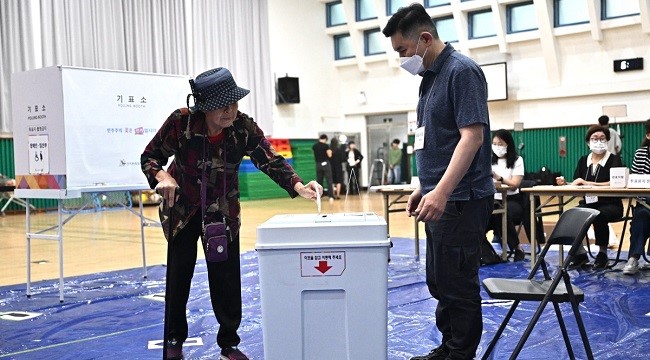
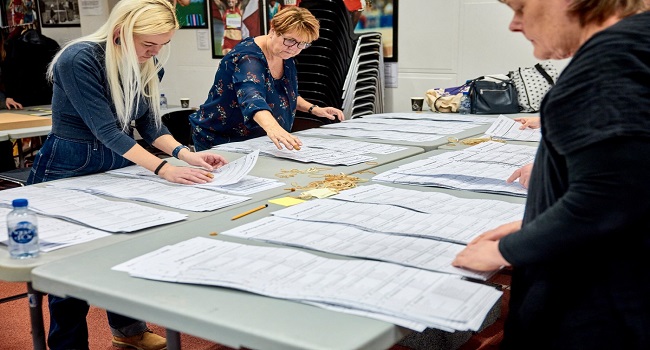
Election workers recount ballots in the Marselisborg Hallen in Aarhus, Denmark on March 25, 2026. (Photo by Mikkel Berg Pedersen / Ritzau Scanpix / AFP) /

Denmark’s political parties began the thorny process of forming a government Wednesday, with the centrist Moderates as kingmaker after the prime minister’s Social Democrats scraped through a general election without a majority.
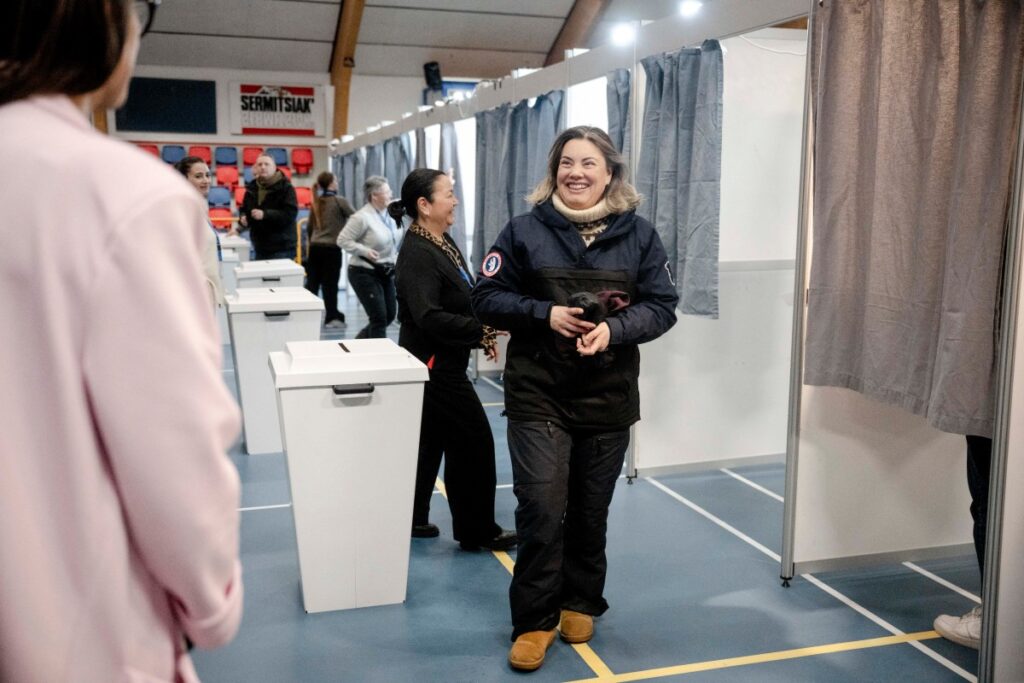
Greenland’s Inuit Ataqatigiit party member Naaja Nathanielsen (C) looks on in a polling station in Nuuk, on March 24, 2026, during the parliamentary election in Denmark (Photo by Oscar Scott Carl / Ritzau Scanpix / AFP) / Denmark OUT

Danes were braced for a weeks-long process as Prime Minister Mette Frederiksen seeks to consolidate power in the deeply splintered parliament after Tuesday’s snap vote.
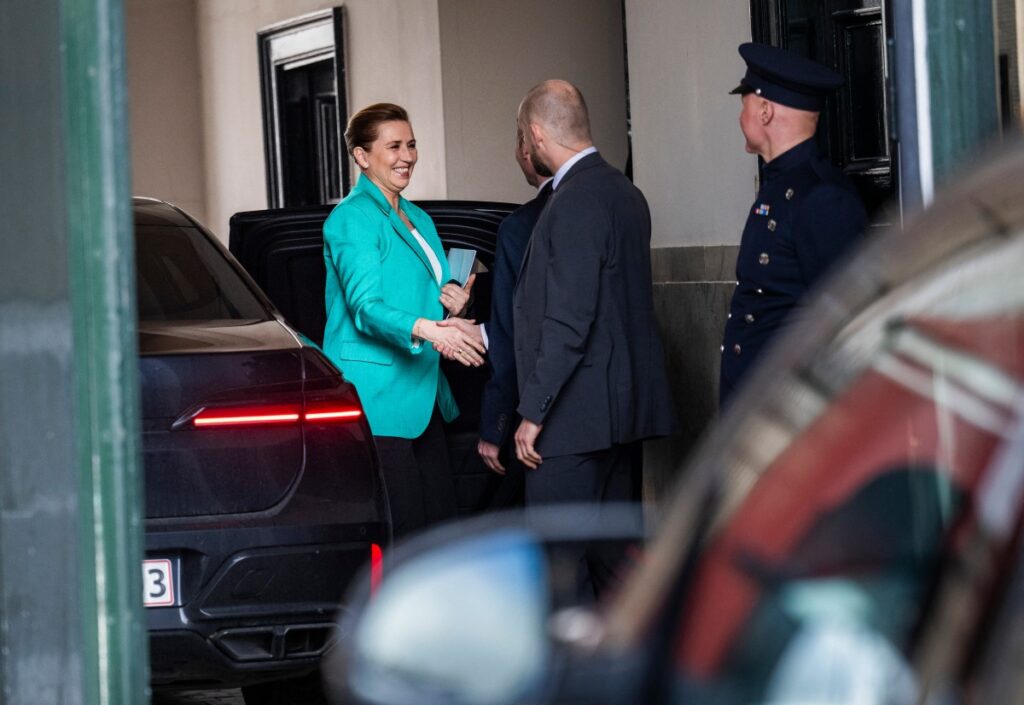
Denmark’s Prime Minister Mette Frederiksen arrives at Amalienborg Palace in Copenhagen to inform the king about the election result one day after the parliamentary election on March 25, 2026. (Photo by Martin Sylvest / Ritzau Scanpix / AFP) 

A left-wing bloc made up of five parties, including Frederiksen’s Social Democrats, won 84 seats; the right-wing and far-right claimed 77; and the Moderates won 14 in the election.

The Social Democrats posted their worst election score since 1903—though they remained Denmark’s largest single party, with 38 seats in the 179-seat parliament.
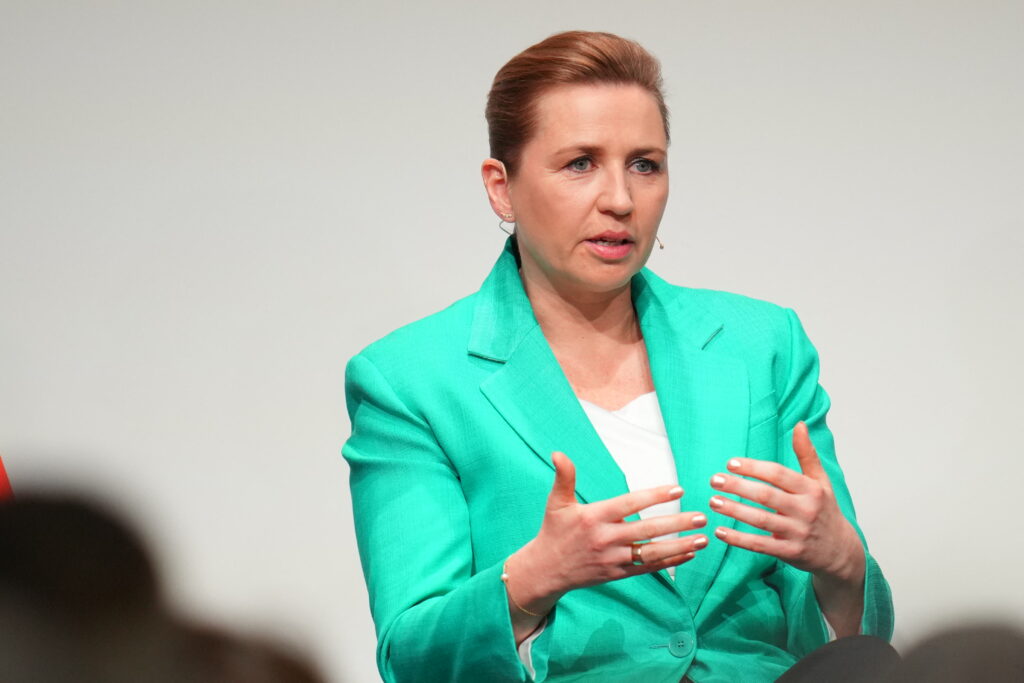
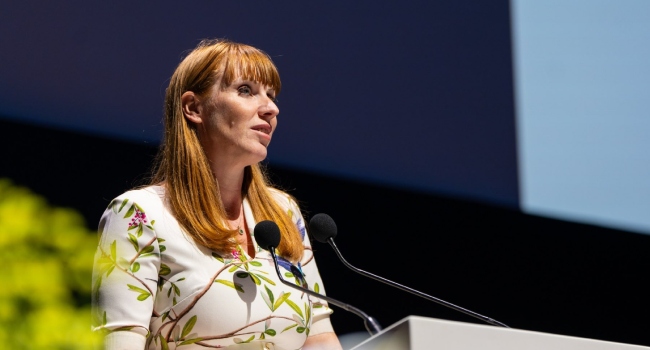
Chairwoman of the Social Democrats Mette Frederiksen attends a party leader debate hosted by Publicists’ Club one the day after the parliamentary election at the Confederation of Danish Industry’s building in Copenhagen on March 25, 2026. (Photo by Liselotte Sabroe / Ritzau Scanpix / AFP)


Frederiksen formally tendered her coalition government’s resignation to King Frederik on Wednesday, telling a televised party leader debate she wanted to try to form a centre-left government.

“The most realistic scenario” would be a coalition with the five parties on the left and the centre-right Moderates, she said.

But it is not certain the Moderates, led by Foreign Minister Lars Lokke Rasmussen, would agree to that.

“I don’t believe that Denmark needs policies aligned with” the leftist Red-Green Alliance, Lokke said.
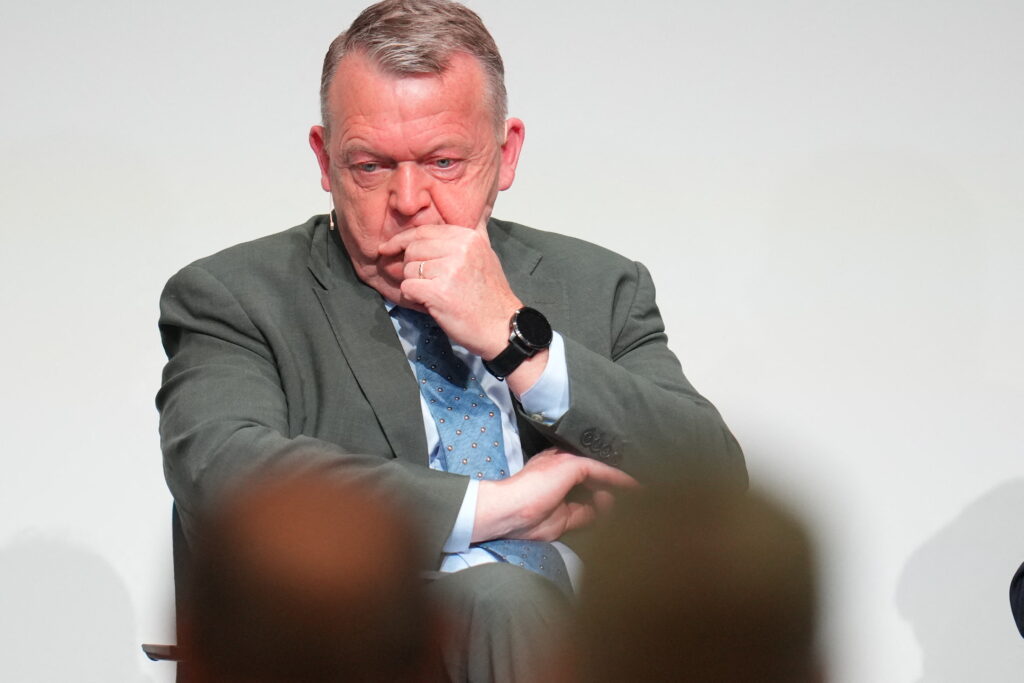
Chairman of the Moderates Lars Loekke Rasmussen attends a party leader debate at the Confederation of Danish Industry’s building in Copenhagen on March 25, 2026, the day after the parliamentary election. (Photo by Liselotte Sabroe / Ritzau Scanpix / AFP) / Denmark OUT

King Frederik was to meet party leaders individually later Wednesday to determine who should be asked to try to form the next government.

“My expectation is that Mette Frederiksen will become prime minister,” University of Copenhagen political science professor Rune Stubager told reporters.

“But I don’t know with the backing of which parties, like the left wing or the right wing,” he said.

He noted that Lokke, a two-time former prime minister, would likely vie for the position of prime minister, even though he has adamantly denied any interest in the job.

“Danes want me and not another prime minister. I still have the backing to be able to continue on behalf of the Danish people,” Frederiksen insisted during the debate.

Frederiksen has for the past four years headed an unprecedented left-right coalition made up of her Social Democrats, the Moderates and the Liberals.

The Liberals have refused to continue in a Social Democrat-led government.

‘Too Hard To Say’

Danes are now prepared for long negotiations. After the 2022 election, the talks lasted six weeks.

“It’s a long process, which means the government won’t be formed and it will be quite difficult to pass laws during this period,” lamented Jesper Dyrfjeld Christensen, a 54-year-old engineer.

“It’s really too hard to say who will be part of the coalition,” admitted Stubager.

With 12 parties in parliament, the political landscape is jagged — though Denmark is accustomed to minority governments.

“To some extent, this is the way Danish politics works. You have a minority government in the centre which forms a majority with the left on some issues and with the right on others,” he explained.

The negotiations are expected to focus on economic and pension issues, pollution and immigration, he said.

The traditional far-right party, the Danish People’s Party, which has heavily influenced policy since the late 1990s but slumped in the 2022 election, more than tripled its result to 9.1 per cent of votes.

The three anti-immigration groups together garnered 17 per cent, a stable figure for Denmark’s populist right over the past two decades.

“If negotiations take place in the left-wing bloc with the moderates, then there will be more focus on green issues than on immigration,” Stubager said.

“But if, instead, the Moderates negotiate with the parties on the right, then the central issue will be immigration.”

Four seats in Denmark’s parliament are held by its two autonomous territories — two for Greenland and two for the Faroe Islands.

While the Faroese renewed the mandates of the two outgoing lawmakers, with one for each bloc, Greenland overwhelmingly backed the left-wing party and Naleraq, which advocates rapid independence from Denmark.


AFP

International News

Transfer: Real Madrid , Cucurella Reach Verbal Agreement 

Published

on

Spread the love


Chelsea reliable defender, Marc Cucurella may join Spanish giant, Real Madrid before the end of the current transfer window.if information from transfer journalist, Fabrizio Romano are anything to go by.


Romano In a latest transfer update, said Real Madrid has reached verbal agreement to sign Marc Cucurella from Chelsea.

“Verbal agreement in place between all parties, player too — he’s the left back wanted by Mourinho” the update read.

Continue Reading

International News

Ancelotti: Pressure Affected Brazil Against Morocco 

Published

on

Spread the love


Carlo Ancelotti felt Brazil were “anxious” in their World Cup opener against Morocco, as he suggested the pressure got to his players.


Brazil were largely underwhelming at New York New Jersey Stadium, as they opened their Group C campaign with a 1-1 draw.

World Cup 2022 semi-finalists Morocco made a fine start, which was capped off when Ismael Saibari charged through in the 21st minute and lofted a cute finish over Alisson.

With the unfit Neymar watching on from the bench, Vinicius Junior slammed home a brilliant equaliser 11 minutes later, but Brazil could not find a way through Morocco’s defence for a second time.

In fact, Brazil relied on a sharp double save from Alisson late on to preserve a point, and Ancelotti knows there is plenty of scope for improvement.

“I think it was a tough match, especially in the first half,” Ancelotti said, as reported by ESPN

“Maybe the team was a bit anxious, and the nerves were all over the place. The second half was better, but it was still tough, and I’m sure we’ll get better.

“I think that’s something we’ll have to look into.

“There’s a lot of pressure, so it’s natural. Little by little, we’ll improve in that sense.”

Brazil are, at least, unbeaten in their opening match in the last 21 World Cups dating back to 1938 (W17 D4).

It is the longest such streak in the history of the World Cup, more than twice as long as any other (Germany, Netherlands – nine straight).

“We have to reassess what we did,” Ancelotti added.

“In the first half, we were very unbalanced. We did a bit better in the second half. The result isn’t bad. You don’t win the World Cup in your first match.

“I’m not disappointed, but I’m not satisfied, either. We need to work, but that’s normal. Morocco played well. They’re a solid team, very well organised. It was a difficult game.

“For many different reasons, a debut in the World Cup might not end up as expected. The goal is to qualify, move on to the next round and improve over time.”

With uncertainty over how much Neymar will be able to contribute at this tournament, Brazil need Vinicius to step up, and the Real Madrid forward demonstrated his quality with a wonderful run and finish to restore parity.

It marked Vinicius’ 10th goal for Brazil, with three of those coming on American soil.

“We started on a really bad note,” Vinicius said. “For certain, we got to hold on to the ball. We have to move better.”

Continue Reading

International News

Revealed: Why Yamal Lost Spain’s No.10 Shirt To Olmo At The Mundia

Published

on

Spread the love


According to The Athletic, Yamal will not wear the No. 10 jersey for Spain; it will belong to teammate Olmo.


Pelé, Diego Maradona, Zinedine Zidane, Messi, and Roberto Baggio have all delivered superstar-level performances at the FIFA World Cup.

What do they have in common? They all wore the No. 10 jersey at the time.

Historically, this number typically belongs to the most creative player on the team, usually an attacking midfielder, and sometimes even a forward. It is also part of a player’s personal brand, an honor reserved for a special type of player.

Spain is one of the favorites to win this summer’s North American tournament, and there is no bigger name in the squad than Yamal. But he will not wear the No. 10 for Spain; instead, he will wear No. 19, the same number he wore in the summer of 2024 when he helped Spain win the European Championship in Germany.

So, why can’t the 18-year-old, who wears this legendary number at Barcelona—a number most easily associated with the club’s all-time leading goal scorer and appearance record holder Messi—enjoy the same treatment with the Spanish national team?

Spain’s No. 10 this summer will be Olmo, who is also one of Yamal’s teammates at Barcelona.

Olmo wears No. 20 at Barcelona, but for the national team, a simple factor puts him ahead of the young player when deciding numbers: seniority.

Spain’s system for assigning squad numbers dictates that the player with the most national team appearances gets priority in choosing from available numbers.

Yamal has made 25 appearances for the national team since his debut in 2023; Olmo has 50 national team appearances and was already wearing the No. 10 before Yamal joined the Spanish squad.

Yamal has proven capable of handling the challenge of wearing the No. 10 at Barcelona. When Messi left the club in a painful manner in the summer of 2021, it left Barcelona with several issues to resolve, one of which was who would inherit the No. 10 and bear the pressure of the legacy left by the Argentinian.

Ansu Fati, one of the brightest talents to emerge from Barcelona’s La Masia academy in recent years, did not succeed. After Messi’s departure, he inherited the No. 10 but suffered multiple injuries and could not meet expectations.

Barcelona sources believe that giving the number to Fati was a mistake because it placed too much pressure on the young player. Like all quoted sources in this article, they requested anonymity to protect their relationships.

But Yamal’s situation is different. He took over Fati’s No. 10 last summer and hasn’t looked back since. Last season, he achieved his career-best statistics, scoring 24 goals and providing 17 assists in 45 games.

Not wearing the Spanish No. 10 has also not affected Yamal’s progress with the national team.

This is not seen as a problem, but rather as part of the young player’s development. Everyone in the Spanish squad understands the rules, and sources close to Yamal and the team insist that Yamal holds no resentment towards Olmo.

It can also be argued that, besides international recognition, there are commercial factors for jersey numbers that should not be overlooked. Giving Yamal the No. 10 would certainly boost sales of the Spanish team’s jerseys and bring a more significant commercial impact from the star player.

However, respect among teammates, especially for more senior players, is a key tenet for Spain’s coach Luis de la Fuente and the foundation of the culture he is building for this Spanish team.

No individual is important enough to be above this team spirit, not even Yamal. The young player is considered the most important attacking player for Spain and is highly respected in the locker room, but breaking the seniority policy to take a teammate’s number is simply not allowed in this team.

Gavi should also be mentioned. The 21-year-old player has primarily played as a central midfielder for Barcelona this season, even playing as a defensive midfielder, but he will wear No. 9 for Spain, a number more commonly associated with central forwards.

There’s a story behind this too. When Gavi made his Spain debut in 2021, No. 9 was the last available number when he chose.

That year, he made his debut in the Nations League semi-final win against Italy, with an impressive performance, and Gavi has stuck with that number ever since. Whenever the national team’s No. 9 is available, he always chooses it.

Spain’s starting forward Oyarzabal actually began his career as a winger, but he has always chosen No. 21 and decided to keep this number throughout his national team career.

Another forward included in Luis de la Fuente’s FIFA World Cup squad, Celta player Borja Iglesias, has 8 national team appearances, fewer than Gavi’s 30, so he cannot get the No. 9.

Continue Reading

Trending

Copyright © 2026 TheColumn NG