
International News
W/Cup: Germany Recalls Retired Goalie @ 40


Manuel Neuer has been called up to Germany’s World Cup squad – two years after his international retirement.
The 40-year-old was named as part of Julian Nagelsmann’s 26-man squad for the tournament this summer, having not featured for his country since Euro 2024.
Among the list include Premier League players Malick Thiaw and Nick Woltemade – both of Newcastle – Arsenal striker Kai Havertz, Liverpool midfielder Florian Wirtz and Brighton’s Pascal Gross.
Injured duo Serge Gnabry and Anton Stach and forwards Karim Adeyemi, Kevin Schade and Niclas Fullkrug are among those to miss out.
Germany’s World Cup squad in full
Goalkeepers: Oliver Baumann (Hoffenheim), Manuel Neuer (Bayern Munich), Alexander Nubel (Stuttgart)
Defenders: Waldemar Anton (Borussia Dortmund), Nathaniel Brown (Eintracht Frankfurt), David Raum (RB Leipzig), Antonio Rudiger (Real Madrid), Nico Schlotterbeck (Borussia Dortmund), Jonathan Tah (Bayern Munich), Malick Thiaw (Newcastle)
Midfielders: Pascal Gross (Brighton), Joshua Kimmich (Bayern Munich), Felix Nmecha (Borussia Dortmund), Aleksandar Pavlovic (Bayern Munich), Angelo Stiller (Stuttgart), Leon Goretzka (Bayern Munich), Florian Wirtz (Liverpool), Jamie Leweling (Stuttgart)
Forwards: Maximilian Beier (Borussia Dortmund), Kai Havertz (Arsenal), Lennart Karl (Bayern Munich), Jamal Musiala (Bayern Munich), Leroy Sane (Galatasaray), Deniz Undav (Stuttgart), Nick Woltemade (Newcastle)


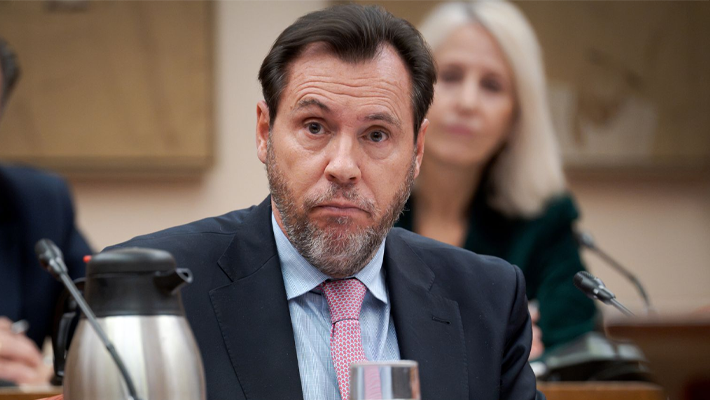
Spain’s Transport Minister Óscar Puente has resigned – six days after the high-speed train collision in which at least 69 people were killed and dozens injured.
He announced his decision in Congress, after giving evidence on last Wednesday’s disaster near the town of Urda, south of the capital Madrid, in which a train smashed into the back of another which had stopped on the same line.
“A transport minister in a country like Spain cannot remain in office after two accidents of this seriousness in less than a year,” he said – a reference to January’s crash on the same line in which 46 people were killed.
Last week’s crash was one of the worst rail disasters in Europe’s modern history, and Spain’s worst crash since 2013.
Rescuers had to use heavy lifting equipment to get access to derailed carriages where a number of passengers were trapped
Puente announced his decision at the end of a congressional session on Tuesday evening in which he had outlined new rail safety measures and been grilled by the opposition.
He said he had taken the decision to resign immediately after the 28 October disaster, but had not made it public.
Puente had been under mounting pressure in the wake of the disaster as opposition parties and some allies of the government called on him to step down.
His resignation comes as a blow to the Socialist-led government ahead of a general election set for 29 November.
During his lengthy hearing before lawmakers, Puente said: “I wish to inform you that I am not only stepping down from my position as minister of transport, but that I am also withdrawing my name from the lists for the early legislative elections.”
Last Wednesday’s accident involved a train run by state-owned operator Renfe with 397 passengers on board and a stationary train run by private operator Iryo, which was carrying 147 passengers.
A reported issue with the automatic signalling system – a computer failure – had forced all trains to halt on the affected stretch.
Leaked audio recordings published in Spanish media soon after the crash revealed conversations between train drivers and a control centre just minutes before the disaster.
The three recordings of conversations between Madrid’s control centre and two train drivers appear to show that the Renfe train was given clearance to move even though the other train had stopped on the track, about 25km (15 miles) ahead.
In one, a control centre operator is speaking to the driver of the Renfe train, which was having some technical difficulties.
After some exchanges, the control operator tells the driver: “Continue your journey and then proceed under [Lateral Signalling Block], at normal speed with normal operation.”
The driver replies: “At normal speed?” To which the controller answers: “Yes.”
The Lateral Signalling Block is a back-up system used when the automatic signalling or data transmission system fails.
The driver of the stationary Iryo train says in another audio recording that communication with the train-control system has been lost, and it is not moving.
The train “is stationary in front of the entry signal at Urda”, the driver tells the control centre operator. After a series of exchanges, the driver is then told to “resume the journey” normally.
The Iryo driver then contacts the control centre again, according to a later recording, saying they cannot start the train. “The train won’t allow me to control the [security] system. That’s why I am still stopped in front of the entry signal,” they say.
The latter recording suggests that the controller had been notified that the Iryo train remained stationary as the Renfe train approached.
Iryo said its carriages were “struck from behind” by the other train.
Puente said last week that the decision to instruct the trains to move again, without any speed restrictions, was “inexplicable”.
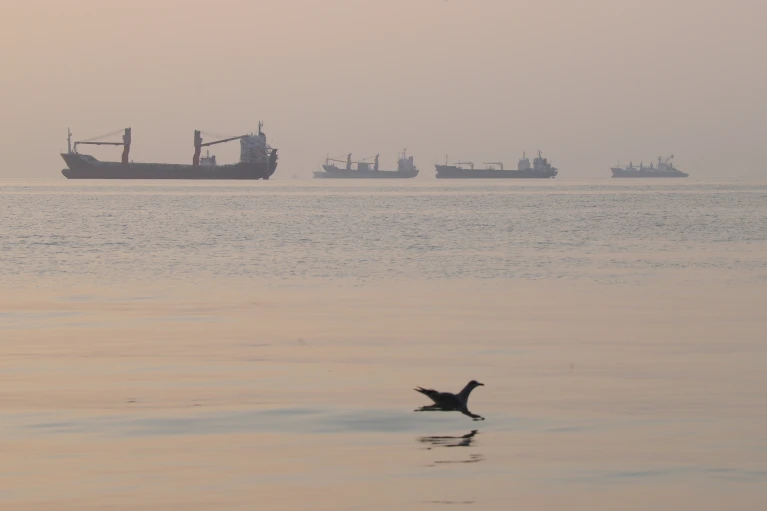
The United States has launched strikes on Iranian targets in the Strait of Hormuz, just hours before the country votes in the mid-term elections.
US officials told several American news outlets that the strikes were defensive in nature and meant to protect US assets in the region.
The officials added that the strikes were also in response to Iran’s Islamic Revolutionary Guard Corps (IRGC) firing at a US aircraft.
The last confirmed US strikes on Iran were in September.
Trump previously said attacks would not resume until after the mid-terms.
On Saturday, Iranian Supreme Leader Mojtaba Khamenei instructed the country’s military to respond to any threats, without geographical restrictions.
Khamenei also ordered an expansion of the list of potential American and Israeli targets.
At the time, Marco Rubio, US secretary of state, said Trump had yet to decide whether to launch new missiles on Iran but would prefer to resolve the conflict diplomatically.
Trump has been facing plunging poll numbers and pressure from within his party to end the war, which began when the US and Israel attacked Iran in February.
Mohammad Ghalibaf, Iranian parliamentary speaker who is leading negotiations with the US, issued a fresh warning early Tuesday.
“The Iranian nation will not surrender to the enemy’s threats and military actions,” he said.
Ghalibaf added that Iran’s military and strategic response “will be unpredictable”.

A 20-year-old copilot was among nine people killed when a small jet crashed and exploded in Florida on Sunday, according to US media.
Nathalia Filgueiras, who earned her pilot’s licence when she was 17, is reported to have been one of two crew members aboard the Learjet 60 from Austin, Texas, to the Bahamas when it crashed near West Palm Beach.
The National Transportation Safety Board (NTSB) said it would investigate to what extent ice and turbulence may have contributed to the crash, and whether human error played a role.
One man on the ground sustained a leg injury when the aircraft nosedived on to a street near Cresthaven, nine miles (14 km) from President Donald Trump’s Mar-a-Lago resort.
The debris was scattered across sports fields, businesses and homes in the area, officials told a news conference on Monday, possible evidence that the plane broke up before it hit the ground.
The NTSB confirmed that after the jet took off from Austin, the crew transmitted to air traffic control that they were encountering ice and moderate turbulence.
“We are picking up precipitation, requesting to climb to 37,000 feet if able,” the crew said.
NTSB member Tom Chapman said that less than 30 seconds later, the plane began to descend and the crew issued a mayday call.
The transmission then became “unintelligible”, he said, adding that: “Sadly, all aboard were lost.”
Flight analysis indicates the jet was plummeting hundreds of feet per second before crashing.
In air traffic control audio, a crew member can be heard declaring an emergency, shouting “we are in an overspeed condition descending 20,000ft per minute”, before saying, “we are going to crash into the ground”.
About 35 seconds after the initial mayday announcement, the last remark from the cockpit appears to be “we’re out of time”.
Three years before crash, young copilot spoke of earning pilot licence
Filgueiras’s mother, Camila Corteleti, confirmed to US media that her daughter had died in the fireball.
Corteleti told the New York Times: “She loved the freedom. It was completely different seeing the world from the top.”
In a 2023 interview with a local news affiliate of CBS News, Filgueiras spoke proudly of receiving her pilot’s licence while still a senior in high school.
“I like being different than everyone,” she said. “Some people think that it’s weird that I can fly planes, but I can’t drive a car, I mean I can but, a lot of people think it’s funny.”
None of the other eight people on board has been identified.
-
News2 years ago
CBN Debunks Fake Circular on New ₦5,000 and ₦10,000 Notes
-
 Health & Wellness1 year ago
President Tinubu Directs Cut in Dialysis Cost from ₦50,000 to ₦12,000
-
 Opinion2 years ago
Championing the People’s Voice: Obasa’s Dedication to Grassroots Representation By Dave Agboola⁰
-

 International News7 months ago
Indian Police Arrest Nigerian Over ₦290m Drug Haul
-
 Business7 months ago
Dangote Refinery Reduces Petrol Gantry Price To ₦1,200 Per Litre
-
 Business7 months ago
After Plea Bargain, Court Discharges Stella Oduah of ₦2.5bn Fraud
-
Business2 years ago
Dangote; We Did Not Fix ₦600/Litre Petrol Price
-
 Trending News1 year ago
NELFUND Disburses ₦86bn To 449,000 Beneficiaries