
Business
Wema Bank Launches ALAT’s New Anthem: The Evolution


Wema Bank has introduced a new jingle to mark the next phase of its digital banking journey, tagged the ALAT: The Evolution jingle. Designed to capture the energy of a smarter and more seamless banking experience, the jingle is bright, catchy, and full of life.
It reflects a platform built to simply work, pairing sound with innovation as ALAT: The Evolution steps forward with enhanced features and a refreshed user experience.
Everyday banking can often feel routine or even stressful, with multiple steps and delays slowing things down. The ALAT: The Evolution jingle reimagines that experience with a lively and confident tone that mirrors the app’s capabilities.
From voice banking with SAW to Tap and Pay and bank uptime prediction, each feature is echoed in the rhythm and flow of the sound. It brings to life the speed, convenience, and reliability that define this new phase of ALAT: The Evolution.
More than just music, the ALAT: The Evolution jingle represents a clear statement of intent. It signals a shift towards banking that feels natural, responsive, and in tune with the user.
As customers update their app and explore ALAT: The Evolution, the jingle serves as a reminder that a better, smoother way to bank is already here. Wema Bank is not just evolving its technology; it is shaping how banking feels.

Moove, the global mobility company founded in Lagos, has announced plans to end its operations in Nigeria.
According to report, as part of its exit strategy, the company founded six years ago, said it will transfer full ownership of eligible vehicles “worth approximately N35 billion” to existing customers at no cost.
The affected customers will take full ownership of the vehicles, with no further payments to Moove required from October 1, 2026.
The company said the move forms part of its plans to conclude its Nigerian operations while ensuring that eligible customers retain the vehicles they have been using under its financing model.
Moove was founded by Ladi Delano and Jide Odunsi and has built its business around providing vehicle financing and mobility solutions to drivers.
The company launched in Nigeria six years ago and expanded its operations by financing vehicles for drivers, particularly those operating on ride-hailing platforms.
The report says the transfer of the vehicles means eligible customers will receive assets collectively valued at about N35 billion without making additional payments to the company.
Moove is a global mobility fintech company that has expanded its operations across several markets, providing vehicle financing and other mobility-related services.
This is coming a few weeks after another global mobility company Uber exited Nigerian operations, the report concluded.
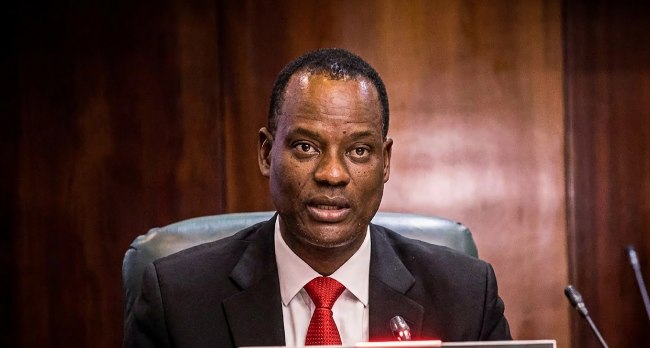
The federal government says late tax payments will attract new interest rates from October 1, 2026.
According to a statement by the ministry of finance, the new rates are linked to market interest rates and will be set for each calendar month.
Under the order, interest on tax payable in naira will be charged at the Central Bank of Nigeria (CBN’s) monetary policy rate (MPR) plus one percentage point, compared with the previous five-percentage-point spread.
However, the ministry said the rate would not fall below the yield on 364-day treasury bills.
This means that since the MPR is 23 percent, taxpayers who pay late would be charged 24 percent interest on the delayed tax, subject to the 364-day treasury bill yield floor.
For tax payable in foreign currency, the statement said the interest rate will be the secured overnight financing rate (SOFR) plus 6 percentage points. The SOFR stands at 22.12 percent for the 30-day average and 22.59 percent for the 90-day average as of September 24, 2026.
The ministry said the new rates would provide taxpayers with greater certainty over the cost of late payment, which it said has been linked more closely to prevailing market rates.
Speaking on the move, Taiwo Oyedele, minister of finance and coordinating minister of the economy, said the new framework would ensure that delaying tax payments does not become a cheaper source of credit than borrowing from the market.
“Tax that is due belongs to the public. When it is paid late, Government may have to borrow to fill the gap, and the cost falls on everyone,” Oyedele said.
“This Order ties the cost of late payment to real market rates, so that delaying tax does not become a cheaper form of credit than the market itself.”
The ministry said under the order, one interest rate would apply for each calendar month and would be determined on the last business day of the preceding month.
“The Nigeria Revenue Service (NRS) is required to publish the applicable rate on its website by the third business day of every month,” the statement added.
The ministry said interest would be calculated as simple interest on a daily basis, from the date the tax becomes due until payment is made.
For foreign-currency tax, the ministry said SOFR would apply as the international benchmark for US dollar rates, noting that if the SOFR is discontinued, its official successor rate would apply.
Oyedele said the arrangement would also provide a uniform basis for taxpayers dealing with federal, state and FCT tax authorities.
“Just as important is certainty. Every taxpayer, whether dealing with the Nigeria Revenue Service or a State revenue service, will know the rate in advance, see it published every month, and be charged in the same way,” he said.
“Clear rules make compliance easier and support a fair, predictable tax system.”
The ministry said the order does not change the 10 percent penalty for late payment provided under section 65 of the Nigeria Tax Administration Act (NTAA), 2025.
“The relevant tax authorities may also waive interest or penalties where good cause is shown, in line with section 66 of the Act,” it said.
The ministry said the new rates would apply to interest arising from October 1, including interest on tax that became due before that date.
“Interest that arose before October 1 will not be affected to the extent that it was specifically provided for under the rules in force at the time,” the statement said.
The finance ministry said the order supersedes the 2017 notice on interest on unpaid taxes and other earlier notices on the subject.
The ministry said the framework applies to self-assessment taxpayers, the NRS, and state and Federal Capital Territory (FCT) internal revenue services.
The ministry advised taxpayers to file their returns and pay applicable taxes on time.
It also advised taxpayers with outstanding liabilities to settle them promptly or engage the relevant tax authority.

Adron Homes and Properties is set to participate in the 11th Olojo Festival in Ile-Ife, Osun State, as the company deepens its engagement with the ancient city and unveils plans for a Premium Estate development within the Ile-Ife domain.
The 2026 edition of the renowned cultural festival, themed “Culture Preservation Through Sustainable Tourism,” is expected to bring together traditional rulers, government representatives, corporate organisations, cultural stakeholders, tourists and the media for a celebration of Yoruba heritage and the cultural significance of Ile-Ife.
Ahead of the festival, Adron Homes made a strong appearance at the press conference and unveiling of the 2026 edition with a delegation comprising key members of its Western operations.

The delegation included Ogundapo Odunola, Deputy Managing Director, Western Super-Cluster; Johnson Olugbenga, Assistant Managing Director, Western Galaxy 1; and Shobowale Taiwo, Deputy Sales Manager, Livingspring World.
Their presence reflected the company’s growing development interests in Ile-Ife and its commitment to initiatives that connect real estate development with cultural heritage and community growth.
Speaking at the event, Seyi Oyekunle, Director General, Media, Branding & Corporate Communication, Adron Group, who represented the Managing Director of Adron Homes and Properties, Mrs Adenike Ajobo, said the company’s participation in the Olojo Festival was driven by its belief that cultural preservation and sustainable development could work hand in hand.
Oyekunle described the theme of the festival as timely, noting that culture remains an important part of identity and history, while sustainable tourism can create opportunities for employment, investment, entrepreneurship and community development.
He described Olojo as more than an annual cultural celebration, saying it represents the enduring connection between the past, present and future of Ile-Ife and its place in Yoruba civilisation.
According to him, Adron Group’s vision extends beyond conventional real estate development.
“At Adron Group, we are in the business of real estate, but our purpose is much bigger than the development of properties. We build homes. We build cities. We build communities,” he said.
A major highlight of the company’s participation was the unveiling of plans for the Adron Homes Premium Estate within the Ile-Ife domain.
Oyekunle expressed appreciation to the Ooni of Ife, His Imperial Majesty, Oba Adeyeye Enitan Ogunwusi, Ojaja II, for the confidence and approval granted to Adron Homes and Properties for the development.
He said the approval comes with a strong responsibility for the company to contribute meaningfully to the development of Ile-Ife while respecting the city’s rich historical and cultural heritage.
According to him, Adron Homes is prepared to deploy its experience, resources and development capacity towards delivering a project capable of creating value for residents and contributing to the growth of the community.
He described the Premium Estate as more than a property development, saying it presents an opportunity to attract investment, provide quality housing, stimulate local businesses and strengthen the connection between Ile-Ife and sons and daughters of Ifeland and Yorubaland across the world.
The Adron Group representative said the development could provide an avenue for people in the diaspora to reconnect with the Source by creating opportunities to “come home, invest home, build home and preserve home.”
He also called for greater development of Ile-Ife as a year-round tourism destination, stressing that the city’s tourism potential should extend beyond the annual Olojo Festival.
Oyekunle said sustainable tourism should translate into tangible economic opportunities for residents, particularly artisans, young people, entrepreneurs and operators within the hospitality sector.
He further urged young people to view Yoruba culture and heritage as potential sources of economic opportunity, noting that the sector could inspire careers and businesses across film, technology, fashion, music, arts and tourism.

The Olojo Festival press conference brought together traditional rulers, government representatives, corporate organisations, members of the Olojo Festival Committee, cultural stakeholders and media practitioners ahead of the 11th edition of the festival.
As Adron Homes prepares for its participation in the festival, the company’s Premium Estate plan adds a major real estate dimension to its engagement with Ile-Ife, reinforcing its vision of “Building Homes, Cities and Communities Across the Globe.”
-
 Health & Wellness1 year ago
President Tinubu Directs Cut in Dialysis Cost from ₦50,000 to ₦12,000
-
News2 years ago
CBN Debunks Fake Circular on New ₦5,000 and ₦10,000 Notes
-

 International News6 months ago
Indian Police Arrest Nigerian Over ₦290m Drug Haul
-

 Business7 months ago
Dangote Refinery Reduces Petrol Gantry Price To ₦1,200 Per Litre
-

 Business7 months ago
After Plea Bargain, Court Discharges Stella Oduah of ₦2.5bn Fraud
-
Business2 years ago
Dangote; We Did Not Fix ₦600/Litre Petrol Price
-
 Trending News1 year ago
NELFUND Disburses ₦86bn To 449,000 Beneficiaries
-
 Opinion2 years ago
Championing the People’s Voice: Obasa’s Dedication to Grassroots Representation By Dave Agboola⁰