
News
25 Assemblies Endorse State Police Constitution Amendment Bill


Twenty-five state houses of assembly have endorsed the proposed constitutional amendment seeking to establish state police.
The endorsement, based on a compilation of legislative decisions across 25 states, is a significant step toward decentralising policing powers currently vested in the federal government.
Section 9(2) of the 1999 constitution stipulates that a constitutional amendment must secure the support of at least a two-thirds majority of members of each chamber of the national assembly and be approved by resolutions of the houses of assembly of not fewer than two-thirds of 36 states.
The senate and the house of representatives passed the proposed amendment in June and July, respectively, before Kamoru Ogunlana, clerk to the national assembly, transmitted the bill to the state legislatures for consideration.
The states that have endorsed the proposal are Ogun, Delta, Plateau, Kwara, Adamawa, Edo, Osun, Oyo, Rivers, Zamfara, Abia, Akwa Ibom, Anambra, Bayelsa, Benue, Cross River, Ekiti, Enugu, Gombe, Imo, Kaduna, Nasarawa, Taraba, Yobe and Kebbi.
The endorsements exceed the constitutional threshold of 24 states required to alter the constitution under section 9(2).
Under the current constitutional framework, the Nigeria Police Force operates as a federal institution, with policing placed under the exclusive legislative list.
The proposed amendment seeks to move policing from the exclusive legislative list to the concurrent legislative list, enabling both the national assembly and state houses of assembly to legislate on policing and related security matters.
The proposal is designed to establish a dual policing framework in which federal and state police formations operate within their respective jurisdictions.
It provides that the Nigeria Police Force would continue to discharge policing functions in any state until a state police formation becomes operational.
Even after a state force commences operations, the federal police would retain responsibility for federal policing duties and could assist state police in accordance with the law.
The proposed framework contains provisions to limit federal police interference in the operations and internal security affairs of state police formations, except under specified circumstances.
These include a complete breakdown of law and order beyond the capacity of a state police force, a state governor’s request for federal intervention, or circumstances in which a state police formation becomes unable to function because of administrative, financial, or other challenges.
The provisions are intended to delineate the operational responsibilities of the two tiers of policing while preserving the federal police’s capacity to intervene in exceptional situations.
Following the endorsement by 25 states, the national assembly is expected to complete the necessary legislative processes and transmit the proposed constitutional alteration to President Bola Tinubu for assent, in accordance with the applicable constitutional procedure.
Meanwhile, the presidential working group on police reform said it will soon transmit the national policing bill to the national assembly.
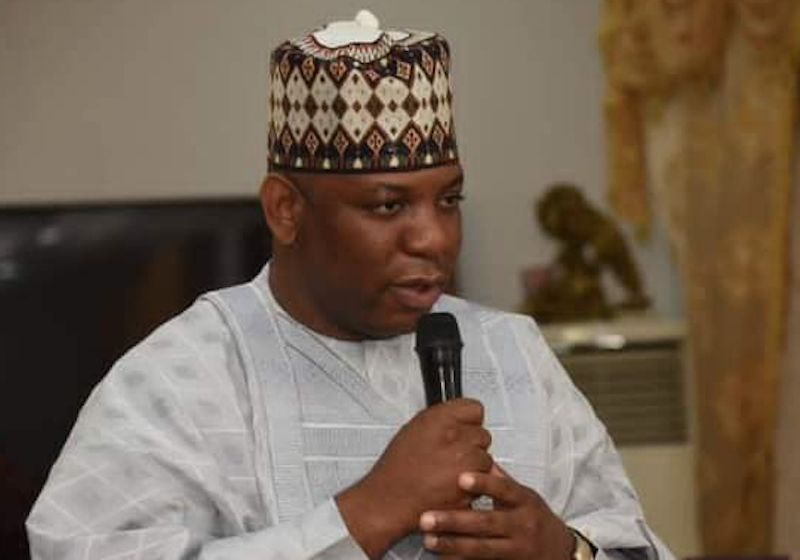
The Federal Government has moved to end the theft and vandalism of public infrastructure through tighter regulation of Nigeria’s scrap metal industry.
The Minister of Steel Development, Prince Shuaibu Abubakar Audu, said the proposed 2026 Scrap Metal Regulations would sanitise the sector, protect critical national assets and boost local steel production.
Audu, represented by the Director, Metallurgical Raw Material Development and Investment Promotion Department, Ime Eprikpo, spoke at a two-day stakeholders’ engagement on the validation of the draft regulations, held in Lagos.
He said the proposed Scrap Metal (Collection, Trading, Recycling and Regulation) Regulations would establish a transparent and sustainable value chain capable of supporting Nigeria’s industrialisation drive.
The minister identified scrap metal as a critical raw material for steel production, foundry operations and other manufacturing activities, noting that effective recycling would reduce waste, create jobs and stimulate economic growth.
He, however, warned that poor regulation had encouraged the theft of electrical cables, railway components, manhole covers and other metallic infrastructure, resulting in disruption of public services, safety risks and huge economic losses.
According to him, the proposed regulations would introduce licensing and supervision of operators, regulate collection and aggregation centres, ensure transaction traceability and enforce environmental and occupational safety standards.
“Our objective is not to suppress legitimate commercial activity. Rather, it is to establish a system in which lawful businesses can operate with greater clarity and confidence, while activities involving stolen materials, unsafe practices or environmental harm are addressed through appropriate regulatory and legal measures,” he said.
Audu stressed that small-scale operators would not be excluded from the regulatory framework, explaining that requirements would be tailored to the size and risks of their businesses.
He called for stronger supplier identification, verification of material sources, reliable transaction records and collaboration with security agencies to check the illegal acquisition and trading of stolen metals.
The minister urged stakeholders to make practical contributions towards ensuring that the proposed regulations were workable and addressed the challenges confronting operators.
Also speaking, the Permanent Secretary of the ministry, Amb. Nura Abba Rimi, represented by the Director, Metallurgical Inspectorate and Environmental Protection Department, Christopher T. Wanje, said effective regulation of the scrap metal industry was critical to building a competitive and self-sustaining steel sector.
He said the regulations would curb illegal metal trading, protect public infrastructure and guarantee reliable raw materials for domestic steel production.
In his goodwill message, the National President of the National Association of Scrap and Waste Dealers Employers of Nigeria, Comrade Pastor Engr. Ogbu Luke Uchechukwu, described the engagement as a landmark development that would lay the foundation for an organised and economically viable industry.
Similarly, the Director-General of the National Environmental Standards and Regulations Enforcement Agency (NESREA), Dr Innocent Bariate Bariko, represented by the Deputy Director, Base Metal Sector, Engr. Walter Okoye, warned that inadequate regulation could expose the environment and public health to serious risks.
He commended the ministry for initiating the proposed regulatory framework.
Also, the Business Manager of Kam Steel Integrated Company Ltd, Busari Olanrewaju, described scrap metal as the backbone of Nigeria’s steel industry.
He pledged the company’s support through the training of scrap collectors, standardised grading procedures, modern sorting and shredding technologies, and increased use of locally generated scrap materials in domestic steel production.
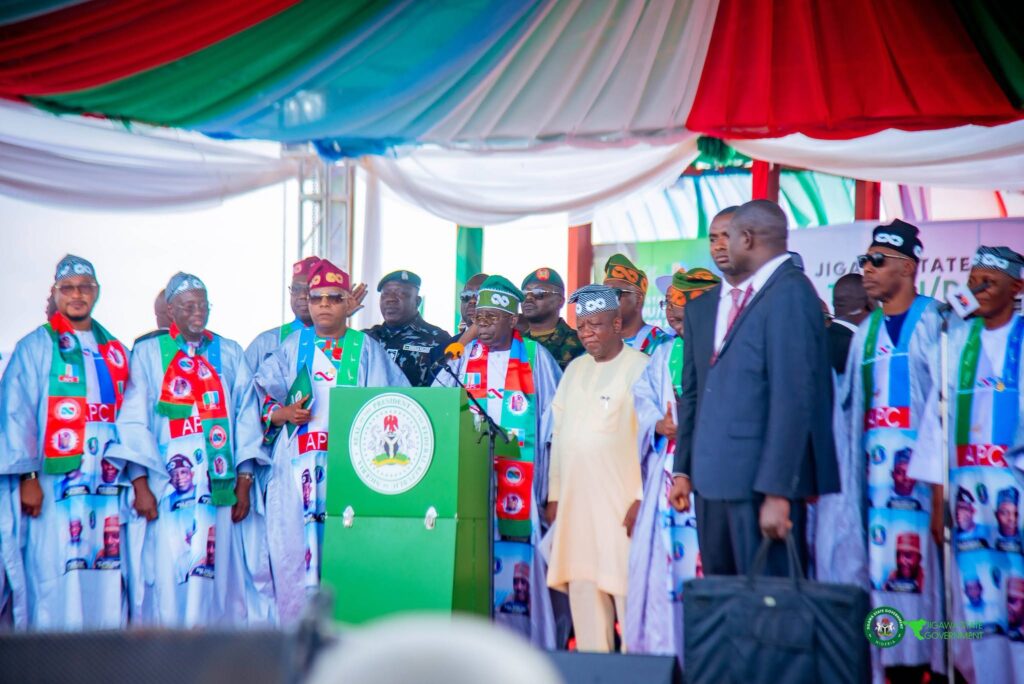
President Bola Tinubu says the Nigerian Education Loan Fund (NELFUND) is a weapon his administration is deploying to tackle poverty, insisting that the scheme will not be stopped.
The president spoke on Tuesday at the All Progressives Congress (APC) presidential campaign rally held at the Dutse Township Stadium in Jigawa state.
Tinubu said his administration would continue to support the student loan scheme, reiterating that all funds recovered by the Economic and Financial Crimes Commission (EFCC) would be channelled into NELFUND.
“NELFUND is our weapon against poverty. And we will continue in that direction. We will continue,” he said.
“Every money recovered from irregularities by the EFCC is now directed to NELFUND to educate our children. Every asset coveted through irregularities will be invested in NELFUND.”
The president also defended his administration’s decision to remove the petrol subsidy, dismissing calls for its restoration.
“Those who think they should bring subsidy back, they are liars. How will you pay for those commitments? How will you repair the roads? How will you maintain them? How will you function?” he asked.
Tinubu said the removal of the subsidy had created economic opportunities for workers and suppliers, while NELFUND was helping to ease the financial burden of educating their children.
“The labourers, the granite suppliers, they are eating, and they are surviving. We have taken away the problem of the education of their children by establishing NELFUND,” he said.
On August 19, the president directed the EFCC to channel all recovered funds into NELFUND.
Tunji Alausa, minister of education, announced the directive while answering questions from State House correspondents shortly after the weekly federal executive council (FEC) meeting.
Alausa also said the FEC had approved the allocation of all unclaimed dividends in the Capital Market Trust Fund and funds in the Dormant Account Trust Fund to NELFUND to expand its reach and improve its efficiency.
Speaking recently at the launch of Arise Palm Resort in Uyo, the Akwa Ibom state capital, Tinubu said the decision was informed by the need to ease the burden of tuition fees on parents and ensure equal access to education for all Nigerians.
At a press briefing in Abuja on August 31 to highlight the commission’s achievements under his leadership, Ola Olukoyede, EFCC chairman, said the federal government had allocated N100 billion from funds recovered by the anti-graft agency to NELFUND since 2024.

The management of the Anambra State Traffic Management Agency, ATMA, has suspended some of its officers for two months without pay after they went viral recently for singing a campaign song in support of the presidential candidate of the Nigeria Democratic Congress, NDC, Mr Peter Obi, and his running mate, Senator Rabiu Kwankwaso.
According to report, the management announced the suspension of the officers on Tuesday.
The sanction followed the controversy generated by a viral video showing the officers singing an NDC campaign song associated with the political aspirations of Obi and Kwankwaso to a motorist.
The incident reportedly occurred at Nwagu Agulu Junction, where the officers were deployed for traffic control duties.
The officers had earlier been summoned to the agency’s headquarters in Awka to explain their conduct and the circumstances surrounding the incident.
Their two-month suspension without pay is believed to be the outcome of the disciplinary process initiated by the agency following the circulation of the video.
Although the circumstances surrounding the officers’ action remain unclear, there had been suggestions that their singing might have been prompted by the NDC logo they reportedly sighted in the motorist’s car.
The development has reportedly thrown the affected officers into distress, with some expressing fears about their future following the disciplinary action.
It was gathered that some of the affected officers had been weeping and approaching influential personalities who could intervene on their behalf and appeal to the relevant authorities for leniency.
Meanwhile, relatives of the affected officers have appealed to public-spirited individuals to come to their aid by helping them secure alternative employment opportunities in view of their present circumstances.
The relatives reportedly fear that the suspension, particularly without pay, could worsen the economic situation of the affected officers and their families.
The incident has also raised questions about the extent to which public officers can freely express their political preferences, particularly when such expressions occur while they are performing official duties.
While public servants retain their constitutional rights as citizens, the regulations governing their respective agencies may restrict partisan political activities, especially when carried out in official uniforms or during working hours.
However, it remains unclear whether the two-month suspension was specifically imposed for breaching ATMA’s operational regulations or for other reasons connected with the incident, report said.
-
 Opinion2 years ago
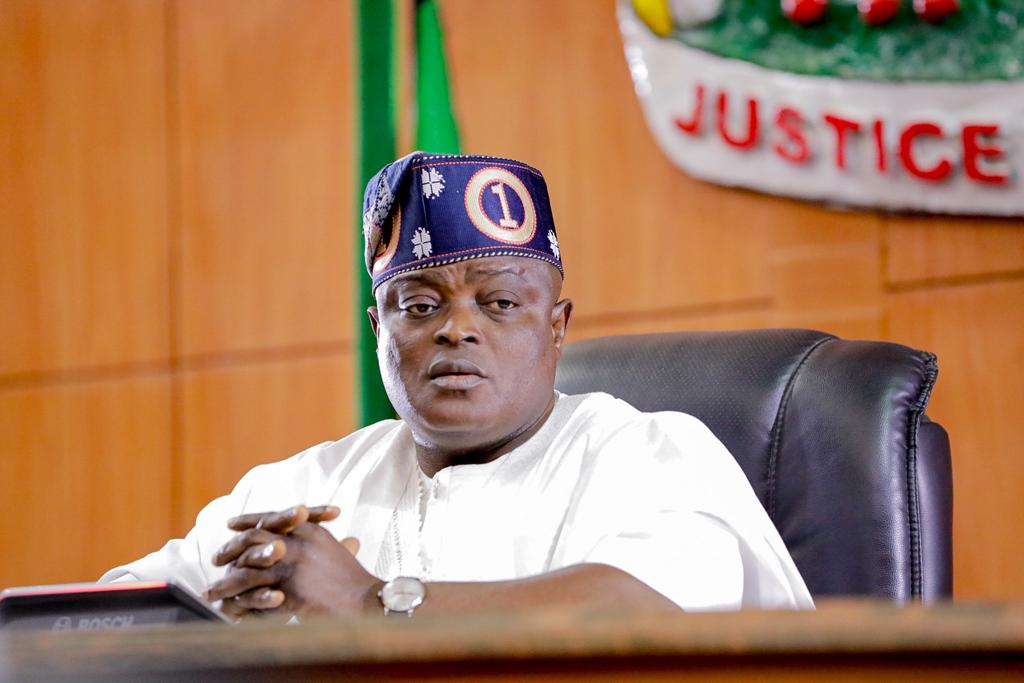
Championing the People’s Voice: Obasa’s Dedication to Grassroots Representation By Dave Agboola⁰
-
News2 years ago
CBN Debunks Fake Circular on New ₦5,000 and ₦10,000 Notes
-
 Health & Wellness1 year ago
President Tinubu Directs Cut in Dialysis Cost from ₦50,000 to ₦12,000
-

 International News8 months ago
Indian Police Arrest Nigerian Over ₦290m Drug Haul
-
 Business8 months ago
Dangote Refinery Reduces Petrol Gantry Price To ₦1,200 Per Litre
-
 Business8 months ago
After Plea Bargain, Court Discharges Stella Oduah of ₦2.5bn Fraud
-
Business2 years ago
Dangote; We Did Not Fix ₦600/Litre Petrol Price
-
 Trending News1 year ago
NELFUND Disburses ₦86bn To 449,000 Beneficiaries