
Health & Wellness
EU Envoy Raises Alarm Over Two Million Malnourished Children in North-West, North-East


The European Union Ambassador to Nigeria and ECOWAS, Gautier Magnet, has urged increased support to help Nigeria combat malnutrition, which currently affects an estimated two million children across the North-East and North-West regions.
Magnot, who made the call on Channels Television’s The Morning Brief on Friday, said that the withdrawal of aid by the United States and other partners had created a huge gap in the provision of therapeutic food for the affected children.
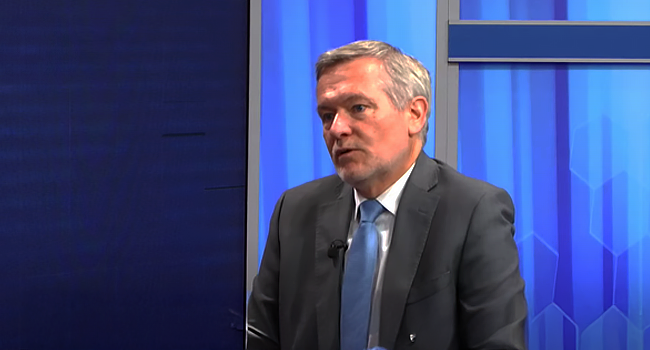
“Those who are, right now, suffering from severe acute malnutrition, and in particular, children. According to all humanitarian partners, in Nigeria, there are currently 3.5 million children in severe acute malnutrition, in particular two million in the northwest and northeast, and these need assistance, in particular through therapeutic food,” he said.
“And this assistance was traditionally given in a big part through humanitarian international assistance. And now, with the withdrawal of some partners, particularly the US, there is a huge gap to be covered.
“Plus, the problem has also deteriorated because of the impact of climate change, insecurity, and several factors, so there is now a need for additional effort to cover these needs and ensure that the supply of therapeutic food is not disrupted in a few weeks’ time,” he added.
Therapeutic Milk
The envoy said that, though there are local producers of rapid-use therapeutic food, there is a need for the importation of the item to meet the demands.
“But you also need to import some, for instance, therapeutic milk, which is what saves babies,” the ambassador said.
He added, “When you see babies, like I saw in Sokoto last weekend with the Minister of Humanitarian Affairs, who are not even able to eat by themselves because they are too weak for that, the only thing that can save them is therapeutic milk.
“And then after a couple of days, you see they come back to life and they start drinking themselves again with an appetite, and then, you can change their diet and come back to a normal diet after some time.
“But the chain exists, the stabilisation centres exist. They are overstretched with normal capacities also, but it’s important to supply the therapeutic food necessary for these children.”
Vice President Kashim Shettima had raised the alarm over the scale of malnutrition in Nigeria, warning that the condition was depriving nearly 40 per cent of children under the age of five of their full physical and cognitive potential.
Speaking at the National Summit on Nutrition and Food Security held in Abuja, Shettima, who was represented by the Deputy Chief of Staff to the President (Office of the Vice President), Ibrahim Hadejia, described the situation as a national crisis that must be tackled urgently and collectively.
“It is a reminder of the burden that we bear — a malnutrition crisis that continues to rob nearly 40 per cent of Nigerian children under five of their physical and cognitive potential,” he said.





The National Agency for Food and Drug Administration and Control (NAFDAC) has reported that 48 people have died after consuming suspected locally prepared alcoholic and herbal concoctions in parts of Ondo State, with preliminary laboratory findings indicating high concentrations of toxic methanol in samples of the suspected drinks.
The agency, in an update signed by its Director-General, Prof. Mojisola Adeyeye yesterday said a total of 182 cases had been recorded, with five victims who are now totally blind and two others partially blind.
The incident, which was initially reported in early September, affected residents of Odigbo Town, Araromi-Obu, New Town, Odole, Okele, Orita Odigbo and Oniparaga in Odigbo Local Government Area. The report also listed Irele Local Government Area among the affected locations.
According to NAFDAC, the number of reported deaths initially stood at 31, comprising 20 in Odigbo Town and 11 in Araromi-Obu, but increased as investigations and surveillance progressed.
The agency said 90 affected persons had been admitted and subsequently discharged, while six remained hospitalised. Another 31 were treated as outpatients, while the remaining cases involved varying degrees of illness and complications.
NAFDAC said the clinical features reported among affected persons included headaches, generalised body weakness and pain, visual disturbances, difficulty in breathing and altered consciousness, with some cases deteriorating rapidly.
The agency disclosed that 15 people had so far been arrested in connection with the suspected production, sale and distribution of the implicated locally produced alcoholic and herbal beverages.
As part of its investigation, NAFDAC said samples of the suspected concoctions had undergone laboratory examination and toxicological studies to determine their chemical composition and identify potentially toxic substances, adulterants, contaminants or undeclared ingredients.
It said toxicological, microbiological and chemical screening was conducted on 15 unlabeled samples, while acute oral toxicity tests were performed on laboratory mice in accordance with its standard operating procedures and OECD guidelines.
The preliminary findings showed that all the samples caused critical illness in the test animals, while approximately 50 per cent mortality was recorded in six of the 15 samples analysed.
NAFDAC said the critically ill mice recovered after 24 hours of administration, but noted that there was a possibility that they could die if exposed to a second dose.
The agency further disclosed that chemical screening detected Cannabis indicated in 11 samples, while gas chromatography confirmed the presence of high concentrations of methanol.
It explained that methanol was a highly toxic substance capable of causing severe health complications, including blindness, organ failure and death.
According to NAFDAC, the combination of high mortality recorded during animal testing and the confirmed presence of methanol strongly suggested that the samples posed a serious public health risk.
However, it stressed that the findings remained preliminary and required further confirmatory analyses.
The agency said additional testing was ongoing to quantify the methanol concentration and identify other possible toxic agents in the suspected drinks.
NAFDAC said surveillance, case management, investigation and risk-control measures were ongoing, while the reported figures remained subject to verification as investigations continued.

The Economic and Financial Crimes Commission (EFCC), on Monday, disclosed that more than 40 of its personnel have been dismissed in the past two and a half years.
The commission revealed that they were sacked over their involvement in alleged corruption and financial malfeasance that could tarnish the image of the agency.
The EFCC Chairman, Ola Olukoyede, who disclosed this in Abuja when he met with media executives and other journalists in Abuja, said more than five of them are currently facing prosecution.
According to him, the case files of others involved that are yet to face the wrath of the law were being prepared for prosecution.
He stressed that these were part of the efforts to ensure that personnel of the anti-graft agency maintained the highest standards of integrity while investigating and prosecuting corruption cases.
“In the past two and a half years or three years of my service, I have asked them to dismiss over 40 staff on account of corruption and financial malpractice.
“More than five of them are being prosecuted at the moment. You can follow those cases in court; they are public knowledge,” the anti-graft agency boss told journalists.
The EFCC chairman said the commission had also introduced measures to strengthen accountability among its personnel, including a gift policy designed to regulate the acceptance and declaration of gifts by staff.
According to him, personnel would be required to declare assets valued above a specified threshold, including gifts received from relatives abroad.
He said the commission would determine the categories and value of gifts that its personnel could accept, stressing that the policy was aimed at ensuring that staff could account for their means of livelihood and standard of living.
Olukoyede warned that EFCC personnel could not effectively fight corruption while engaging in corrupt practices themselves.
He also disclosed that the commission had renamed its former Department of Internal Affairs as the Department of Ethics and Integrity, as part of efforts to strengthen internal accountability.
Olukoyede said the commission’s anti-corruption activities had also contributed significantly to revenue mobilisation, with federal and state tax recoveries amounting to approximately N288.1 billion during the period under review.
He said the figure comprised about N173.2 billion in federal tax recoveries and N114.9 billion attributed to state internal revenue services.
“This is fiscal value recovered through enforcement of existing obligations, not through the imposition of new taxes,” he said.
The EFCC chairman further disclosed that approximately N257.2 billion in naira recoveries were recorded for federal ministries, departments and agencies.
‘N1.23tn recovered in 3 years’
Olukoyede said the commission recovered N1.23tn, $684.48m, £373,905.78 and €9.34m between October 1, 2023, and June 30, 2026.
He explained that about N397.26 billion, representing 33 per cent of the naira recoveries, constituted direct recoveries for the Federal Government, while N836.34 billion, or 67 per cent, represented indirect recoveries made on behalf of ministries, departments and agencies, state revenue services, companies, individuals and foreign victims.
On the utilisation of recovered funds, Olukoyede said N661.32 billion and $492.37 million had been released to beneficiaries during the period.
He said the naira releases included about N325.35 billion paid directly to individuals and corporate bodies, while N335.97 billion was released to various MDAs, the Nigerian Revenue Service and state internal revenue services, among other beneficiaries.

Conference of the West African College of Physicians, WACP, has urged government at all levels to strengthen the health system or risk worsening the ongoing migration of skilled medical professionals, declining service delivery, and deepening pressures on already overstretched hospitals.
The position was made at a press conference held at the Theophilus Ogunlesi Hall, University of Ibadan on Monday, to formally announce activities marking the 50th Annual General and Scientific Conference of the West African College of Physicians, WACP, Nigeria Chapter.
WACP also highlighted systemic gaps in governance, funding, workforce retention, and healthcare delivery, while emphasising the need for reforms anchored on collaboration, innovation, and patient-centred care.
Speaking at the briefing, the Chairman of the Nigeria Chapter of WACP and Vice President of the College, Prof. Benjamin Uzochukwu, said Nigeria’s health system challenges cannot be solved by restrictive policies but by making local practice more attractive, functional, and sustainable.
Prof. Uzochukwu noted that while artificial intelligence is increasingly useful in modern medicine, especially in diagnosis, it cannot replace the empathy and judgment required in patient care.
He said: “For us and for me in particular, we should not rely solely on artificial intelligence. We must combine it with human intelligence.
“In our clinical practice, we have found that artificial intelligence is very helpful, particularly in diagnosis. However, when it comes to management, the human element is missing.
“Artificial intelligence will not say, ‘I’m sorry.’ However, a clinician’s empathy can help address the social aspects of a patient’s problem by saying, ‘I’m sorry. How are you doing?’ and so on.”
He, however, expressed concern over the continued migration of health workers abroad, warning that brain drain is weakening Nigeria’s healthcare system.
“Brain drain continues to strip our hospitals of experienced specialists,” he said, adding that inflation has further reduced the real value of healthcare workers’ earnings.
On past efforts to curb brain drain, he criticised restrictive measures that limited doctors’ access to international training opportunities, arguing that such policies were counterproductive.
“At one point, the Federal Government introduced a policy that indirectly prevented some doctors from travelling abroad to undertake specialist training. However, we do not believe that this is the appropriate approach.
“To curb brain drain, we must ensure that what we have within the country is sufficient, of high quality, and offers appropriate remuneration to sustain the health system.
“If we strengthen our health system, then anyone who visits a health facility will receive appropriate treatment and quality healthcare services.”
On how Nigeria’s health sector can be revitalised, he said: “We must allocate at least the agreed 15% of the national budget to health. At present, spending is below 6 percent.”
-
 Health & Wellness1 year ago
President Tinubu Directs Cut in Dialysis Cost from ₦50,000 to ₦12,000
-
 News1 year ago
PICTURE: In Lagos Couple Sentenced to 22½ Years for Cannabis Trafficking
-

 Business6 months ago
Dangote Refinery Reduces Petrol Gantry Price To ₦1,200 Per Litre
-
Business2 years ago
Dangote; We Did Not Fix ₦600/Litre Petrol Price
-
 Business2 years ago
Heritage Bank Customers’ Path to Securing ₦5m Insured Funds: A Step-By-Step Guide by NDIC”
-

 International News6 months ago
Indian Police Arrest Nigerian Over ₦290m Drug Haul
-
 Trending News1 year ago
NELFUND Disburses ₦86bn To 449,000 Beneficiaries
-

 Business6 months ago
After Plea Bargain, Court Discharges Stella Oduah of ₦2.5bn Fraud