
Business
CBN: AG Mandated Us Open Accounts For Adeyemi’s PFIPC

The Central Bank of Nigeria (CBN) has mentioned to the House of Representatives ad hoc committee investigating the legal basis, operations and budgetary inclusion of the alleged fake Presidential Foreign Investment Promotion Council (PFIPC) that it received authorisation from the Office of the Accountant-General of the Federation (OAGF) to open two domiciliary accounts for the council.
The revelation from the apex bank is coming as the Independent Corrupt Practices and Other Related Offences Commission (ICPC) on Monday questioned the Chief of Staff to the President, Femi Gbajabiamila, over allegations against him by the purported Director General of the council, Prince Adeniyi Adeyemi.
Adeyemi had alleged that he paid N400 million to Chief of Staff to the President, Femi Gbajabiamila through the late Babatunde Dolapo Tanimola to secure the appointment. He also claimed that the Chief of Staff allegedly demanded 48 per cent from the agency’s N27.3 billion take-off grant. Gbajabiamila had debunked the allegations and filed a N15bn defamation suit against Adeyemi.
Also, over N1.3 billion was allocated to the PFIPC in the approved 2026 budget, raising questions on how the ‘fictitious’ council found its way into the budget without the National Assembly spotting it.
Findings further revealed that Adeyemi got approvals for the employment of 300 staff members and an office space at the Federal Secretariat, Abuja, and opened accounts with the Central Bank of Nigeria (CBN).
But the Office of the Accountant General of the Federation (OAGF) insisted that the disputed council had no account with the apex bank, contradicting the Presidency’s statement that Adeyemi used fake documents and misled the OAGF to fraudulently open a CBN account.
While appearing before the probe panel shortly after the inauguration of the ad hoc committee at the National Assembly on Monday, a director at the CBN, Hamisu Abdullahi, who represented the CBN Governor at the investigative hearing, disclosed that the apex bank received a mandate from the OAGF to open two domiciliary accounts for the Presidential Economic Advisory Council/Presidential Foreign Investment Promotion Council.
According to him, the accounts, one United States dollar domiciliary account and one Pound Sterling domiciliary account, were opened on July 30, 2025.
He, however, informed lawmakers that the accounts remained inactive because the council failed to provide authorised signatories required for their operation.
“The process for opening the account requires a mandate from the office of the Account General of the Federation. So once we receive that mandate, we perform all the necessary verification to confirm that this mandate is actually coming from the Office of the Accountant General. So once we confirm that, we have some internal procedures too, which we follow to open those accounts.
“On the 30th of July 2025, we received a mandate dated 29 July 2025 from the office of the Accountant-General of the Federation to the Central Bank of Nigeria to open two domiciliary accounts for the Presidential Economic Advisory Council/ Presidential Foreign Investment Promotion Council.
“Based on that mandate, we did the normal verification to confirm the genuineness of the mandate and also process the account opening. And two accounts were actually opened: a domiciliary account, one dollar account and one pound sterling account for the Presidential Economic Advisory Council/ Presidential Foreign Investment Promotion. Those two accounts remain inactive with zero balance and have never been operated,” Abdullahi stated.
He further disclosed that there had been no financial activities linked to the accounts, including foreign exchange allocations, remittances, inflows or outflows.
“There have been no foreign exchange allocations, no remittances, no inflows and no outflows. The accounts have maintained zero balance from inception to date,” he said.
The CBN official explained that the bank does not have direct dealings with Ministries, Departments and Agencies (MDAs) on account opening, closure or change of account details except through the OAGF.
“As a banker to the federal government, the Central Bank has responsibility for opening all accounts for Ministries, Departments and Agencies, with the exception of those exempted from the Treasury Single Account,” he said.
Abdullahi added that the apex bank had no direct correspondence with the council regarding the operation of the accounts.
On her part, the Head of the Civil Service of the Federation, Mrs Didi Esther Walson-Jack, told the committee that her office had no constitutional responsibility for establishing government agencies.
She explained that while the office approves administrative structures of federal agencies, the establishment of such agencies falls outside its mandate.
“The approval and establishment of agencies is not within the purview of the Office of the Head of the Civil Service of the Federation (OHCSF). However, the OHCSF is responsible for approving the administrative structure of federal government agencies,” she said.
The OHCSF representative disclosed that the council had submitted a request for approval of its organisational structure on August 6, 2025, but the request was not granted because the required documents were not provided.
She, however, stated that during the 2025 annual manpower budget defence exercise, officials of the Presidential Economic Advisory Council/Presidential Foreign Investment Promotion Council requested an authorised establishment and recruitment waiver.
According to her, the council informed the office that 14 officers, including the Director-General/Chief Executive Officer, were already working with the body and sought approval to commence full operations.
She added that the request was processed alongside those of 87 other MDAs and later approved as part of the fourth batch of manpower approvals.
The approval provided for 314 positions, comprising 14 existing officers and 300 additional positions.
However, the OHCSF disclosed that it later discovered irregularities in documents submitted by the council as its enabling legal instrument.
“It was observed that the document presented by the council as its enabling law or legal instrument did not really carry the requisite features,” she told lawmakers.
The Head of Service also denied deploying civil servants to the council or allocating office accommodation to it.
“We wish to state that there was no deployment of staff by the Office of the Head of the Civil Service of the Federation to the council,” she said.
She added that reports linking the office to the allocation of accommodation at the Federal Secretariat Phase III were incorrect.
Meanwhile, the panel has directed the CBN to provide comprehensive records of all financial transactions linked to the council.
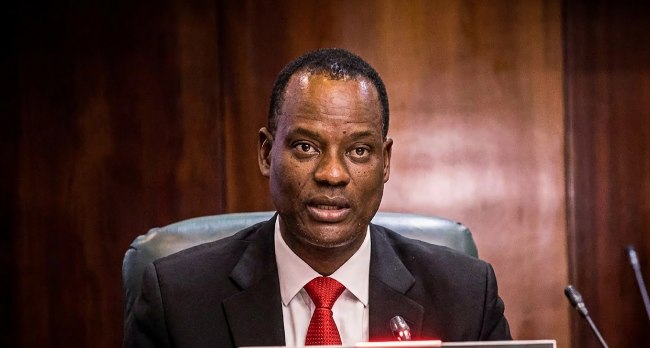
Minister of Finance and Coordinating Minister of the Economy, Taiwo Oyedele, has cautioned governments against introducing new taxes or increasing existing tax burdens on vulnerable citizens and productive sectors, warning that such measures could deepen economic hardship.
Oyedele spoke on the sidelines of the 2026 annual meetings of the International Monetary Fund (IMF) and World Bank in Bangkok, Thailand, where he presented a communiqué on behalf of the Intergovernmental Group of Twenty-Four (G24), which he chairs.
“This is the wrong time to impose new taxes or increase the burden of tax, particularly on the vulnerable population and productive sectors of the economy,” he said.
Responding to questions on how developing countries could reduce debt-servicing costs without cutting essential public spending,report quoted Oyedele as urging governments to identify waste, find savings and improve revenue collection before placing additional financial pressure on citizens and businesses.
He said borrowing remained necessary to finance economic growth but stressed that governments must ensure that debt supports job creation and inclusive development.
“Borrowing and debt financing is a necessary condition for growth, and every country emerging, developing must be able to apply debt financing in a way that is overall of positive impact, particularly to stimulate job-rich and inclusive growth,” he said.
The minister also called for available public funds to be prioritised for essential services, including healthcare and education, while private capital could help finance other areas of investment.
On the choice between taxation and borrowing, Oyedele said both options carried consequences and should be considered in the context of their impact on household welfare.
“If you collect taxes, you raise the money now, and that itself has a lot of trade-offs. What taxes are you collecting? You collect taxes from the most vulnerable, and this will deprive them of money to provide food, health, education,” he said.
He argued that excessive taxation could leave low-income households with less money for basic needs, while borrowing also carried future obligations.
“Debt is future taxes, so it’s not one or the other. It’s to strike a balance, bearing in mind ultimately that the essence of tax and of debts is to cater for the people,” Oyedele said.in the report.
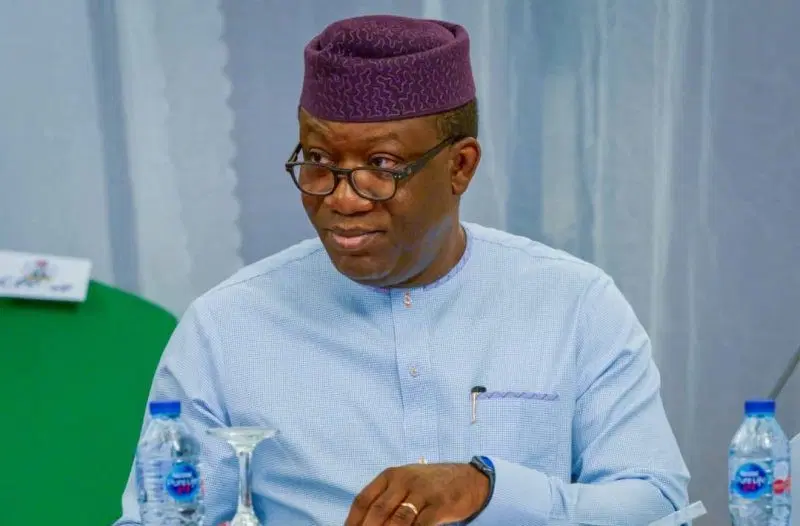
Former Governor of Ekiti State and ex-Minister of Mines and Steel Development, Dr Kayode Fayemi, has warned the United States against slipping into isolationism in its engagement with Africa, insisting that Nigeria remains a must-have strategic partner in the evolving global order.
Fayemi maintained this position in Lagos while speaking as a panelist at the Nigeria Moment, a Nigeria–United States Strategic Dialogue organised by the American Business Council in collaboration with the Heritage Foundation.
In his presentation, which focused on why Nigeria is a must-have partner in the changing world order, Fayemi,former chairman of the Nigeria Governors’ Forum (NGF) stressed the need for a more holistic relationship between both countries grounded in transparency, mutual benefit and shared prosperity.
He insisted that Nigeria must be treated as a strategic partner in the emerging world order.
“While welcoming the growing American interest in Nigeria’s vast mineral endowment, Fayemi warned that the partnership must go beyond resource extraction.
“Nigeria must be engaged as a strategic actor and a co-creator in shaping the future of global energy and resource governance, rather than as a testing ground for experiments. A partnership built on mutual respect, shared interests and long-term cooperation offers the strongest foundation for an enduring relationship between Nigeria and the United States,” Fayemi said.
Describing the engagement as a pleasure, Fayemi said the dialogue brought together a distinguished group of policymakers, business leaders and strategic thinkers to reflect on the future of Nigeria-US relations.
He commended the convener of the dialogue, Mr Ayo Otuyalo,for an excellent convening and for bringing together such high-level participants for the important strategic conversation.
The conference featured Governor Babajide Sanwo-Olu of Lagos State as keynote speaker, alongside senior representatives of the Federal Government, including the Minister of Industry, Trade and Investment, Dr Jumoke Oduwole; Minister of Power,
Also st the event were : Engr Joseph Tegbe; Minister of Solid Minerals Development, Mr Dele Alake, represented by Engr Simon Nkom; and the Head of the Nigerian Upstream Petroleum Regulatory Commission (NUPRC), Mrs Oritsemeyinwa Eyesan among others.

Moove, the global mobility company founded in Lagos, has announced plans to end its operations in Nigeria.
According to report, as part of its exit strategy, the company founded six years ago, said it will transfer full ownership of eligible vehicles “worth approximately N35 billion” to existing customers at no cost.
The affected customers will take full ownership of the vehicles, with no further payments to Moove required from October 1, 2026.
The company said the move forms part of its plans to conclude its Nigerian operations while ensuring that eligible customers retain the vehicles they have been using under its financing model.
Moove was founded by Ladi Delano and Jide Odunsi and has built its business around providing vehicle financing and mobility solutions to drivers.
The company launched in Nigeria six years ago and expanded its operations by financing vehicles for drivers, particularly those operating on ride-hailing platforms.
The report says the transfer of the vehicles means eligible customers will receive assets collectively valued at about N35 billion without making additional payments to the company.
Moove is a global mobility fintech company that has expanded its operations across several markets, providing vehicle financing and other mobility-related services.
This is coming a few weeks after another global mobility company Uber exited Nigerian operations, the report concluded.
-
 Health & Wellness1 year ago
President Tinubu Directs Cut in Dialysis Cost from ₦50,000 to ₦12,000
-
News2 years ago
CBN Debunks Fake Circular on New ₦5,000 and ₦10,000 Notes
-

 International News7 months ago
Indian Police Arrest Nigerian Over ₦290m Drug Haul
-

 Business7 months ago
Dangote Refinery Reduces Petrol Gantry Price To ₦1,200 Per Litre
-
 Business7 months ago
After Plea Bargain, Court Discharges Stella Oduah of ₦2.5bn Fraud
-
Business2 years ago
Dangote; We Did Not Fix ₦600/Litre Petrol Price
-
 Trending News1 year ago
NELFUND Disburses ₦86bn To 449,000 Beneficiaries
-
 Opinion2 years ago
Championing the People’s Voice: Obasa’s Dedication to Grassroots Representation By Dave Agboola⁰