
International News
Trump May Visit Middle East, Says Gaza Deal ‘Very Close’


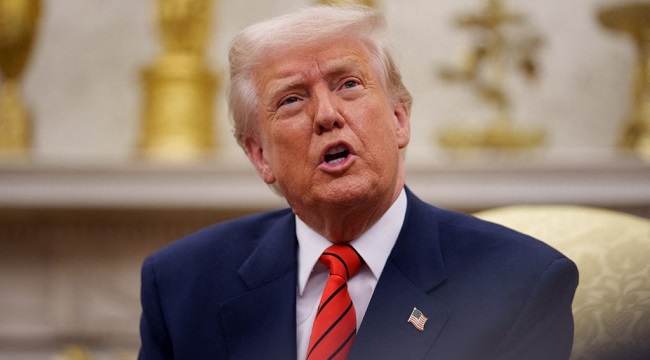
US President Donald Trump said Wednesday he may travel to the Middle East later this week, as negotiators in Egypt reported “encouraging” progress toward a deal to end the Gaza war.
Trump, whose 20-point peace proposal forms the basis of the talks in the resort town of Sharm El-Sheikh, said a peace deal between Israel and the Palestinian Islamist movement Hamas is “very close”.
“Negotiations are going along very well,” Trump told reporters at the White House.
“I may go there sometime toward the end of the week, maybe on Sunday,” he said, adding that he was “most likely” to turn up in Egypt but would also consider going to war-torn Gaza.
“‘Peace for the Middle East,’ that’s a beautiful phrase, and we hope it’s going to come true.”
Egyptian President Abdel Fattah al-Sisi — who has invited Trump to travel to Egypt if a deal is reached — said signs from the talks were “encouraging”, while Hamas, too, expressed “optimism” over the indirect discussions with its foe Israel.
Both warring sides have responded positively to Trump’s plan, which calls for a ceasefire, the release of all the hostages held in Gaza, Hamas’s disarmament and a gradual Israeli withdrawal from the territory.
Al-Qahera News, which is close to Egypt’s intelligence services, reported that the evening sessions for Wednesday’s talks had begun.
Egyptian state-linked media earlier aired footage of Trump’s son-in-law Jared Kushner and Middle East envoy Steve Witkoff pulling up to the talks.
‘Optimism prevails’
As night fell in the coastal area of Al-Mawasi in southern Gaza, an AFP contributor described an atmosphere of anticipation, with joyful chants of “Allahu akbar” (God is the greatest) and some celebratory gunfire into the air.
“We want the war to end as soon as possible,” said 50-year-old Mohammed Zamlot, who had been displaced from northern Gaza.
“We’re closely following every bit of news about the negotiations and the ceasefire.”
Senior Hamas official Taher al-Nunu told AFP from Sharm El-Sheikh that “mediators are making great efforts to remove any obstacles to the implementation of the ceasefire, and a spirit of optimism prevails”.
The militant group submitted a list of Palestinian prisoners it wants released from Israeli jails in the first phase of the truce, “in accordance with the agreed-upon criteria and numbers”, Nunu added.
In exchange, Hamas is set to free the remaining 47 hostages, both alive and dead, who were seized in its October 7, 2023 attack on Israel, which sparked the war.
Qatari Prime Minister Sheikh Mohammed bin Abdulrahman Al Thani and Turkish intelligence chief Ibrahim Kalin were also expected at the talks on Wednesday, while Hamas said it would be joined by delegations from Islamic Jihad — which has also held some of the hostages in Gaza — as well as the Popular Front for the Liberation of Palestine.
The negotiations were taking place under the shadow of the second anniversary of the 2023 Hamas attack, which resulted in the deaths of 1,219 people, mostly civilians, according to an AFP tally based on official Israeli figures.
Militants also took 251 people hostage into Gaza, where 47 remain, including 25 the Israeli military says are dead.
Israel’s military campaign in Gaza has killed at least 67,183 people, according to the health ministry in the Hamas-run territory, figures the United Nations considers credible.
The data does not distinguish between civilians and combatants but indicates that over half of the dead are women and children.
The territory’s civil defence agency, a rescue force operating under Hamas authority, said the bombardment of Gaza had not stopped.
An AFP journalist in Israel near the Gaza border reported hearing multiple explosions in the morning.
Protests, prisoners
Global pressure to end the war has escalated, with much of Gaza flattened, a UN-declared famine unfolding and Israeli hostage families still longing for their loved ones’ return.
In Israel, people marked the second anniversary of the October 7 attack with music, tears and speeches.
In Gaza, meanwhile, people were desperate for an end to a war that has upended their lives, interrupted their children’s education, and left many families scarred by loss and grief.
A UN probe last month accused Israel of genocide in Gaza, while rights groups have accused Hamas of committing war crimes and crimes against humanity during the October 7 attack. Both sides reject the allegations.
Key to the negotiations will be the names of the Palestinian prisoners Hamas will push for.
According to Egyptian state-linked media, high-profile inmate Marwan Barghouti — from Hamas’s rival, the Fatah movement — is among those the group wants to see released.
He has been imprisoned since 2002, and was sentenced to life in 2004 on murder charges.
Regarded as a terrorist by Israel, he often tops opinion polls of popular Palestinian leaders and is sometimes described by his supporters as the “Palestinian Mandela”.
Hamas’s top negotiator, Khalil al-Hayya, also said the Islamist group wants “guarantees from President Trump and the sponsor countries that the war will end once and for all”.
A Palestinian source close to the Hamas negotiating team said Tuesday’s session included Hamas discussing “the initial maps presented by the Israeli side regarding the withdrawal of troops as well as the mechanism and timetable for the hostage-prisoner exchange”.
“Our final negotiation, as you know, is with Hamas, and it seems to be going well,” Trump said.

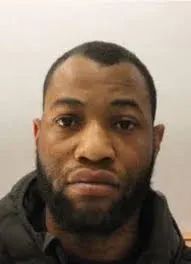
A Nigerian man and registered sex offender, Babatunde Odutola, has been sentenced to prison in the UK after exposing himself and masturbating in front of a woman on a train heading to Manchester.
Odutola, 36, who has no fixed address, was sentenced to 44 weeks in prison at Manchester Magistrates’ Court on Monday, September 14, after pleading guilty to outraging public decency and violating a suspended sentence order.
The incident took place around 7 p.m. on Friday, September 11, on a train traveling through Cheshire towards Manchester Piccadilly railway station.
According to the British Transport Police, Odutola approached a woman on the train, looked her up and down, and became aggressive when she refused to engage with him.
He then exposed himself while sitting in a wheelchair and began masturbating while staring at the woman and telling her to “come over.”
A fellow passenger intervened and helped escort the distressed woman from the carriage. Police reports indicate that CCTV footage showed Odutola continuing to masturbate as other passengers walked through the carriage.
British Transport Police officers arrested him after the train arrived at Manchester Piccadilly. He was prosecuted and jailed within 72 hours of the incident.
Detective Constable Leonidas Christoforou of the British Transport Police stated that Odutola’s behavior was “terrifying” for the victim, whom he allegedly targeted while she was traveling alone.
The National Hajj Commission of Nigeria (NAHCON) has announced that the Kingdom of Saudi Arabia has declined Nigeria’s request for an upward review of its 2027 Hajj allocation, leaving the country’s quota unchanged despite growing demand from intending pilgrims nationwide.
The Commission disclosed that it had formally engaged the Saudi Ministry of Hajj and Umrah, seeking additional pilgrimage slots to accommodate the increasing number of Nigerian Muslims desirous of undertaking the sacred journey and to address appeals from several state pilgrims’ welfare boards for enhanced allocations.
However, Saudi authorities communicated their inability to grant additional slots, citing capacity limitations, structural constraints within the holy sites, and the Kingdom’s policy of strict adherence to approved country quotas under the current operational framework.
Consequently, Nigeria’s allocation for the 2027 Hajj exercise remains fixed at 35,000 slots for government pilgrims and 15,000 slots for licensed tour operators, bringing the country’s total approved allocation to 50,000 pilgrims.
Commenting on the development, the Chairman and Chief Executive Officer of NAHCON, Ambassador Ismail Abba Yusuf, said the Commission fully understands the disappointment the decision may cause many aspiring pilgrims and state pilgrim boards that had hoped for additional allocations.
According to him, the Commission explored all available diplomatic and operational channels in pursuit of an increased quota but respects the final decision of the Saudi authorities.
“We appreciate the deep spiritual desire of many Nigerian Muslims to perform Hajj and understand the expectations of states and stakeholders seeking additional slots. While every effort was made to secure an upward review, the Saudi authorities have communicated their final position based on operational realities and capacity considerations,” Ambassador Yusuf stated.
The NAHCON Chairman urged state pilgrims’ welfare boards, agencies and licensed tour operators to make judicious and transparent use of their approved allocations while ensuring strict compliance with all timelines established by the Commission and the Saudi Nusuk platform.
He emphasized that the deadline for uploading the data of all prospective pilgrims for the 2027 Hajj exercise remains September 26, 2026, warning that no extensions would be granted under any circumstance.
“Kindly note that the deadline for uploading prospective pilgrims’ data remains September 26, 2026. We urge all partners, state pilgrim boards, tour operators and representatives to ensure that all required information is submitted before this date, as no extensions will be granted,” he said.
Ambassador Yusuf further advised intending pilgrims who may be unable to secure a slot under the approved 2027 allocation not to lose hope, revealing that preparations for the subsequent pilgrimage season have already commenced.
“Individuals who were unable to secure a slot for the upcoming Hajj are encouraged to register for the 2028 Hajj. The Commission has officially opened the registration portal for this period, and applications are now being accepted,” he added.
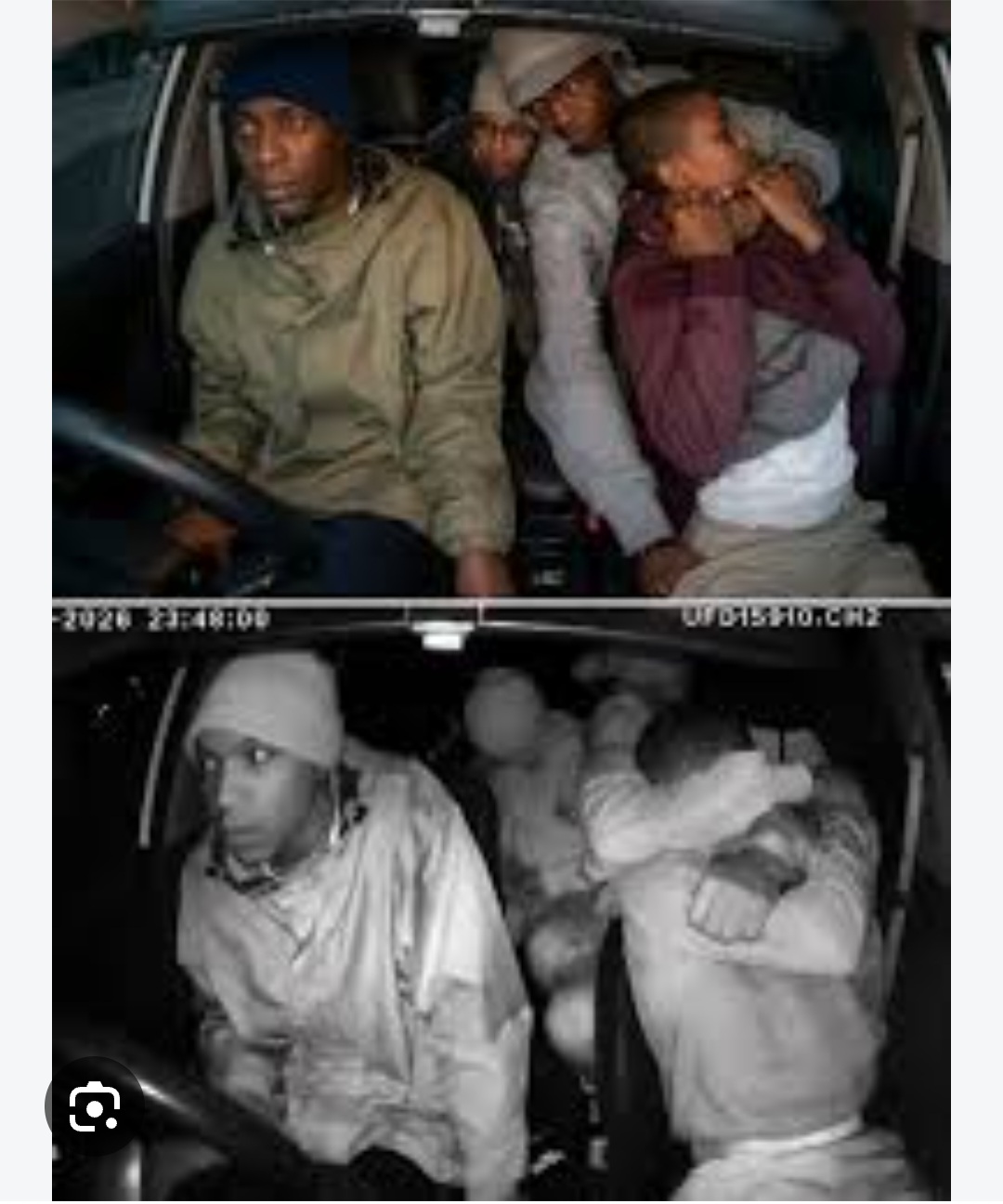
South African police have arrested five suspects after rescuing a 25-year-old e-hailing driver who was allegedly kidnapped, raped and held for ransom in Cape Town.
The South African Police Service (SAPS) said in a statement on Sunday that Steenberg police rescued the driver after he was allegedly raped by two female suspects and held at ransom by the group.
Police were alerted by the victim’s brother after the suspects contacted him and demanded R4,000 in cash for the driver’s release.
According to SAPS, the police used the victim’s vehicle tracker to locate him at Southampton Road in Heathfield, where he was rescued.
“Steenberg police rescued a 25-year-old e-hailing driver after he was raped and held at ransom by two female suspects and three males yesterday,” the police said.
The victim had reportedly met one of the female suspects the previous week through his e-hailing business.
According to police, the two exchanged telephone numbers and communicated throughout the week before arranging to meet.
“When he went to meet her, he was kidnapped by the suspects and the females raped him,” SAPS said.
Police subsequently arrested the two female suspects, aged 23 and 34, as well as three male suspects aged 16, 42 and 48.
The five suspects are expected to appear before the Wynberg Magistrate’s Court on Monday, September 14, 2026.
SAPS said they would face charges relating to the alleged kidnapping and rape.
-
 Health & Wellness1 year ago
President Tinubu Directs Cut in Dialysis Cost from ₦50,000 to ₦12,000
-
 News1 year ago
PICTURE: In Lagos Couple Sentenced to 22½ Years for Cannabis Trafficking
-
 Business6 months ago
Dangote Refinery Reduces Petrol Gantry Price To ₦1,200 Per Litre
-
Business2 years ago
Dangote; We Did Not Fix ₦600/Litre Petrol Price
-
 International News6 months ago
Indian Police Arrest Nigerian Over ₦290m Drug Haul
-
 Business2 years ago
Heritage Bank Customers’ Path to Securing ₦5m Insured Funds: A Step-By-Step Guide by NDIC”
-
 Trending News1 year ago
NELFUND Disburses ₦86bn To 449,000 Beneficiaries
-
 Business6 months ago
After Plea Bargain, Court Discharges Stella Oduah of ₦2.5bn Fraud