
News
Oyo Abduction: Senate Donates N50m To Families Of Slain Teachers, Soldiers

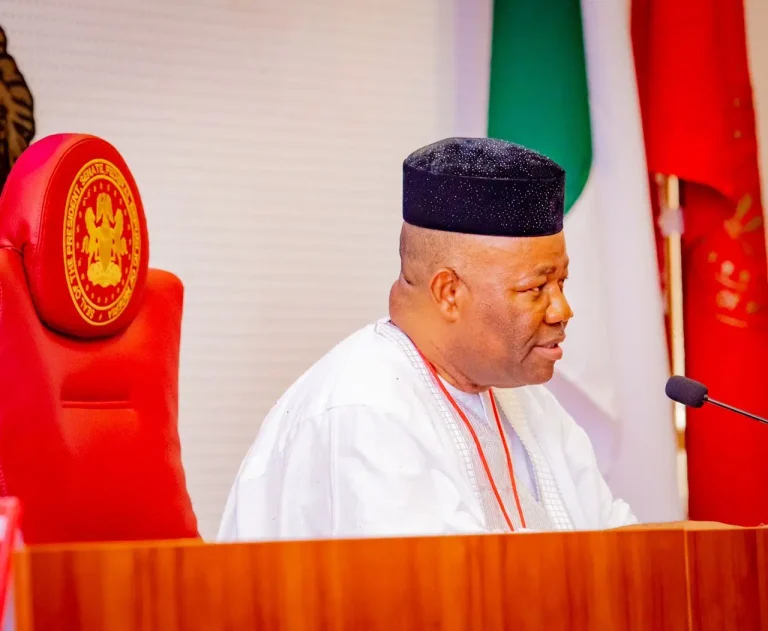
The Nigerian Senate has approved a donation of N50 million to the families of five individuals who lost their lives in the abduction of pupils and teachers from schools in the Oriire local government area of Oyo State.
Senate President Godswill Akpabio announced the donation during plenary on Wednesday, describing their deaths as a painful sacrifice in the nation’s fight against insecurity.
Akpabio lauded the Nigerian Armed Forces and other security agencies for the successful rescue of the abducted victims after nearly two months in captivity.
According to him, N10 million would be given to each of the families of the two teachers murdered by the abductors and the three soldiers who died during the rescue operation.
Akpabio stated that the gesture was aimed at providing some support to the bereaved families and recognising the sacrifices made by the deceased in the course of the tragic incident.





Three boat drivers desperate to leave Nigeria in search of better economic opportunities in Germany ended inside the cramped propeller compartment of a merchant vessel, where they were intercepted by the Nigerian Navy.
The three suspects, Isaiah Oyetayo, 30; Goddey Ajinde Samson, 26; and Popoola Felix, 28, were arrested after allegedly sneaking aboard the MV Maersk Calabar at Apapa Port and hiding inside its propeller compartment.
Report says The Nigerian Navy Ship (NNS) Beecroft on Wednesday, handed them over to the Nigeria Immigration Service (NIS) for further investigation.
The suspects reportedly used a canoe to gain access to the vessel while it was at the port before concealing themselves in the propeller compartment. Their presence was discovered after the ship got underway, prompting the intervention of NNS Beecroft.
According to the Navy, the suspects were intercepted following a tip-off from the Western Regional Control Centre. The ship’s Quick Reaction Team stationed at Tarkwa Bay moved in, intercepted the vessel and safely extracted the men from the compartment.
They were subsequently taken to NNS Beecroft for preliminary investigation and profiling before being handed over to the NIS.
For Popoola, a boat driver and father of four, the decision to risk his life aboard a moving merchant vessel was driven by what he described as the struggle to survive in Nigeria.
He said he was heading to Germany in search of better economic opportunities, explaining that the rising cost of living had made it increasingly difficult to provide for his family.
According to him, his desperation pushed him to consider unconventional means of leaving the country, including using a paddle boat to gain access to the merchant vessel.
Goddey, also a boat driver and married, said he took the risk because he hoped to secure a better future for himself and his family.
He said the desire for improved living conditions persuaded him to embark on the dangerous journey, despite the risks involved in hiding aboard a vessel at sea.
Oyetayo, another boat driver, similarly said his decision was driven by the search for a better life and greater economic opportunities abroad.
The Navy said the incident underscored the dangers associated with unauthorised access to seagoing vessels, warning that such acts could endanger not only those attempting illegal migration but also vessels, crews and other maritime users.
The handover, carried out on behalf of the Commander, NNS Beecroft, Commodore Aiwuyor Adams-Aliu, by the Executive Officer, Captain Olanrewaju Olubunmi, also highlighted continued collaboration among security agencies in tackling illegal migration and strengthening maritime security.
The Navy urged parents, guardians and other authority figures to discourage youths from undertaking dangerous journeys by sea and to sensitise them to the potentially fatal consequences.
It warned that the risks posed by such activities could extend beyond individual migrants to maritime safety and security across the West African sub-region.
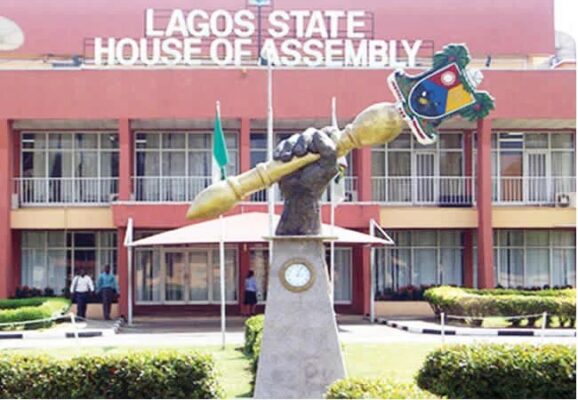
Hard times await street beggars and urchins in Lagos following plan by the Lagos government to criminalise their activities, with proposed sanctions, including fines of up to N200,000 and imprisonment of up to two years.
A bill to the effect is presently before the Lagos State House of Assembly and it is expected to be passed into law.
The proposed legislation, however, combines the planned crackdown with rehabilitation and welfare programmes aimed at addressing the social and economic conditions that drive people, particularly children and vulnerable youths, to the streets.
The bill, titled the Street Begging and Street Urchins (Prohibition, Prevention and Rehabilitation) Law of Lagos State 2026, was presented to legal practitioners, civil society organisations and members of the public at a public hearing held on Tuesday at the Lateef Jakande Auditorium, Alausa, Ikeja.
The public hearing, chaired by the chairman of the House Committee on Youth, Sports and Social Development, Abiodun Orekoya, is part of the legislative process before the bill proceeds to further consideration by the House.
The proposed law seeks to prohibit street begging and activities associated with street urchins in public places, including motor parks, traffic intersections, pedestrian bridges and open markets.
Orekoya said the legislation was designed to promote public order, safety and environmental sanitation, while also strengthening child protection measures.
Under the proposed law, activities such as loitering, sleeping, assembling or erecting temporary structures for the purpose of begging would constitute offences.
People who engage in, procure, aid or abet begging would also be liable to prosecution.
The bill specifically targets parents and guardians who send children onto the streets to solicit alms, with such actions potentially attracting prosecution under the proposed law and existing child-rights legislation.
The proposed sanctions are structured in three stages.
A first-time offender may receive a formal warning and be referred to a state-run rehabilitation centre. A subsequent violation could attract a fine of up to N200,000, a non-custodial sentence of not more than three months, or both.
For more serious or repeated offences, the bill proposes imprisonment of up to two years upon conviction by a Lagos State High Court or Magistrate Court.
The legislation also proposes giving the Environmental Sanitation Corps Agency broad enforcement powers, including the arrest of suspected offenders without a warrant and the seizure of property connected to the alleged offence.
Enforcement officers would be required to profile those arrested before transferring them to the Nigeria Police Force or appropriate local neighbourhood security units.
However, the proposed enforcement powers have raised concerns among some participants at the hearing, particularly over the possibility of arbitrary arrests and the treatment of vulnerable people during enforcement operations.
The bill attempts to address such concerns by expressly prohibiting enforcement officers from subjecting detainees to torture, inhuman or degrading treatment, or unlawful detention, in line with the fundamental rights provisions of the Nigerian Constitution.
Beyond enforcement, the proposed legislation places emphasis on rehabilitation.
It mandates the Ministry of Youth and Social Development to establish dedicated Rehabilitation and Welfare Centres where people removed from the streets would receive temporary accommodation, basic literacy education, psychological counselling and vocational and life-skills training.
The stated objective is to help beneficiaries acquire skills and support needed for eventual reintegration into society rather than simply removing them from public spaces.
At the public hearing, however, human rights advocates and legal scholars urged caution, particularly regarding warrantless arrests and the broad enforcement powers proposed under the bill.
They also raised questions about how the legislation would balance the need to regulate public spaces with the rights and dignity of people living in vulnerable circumstances.
Deputy Speaker of the House, Mojisola Lasbat Meranda, said the views gathered from members of the public and stakeholders would be considered before the bill is finalised.
She said the feedback would help shape the legislation before it proceeds to third reading and, if passed by the Assembly, is presented to the Lagos State Governor for assent.
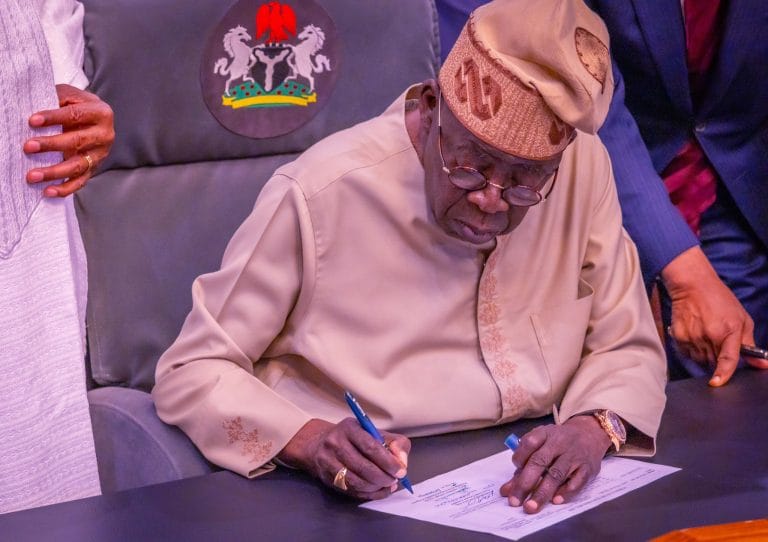
President Bola Ahmed Tinubu has declared the eradication of child labour a national development priority, saying the menace threatens education, poverty reduction, economic growth, food security, human capital development and national security.
The President stated this on Wednesday in Abuja at the National Dialogue on the implementation of Nigeria’s National Child Labour Policy and National Action Plan, 2026–2030. He also launched the 2024 National Child Labour Survey Report.
Tinubu, who was represented by the Secretary to the Government of the Federation, Senator George Akume, said the Federal Government would intensify efforts to address the conditions forcing children into exploitative labour.
“Every nation is judged by how well it protects its children. A child who is forced into labour instead of attending school loses more than an education. That child loses opportunities, confidence, health and the chance to fully contribute to national development,” he said.
“For this reason, the Federal Government considers the elimination of child labour not merely as a labour issue, but as a national development priority. It is linked to education, social protection, economic growth, poverty reduction, food security, human capital development and national security.”
He identified education as a major safeguard against child labour, noting that his administration was pursuing reforms addressing out-of-school children, education data, teacher development and skills acquisition.
Tinubu also said the Renewed Hope National Home-Grown School Feeding Programme would support school attendance while reducing hunger among children from vulnerable households.
He added that social protection initiatives, including the NG-CARES Additional Financing Programme and the Human Capital Opportunities for Prosperity and Equity Programme, were being implemented to improve household resilience and help parents earn decent livelihoods.
-
 Health & Wellness1 year ago
President Tinubu Directs Cut in Dialysis Cost from ₦50,000 to ₦12,000
-
 News1 year ago
PICTURE: In Lagos Couple Sentenced to 22½ Years for Cannabis Trafficking
-
 Business6 months ago
Dangote Refinery Reduces Petrol Gantry Price To ₦1,200 Per Litre
-
 Trending News1 year ago
NELFUND Disburses ₦86bn To 449,000 Beneficiaries
-
 Business2 years ago
Heritage Bank Customers’ Path to Securing ₦5m Insured Funds: A Step-By-Step Guide by NDIC”
-
Business2 years ago
Dangote; We Did Not Fix ₦600/Litre Petrol Price
-
 International News6 months ago
Indian Police Arrest Nigerian Over ₦290m Drug Haul
-

 Business6 months ago
After Plea Bargain, Court Discharges Stella Oduah of ₦2.5bn Fraud