Connect with us

News

Oyo Abduction: Senate Donates N50m To Families Of Slain Teachers, Soldiers

Published

on

Spread the love


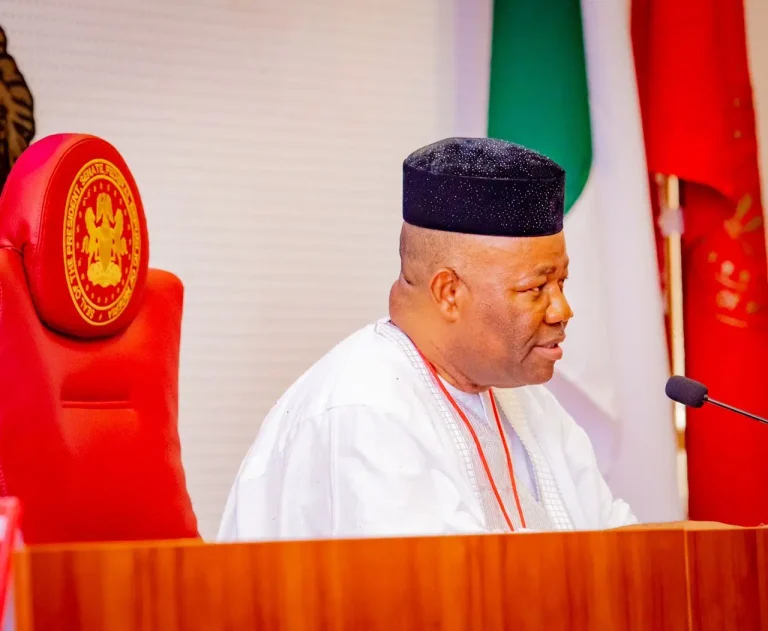
The Nigerian Senate has approved a donation of N50 million to the families of five individuals who lost their lives in the abduction of pupils and teachers from schools in the Oriire local government area of Oyo State.


Senate President Godswill Akpabio announced the donation during plenary on Wednesday, describing their deaths as a painful sacrifice in the nation’s fight against insecurity.

Akpabio lauded the Nigerian Armed Forces and other security agencies for the successful rescue of the abducted victims after nearly two months in captivity.

According to him, N10 million would be given to each of the families of the two teachers murdered by the abductors and the three soldiers who died during the rescue operation.

Akpabio stated that the gesture was aimed at providing some support to the bereaved families and recognising the sacrifices made by the deceased in the course of the tragic incident.

News

ADC Demands Umahi Steps Aside For Independent Probe Over Mary Habila Death

Published

on

Spread the love


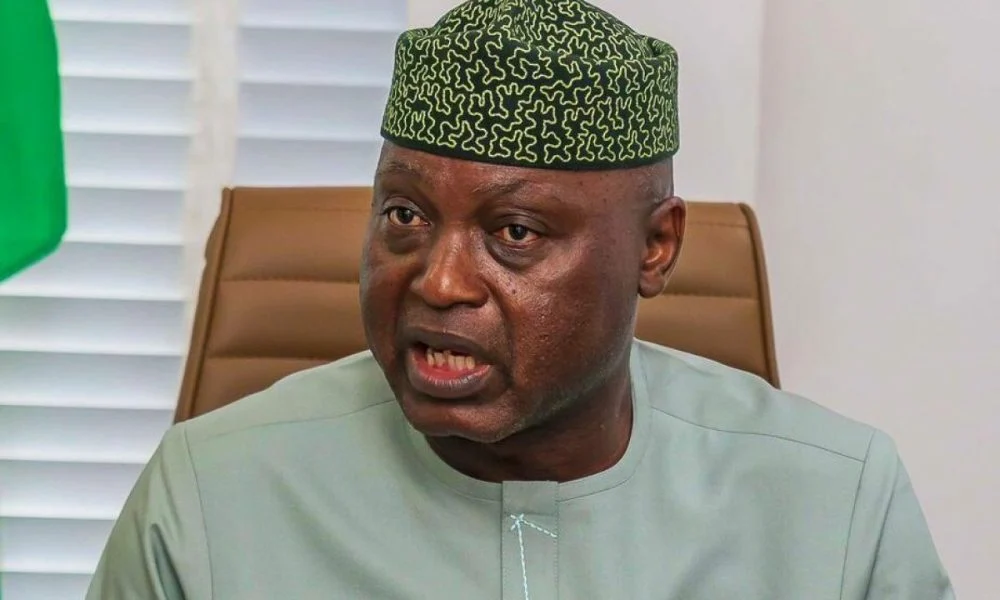
The African Democratic Congress, ADC, has asked the Minister of Works, David Umahi, to step aside pending an independent investigation into the death of Mary Habila, who reportedly died at his residence.


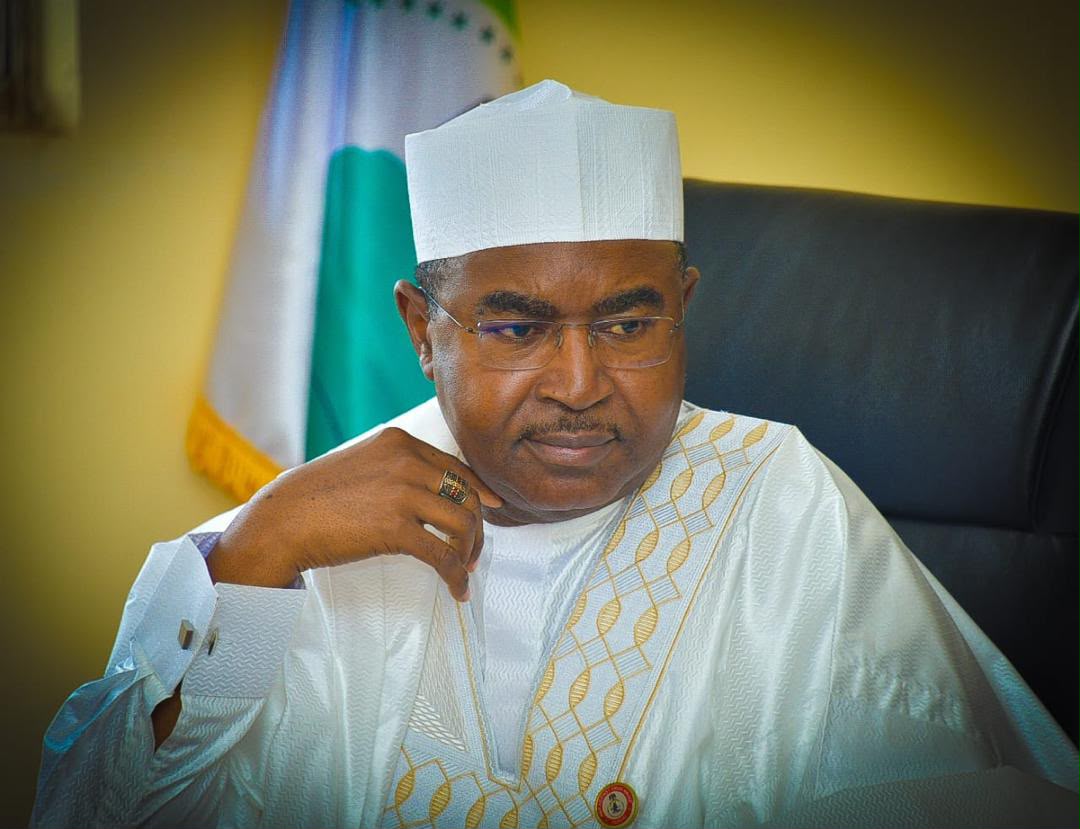
The demand was made on Wednesday in a statement by the party’s National Publicity Secretary, Bolaji Abdullahi.

The party said the circumstances surrounding Habila’s death had raised public concerns that required an independent investigation, insisting that only a transparent process would establish the facts and restore public confidence.

The party also demanded a full autopsy and the public release of the investigation findings, arguing that the investigation should be conducted outside the influence of the All Progressives Congress, APC, Federal Government.

“Every Nigerian life matters. But when a citizen dies in the home of a serving cabinet minister, the matter immediately transcends private tragedy and becomes a question of public accountability. The only acceptable response in a constitutional democracy is a thorough, transparent and independent investigation that commands public confidence,” ADC said.

The opposition party questioned the circumstances surrounding Habila’s presence at the minister’s residence, saying issues relating to her assignment, the events leading to her death and the outcome of ongoing investigations should be clarified through an independent inquiry.

ADC further alleged that the President Bola Tinubu administration had repeatedly shielded senior government officials whenever allegations emerged against them, claiming that public confidence in accountability had continued to decline.

The party also called on Umahi to step aside pending the outcome of the investigation, maintaining that such a move would allow an impartial inquiry into the matter.

“The least that should be expected is that the Minister, Senator David Umahi, should immediately step aside from office pending the conclusion of an independent investigation,” the statement added.

The party expressed condolences to Habila’s family, insisting that a transparent investigation is necessary to establish the circumstances surrounding her death.

Continue Reading

News

Bandits Invade Kogi School, Abduct Principal, NECO Supervisor, Students

Published

on

Spread the love


Suspected bandits have attacked Government Secondary School, Opada-Olowa in Dekina Local Government Area of Kogi State, abducting the school principal, a National Examinations Council (NECO) supervisor, and four students.


The attack reportedly occurred around 2 p.m, on Tuesday, while students were sitting for the examination.

Residents said the heavily armed assailants stormed the community, firing sporadically to scare people before invading the school.

A community leader, Sunday Alkali, said residents were relaxing under trees when the gunmen suddenly appeared.

“The gunmen seemed surprised to see many people outside at that time of the day and initially retreated. They later returned, shooting indiscriminately, forcing everyone to flee for safety,” he said.

According to residents, it was only after the gunfire subsided that they discovered the school had been attacked.

“We initially did not know what the gunmen were after. After the shooting stopped, some of us went to the school and found examination papers scattered across classrooms and the school premises. There were no students or school officials in sight,” another resident said.

The victims were later identified as the school principal, Mr. Nyada Daniel; the NECO supervisor, Mr. Solomon Audu; and four students.

Residents noted that the number of abducted students could have been higher but for the fact that only a limited number of candidates were writing Literature in English at the time, unlike core subjects such as English Language and Mathematics, which attract larger attendance.

The kidnappers were also said to have contacted some relatives of the victims on Tuesday evening, demanding ransom for their release.

“At least four families have received calls from the abductors demanding huge sums of money for the victims’ freedom,” Alkali alleged.

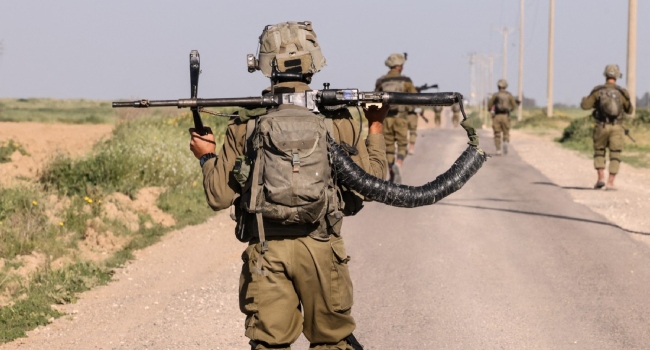
Following the incident, soldiers, police officers, local vigilantes and hunters were mobilised to the area to track the abductors and rescue the victims.

“As I speak with you, soldiers, policemen, vigilantes and hunters are combing the surrounding forests in search of the kidnappers,” a resident, who requested anonymity, said.

Confirming the incident, the Kogi State Police Command said the attackers abducted the school principal, a NECO ad hoc staff member and four students while the examination was in progress.

The Police Public Relations Officer, ASP Saliu Oyiza Afusat, said a combined team of security agencies immediately launched a rescue operation.

“A combined team of the Police and other security agencies immediately launched a search-and-rescue operation and is currently on the trail of the assailants.

“So far, one of the abducted students has been rescued, while efforts are ongoing to secure the safe rescue of the remaining victims and apprehend the perpetrators.

“The Commissioner of Police, Kogi State Command, CP Naziru Bello Kankarofi, the Brigade Commander and the State Security Adviser to the Governor are currently en route to the scene for an on-the-spot assessment,” she said.

Afusat added that the command would issue a more detailed statement as additional verified information becomes available.

Meanwhile, residents linked the latest attack to the worsening security situation in the area, recalling that a farmer was killed on his farm a few weeks ago.

The incident reportedly prompted the community to ask herders to leave the area amid rising tensions.

Continue Reading

News

Fear Of Abuse: FG Insert Control Clauses In State Police Bill

Published

on

Spread the love


The Federal Government has expanded the circumstances under which it can intervene in the operations of state police forces in the Executive Bill on state policing transmitted to the National Assembly by President Bola Ahmed Tinubu.


The House of Representatives had earlier passed its own State Police Bill during the ongoing constitutional amendment exercise.

Speaker Tajudeen Abbas announced yesterday that the House would withdraw its version to enable lawmakers consider the Executive Bill which he described as “more robust and comprehensive.”

He spoke at the opening ceremony of the 2026 National Assembly Open Week and the unveiling of the Third-Year Legislative Scorecard of the 10th House of Representatives in Abuja.

Abbas noted that the Executive Bill was produced by a committee inaugurated by President Tinubu and chaired by the Chief of Staff to the President and former Speaker of the House Femi Gbajabiamila.

Deregistration: A/Court reserves judgement on ADC, others’ appeals
Residents laud FCT infrastructural development

He explained that the House would withdraw the bill he passed to give expedited consideration to the new proposal from the executive.

“I am able to share a development that speaks to the seriousness with which this administration regards the safety of Nigerians. His Excellency the president has now transmitted to the National Assembly an Executive version of the State Police Bill, one that is more robust and more comprehensive than the version this House earlier passed.

“The House will therefore recall the version it earlier passed, and accord the Executive Bill the expedited consideration that a matter of this urgency deserves,” the speaker stated.

He assured Nigerians that the proposed legislation would undergo public hearing and scrutiny before passage.

He said safeguards would be incorporated to prevent abuse of state police structures, noting that states would be required to meet strict conditions before establishing their own police services.

Key changes introduced by the executive bill

A comparative analysis of the Executive Bill and an earlier State Police Bill passed by the House of Representatives shows that the Presidency is seeking broader constitutional powers to step into the affairs of state police services, while also introducing stricter safeguards to prevent abuse of such intervention.

The proposed legislation allows the Federal Government to intervene not only when there is a breakdown of law and order beyond the capacity of a state police service or at the request of a governor, but also where there is evidence of widespread human rights violations, partisan policing, ethnic or religious persecution, or threats to national security.

Whereas the House bill provides that the Federal Police shall maintain public security across the federation and within states “to the extent provided for under this Constitution”; the Executive Bill expressly reserves federal policing for national issues.

“The Federal Police Service shall be responsible for federal policing functions, including the enforcement of laws of the Federation, policing of the Federal Capital Territory, Abuja, protection of federal institutions and assets, and policing matters with inter-State, international, organised-crime, terrorism, cybercrime, arms-trafficking, border-security, national-security or other federal dimensions.”

One of the most significant departures is the clear division of responsibilities between the Federal Police Service and State Police Service.

It states that in section 214(5) “The Federal Police Service shall be responsible for federal policing functions, including the enforcement of laws of the Federation, policing of the Federal Capital Territory, Abuja, protection of federal institutions and assets, and policing matters with inter-State, international, organised-crime, terrorism, cybercrime, arms-trafficking, border-security, national-security or other federal dimensions.”

The Executive Bill equally gives state police clearly defined local responsibilities, providing in section 214(6) that:

“A State Police Service shall, within the State for which it is established, be responsible for the enforcement of laws of the State, the maintenance of public safety and public order, the prevention and detection of offences within its policing competence, the protection of life and property.”

The House version contains no such detailed constitutional allocation of policing functions.

Another major difference is the expansion of circumstances under which the Federal Government can intervene in a state’s policing affairs.

The House bill permits intervention only where there is a breakdown of law and order beyond the capacity of the state police, where the governor requests assistance, or where the state police becomes inoperative due to administrative or financial problems, subject to approval of the National Police Council.

The Executive Bill, however, substantially widens those powers.

Beyond security breakdowns and governors’ requests,in section 214(10)(d) allows intervention where there is:

“substantial evidence that the State Police Service is being used for egregious or systematic violation of fundamental rights, partisan or electoral intimidation, ethnic, religious or sectional persecution, or unlawful obstruction of this Constitution…”

It also permits intervention where there is “a substantial threat to national security, the sovereignty or integrity of the Federation, or public safety across State boundaries.”

Unlike the House version, the Executive Bill prescribes elaborate constitutional safeguards for such intervention.

It requires that every intervention be temporary, proportionate and authorised in writing by the President, with notice to the governor, state assembly, National Police Council and National Assembly within 48 hours.

It further provides that no intervention may continue beyond the period prescribed by law without Senate approval, while the legality and duration of every intervention shall remain subject to judicial review.

On operational independence, the Executive Bill expressly bars state police from operating outside their states except where authorised by an Act of the National Assembly.

Section 214(7) state that “A State Police Service shall not exercise police powers outside the State for which it is established except as authorised by an Act of the National Assembly.”

The Executive Bill also contains stronger provisions aimed at preventing political misuse of state police.

While the House bill allows governors to issue lawful directions to Commissioners of Police, subject only to review by the National Police Council where the commissioner considers such directives unlawful, the Executive Bill expressly prohibits governors from issuing operational directives against specific individuals or political groups.

Section 215(7) state that “No direction under this section shall require the arrest, detention, investigation, non-investigation, deployment or use of force against any named person, political party, association or class of persons except in accordance with law.”

It further prohibits directives that would “require a police service to act unlawfully, violate fundamental rights, suppress lawful political activity, discriminate against any person or group, or enforce the law for a partisan, ethnic, religious, sectional or personal purpose.”

The President’s proposal also highlights the security of tenure for police leadership.

Unlike the House bill, which simply prescribes removal procedures, the Executive Bill constitutionally protects both the Inspector-General of Police and state Commissioners of Police from arbitrary removal.

It provides that the Inspector-General in section 215(9) “shall not be suspended or removed except for stated cause, in accordance with a fair hearing on the recommendation of the National Police Council and subject to approval by a resolution supported not less than two-thirds majority of the Senate.”

Similarly, a state Commissioner of Police cannot be removed except for stated cause and with the approval of two-thirds of members of the State House of Assembly.

The Executive Bill equally introduces an entirely new constitutional framework on national policing standards and accountability.

It mandates the National Assembly to prescribe minimum standards covering recruitment, vetting, training, promotions, use of force, firearms, complaints, criminal information systems and public reporting.

Section 216(1) stated that “The National Assembly shall by an Act prescribe national minimum standards applicable to the Federal Police Service and every State Police Service, including standards on recruitment, vetting, training, certification, appointment, promotion, discipline, conduct, use of force, firearms, custody, complaints, criminal information, inter-governmental cooperation, public reporting and accountability.”

The House bill instead introduces a different provision empowering the Federal Government to provide grants and financial assistance to state police.

It states section 216 (a) “The Federal Government shall provide grant or aids to State Police on the recommendation of the National Police Council subject to the approval of the National Assembly.”

Another notable difference concerns the composition of oversight institutions.

The House proposal creates a much broader National Police Council that includes representatives of the Nigeria Union of Journalists, traditional rulers, the Nigerian Labour Congress, Nigerian Bar Association and two representatives of the National Human Rights Commission.

By contrast, the Executive Bill streamlines the council’s membership, removing the NUJ and traditional rulers while reducing National Human Rights Commission representation to one member.

Similarly, the House bill prescribes detailed membership for State Police Service Commissions, including representatives of the NBA, NUJ, National Human Rights Commission, labour unions and traditional rulers.

The Executive Bill instead leaves the composition largely to legislation, providing only that the commission shall comprise a chairman and “such number of other persons, as may be prescribed by an Act of the National Assembly.”

Continue Reading

Trending

Copyright © 2026 TheColumn NG