
Politics
Ekiti Tribunal: Appeal Court Rejects Request To Relocate Sitting

The Court of Appeal has rejected a call by counsel to the Social Democratic Party (SDP) in Ekiti State, Ebenezer Akinbuli, to relocate the venue of the Ekiti State Governorship Election Petition Tribunal to another place over alleged security concerns.
The tribunal had earlier adjourned proceedings from September 16 to September 23 to enable the President of the Court of Appeal consider the petitioners’ request for a change of venue following the alleged assault on SDP counsel.
However, SDP’s counsel, in his absence, served another letter to the court, seeking adjournment of the hearing pending the time that the Court of Appeal would address the application for the relocation of hearing.
During the proceedings, the chairman of the three-man tribunal, Justice Abubakar Kutigi, informed the court that the President of the Court of Appeal, Hon. Justice Monica Dongban-Mensem, had declined to order the transfer of the sitting, adding that the tribunal was properly constituted to continue hearing the petitions.
While counsel to the All Progressives Congress (APC) and the Independent National Electoral Commission (INEC), Kabir Akingbolu and Bunmi Ipinlaiye, denied awareness of the order of the Appeal Court which was served through the secretary of the tribunal, Justice Kutigi further adjourned the case to September 24 for the continuation of the hearing to clear all doubts.
Speaking with journalists after the proceedings, APC counsel, Kabir Akingbolu, said the petitioners had renewed their demand for the relocation of the tribunal from Ado-Ekiti to another venue, stressing that the request for relocation was made in respect of the SDP petition and not the Action Alliance (AA) petition.
The APC counsel also alleged that the petitioners were responsible for seeking the latest adjournment, saying the request was contained in letters filed in respect of the two election petitions.
Akingbolu, however, described the petition challenging Governor Biodun Oyebanji’s victory as unusual, arguing that the margin and voting pattern in the election made the case unprecedented in his view.
He claimed that the governor won across the 16 local government areas and most of the 177 wards in the state, while questioning the basis of a challenge to the election by petitioners whom he said recorded relatively low vote figures.
Akingbolu further alleged that the petitioners were resorting to different tactics to delay the proceedings, including seeking repeated adjournments, while urging them to focus on the substantive issues before the tribunal.
Akingbolu said, “There is confusion, so we need to clarify it. The SDP filed a petition and the AA filed a petition. On the last adjourned day, September 16, a petition was written by counsel to the party, SDP, saying that there was no security and that the venue of the tribunal should be moved to Abuja or elsewhere.
“As it is today, they are secure. They are the ones that sought the adjournment. The court has now adjourned the matter to tomorrow for continuation at the instance of the petitioners because they wrote the petition and a letter of adjournment to that effect on both election petitions.
“It is an unprecedented petition. The success of the governor and the people is unprecedented. The 16 local governments, almost the entire 177 wards, were won by the governor.
“There was no challenge from the people that filed the petition. None of the political parties called up to 200 votes. It has never happened in Nigeria in a governorship election that somebody who has not scored thousands, or even hundreds, will come and file an election petition.
“For me, I don’t think it is proper. We are here because this is litigation. If somebody writes that kind of petition when there is no ground, I think it is an illegal step.”
State Houses of Assembly have begun considering the proposed State Police Bill transmitted to them by the National Assembly, with Osun state approving the proposal while others have either the bill , setting up committees, and several are awaiting formal receipt of the document.
The National Assembly had on September 16 transmitted the bill, titled A Bill for an Act to Alter the Constitution of the Federal Republic of Nigeria, 1999 to Provide for the Establishment of State Police Services; and for Related Matters, to the 36 state legislatures.
The amendment requires the approval of at least two-thirds of state Houses of Assembly.
The state legislatures were requested to consider the bill and communicate their resolutions to the National Assembly.
Although the Constitution does not prescribe a specific timeline, the National Assembly urged them to respond within 30 days.
Report indicate that while some states had commenced consideration, others were preparing to do so when lawmakers reconvene, while a number of assemblies were yet to receive the bill.
The Osun State House of Assembly on Tuesday approved a resolution supporting the creation of state police.
The resolution was adopted during plenary following a motion by the Majority Leader, Babajide Kofoworola, seconded by Tajudeen Adeyemi.
The Speaker, Adewale Egbedun, said the approved amendment should be forwarded to the National Assembly for consideration.
The Ogun State House of Assembly has received the bill and may commence legislative action next Tuesday.
Report quoted a lawmaker representing Odogbolu Constituency, Lukman Adeleye, as saying members received soft and hard copies of the bill on Tuesday and had been asked to study it before reconvening.
The Zamfara State House of Assembly Tuesday commenced consideration of the bill during plenary, presided over by Speaker Bilyaminu Isma’il Moriki.
The Director of Legislative Matters, Yusuf Sabo Tsafe, confirmed the development, expressing confidence that the House would consider and pass the bill.
In Sokoto, the State House of Assembly also began consideration of the proposal, with its First Reading conducted on Tuesday.
The Head of the Assembly’s New Media Unit, Aminu Abdullahi, said copies of the bill would be distributed to lawmakers for detailed study ahead of the Second Reading, when members would make their contributions.
He said it was too early to determine whether the House would approve or reject the proposal, adding that lawmakers were expected to proceed on recess on Thursday the report said.
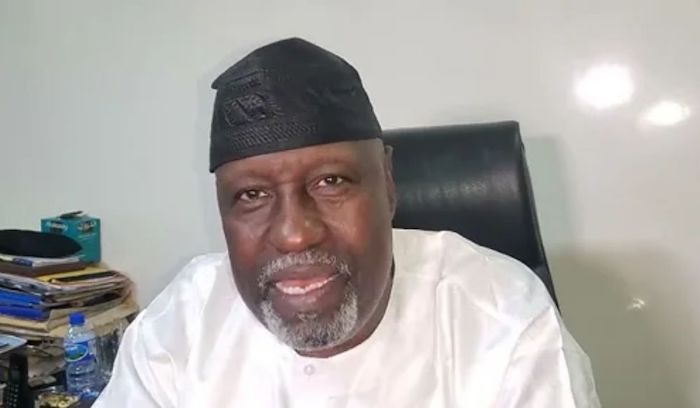
Former Minority Leader of the House of Representatives, Farouq Aliyu, has claimed that he rejected the N250 million offered to him to support the third term agenda of former President Olusegun Obasanjo.
He said the speaker of the House of Representatives at the time, Aminu Masari, also rejected the sum of N400 million to support the bid.
The third term agenda was one of the most controversial issues that characterised the administration of Obasanjo, who was president between 1999 and 2007.
In May 2006, the National Assembly rejected a bill that sought to amend Nigeria’s constitution, which would have allowed Obasanjo run for a third successive term in office.
The former president has repeatedly denied that he sought a third term in office.
Speaking on a podcast at the weekend ,Aliyu insisted that Obasanjo’s third term agenda was real.
According to him, during discussions about the third term agenda, Nuhu Ribadu, who was the chairman of the Economic and Financial Crimes Commission, asked him to come to Abuja for a meeting with Obasanjo.
Aliyu said he initially rejected Ribadu’s request but later accepted to meet with Obasanjo.
The former lawmaker said when he went to Abuja, he discussed the third term agenda and insisted that the move would not be successful.
He added that he was offered N250 million by someone Ribadu asked him to meet with.
Aliyu, however, did not mention the name of the person during the interview.
He added that Masari rejected the sum of N400 million to support the third term bid, while lawmakers were offered a minimum of N50 million to support the agenda.
“Third term agenda was real. In fact, 250 million was given to me. I did not take it,” he said.
“Masari, who was the speaker then, 400 million was offered. He did not take it. Abdul Ningi, the majority leader, 400 million naira was offered to him. He did not take it.
“N50 million was dashed to small fries. They paid minimum of N50 million.”
The former minority leader said late Muhammadu Buhari, former Vice-President Atiku Abubakar, and Secretary to the Government of the Federation, George Akume, played prominent roles in thwarting the bid for a third term.
The Independent National Electoral Commission (INEC) has described Saturday’s bye-elections in Gombe, Kano, Bauchi and Delta states as an opportunity to test its systems and logistics ahead of the 2027 general elections.
The INEC Chairman, Prof. Joash Amupitan, SAN, said the commission would use lessons from the four bye-elections to improve its preparations for the nationwide polls.
Amupitan spoke while monitoring the elections from the commission’s National Situation Room at its headquarters in Abuja on Saturday.
The elections were held in the Gombe/Kwami/Funakaye Federal Constituency of Gombe State, Dawakin Kudu State Constituency of Kano State, Sakwa and Disina State Constituencies of Bauchi State, and Udu State Constituency of Delta State.
In a statement issued by his Chief Press Secretary/Media Adviser, Adedayo Oketola, the INEC chairman said every election provided an opportunity for the commission to assess its readiness.
“These four bye-elections provide indispensable operational lessons for the Commission as we systematically chart our roadmap toward the 2027 General Election,” Amupitan said.
He said the commission would use the exercises to assess its logistics, technology and administrative preparations.
According to him, the commission must not treat bye-elections as routine exercises because they provide important lessons that could strengthen future elections.
Amupitan personally monitored reports from the various locations alongside National Commissioners and senior officials of the commission.
He said some operational challenges identified before the elections were addressed promptly.
The INEC chairman said the National Situation Room was also being used to monitor developments and resolve problems that could affect the smooth conduct of the elections.
“We will continue to improve our processes to achieve greater efficiency and build public confidence in future elections,” Amupitan said.
-
 Health & Wellness1 year ago
President Tinubu Directs Cut in Dialysis Cost from ₦50,000 to ₦12,000
-
 News1 year ago
PICTURE: In Lagos Couple Sentenced to 22½ Years for Cannabis Trafficking
-
 Business2 years ago
Heritage Bank Customers’ Path to Securing ₦5m Insured Funds: A Step-By-Step Guide by NDIC”
-

 Business6 months ago
Dangote Refinery Reduces Petrol Gantry Price To ₦1,200 Per Litre
-
 International News6 months ago
Indian Police Arrest Nigerian Over ₦290m Drug Haul
-
Business2 years ago
Dangote; We Did Not Fix ₦600/Litre Petrol Price
-
 Trending News1 year ago
NELFUND Disburses ₦86bn To 449,000 Beneficiaries
-
 Business6 months ago
After Plea Bargain, Court Discharges Stella Oduah of ₦2.5bn Fraud