
News
Workers Fixes Oct 2nd To Begin Strike Over Fuel Price Hike

Nigerian public servants under the Joint National Public Service Negotiating Council (JNPSNC) have reaffirmed plans to embark on a three-day warning strike from October 2 if the Federal Government fails to address their demands over the rising cost of petrol, wage award and negotiations for a new national minimum wage.
The council, comprising eight public sector unions, gave the Federal Government until September 30 to reduce the price of Premium Motor Spirit (PMS) to ₦500 per litre, approve a wage award and begin negotiations for a new national minimum wage of not less than ₦500,000 from 2027.
The JNPSNC said it had mobilised public servants nationwide for the warning strike if the Federal Government failed to address the issues raised in its letter to President Bola Ahmed Tinubu.
The council had, on September 21, written to Tinubu demanding a reduction in petrol prices, an immediate wage award and the commencement of negotiations for a new national minimum wage, among other measures.
In a statement issued on Tuesday by the National Secretary of the JNPSNC and General Secretary of the Nigeria Civil Service Union, Gbenga Olowoyo, the council said its September 30 deadline remained sacrosanct.
Olowoyo said the concerns of Nigerian workers could no longer be ignored, warning that failure to address the issues would lead to the commencement of the three-day warning strike from Friday, October 2.
He said, “The three critical issues requiring urgent attention are as follows: reduction of fuel price to ₦500 per litre. The Federal Government should take urgent steps to bring down the price of Premium Motor Spirit (PMS) to ₦500 per litre.
“This can be achieved through the provision of an intervention fund to address landing costs and support oil and gas operators.
“It is equally important for the Federal Government to ensure the sale of crude oil to the Dangote Refinery and operators of modular refineries at appropriate terms to facilitate increased domestic refining and help bring down the price of petroleum products.
“The current price of PMS, ranging from ₦1,450 to ₦2,000 and, in some locations outside major communities and cities, as high as ₦2,500 per litre, is unacceptable to Nigerian workers.”
“The council said the high cost of petrol had placed severe pressure on workers, their dependants and the wider population.
“The council maintains that the economic hardship occasioned by the high cost of fuel is placing the survival of Nigerian workers, their dependants and the general populace under severe pressure, making it increasingly difficult for Nigerians to live normal and dignified lives.
On the demand for a wage award, the council said, “The Federal Government should urgently approve a wage award for Nigerian workers to cushion the effects of the prevailing harsh economic conditions being experienced by workers, their dependants, and vulnerable Nigerians.”
It added that such intervention would support public servants to remain productive despite the economic pressures.
“The council believes that urgent action on this demand will further enable public servants to consolidate their loyalty, commitment and productivity within the public service ecosystem,” it said.
The workers also called on the Federal Government to urgently constitute a tripartite committee to begin negotiations for a new national minimum wage ahead of 2027.
“The Federal Government should urgently establish a tripartite committee to commence and facilitate negotiations for the new national minimum wage expected to become due in 2027,” the council said.
“The Nigerian workers’ demand for the immediate constitution of the committee is informed by the need to avoid any administrative or procedural delay that could affect the implementation of the new National Minimum Wage once it is eventually negotiated and passed into law by the National Assembly.”
The council said the Federal Government’s response before September 30 would determine whether the planned industrial action would go ahead.
“Consequently, the council states that failure by the Federal Government to take the necessary steps to address these issues on or before 30th September 2026 will leave Nigerian workers with no option but to commence a three-day warning strike, with effect from Friday, 2nd October 2026, to press home their demands,” it said.
The council further urged the President to use his Independence Day address to respond to the issues raised by the workers.
“It is imperative to state clearly that the Independence Day address of the President of the Federal Republic of Nigeria should adequately address these critical issues,” the council said.
It warned that failure to address the demands would deepen dissatisfaction among workers and other Nigerians affected by the economic situation.
“Failure to address the concerns raised, according to the Council, will attract the displeasure of Nigerian workers and their dependants, as well as other vulnerable Nigerians who continue to bear the brunt of the prevailing economic hardship,” it said.
The JNPSNC comprises the Nigerian Civil Service Union; Medical and Health Workers Union; Association of Senior Civil Servants of Nigeria; National Association of Nigerian Nurses and Midwives; Amalgamated Union of Public Corporations, Civil Service Technical and Recreational Employees; Nigeria Union of Public Service, Reportorial, Secretarial, Data Processors and Allied Workers; National Union of Printing, Publishing and Paper Products Workers; and National Union of Agriculture and Allied Employees.
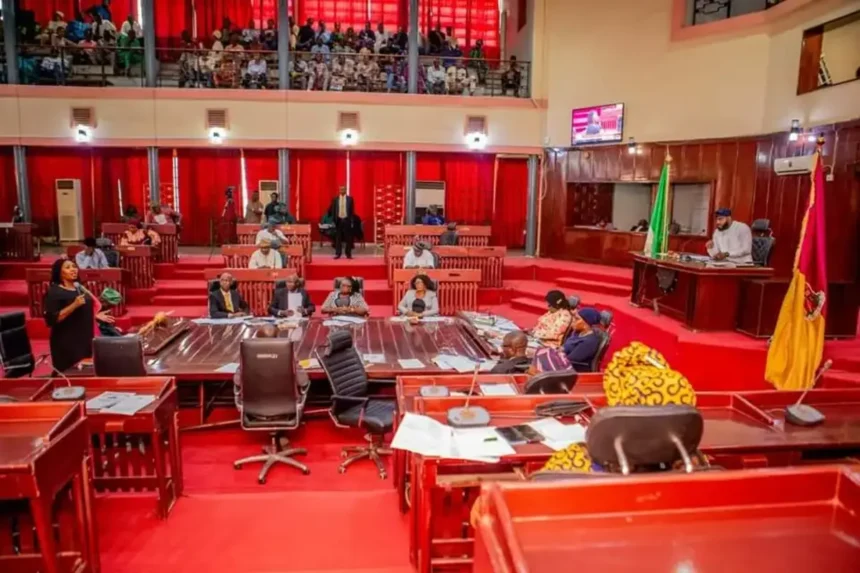
The Oyo State House of Assembly has passed the constitutional amendment bill seeking to establish State Police Services and is set to transmit its resolution to the National Assembly.
The bill was passed for third reading during plenary on Tuesday after the House constituted itself into a Committee of the Whole and considered the provisions of the bill clause by clause.
The sitting was presided over by the Speaker of the House, Rt. Hon. Adebo Ogundoyin.
The development followed the transmission of the Constitution of the Federal Republic of Nigeria, 1999 (Sixth Alteration) Bill, 2026, by the National Assembly to the 36 state Houses of Assembly for consideration and approval. NigeriaInvestment Guide
The bill seeks to provide a constitutional framework for the establishment of State Police Services.
The National Assembly had asked the state legislatures to consider the bill in accordance with their respective legislative procedures and communicate their resolutions after completing their deliberations.
Under the constitutional amendment process, the proposed alteration requires approval by at least two-thirds of the 36 state Houses of Assembly before further steps can be taken at the federal level.
With the passage of the bill, the Oyo State House of Assembly will communicate its resolution to the National Assembly as part of the ongoing constitutional alteration process.

Member of the collective leadership of Morocco’s Authenticity and Modernity Party (PAM), Fatima Ezzahra El Mansouri, who is also Morocco’s Minister of National Planning, Urban Planning, Housing and Urban Policy and Mayor of Marrakesh has been named the country’s Prime Minister. She becomes the first female to be so named.
El Mansouri was elected as Morocco’s prime minister after her party won the most seats in the parliamentary elections held in the North African country.
King Mohammed VI named El Mansouri as the country’s prime minister on Tuesday and tasked her with forming a new government, the Royal Palace said in a statement.
Morocco is a constitutional monarchy, but the king retains significant powers. Under the constitution, the king appoints the head of government from the political party that wins the most seats in the house of representatives.
The 50-year-old attorney was previously the mayor of Marrakech before her appointment as prime minister. She is the second woman to serve as prime minister in the Arab world, after Tunisia’s Najla Bouden.
Fouzi Lekjaa, president of the Royal Moroccan Football Federation and a key figure in the king’s aligned Authenticity and Modernity Party (AMP), was El Mansouri’s strongest contender.
El Mansouri’s government will oversee the final stages of a $20-billion push to prepare Morocco for the 2030 World Cup, which the country will co-host with Portugal and Spain.
She will also be tasked with implementing economic policies aimed at addressing widespread youth discontent, an issue highlighted by a mass border rush on the Spanish enclave of Ceuta in July and deadly Gen-Z-led protests last year.
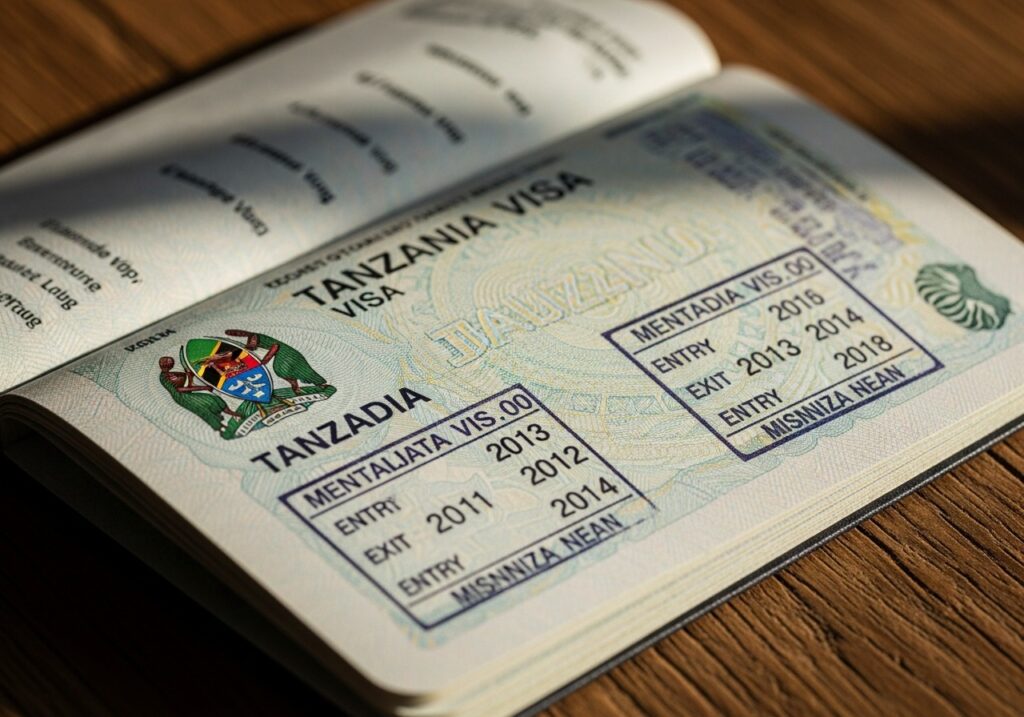
Tanzania has removed Nigerian nationals from its referred visa category, ending the requirement for special clearance before they can obtain a visa.
The Tanzania Immigration Services Department announced the development in a notice dated September 25 and shared on its official X handle on Monday.
The statement signed by Paul Mselle, chief spokesperson of the Tanzania Immigration Services Department, said the decision followed amendments published in government gazette No. 246 of 2026.
“With immediate effect, Nigerian nationals travelling to the United Republic of Tanzania are no longer subject to referred visa restrictions and will follow standard visa application procedures through the official immigration online portal or designated entry points,” the statement reads.
A referred visa is required for nationals of certain countries who need special clearance from Tanzania’s commissioner general of immigration or the commissioner of immigration (Zanzibar) before a visa can be issued.
Applicants in the category are often advised to wait for approval before making travel arrangements, including booking flight tickets or accommodation.
Before the latest change, Nigeria was among the countries whose nationals were subject to the referred visa requirement.
Other countries currently listed under Tanzania’s referred visa category include Afghanistan, Abkhazia, Azerbaijan, Bangladesh, Chad, Djibouti, Ethiopia, Eritrea, Equatorial Guinea, Kazakhstan, Kyrgyzstan, Lebanon, Mali, Mauritania, Niger, Palestine, Senegal, Somalia, Sri Lanka, Somaliland, Sierra Leone, Tajikistan, Turkmenistan and Uzbekistan.
The category also covers stateless persons and individuals with refugee status.
The removal means Nigerians travelling to Tanzania will now follow the country’s standard visa application process without the additional referral clearance.
-
 Health & Wellness1 year ago
President Tinubu Directs Cut in Dialysis Cost from ₦50,000 to ₦12,000
-
 Business6 months ago
Dangote Refinery Reduces Petrol Gantry Price To ₦1,200 Per Litre
-
 News1 year ago
PICTURE: In Lagos Couple Sentenced to 22½ Years for Cannabis Trafficking
-
 Business6 months ago
After Plea Bargain, Court Discharges Stella Oduah of ₦2.5bn Fraud
-

 International News6 months ago
Indian Police Arrest Nigerian Over ₦290m Drug Haul
-
Business2 years ago
Dangote; We Did Not Fix ₦600/Litre Petrol Price
-
 Trending News1 year ago
NELFUND Disburses ₦86bn To 449,000 Beneficiaries
-
 Business2 years ago
Heritage Bank Customers’ Path to Securing ₦5m Insured Funds: A Step-By-Step Guide by NDIC”