
News
Ethiopian Airlines bars Nigerians from bringing ‘Ghana-Must-Go’ luggage


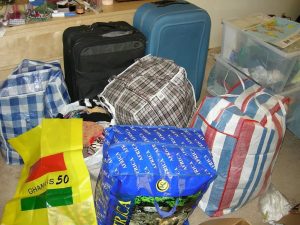 The restriction was disclosed in a letter signed by Henok Gizachew, the airline’s Manager of Airport Services, addressed to the Regional Manager of the Federal Airports Authority Of Nigeria (FAAN).
Ghana-must-go bags are popular sac-like load carriers in Nigeria that come in different sizes and colours and are preferred by many travellers due to their durability and affordability.
The airline noted that the ban should take effect from November 25, 2023 in a letter dated November 23, 2024.
“Please be informed that effective November 25, 2023, the usage of Ghana Must Go to travel on our flight is hereby prohibited,” the letter read.
“The use of Ghana Must Go as a means of packing baggage has cost the airlines huge loss and also damaging the conveyor belt system, not only on out flight but also on other foreign airlines, hence the prohibition.”
However, the airline allowed users of the bag to continue to use them to package their luggage on the condition that they must be well packed in cartons of a hardcover of rectangular size.
Governor Seyi Makinde of Oyo State, the presidential candidate of the Allied Peoples Movement (APM), has gone to court to challenge a N200 million fee the Abia State Government reportedly imposes on presidential candidates who want to display campaign materials in the state.
Makinde and the APM argue that the fee, which is twenty times what the Electoral Act 2026 allows a candidate to spend on billboards in any single state, is a backdoor bid to shut out non-incumbent candidates from public view and make compliance with campaign spending limits impossible.
In suit HC/214/2026 filed at the Abia State High Court, they are challenging Governor Alex Otti, the state Attorney General, the Abia State Signage and Advertisement Agency (ASAA) and the state House of Assembly. Their lawyer is Musibau Adetunbi (SAN).
The plaintiffs say Section 92 of the Electoral Act 2026 caps total spending for a presidential campaign at N10 billion nationwide. They argue that if every state and the FCT charged a similar fee, billboard charges alone would exceed 80 per cent of that limit.
They said they learnt of the fee while preparing to begin their nationwide campaign.
The plaintiffs raised six questions for determination and are asking for eight reliefs. Key among them:
An order setting aside ASAA’s regulations on political campaigns, including the N200m fee or any other amount.
An injunction restraining the defendants and their agents from enforcing the fee and from “removing, defacing, destroying and obstructing” their campaign billboards and outdoor advertisements in Abia.
A declaration that the N200m schedule is inconsistent with federal law, unconstitutional, null and void ab initio, under Item F, Section 15(a) and (f) of the Third Schedule and Sections 1(3) and 4(5) of the Constitution, and Sections 92 and 99 of the Electoral Act 2026.
A declaration that the fee breaches Section 99(2) of the Electoral Act 2026, which bars the use of state apparatus or regulatory bodies to advantage or disadvantage any party or candidate, and undermines the principle of a level playing field.
INEC’s exclusive powers: The plaintiffs contend that under the Constitution and Section 9(1) of the Electoral Act, INEC alone has the power to make rules and regulations on campaigns for the purpose of elections.
State apparatus: They say that by fixing an exorbitant fee, the defendants are using ASAA to “constructively exclude” non-incumbent candidates from public visibility, contrary to Section 99(2).
Right to campaign: Section 99 guarantees candidates an unhindered right to campaign publicly once the statutory period opens, they argue, and the fee violates it.
Limits of state power: They acknowledged that outdoor signage falls under the Residual List and is a state matter, but insisted that states cannot exercise that power in a prohibitive or discriminatory manner that frustrates or overrides an Act of the National Assembly on campaigns.
Supremacy of federal law: Under Sections 1(3) and 4(5) of the Constitution, any state law, directive or regulation inconsistent with the Electoral Act is void to the extent of that inconsistency, they said.
The plaintiffs warned that unless the court intervenes swiftly, Makinde will suffer irreparable harm to his constitutional right to seek public office, and the principle of a level playing field will be badly compromised.
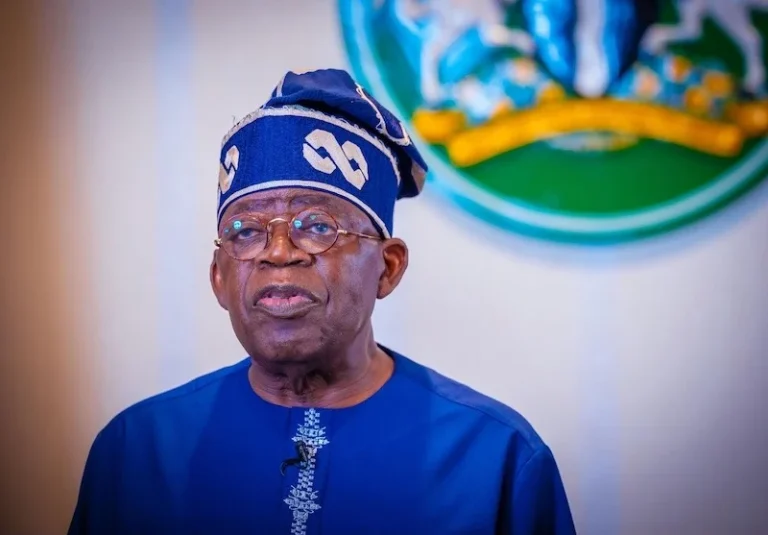
President Bola Ahmed Tinubu will not be physically present at the 81st Session of the United Nations General Assembly, UNGA, in New York, United States.
The development follows an announcement by the Presidency that the President would return to Nigeria after his three-week vacation in Europe.
Stanley Nkwocha, spokesman to Vice President Kashim Shettima, announced the development in a statement on Sunday.
According to the statement, Tinubu had directed the Vice President to lead Nigeria’s delegation to the UNGA.
Tinubu’s absence was also confirmed after a provisional list of speakers showed that Shettima would represent Nigeria at the high-level General Debate.
Tinubu had been listed as the 10th speaker during the morning session on the second day of the high-level General Debate scheduled for Wednesday, September 23.
The 81st session of the United Nations General Assembly began on September 8, 2026, while the high-level week is scheduled to take place from September 22 to 29 in New York City.
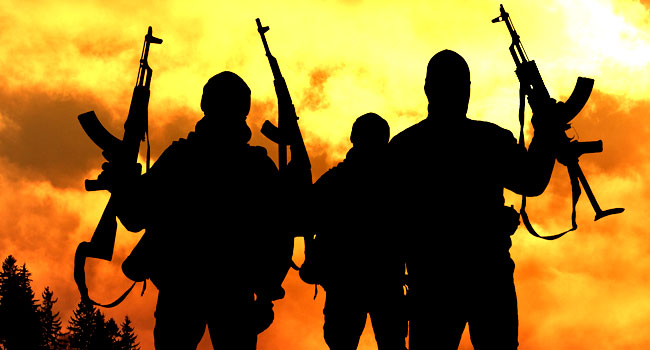
Four suspected illegal miners were found dead after gunmen opened fire on their vehicle while returning from a mining site in Ganna Ropp, Barkin Ladi Local Government Area of Plateau State.
Security analyst Zagazola Makama reported that the incident occurred at about 3:38am on Sunday, September 20, 2026, when troops of Sector 4, Operation Enduring Peace, responded to a report of a shooting involving an Opel vehicle.
“The troops, upon arrival at the scene, confirmed that all four occupants of the vehicle had been shot dead,” Zagazola reported.
The victims were returning from a mining site in the Ganna Ropp area when their vehicle came under attack by unidentified gunmen.
Two of the victims were identified as the driver, Mallam Sadam, and Mr Umar, while the identities of the other two remained unknown.
Personnel of the Keystone Outpost, Ganna Ropp, evacuated the bodies from the scene for further action.
Troops have launched a manhunt for the attackers and are conducting operations in the area to identify and apprehend those responsible.
-
 Health & Wellness1 year ago
President Tinubu Directs Cut in Dialysis Cost from ₦50,000 to ₦12,000
-
 News1 year ago
PICTURE: In Lagos Couple Sentenced to 22½ Years for Cannabis Trafficking
-

 Business6 months ago
Dangote Refinery Reduces Petrol Gantry Price To ₦1,200 Per Litre
-
 Trending News1 year ago
NELFUND Disburses ₦86bn To 449,000 Beneficiaries
-
 Business2 years ago
Heritage Bank Customers’ Path to Securing ₦5m Insured Funds: A Step-By-Step Guide by NDIC”
-
Business2 years ago
Dangote; We Did Not Fix ₦600/Litre Petrol Price
-

 International News6 months ago
Indian Police Arrest Nigerian Over ₦290m Drug Haul
-

 Business6 months ago
After Plea Bargain, Court Discharges Stella Oduah of ₦2.5bn Fraud