The Federal Government has ruled out an immediate ban on conferences and other large public gatherings following Nigeria’s confirmed Ebola case, saying there was no evidence of community transmission.
The patient, who arrived in Nigeria without symptoms and developed illness several days later, was improving, while health authorities monitored 44 contacts identified through investigations at hospitals, domestic settings and other locations she had visited.
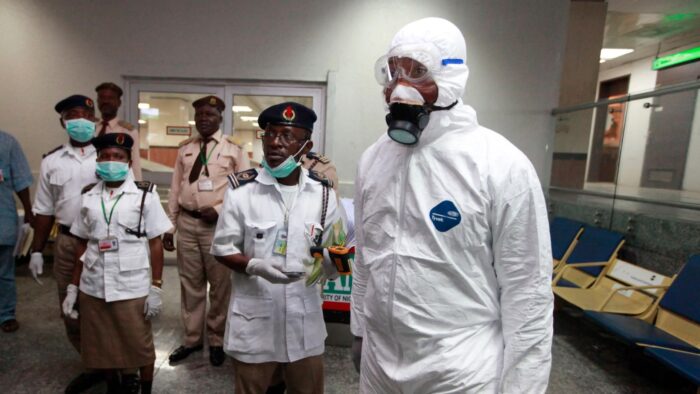
The government also directed a reduction in visiting foreign delegations, particularly those arriving from or travelling through affected countries, while intensifying contact tracing, border surveillance and public sensitisation.
Coordinating Minister of Health and Social Welfare, Muhammad Ali Pate, said at a briefing in Abuja on Thursday that the patient’s improving condition did not lessen the need for vigilance. He warned that misinformation, public distrust and non-compliance could undermine containment efforts.
Addressing concerns about restrictions on public activities, Pate said decisions would be guided by scientific evidence and expert advice.
“At this moment, there is no indication that requires us to alter the course of large gatherings that have been planned,” he said.
He said that position could change if new evidence emerged, adding that the immediate task was to contain the confirmed case and prevent transmission beyond those already identified as potentially exposed.
Pate said clinicians had reported encouraging laboratory results, raising hopes of recovery.
“Today, I spoke to the clinicians and I understand that her lab results are showing great improvement and there’s a possibility that she would recover from this,” he said.
He stressed that the improvement did not diminish the need for close monitoring, enforcement of public health measures and sustained preparedness.
Against growing scepticism about the case, Pate said the patient had tested positive on three occasions and warned that dismissing the infection as fabricated could lead people to disregard quarantine or isolation directives.
“The alternative to trusting the experts is a tragedy,” he said, urging Nigerians to rely on credible sources and demand evidence from those circulating unverified claims.
He cited misinformation about polio vaccination as an example of how false narratives could frustrate life-saving interventions and appealed to political leaders not to turn the health emergency into a partisan dispute. “Health has no political party, has no citizenship, has no nationality, has no tribe, no religion. It is a great unifier.”
He urged journalists to report responsibly and avoid amplifying rumours, assuring Nigerians that the government would provide regular updates on established facts, uncertainties and measures being taken to protect the public.