
News
Electricity: Minister laments blackout despite 65% subsidy, warns Discos


Power distributors that reject electricity allocated to them by the Transmission Company of Nigeria shall be dealt with severely going forward, the Federal Government declared on Monday.
It also revealed that in the next three to six months, it would ramp up power generation and supply to between 6,000 and 6,500 megawatts.

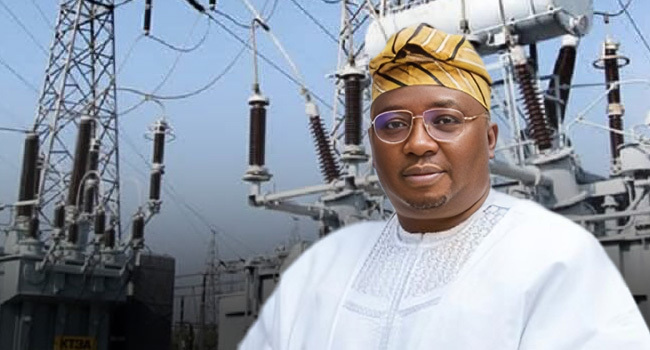
Adebayo-Adelabu
The Minister of Power, Chief Adebayo Adelabu, who disclosed this in Abuja before commencing a meeting with heads of agencies under his ministry, also disclosed that the Federal Government was subsidising the electricity bills of consumers nationwide by about 65 per cent.
“I am holding this meeting with all the directors in the Ministry of Power and the CEOs of our agencies in order to address the lingering crisis in the power sector,” Adelabu stated
According to him, what the country is witnessing currently with respect to power supply is not acceptable, adding that “the situation is getting worse, and in the last two, three weeks the level of power supply to Nigerians has not been good enough.”
Commenting on the performances of power distribution companies, the minister stated that the Discos would be dealt with severely for power load rejection.
He said, “We must address the issues of distribution, and I’ve said before now that the non-performance of Discos in terms of epileptic power supply qualifies as a basis for the revocation of licence.
“Any Disco that is found wanting will be severely dealt with; I’ve had discussions with the chairman of NERC. Their (Discos) actions or inactions directly affect the performance of the sector, and we must take it seriously.
“If we ramp up generation to 6,000MW as planned in three to six months, and ramp up our infrastructure in transmission to get power to the Discos within the next couple of days, if the Discos are not picking this power, it amounts to nothing.
“So the refusal to take up and supply power by the Discos is a qualified basis for the revocation of licence. Therefore the Discos should not frustrate our efforts in generation and transmission.”
The minister said he had discussed with NERC to come up with adequate performance measurement standards for Discos, stressing that laggards should be fished out and sanctioned.
“We should not be toothless bulldogs, barking and barking without biting. We should bite, for by the time we sanction two, three Discos heavily, others will sit up, and it will serve as a deterrent to others that we mean business.
“Their actions and inactions are causing us damage as a country. So they must know that it is no longer business as usual. We should have performance information, for example, last week, a number of the Discos did not pick up the power provided by TCN, throwing a number of communities into darkness,” he stated.
Report stated that data from the Transmission Company of Nigeria showed that though some of the power firms received excess electricity load allocation during the period, most of them failed to utilise all the quantum of energy allocated to them by TCN.
Nigeria has 11 power distribution companies and they include Abuja, Benin, Eko, Enugu, Ibadan, Ikeja, Jos, Kaduna, Kano, Port Harcourt and Yola Discos.
The report stated that on February 1, 2024, for instance, seven of the power distributors failed to utilise a total of 128.62MW of electricity, as the load rejection by the power firms lingered during the review period.
Adelabu declared that the rejection of electricity would no longer be allowed in the sector, stressing that “they must take up a minimum of 90 to 95 per cent of power supplied to their jurisdiction.”
Power generation
On the issue of power generation, the minister stated that “we’ve discussed the status of the debt in the sector, including the legacy debts to gas companies and the debts to generating companies.”
Adelabu said he was “confident that we are going to have some cash injections in terms of payments, and we are going to also work around the balance by giving out guaranteed debt instruments such as promissory notes to the Gencos and gas companies.”
The minister said he believes that this will ensure that the Gencos go back to production and improve generation output as soon as the government pays that money.
“We will ensure that we agree on payment milestones for these debts, because these outstanding debts to Gencos are also a major problem,” he stated.
Speaking on strategies to further improve power generation and stabilise output, the minister stated that the country’s average power generation and supply of 4,000MW to 4,500MW was no longer acceptable.
“So what we are doing now is to have an agreement to ramp up to a minimum of 6,000MW within the next three to six months. I know that the highest we’ve ever generated was 5,700MW about three years ago, specifically in November 2021.
“And this was also distributed, so if we could achieve 5,700MW at that time, I believe we still have the infrastructure to generate between 6,000MW and 6,500MW once there is stability in the supply of gas,” Adelabu stated.
According to him, once there is gas supply, “we want to ramp up generation to a minimum of 6,000MW; if possible, 6,500MW within the next three to six months. That is our plan.”
The minister also stated that since the Discos could take up 5,700MW about three years ago, they should be able to distribute 6,000MW or 6,500MW in the next three to six months.
He said discussions were ongoing on how to ensure stability in the supply of at least 6,000MW, adding that maintaining guaranteed capacity payments to Gencos was one of the ways to achieve this feat.
“As it is today, out of the 27 Gencos that we have, only about five of them have this kind of payment assurance for gas, I think Azura, Omotosho, Olorunsogo and Calabar, which is why the debt we are owing to these generating companies is that huge. And consequently, they are also owing the gas suppliers,” Adelabu stated.
Substation fire
The minister directed the Transmission Company of Nigeria to immediately investigate the course of the fire incident at the transmission substation in Kano State on Sunday.
“I am using this opportunity to instruct the management of TCN to immediately interrogate the immediate and remote courses of the fire incident in Kano transmission station, because we cannot afford this kind of incidents consistently.
“We had one in Benin-Kebbi just less than six months ago and now another one in Kano. I need an investigation into this, because ordinarily we should have our protective devices at these installations,” Adelabu stated.
Some transformers were burnt as a result of the massive fire outbreak at the Dan Agundi Substation in Kano on Sunday.
TCN, however, announced in a statement issued in Abuja on Monday that it had restored power supply to some of the areas taking power from the transformers affected by the fire incident in Kano.
“Full restoration for all areas is expected today, March 11, 2024,” the spokesperson of the company, Ndidi Mbah, stated.
She added, “Yesterday (Sunday), the electrical engineering team isolated the transformers impacted by the incident and reconfigured some cables to facilitate power supply to three of the feeders for Kano Disco customers, while work is ongoing to ensure full restoration to the rest of the feeders.
“This incident, involving two 60MVA power transformers at the Kano transmission substation, was triggered by a sudden spark from the electrical oil pumping machine used to pump oil back into one of the 60MVA power transformers which had just undergone maintenance in the substation.”
Mbah stated that despite TCN’s safety workers’ efforts to extinguish the fire using industrial extinguishers, the fire persisted, until it was contained through the collaborative efforts of the Kano fire service, TCN’s safety engineers and security personnel.
“As of yesterday, three feeders – Kurna, Buk, and one of the 15MVA power transformers – began receiving power supply from a 60MVA transformer, enabling Kano Disco to distribute power to some customers.
“The remaining four feeders, namely Zaria, Club, CBN, and the second 15MVA power transformer, will resume bulk power supply today, following repair works on a punctured cable initiated in the early hours of the morning.
“TCN has a redundancy of 100MVA transformer fully installed at the substation, which will undergo testing and energisation to mitigate any potential bulk supply shortfall to Kano Disco,” she said.
Meanwhile, the minister stated that the meeting would consider pushing for capital punishment for power consumers who bypass their meters and steal electricity, as well as for those who vandalise power assets.
He urged Nigerians to desist from such acts, stressing that they drag the sector backwards.
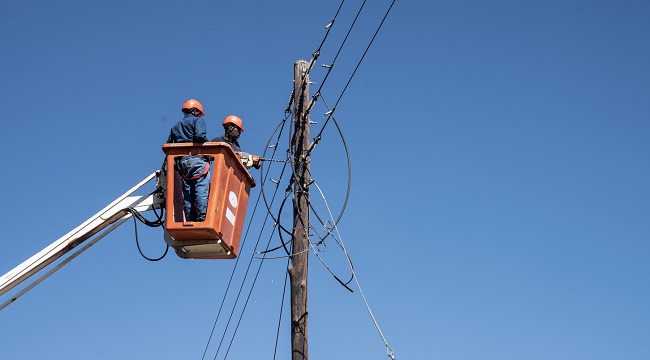
Meanwhile, no fewer than 15 communities in Kaduna State are currently experiencing power outages following a technical fault on the 33KV independent feeder.
The Kaduna Electricity Distribution Company disclosed this in a statement by its Head of Corporate Communication, Abdulazeez Abdullahi, on Monday.
Abdullahi listed the affected communities to include Kigo Road, Bonny Road, Keffi Road, Lokoja Road, Constitution Road, Bala Miller, Kabalan Doki, KASU, Tafawa Balewa Way, Degel, Costain and others.
While apologising to customers, the distribution company said normal supply would be restored as soon as the Transmission Company of Nigeria amends the fault.



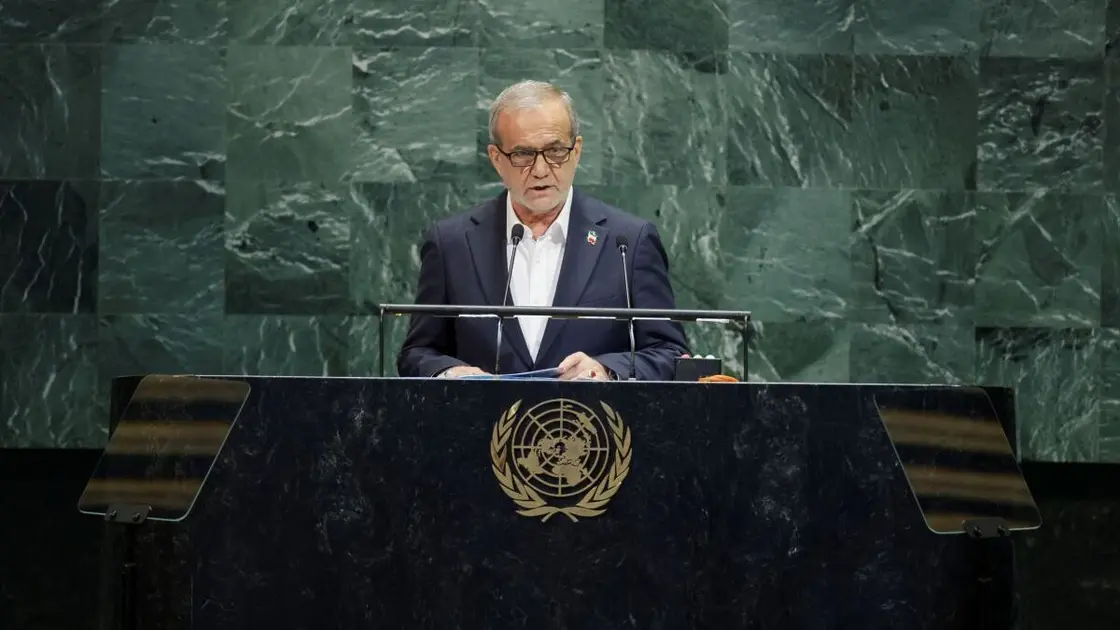
The United States has refused to issue visas for members of Iranian President Masoud Pezeshkian’s delegation, including his communications team, for this week’s trip to the UN General Assembly, Iranian state media reported Monday.
Pezeshkian will be the highest-ranking Iranian official to enter the United States since the Middle East war began with US-Israeli strikes on Iran in February.
“In an unprecedented hostile move by the US government, (US President Donald) Trump has denied US visas to certain members of the president’s high-level delegation, including members of his communications team,” state news agency IRNA reported.
The Mehr news agency also carried the story, citing a spokesperson for the Iranian presidency, and added that Pezeshkian will address the UN General Assembly on Wednesday.
The US has authorised the Iranian delegation to travel for the UN General Assembly but will, like last year, put restrictions in place.
Iran’s delegation will not, for instance, be allowed to purchase luxury goods or other items, the State Department said on Thursday.
Iranian Foreign Minister Abbas Araghchi, part of the delegation to the UN, left Iran on Sunday evening for a stopover in Qatar.
Iran says it has conveyed to the US, via Qatar as mediator, conditions for reopening the strategic Strait of Hormuz oil and gas shipping route, which it has choked off since the war began.
The United States, in turn, is imposing a counterblockade of Iranian ports.
AFP
Civil servants under the Joint National Public Service Negotiating Council, JNPSNC, Trade Union Side, have written to President Bola Ahmed Tinubu, demanding an urgent intervention to address the worsening economic hardship facing workers and their dependants.
The workers called on the Federal Government to stabilise the price of Premium Motor Spirit, PMS, at N500 per litre, approve an immediate Wage Award and upwardly review salaries and allowances across the public service.
They also demanded the immediate constitution of a committee to negotiate a new National Minimum Wage ahead of January 2027.
In a letter addressed to the President at the State House, Abuja, the workers said the recent increase in fuel prices to N1,430 per litre and above in some locations had further worsened the cost-of-living crisis.
They gave the Federal Government until Wednesday, September 30, 2026, to take action on their demands, warning that the prevailing hardship was creating palpable tension among workers and Nigerians.
The JNPSNC said the removal of fuel subsidy three years ago had triggered an astronomical increase in fuel prices and produced multiplier effects on the prices of essential commodities across the economy.
The council said the situation had made life increasingly unbearable for workers, adding that the provision of food palliatives was not a sustainable solution to the economic crisis.
It said: “It has dawned on Nigerian workers that the provision of palliatives such as bags of rice, Indomie, vegetable oil, garri, among other edible foods, is as good as weaponising Nigerians with poverty because it is a Pyrrhic intervention which is unsustainable, inaccessible to the majority of Nigeria’s population and also limited to political cronies.”
The workers argued that a more sustainable intervention would be to reduce the cost of fuel to N500 per litre, saying the measure would have a multiplier effect across the economy.
“Consequent upon the above, it is preferable that the Federal Government should provide an intervention that will trickle down to all Nigerians by making fuel available at an affordable amount as low as N500 (five hundred Naira), the amount at which fuel was being sold when the subsidy was first removed in the year 2023,” they said.
The council identified the restoration of workers’ purchasing power, improved productivity and service delivery, promotion of integrity and accountability, and the reinforcement of trust and industrial peace as major reasons for its demand for improved remuneration.
On fuel prices, the workers said the government should “look inward and stabilize the prices of fuel to an affordable minimum,” arguing that fuel remained an essential commodity with significant implications for the Nigerian economy.
“As a matter of reality, the current hardship being faced by the hapless Nigerian workers is caused by the astronomical increase in the price of Premium Motor Spirit (PMS) to as much as N1,430.00, or more per one litre (this is a killing amount),” the council stated.
The JNPSNC further called for an intervention fund for stakeholders in the oil sector to stabilise fuel prices and eventually bring the pump price down to N500 per litre.
The council said the government could adopt another description for the intervention if the term “fuel subsidy” was considered unacceptable.
“The fuel intervention fund will give the opportunity to every Nigerian to benefit from the intervention fund because it will have multiplier effect in the life of every Nigerian and will naturally trickle down to the downtrodden and all the remotest parts of the country,” it said.
The council also endorsed a position attributed to Nigeria Labour Congress (NLC) President, Joe Ajaero, on measures to address the fuel crisis.
Ajaero was quoted as saying: “Nigeria as an oil-producing country we have sufficient local refining capacity even as this substantially resides with the private sector.”
He also said: “As a nation, and as a people endowed with enormous fossil resources, we are deserving of a certain level of protection or buffer against the gales from the Gulf, and indeed, other gales.”
According to the NLC position cited by the council, “As part of the process of creating this buffer government should sell sufficient crude in Naira to our local refineries; expand our national storage capacity in pursuance of meeting energy emergencies and security. These measures will create jobs, economic value as well as deal with mutating security challenges.”
The statement further said: “There is nothing wrong with government subsidizing the needs of citizens, especially in emergency situations like this. At the moment, there is no oil-producing country we know of that has not intervened or come up with sustainable palliatives in one way or the other in these perilous times.”
The NLC position also stated: “Government is making extra money in the international spot market (of between USD35 and 40 per barrel above the budgeted figure). This translates to trillions of Naira a month.”
It added: “On a long term basis, we are equally concerned that local refineries are importing crude. This is unreasonable and unacceptable and defeats the logic and purpose of local capacity.”
The JNPSNC said it “wholeheartedly subscribe[s] to the submission of NLC leadership” and urged the government to consider the proposals for urgent implementation.
On wages, the council demanded the immediate introduction of a Wage Award covering Federal, State and Local Government workers.
“Wage Award as an urgent intervention and upward review of salaries and allowances of all serving Public Servants in the Nigeria Public Service should be provided with immediate effect to cut across all Federal, State and Local Government workers,” it said.
According to the council, the Wage Award would serve as a precursor to the substantive New National Minimum Wage expected to take effect in January 2027.
The workers also demanded the immediate setting up of a committee to negotiate the new National Minimum Wage, saying early commencement of the process would prevent delays in implementation.
“There is urgent need to immediately set up committee for the negotiation of New National Minimum Wage to accelerate the commencement of the New National Minimum Wage before 2027 so that it can take effect from January, 2027,” the council stated.
The JNPSNC proposed that the minimum salary payable to an officer on Grade Level 01, Step 1, should be N500,000 per month under the 2027 salary template.
The council also called for harmonised wages across Ministries, Departments and Agencies (MDAs), while urging that the review be encouraged at the State and Local Government levels.
It further demanded periodic salary and allowance adjustments linked to inflation, as well as welfare measures including subsidised transportation and affordable housing for civil servants.
The council said public servants remained “the backbone of governance and national development” and the “live wire of any administration,” noting that workers were responsible for policy formulation, implementation of government programmes and the provision of essential public services.
It said rising inflation, fuel prices, transportation costs and the increasing cost of food, housing, healthcare and education had eroded the real value of workers’ salaries.
“Many workers are now struggling to meet basic financial obligations, which has inevitably affected the morale, motivation, and overall productivity within the Public Service,” it stated.
The JNPSNC urged the President to direct the National Salaries, Incomes and Wages Commission (NSIWC) to commence discussions with the Nigeria Labour Congress, NLC, Trade Union Congress of Nigeria TUC, JNPSNC and other relevant stakeholders on the Wage Award and upward review of salaries and allowances.
The council said: “Your Excellency, we trust that this request will receive the prompt attention and action it deserves in the interest of Nigerian workers and their dependants, the Public Service as an age-long institution and the nation at large on or before Wednesday 30th September, 2026 to douse the palpable tension that may erupt.”
It also expressed the expectation that the President’s Independence Day broadcast would address the concerns raised by workers.
“It is the high expectations of Nigerian workers and all patriotic Nigerians that your Independence Day broadcast will attend to our sincere suggestions in order to bring succour and life back to all dying Nigerians,” the council said.

President Bola Ahmed Tinubu has paid an intimate tribute to his wife, First Lady Oluremi Tinubu.
He declared that if given another chance to begin life afresh, he would still choose the path that brought them together.
In a personal message marking the First Lady’s 66th birthday today, the President described his wife as his “truest friend and confidante,” recalling the difficult years, sacrifices, and private moments that have defined their journey together.
“If life returned me to the beginning, I would choose the same road that led me to you. Through every mile, my heart has always remained at home with you,” President Tinubu said.
The President, who addressed his wife affectionately as “Oluremi mi,” said she has stood beside him with patience, grace and “uncommon courage” through different seasons of their lives.
He recalled a Yoruba saying: “Ìyàwó rere ni adé oko ree”, meaning “a good wife is her husband’s crown,” stressing that the First Lady has given practical meaning to the expression in his life.
President Tinubu also drew from the biblical Book of Proverbs on the worth of a virtuous woman, saying his wife has remained a source of strength, counsel, and prayer, particularly during periods of uncertainty.
“You have stood by my side through every season. The burdens that were mine to bear often found their way onto your shoulders. The thoughts I could not put into words somehow found their way to you.
“In difficult times, when the future was uncertain, you stayed calm beside me and prayed with me. Through all these years, you have remained the one who truly understands me,” he said.
The President said the First Lady often knew when he needed advice even before he sought it, adding that there had been occasions when her presence alone provided the counsel he needed.
He described her honesty as one of the qualities he had treasured throughout their years together, saying she had never hesitated to tell him uncomfortable truths.
“I call you my truest friend and confidante because you speak the truth plainly, even on the days I would rather not hear it.
“After a demanding day, you wait until we are alone before telling me what I need to hear. I have always cherished you for that honesty,” he said.
The President also praised his wife for her devotion to their family, saying their children and grandchildren have grown under the influence of her prayers, faith and kindness.
According to him, the imprint of the First Lady’s devotion is evident in their home and in the values their children and grandchildren carry with them.
Turning to her public service and humanitarian activities, President Tinubu said Nigerians have come to know his wife for her compassion, generosity and steadfast faith.
He recalled her humanitarian interventions through the New Era Foundation during their years in Lagos and, more recently, through the Renewed Hope Initiative (RHI), saying the programmes have reached young Nigerians, widows, senior citizens and women farmers across the country.
President Tinubu also lauded her advocacy for people affected by tuberculosis and other diseases, describing her as a compassionate advocate for the vulnerable.
“I know the prayers you offer for people whose names you may never know. I also know many whom you have helped without ever meeting them. For you, compassion has never recognised the boundaries of tribe, region or religion,” he said.
Reflecting on their years together, the President said their journey had taught him the true value of having a dependable partner.
“A long journey teaches a man the true value of a good partner. We have travelled a long road together. I think of the difficult decisions we talked through for hours and the sacrifices no one else saw. Laughter and prayer carried us through many of them,” he said.
Expressing gratitude for their life together, President Tinubu added: “I thank you for the life we have built and the love that has held it together.”
The President prayed for many more years of good health and happiness for the First Lady, wishing that the years ahead would bring her the same comfort and happiness she had given him and others.
“Happy 66th birthday, my darling Oluremi. I pray that God Almighty will grant you many more years in good health and joy.
“May the years ahead bring you the same comfort and happiness you have so freely given to me and many others,” President Tinubu said.
-
 Health & Wellness1 year ago
President Tinubu Directs Cut in Dialysis Cost from ₦50,000 to ₦12,000
-
 News1 year ago
PICTURE: In Lagos Couple Sentenced to 22½ Years for Cannabis Trafficking
-
 Business6 months ago
Dangote Refinery Reduces Petrol Gantry Price To ₦1,200 Per Litre
-
 Trending News1 year ago
NELFUND Disburses ₦86bn To 449,000 Beneficiaries
-
 Business2 years ago
Heritage Bank Customers’ Path to Securing ₦5m Insured Funds: A Step-By-Step Guide by NDIC”
-
Business2 years ago
Dangote; We Did Not Fix ₦600/Litre Petrol Price
-

 International News6 months ago
Indian Police Arrest Nigerian Over ₦290m Drug Haul
-
 Business6 months ago
After Plea Bargain, Court Discharges Stella Oduah of ₦2.5bn Fraud