
Business
Naira Rain: WEMA Bank Declare Winners In N10,000,000 Promo Season 3 Grand Finale Booty


Wema Bank, Nigeria’s most innovative bank and pioneer of Africa’s first fully digital bank, ALAT, has announced 124 winners in the Grand Finale of the third season of its reward initiative, the Wema Bank 5 for 5 Promo bringing the winners for the season to a total of 1200. The Grand Finale held on May 31st, 2024, at the Wema Bank Head Office in Lagos.
Introduced in 2019, the Wema Bank 5 for 5 Promo is a revolutionary reward initiative established by Wema Bank with a set goal of rewarding the Bank’s active and loyal customers for their support of the brand and its products. Designed to maintain transparency and objectivity, the Wema Bank 5 for 5 Promo is executed through monthly raffle draws supervised by Top Regulatory Bodies and exclusive to the Bank’s actively transacting customers based on the minimum requirements for each season. The first two seasons of the Wema Bank 5 for 5 Promo saw a total of 1,177 Wema Bank customers receive a N63.3 million total cash prize and the just concluded Season 3 raised the bar exceptionally high.
Season 3 of the Wema Bank 5 for 5 Promo launched in July 2023 with a N90,000,000 cash prize for both Naira and Domiciliary (Dollar) Wema Bank Account holders across the country. Over a 10-month span, the 5 for 5 Promo Season 3 toured Lagos, Abuja, Ibadan, Uyo, UNILAG, Akure, Enugu, Benin, Osogbo and for the Grand Finale, Lagos. Each monthly draw disbursed a N9,000,000 cash prize excluding the 6th draw in Akure which disbursed N8,000,000, leaving a N1,000,000 deficit that was carried forward to the Grand Finale, bringing the Grand Finale cash prize to N10,000,000; 2 winners of N1,000,000 each, 12 Domiciliary Account winners of N250,000 each, 30 winners of N100,000 each and 80 winners of N25,000 each. In attendance at the Grand Finale of Wema Bank 5 for 5 Promo Season 3 were Representatives of the Federal Competition & Consumer Protection Commission (FCCPC), the Lagos State Lotteries Board and the National Lottery Regulatory Commission (NLRC), among other dignitaries.
Disclosing the Bank’s motivation for launching the Wema Bank 5 for 5 Promo, Tunde Mabawonku, Wema Bank’s Executive Director of Retail and Digital Business, referenced the Bank’s commitment to giving back to its customers and providing an exceptionally rewarding banking experience for them. “What you see today as an instrument of positive impact and transformation began with a vision set in 2019. Since becoming a National Bank, we had been on a success streak with the launch of Africa’s first fully digital bank, ALAT, our female-focused proposition, SARA by Wema, our USSD solution *945# and a host of others. What stood out for us is how receptive our customers have been through the years, supporting us, welcoming our solutions, and embracing each innovation with open arms.
The success reflected in our numbers could not have been possible without the loyalty that we have enjoyed from our customers, so we set our sights on a greater vision—to go beyond the ‘usual’ in our promise of providing customers with a seamless and rewarding banking experience. This vision was brought to life when we launched the 5 for 5 Promo in 2019 and I take this moment to appreciate every person who has contributed to the success of the Wema Bank 5 for 5 Promo and joined us in bringing this vision to reality”.
Elucidating the profound impact generated by the 5 for 5 Promo, Ayodele Olojede, Wema Bank’s Divisional Head of Retail and SME, added, “I am honoured to have had the privilege of assuming office in the preliminary stages of Wema Bank 5 for 5 Promo Season 3, witnessing first-hand the impact that we created in many lives, families, businesses and even careers across our diverse customer base throughout the season. We’ve had winners who were NYSC Corps Members, Business Owners, Corporate Employees, Parents, Students, and several other demographics from all over Nigeria and honestly, being here today at the Grand Finale leaves a bittersweet feeling.
While the Grand Finale attests to the impactful journey that we have traversed through the past 10 months, it also marks the end of the Season. I am beyond proud of the transformative impact we have generated over the course of the 5 for 5 Promo Season 3 and the Bank is honoured by the privilege that our customers have given us to serve them. I thank every one of our customers for choosing Wema Bank. The rewards never end with us so keep using your Wema Bank account for all transactions. You have nothing to lose but have EVERYTHING to gain with Wema Bank”.
The Wema Bank 5 for 5 Promo stands out for its inclusivity, diversity and positive impact, touching the lives of hundreds of Nigerians of different ages, social statuses, interests, qualifications and lifestyles. While the 3rd Season of the Wema Bank 5 for 5 Promo has officially come to a wrap, the footprints left by the remarkable initiative remain imprinted in the hearts and lives of all Wema Bank customers who have benefitted from the Wema Bank 5 for 5 Promo.
Wema Bank continues to offer a plethora of rewards for customers via its Deals & Discounts feature on the ALAT App, its social media platforms and a host of other avenues championed by the Bank.









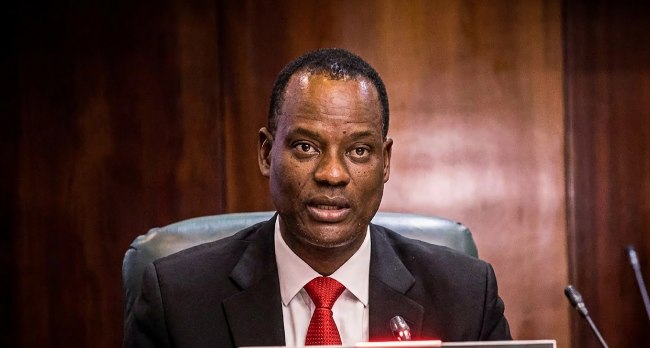
The federal government says late tax payments will attract new interest rates from October 1, 2026.
According to a statement by the ministry of finance, the new rates are linked to market interest rates and will be set for each calendar month.
Under the order, interest on tax payable in naira will be charged at the Central Bank of Nigeria (CBN’s) monetary policy rate (MPR) plus one percentage point, compared with the previous five-percentage-point spread.
However, the ministry said the rate would not fall below the yield on 364-day treasury bills.
This means that since the MPR is 23 percent, taxpayers who pay late would be charged 24 percent interest on the delayed tax, subject to the 364-day treasury bill yield floor.
For tax payable in foreign currency, the statement said the interest rate will be the secured overnight financing rate (SOFR) plus 6 percentage points. The SOFR stands at 22.12 percent for the 30-day average and 22.59 percent for the 90-day average as of September 24, 2026.
The ministry said the new rates would provide taxpayers with greater certainty over the cost of late payment, which it said has been linked more closely to prevailing market rates.
Speaking on the move, Taiwo Oyedele, minister of finance and coordinating minister of the economy, said the new framework would ensure that delaying tax payments does not become a cheaper source of credit than borrowing from the market.
“Tax that is due belongs to the public. When it is paid late, Government may have to borrow to fill the gap, and the cost falls on everyone,” Oyedele said.
“This Order ties the cost of late payment to real market rates, so that delaying tax does not become a cheaper form of credit than the market itself.”
The ministry said under the order, one interest rate would apply for each calendar month and would be determined on the last business day of the preceding month.
“The Nigeria Revenue Service (NRS) is required to publish the applicable rate on its website by the third business day of every month,” the statement added.
The ministry said interest would be calculated as simple interest on a daily basis, from the date the tax becomes due until payment is made.
For foreign-currency tax, the ministry said SOFR would apply as the international benchmark for US dollar rates, noting that if the SOFR is discontinued, its official successor rate would apply.
Oyedele said the arrangement would also provide a uniform basis for taxpayers dealing with federal, state and FCT tax authorities.
“Just as important is certainty. Every taxpayer, whether dealing with the Nigeria Revenue Service or a State revenue service, will know the rate in advance, see it published every month, and be charged in the same way,” he said.
“Clear rules make compliance easier and support a fair, predictable tax system.”
The ministry said the order does not change the 10 percent penalty for late payment provided under section 65 of the Nigeria Tax Administration Act (NTAA), 2025.
“The relevant tax authorities may also waive interest or penalties where good cause is shown, in line with section 66 of the Act,” it said.
The ministry said the new rates would apply to interest arising from October 1, including interest on tax that became due before that date.
“Interest that arose before October 1 will not be affected to the extent that it was specifically provided for under the rules in force at the time,” the statement said.
The finance ministry said the order supersedes the 2017 notice on interest on unpaid taxes and other earlier notices on the subject.
The ministry said the framework applies to self-assessment taxpayers, the NRS, and state and Federal Capital Territory (FCT) internal revenue services.
The ministry advised taxpayers to file their returns and pay applicable taxes on time.
It also advised taxpayers with outstanding liabilities to settle them promptly or engage the relevant tax authority.

Adron Homes and Properties is set to participate in the 11th Olojo Festival in Ile-Ife, Osun State, as the company deepens its engagement with the ancient city and unveils plans for a Premium Estate development within the Ile-Ife domain.
The 2026 edition of the renowned cultural festival, themed “Culture Preservation Through Sustainable Tourism,” is expected to bring together traditional rulers, government representatives, corporate organisations, cultural stakeholders, tourists and the media for a celebration of Yoruba heritage and the cultural significance of Ile-Ife.
Ahead of the festival, Adron Homes made a strong appearance at the press conference and unveiling of the 2026 edition with a delegation comprising key members of its Western operations.

The delegation included Ogundapo Odunola, Deputy Managing Director, Western Super-Cluster; Johnson Olugbenga, Assistant Managing Director, Western Galaxy 1; and Shobowale Taiwo, Deputy Sales Manager, Livingspring World.
Their presence reflected the company’s growing development interests in Ile-Ife and its commitment to initiatives that connect real estate development with cultural heritage and community growth.
Speaking at the event, Seyi Oyekunle, Director General, Media, Branding & Corporate Communication, Adron Group, who represented the Managing Director of Adron Homes and Properties, Mrs Adenike Ajobo, said the company’s participation in the Olojo Festival was driven by its belief that cultural preservation and sustainable development could work hand in hand.
Oyekunle described the theme of the festival as timely, noting that culture remains an important part of identity and history, while sustainable tourism can create opportunities for employment, investment, entrepreneurship and community development.
He described Olojo as more than an annual cultural celebration, saying it represents the enduring connection between the past, present and future of Ile-Ife and its place in Yoruba civilisation.
According to him, Adron Group’s vision extends beyond conventional real estate development.
“At Adron Group, we are in the business of real estate, but our purpose is much bigger than the development of properties. We build homes. We build cities. We build communities,” he said.
A major highlight of the company’s participation was the unveiling of plans for the Adron Homes Premium Estate within the Ile-Ife domain.
Oyekunle expressed appreciation to the Ooni of Ife, His Imperial Majesty, Oba Adeyeye Enitan Ogunwusi, Ojaja II, for the confidence and approval granted to Adron Homes and Properties for the development.
He said the approval comes with a strong responsibility for the company to contribute meaningfully to the development of Ile-Ife while respecting the city’s rich historical and cultural heritage.
According to him, Adron Homes is prepared to deploy its experience, resources and development capacity towards delivering a project capable of creating value for residents and contributing to the growth of the community.
He described the Premium Estate as more than a property development, saying it presents an opportunity to attract investment, provide quality housing, stimulate local businesses and strengthen the connection between Ile-Ife and sons and daughters of Ifeland and Yorubaland across the world.
The Adron Group representative said the development could provide an avenue for people in the diaspora to reconnect with the Source by creating opportunities to “come home, invest home, build home and preserve home.”
He also called for greater development of Ile-Ife as a year-round tourism destination, stressing that the city’s tourism potential should extend beyond the annual Olojo Festival.
Oyekunle said sustainable tourism should translate into tangible economic opportunities for residents, particularly artisans, young people, entrepreneurs and operators within the hospitality sector.
He further urged young people to view Yoruba culture and heritage as potential sources of economic opportunity, noting that the sector could inspire careers and businesses across film, technology, fashion, music, arts and tourism.

The Olojo Festival press conference brought together traditional rulers, government representatives, corporate organisations, members of the Olojo Festival Committee, cultural stakeholders and media practitioners ahead of the 11th edition of the festival.
As Adron Homes prepares for its participation in the festival, the company’s Premium Estate plan adds a major real estate dimension to its engagement with Ile-Ife, reinforcing its vision of “Building Homes, Cities and Communities Across the Globe.”

The Federal Government has commenced a six-week review of the new tax laws to identify implementation gaps, address consequences that have emerged since their implementation and consider concerns raised by the organised private sector and other stakeholders.
The review will examine areas including Value Added Tax thresholds, withholding tax, capital gains treatment and multiple taxation.
Recall that President Bola Ahmed Tinubu last year signed into law four new tax bills passed by the National Assembly, describing the laws as pivotal to the success of his administration’s reforms and the country’s prosperity.
The bills were the Nigeria Tax Bill (Ease of Doing Business), which seeks to consolidate Nigeria’s fragmented tax laws into a harmonised statute; the Nigeria Tax Administration Bill, which establishes a uniform legal and operational framework for tax administration across the federal, state and local governments.
Others are the Nigeria Revenue Service (Establishment) Bill, which repeals the Federal Inland Revenue Service Act and creates a more autonomous and performance-driven national revenue agency, the Nigeria Revenue Service (NRS); and the Joint Revenue Board (Establishment) Bill, which provides a formal governance structure to facilitate cooperation between revenue authorities at all levels of government.
While inaugurating the Technical Subcommittee on Fiscal Policy and Tax Reforms in Abuja yesterday, the Minister of Finance and Coordinating Minister of the Economy, Taiwo Oyedele, said implementation of the new laws had exposed areas requiring clarification and further reforms.
“The real test begins when the law meets the economy, as businesses interpret it, administrators implement it, investors respond to it, and citizens experience it. Implementation inevitably reveals areas requiring clarification, refinement or further reform,” the minister said.
Oyedele said the government was shifting from fundamental tax reforms to continuous improvement, stressing that the review was not intended to reverse the 2025 reforms.
He said, “The Finance Bill 2027 should not be seen as just another annual legislative exercise. Our task is not to rewrite the 2025 reforms, but to preserve their fundamental principles while learning from implementation and responding to new economic realities.
“We must ask where implementation has revealed ambiguity, where unintended consequences have emerged, where compliance can be simplified, and where we can improve investment and competitiveness.”
The review will also cover fiscal policy and management, public financial management, debt, transparency, capital markets and cross-border capital flows.
According to Oyedele, the government received 134 submissions from across Nigeria’s geopolitical zones after inviting public input, alongside additional submissions made in hard copy.
Preliminary concerns raised by stakeholders included calls to clarify and simplify VAT thresholds, withholding tax and capital gains provisions.
Stakeholders also proposed stronger measures against multiple taxation and improved coordination among revenue authorities.
They called for greater digitalisation and data sharing to prevent taxpayers from repeatedly submitting information already available to government agencies.
Other proposals included stronger taxpayer rights, faster refunds, safeguards for small businesses and measures to improve investment and competitiveness in mining, renewable energy, healthcare and capital markets.
Oyedele urged the subcommittee to assess the economic impact of proposed changes, particularly on low-income households, workers and businesses.
“Every tax reform produces winners and losers; the question is whether a policy is fair, efficient and competitive, not whether it is popular with everyone,” he said.
He added, “A provision that raises revenue may impose a far greater cost on the wider economy. The government must optimise the whole economy, not merely achieve a single objective.”
The minister warned that complicated tax rules could increase compliance costs for businesses.
Beyond preparing recommendations for the Finance Bill 2027, the subcommittee will review the Deduction of Tax at Source Regulations 2024 and prepare revised withholding tax regulations.
It will also review the Companies Income Tax (Significant Economic Presence) Order 2020 and develop an updated framework aligned with the new tax laws and international practices.
The Permanent Secretary of the Federal Ministry of Finance chairs the subcommittee, while Chairman of the Tax Advisory Committee Albert Folorunsho serves as co-chair.
Members include representatives of the Federal Ministry of Justice, Nigeria Revenue Service, Joint Revenue Board, Nigeria Customs Service, Central Bank of Nigeria, Debt Management Office, Budget Office of the Federation and Nigerian Investment Promotion Commission.
Other members are drawn from the Small and Medium Enterprises Development Agency of Nigeria, Manufacturers Association of Nigeria, Nigerian Economic Summit Group, Nigerian Bar Association, Association of National Accountants of Nigeria, Chartered Institute of Taxation of Nigeria and Institute of Chartered Accountants of Nigeria.
Representatives of the Nigerian Association of Chambers of Commerce, Industry, Mines and Agriculture and the Big Four accounting firms — Deloitte, EY, KPMG and PwC — are also members.
The Nigeria Tax Act 2025, Nigeria Tax Administration Act 2025, Nigeria Revenue Service (Establishment) Act 2025 and Joint Revenue Board (Establishment) Act 2025 took full effect on January 1, 2026.
-
 Health & Wellness1 year ago
President Tinubu Directs Cut in Dialysis Cost from ₦50,000 to ₦12,000
-
 News1 year ago
PICTURE: In Lagos Couple Sentenced to 22½ Years for Cannabis Trafficking
-

 Business6 months ago
Dangote Refinery Reduces Petrol Gantry Price To ₦1,200 Per Litre
-
Business2 years ago
Dangote; We Did Not Fix ₦600/Litre Petrol Price
-
 Business2 years ago
Heritage Bank Customers’ Path to Securing ₦5m Insured Funds: A Step-By-Step Guide by NDIC”
-

 International News6 months ago
Indian Police Arrest Nigerian Over ₦290m Drug Haul
-
 Trending News1 year ago
NELFUND Disburses ₦86bn To 449,000 Beneficiaries
-

 Business6 months ago
After Plea Bargain, Court Discharges Stella Oduah of ₦2.5bn Fraud