
Business
Wema Bank and Lagos State Government Partner to Celebrate International Day of Cooperatives, Emphasizing Empowerment of Cooperative Societies via CoopHub


Wema Bank, Nigeria’s foremost innovative bank and pioneer of Africa’s first fully digital bank ALAT, has reiterated its commitment to empowering cooperative societies for optimal productivity through its digital solution for cooperatives, CoopHub, at the Lagos State Government Ministry of Commerce, Cooperatives, Trade and Investment International Day of Cooperatives 2024 Event held on Saturday, 6th July 2024.

International Day of Cooperatives is a global celebration commemorated annually on the first Saturday of July, to recognise the significant impact of cooperative societies in promoting sustainable economic growth and their role in building a more sustainable future.
Themed “Cooperatives: Building a Better Future For All”, the 2024 International Day of Cooperatives commemorated by the Lagos State Government in collaboration with Wema Bank, convened key players in the cooperative ecosystem towards proffering solutions to prevalent challenges faced by cooperatives in Nigeria and creating a more sustainable future for all, through the cooperative industry.
CoopHub, Wema Bank’s digital solution for cooperative societies stood out as a key solution to not only overcoming the challenges impeding the growth of cooperative societies but also boosting economic growth and creating a better future for all.
CoopHub is a digital solution launched by Wema Bank to empower cooperative societies with the resources, opportunities and support they need to operate seamlessly, achieve maximum productivity and meet the needs of members in the most efficient way. Simultaneously eradicating the struggles of manual recordkeeping, poor access to loans, inefficient communication and planning, tedious processes and insecurity of funds and data, CoopHub refines the cooperative experience by facilitating secure financial transactions, 100% transparency within cooperative societies, easily accessible and trackable records for both members and leaders, efficient member management for leaders and real-time reporting for informed decision making, all from the comfort of their phones and gadgets, ensuring that cooperative societies can achieve their goals easily and remain productive. This revolutionary solution has proven itself a gamechanger for the Nigerian Cooperative Industry and potentially, will serve as the launchpad of the industry on the global scale.
Recapitulating the role of cooperative societies as an essential avenue for economic growth, Wema Bank’s Divisional Head of Retail and SME, Ayodele Olojede, emphasised the need for intentional, impactful and sustainable efforts towards the advancement of the Nigerian Cooperative Industry. “Cooperative Societies represent a very significant platform for socio-economic development and for us at Wema Bank, we stand proudly as the cooperative-centric bank that is committed to providing the resources and tailored solutions that these cooperatives need to thrive and remain successful. CoopHub is the perfect embodiment of this commitment, and we are thrilled that more cooperatives are discovering this solution and coming on board to optimise their operations and maximise the opportunities provided for their growth. The achievement of a sustainable and ideal future for cooperative societies not only requires that we adapt to the increasingly digital world we exist in, but also drive more inclusivity for the youth to also key in. CoopHub succinctly unites both pillars in one and as the digital solution pioneered by Nigeria’s most resilient and innovative bank, you can trust that the future we are enabling for cooperative societies is one that is built to last”.
“As the Bank that is committed to creating and promoting viable opportunities for women, in celebration of International Day of Cooperatives, we are supporting every woman present here at the Lagos State Government Ministry of Commerce, Cooperatives, Trade and Investment International Day of Cooperatives 2024 Event, with a free healthcare plan through our women-focused proposition, SARA by Wema. We remain unwavering in our lifelong mission of empowering lives through innovation and are committed to proliferating our positive impact across every key vertical that is instrumental to the success of the people and the growth of the Nigerian economy. We take this unique celebration as an opportunity to further reiterate our commitment to empowering cooperative societies for optimal productivity through CoopHub. She concluded.
Since its launch in May 2024, CoopHub, the first of its kind in the Nigerian financial services industry, has onboarded over 1,000 cooperative societies, helping them optimise their operations and secure the resources and support they need to thrive with maximum efficiency. With its unique, simplified and tailored configuration, CoopHub stands as the future of Nigerian cooperative societies.
Cooperative Societies that are interested in getting started on CoopHub, are encouraged to visit https://coophub.alat.ng and get onboarded in minutes.









The Lagos International Trade Fair Complex Management Board (LITFCMB) has condemned the use of its facility for the production of counterfeit products and other illegal activities, pledging to work with regulatory and law enforcement agencies to rid the complex of such practice
The board also commended the National Agency for Food and Drug Administration and Control (NAFDAC) for its recent enforcement operation, which led to the arrest of two persons allegedly linked to the illegal revalidation of expired drinks and the production of counterfeit consumables within the complex.
In a statement issued on Wednesday, the Executive Director and Chief Executive Officer of LITFCMB, Veronica Safiya Ndanusa, said the activities were contrary to the board’s commitment to promoting legitimate trade and ethical business practices.
She disclosed that relevant authorities had commenced investigations to establish the facts surrounding the incident and identify measures to prevent a recurrence.
Ndanusa warned that individuals and businesses found culpable of engaging in activities that endanger public health or undermine the integrity of local manufacturing would face the full weight of the law.
“As a body rooted in the principles of ethical business practices, transparency and genuine trade, we strongly condemn any activity that threatens public safety or brings the reputation of the Lagos International Trade Fair Complex Management Board into disrepute,” she said.
“Our facility exists to provide a conducive environment for legitimate businesses to thrive, not to serve as a breeding ground for the production or distribution of counterfeit and substandard products.”
The board chief assured members of the public that the management would collaborate with relevant regulatory and law enforcement agencies to ensure that the complex remained free of illegal activities.
She also urged traders and business operators within the facility to comply with established standards, stressing that the pursuit of profit must never come at the expense of consumers’ health and safety.
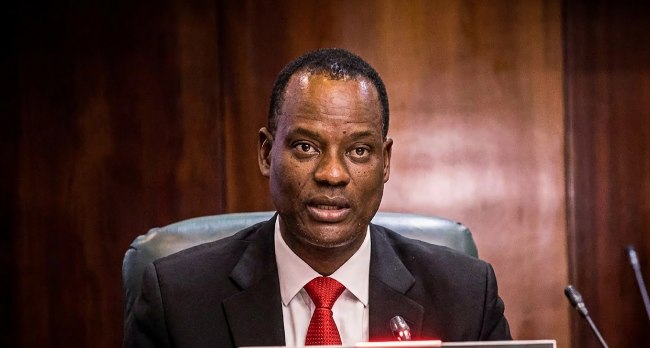
Minister of Finance and Coordinating Minister of the Economy, Taiwo Oyedele, has cautioned governments against introducing new taxes or increasing existing tax burdens on vulnerable citizens and productive sectors, warning that such measures could deepen economic hardship.
Oyedele spoke on the sidelines of the 2026 annual meetings of the International Monetary Fund (IMF) and World Bank in Bangkok, Thailand, where he presented a communiqué on behalf of the Intergovernmental Group of Twenty-Four (G24), which he chairs.
“This is the wrong time to impose new taxes or increase the burden of tax, particularly on the vulnerable population and productive sectors of the economy,” he said.
Responding to questions on how developing countries could reduce debt-servicing costs without cutting essential public spending,report quoted Oyedele as urging governments to identify waste, find savings and improve revenue collection before placing additional financial pressure on citizens and businesses.
He said borrowing remained necessary to finance economic growth but stressed that governments must ensure that debt supports job creation and inclusive development.
“Borrowing and debt financing is a necessary condition for growth, and every country emerging, developing must be able to apply debt financing in a way that is overall of positive impact, particularly to stimulate job-rich and inclusive growth,” he said.
The minister also called for available public funds to be prioritised for essential services, including healthcare and education, while private capital could help finance other areas of investment.
On the choice between taxation and borrowing, Oyedele said both options carried consequences and should be considered in the context of their impact on household welfare.
“If you collect taxes, you raise the money now, and that itself has a lot of trade-offs. What taxes are you collecting? You collect taxes from the most vulnerable, and this will deprive them of money to provide food, health, education,” he said.
He argued that excessive taxation could leave low-income households with less money for basic needs, while borrowing also carried future obligations.
“Debt is future taxes, so it’s not one or the other. It’s to strike a balance, bearing in mind ultimately that the essence of tax and of debts is to cater for the people,” Oyedele said.in the report.
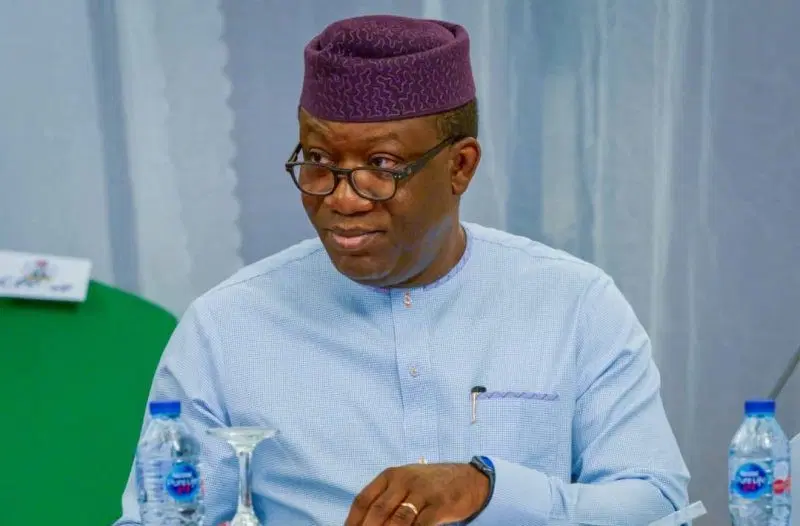
Former Governor of Ekiti State and ex-Minister of Mines and Steel Development, Dr Kayode Fayemi, has warned the United States against slipping into isolationism in its engagement with Africa, insisting that Nigeria remains a must-have strategic partner in the evolving global order.
Fayemi maintained this position in Lagos while speaking as a panelist at the Nigeria Moment, a Nigeria–United States Strategic Dialogue organised by the American Business Council in collaboration with the Heritage Foundation.
In his presentation, which focused on why Nigeria is a must-have partner in the changing world order, Fayemi,former chairman of the Nigeria Governors’ Forum (NGF) stressed the need for a more holistic relationship between both countries grounded in transparency, mutual benefit and shared prosperity.
He insisted that Nigeria must be treated as a strategic partner in the emerging world order.
“While welcoming the growing American interest in Nigeria’s vast mineral endowment, Fayemi warned that the partnership must go beyond resource extraction.
“Nigeria must be engaged as a strategic actor and a co-creator in shaping the future of global energy and resource governance, rather than as a testing ground for experiments. A partnership built on mutual respect, shared interests and long-term cooperation offers the strongest foundation for an enduring relationship between Nigeria and the United States,” Fayemi said.
Describing the engagement as a pleasure, Fayemi said the dialogue brought together a distinguished group of policymakers, business leaders and strategic thinkers to reflect on the future of Nigeria-US relations.
He commended the convener of the dialogue, Mr Ayo Otuyalo,for an excellent convening and for bringing together such high-level participants for the important strategic conversation.
The conference featured Governor Babajide Sanwo-Olu of Lagos State as keynote speaker, alongside senior representatives of the Federal Government, including the Minister of Industry, Trade and Investment, Dr Jumoke Oduwole; Minister of Power,
Also st the event were : Engr Joseph Tegbe; Minister of Solid Minerals Development, Mr Dele Alake, represented by Engr Simon Nkom; and the Head of the Nigerian Upstream Petroleum Regulatory Commission (NUPRC), Mrs Oritsemeyinwa Eyesan among others.
-
 Health & Wellness1 year ago
President Tinubu Directs Cut in Dialysis Cost from ₦50,000 to ₦12,000
-
News2 years ago
CBN Debunks Fake Circular on New ₦5,000 and ₦10,000 Notes
-

 Business7 months ago
Dangote Refinery Reduces Petrol Gantry Price To ₦1,200 Per Litre
-

 International News7 months ago
Indian Police Arrest Nigerian Over ₦290m Drug Haul
-

 Business7 months ago
After Plea Bargain, Court Discharges Stella Oduah of ₦2.5bn Fraud
-
Business2 years ago
Dangote; We Did Not Fix ₦600/Litre Petrol Price
-
 Trending News1 year ago
NELFUND Disburses ₦86bn To 449,000 Beneficiaries
-
 Opinion2 years ago
Championing the People’s Voice: Obasa’s Dedication to Grassroots Representation By Dave Agboola⁰