
Connect with us

News

Ondo 2024 Guber : Police Tighten Security, Deploy Officers Across 18 LGAs

Published

on

Spread the love

Photo combo of Lucky Aiyedatiwa, Sola Ebiseni, Agboola Ajayi and Abbas-Mimiko


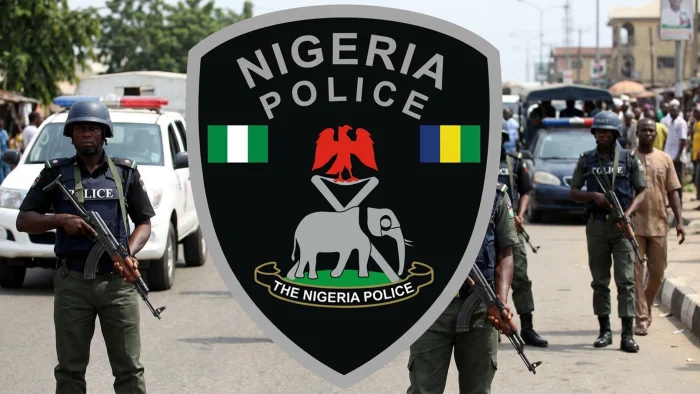
The Nigeria Police Force has affirmed its readiness to ward off any form of threat in Ondo State during the governorship election slated for Saturday.


A statement by the NPF relations officer, ACP Muyiwa Adejobi on Thursday said the police had firmed up security architecture in the state by deploying officers across all the 18 local government areas, 203 wards and the 3, 933 polling units in the state.

It assured that at least four police officers in collaboration with other security personnel will be present at each polling unit, to ensure a smooth poll.


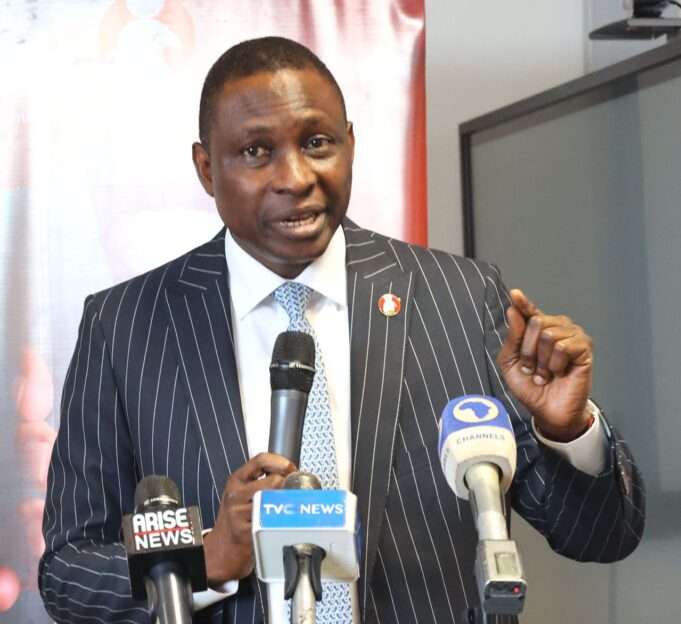
The Deputy Inspector-General of Police in charge of the Ondo State Elections, DIG Sylvester Alabi held a press briefing on Thursday at the Ondo State Police Command Headquarters, Akure, where he addressed officers deployed for the election duty and the members of the press, emphasising the readiness of the NPF and other security agencies.


Seventeen political parties are fielding candidates in the election.

The statement read in part, “The DIG during his address mentioned that the Force had begun effective deployments of personnel across all 18 Local Government Areas, 203 Wards, and 3,933 Polling Units in the state, assuring the presence of at least four (4) Police Officers in collaboration with officers representing other election security agency, at each polling unit, to ensure a smooth poll.


“In a bid to emplace proactive measures against all forms of security threat and interference during the electoral process, the DIG emphasized the importance of Intelligence gathering and firmness.”


The NPF said these approaches were essential for upholding safety and security, as they assist in identifying and preventing electoral fraud, including vote-buying and manipulation.


“By leveraging intelligence gathering, the police can ensure a secure, free, and fair electoral process. To this end, the Force has carried out a comprehensive threat analysis and as well, deployed adequate personnel to areas identified as vulnerable points during the elections.”


The DIG further encouraged a collaborative effort between the NPF, other election security agencies and the electorates, reiterating the commitment of the Force to maintaining law and order across the state with adequate contingency plans to respond appropriately to issues that may arise before, during and after the election.


He advised citizens to abide by the provisions of the Electoral Act, 2023, (as amended) and INEC guidelines, as well as all other extant laws of the land, as every electoral offender and troubles shooter would be arrested and prosecuted accordingly.”


INEC Distributes Sensitive Materials

The Independent National Electoral Commission has distributed sensitive materials, including ballot papers to the 18 local government areas in the state in a move to ensure the timely arrival of electoral materials at the polling booths.

The materials were distributed on Thursday from the Central Bank of Nigeria in Akure under the supervision of the State Resident Electoral Commissioner, Oluwatoyin Babalola.


Representatives of political parties, security agencies, and other key stakeholders witnessed the exercise.

“We are committed to transparency and are making every effort to ensure the voting process is as smooth as possible,” Babalola stated.

She also emphasised the logistical preparations made for riverine and remote areas of Ondo


FRSC Deploys 1500 Personnel

As part of efforts put in place to ensure smooth conduct of the election, the Corps Marshal, Federal Road Safety Corps, Shehu Mohammed has approved the deployment of 1,500 operatives, and ordered them to collaborate with other security agencies to enforce compliance on restrictions of vehicular movement.


The directive issued by the Assistant Corps Marshal Corps Public Education Officer of the FRSC, Olusegun Ogungbemide, Mohammed also mandated the personnel to clear obstructions from the roads, carry out rescue operations in case of emergencies, and maintain orderliness in polling booths.


In the same vein, adequate mobilisation has also been made for operational tools including deployment of 25 patrol vehicles, 7 tow trucks, as well as 6 ambulances to strengthen enforcement of restrictions during the entire process of the election.


He warned the personnel deployed to play an active role in the democratic exercise. While emphasising the need to exhibit the highest sense of professionalism, the Corps Marshal also admonished them to avoid any act that could lead to abuse of the rights of electorates.

Govt Declares Work-Free Day

As of the time of filing this report, activities across the state are said to have slowed.

Government offices and schools are shut as the state government declared Friday a work-free day.
Continue Reading
Click to comment

Leave a Reply

Your email address will not be published. Required fields are marked *

International News

Israel Says It had Struck Two Naval Missile Production Sites In Tehran

Published

on

Spread the love

The Israeli military announced on Wednesday it had struck two naval cruise missile production facilities operating under Iran’s ministry of defence in Tehran.


“In recent days, the Israeli air force acting on IDF intelligence struck two key naval cruise missile production sites in Tehran,” the military said.

It said the facilities were used to “develop and manufacture long-range naval cruise missiles, which are capable of rapidly destroying targets at sea and on land”.

The strikes “represent another step in deepening the damage done to the regime’s military production infrastructure”, the military added.

Last week, the military announced its fighter jets had struck several Iranian naval ships in the Caspian Sea, including vessels equipped with anti-submarine missiles.


AFP

Continue Reading

International News

2025 ‘Deadliest Year’ Yet For Red Sea Migrants, UN Reports 922 Deaths

Published

on

Spread the love

The number of migrants who died on the “Eastern Route” from the Horn of Africa to the Arabian Peninsula doubled to a record high of 922 last year, the UN migration agency said Wednesday.

Tens of thousands of migrants from Ethiopia, Somalia and neighbouring countries take the route across the Red Sea each year, mostly from Djibouti to Yemen, in search of work as labourers or domestic workers in wealthy Gulf countries.

“2025 was the deadliest year ever recorded on the Eastern migration route… with 922 people dead or missing — double the number from the previous year,” Tanja Pacifico, head of mission for the International Organisation for Migration (IOM) in Djibouti, told AFP.

The majority of victims were from Ethiopia, the second most-populous country in Africa with more than 130 million people. It is plagued by multiple internal conflicts and deep poverty.

“IOM remains fully committed to working alongside the government of Djibouti to promote safe and dignified migration pathways, in order to prevent further tragedies,” said Pacifico.

Many migrants who cross the Red Sea find themselves stuck in Yemen, the poorest country on the Arabian Peninsula, which has been embroiled in a civil war for nearly a decade, and some even choose to return.

Rapid economic growth in Ethiopia — estimated to reach around 10 percent in 2026 — could encourage less migration, IOM says, but that is mitigated by high inflation, also around 10 percent in February.


AFP

Continue Reading

International News

Denmark Faces Lengthy Negotiations To Form A Government

Published

on

Spread the love
Election workers recount ballots in the Marselisborg Hallen in Aarhus, Denmark on March 25, 2026. (Photo by Mikkel Berg Pedersen / Ritzau Scanpix / AFP) /

Denmark’s political parties began the thorny process of forming a government Wednesday, with the centrist Moderates as kingmaker after the prime minister’s Social Democrats scraped through a general election without a majority.

Greenland’s Inuit Ataqatigiit party member Naaja Nathanielsen (C) looks on in a polling station in Nuuk, on March 24, 2026, during the parliamentary election in Denmark (Photo by Oscar Scott Carl / Ritzau Scanpix / AFP) / Denmark OUT

Danes were braced for a weeks-long process as Prime Minister Mette Frederiksen seeks to consolidate power in the deeply splintered parliament after Tuesday’s snap vote.

Denmark’s Prime Minister Mette Frederiksen arrives at Amalienborg Palace in Copenhagen to inform the king about the election result one day after the parliamentary election on March 25, 2026. (Photo by Martin Sylvest / Ritzau Scanpix / AFP) 

A left-wing bloc made up of five parties, including Frederiksen’s Social Democrats, won 84 seats; the right-wing and far-right claimed 77; and the Moderates won 14 in the election.

The Social Democrats posted their worst election score since 1903—though they remained Denmark’s largest single party, with 38 seats in the 179-seat parliament.

Chairwoman of the Social Democrats Mette Frederiksen attends a party leader debate hosted by Publicists’ Club one the day after the parliamentary election at the Confederation of Danish Industry’s building in Copenhagen on March 25, 2026. (Photo by Liselotte Sabroe / Ritzau Scanpix / AFP)


Frederiksen formally tendered her coalition government’s resignation to King Frederik on Wednesday, telling a televised party leader debate she wanted to try to form a centre-left government.

“The most realistic scenario” would be a coalition with the five parties on the left and the centre-right Moderates, she said.

But it is not certain the Moderates, led by Foreign Minister Lars Lokke Rasmussen, would agree to that.

“I don’t believe that Denmark needs policies aligned with” the leftist Red-Green Alliance, Lokke said.

Chairman of the Moderates Lars Loekke Rasmussen attends a party leader debate at the Confederation of Danish Industry’s building in Copenhagen on March 25, 2026, the day after the parliamentary election. (Photo by Liselotte Sabroe / Ritzau Scanpix / AFP) / Denmark OUT

King Frederik was to meet party leaders individually later Wednesday to determine who should be asked to try to form the next government.

“My expectation is that Mette Frederiksen will become prime minister,” University of Copenhagen political science professor Rune Stubager told reporters.

“But I don’t know with the backing of which parties, like the left wing or the right wing,” he said.

He noted that Lokke, a two-time former prime minister, would likely vie for the position of prime minister, even though he has adamantly denied any interest in the job.

“Danes want me and not another prime minister. I still have the backing to be able to continue on behalf of the Danish people,” Frederiksen insisted during the debate.

Frederiksen has for the past four years headed an unprecedented left-right coalition made up of her Social Democrats, the Moderates and the Liberals.

The Liberals have refused to continue in a Social Democrat-led government.

‘Too Hard To Say’

Danes are now prepared for long negotiations. After the 2022 election, the talks lasted six weeks.

“It’s a long process, which means the government won’t be formed and it will be quite difficult to pass laws during this period,” lamented Jesper Dyrfjeld Christensen, a 54-year-old engineer.

“It’s really too hard to say who will be part of the coalition,” admitted Stubager.

With 12 parties in parliament, the political landscape is jagged — though Denmark is accustomed to minority governments.

“To some extent, this is the way Danish politics works. You have a minority government in the centre which forms a majority with the left on some issues and with the right on others,” he explained.

The negotiations are expected to focus on economic and pension issues, pollution and immigration, he said.

The traditional far-right party, the Danish People’s Party, which has heavily influenced policy since the late 1990s but slumped in the 2022 election, more than tripled its result to 9.1 per cent of votes.

The three anti-immigration groups together garnered 17 per cent, a stable figure for Denmark’s populist right over the past two decades.

“If negotiations take place in the left-wing bloc with the moderates, then there will be more focus on green issues than on immigration,” Stubager said.

“But if, instead, the Moderates negotiate with the parties on the right, then the central issue will be immigration.”

Four seats in Denmark’s parliament are held by its two autonomous territories — two for Greenland and two for the Faroe Islands.

While the Faroese renewed the mandates of the two outgoing lawmakers, with one for each bloc, Greenland overwhelmingly backed the left-wing party and Naleraq, which advocates rapid independence from Denmark.


AFP

Continue Reading

Trending

Copyright © 2026 TheColumn NG