
Business
Corruption Hinders Trade and Investment Growth in Nigeria — US Report

The United States government has stated that corruption continues to pose a major obstacle to trade and investment in Nigeria.
In its latest 2025 National Trade Estimate Report on Foreign Trade Barriers, the Office of the United States Trade Representative said corruption and lack of transparency in tender processes are of great concern to U.S. companies.
“U.S. firms experience difficulties in day-to-day operations as a result of inappropriate demands from officials for ‘facilitative’ payments.
“Efforts to strengthen anticorruption measures have been hampered by inter-ministerial infighting and partisan politics.
“Questions also remain regarding the Nigerian justice system’s capacity to achieve convictions and appropriate sentencing for corruption-related crimes.”
It also faulted Nigeria for the continued delay in approving import permits for American agricultural products, describing the situation as a longstanding trade barrier that has hindered access to the Nigerian market.
It said that despite repeated efforts to secure market access, Nigeria had not acted on several pending requests concerning food and agricultural imports from the US.
The US National Trade Estimate Report on Foreign Trade Barriers stated, “Since 2019, the United States has sought to negotiate import permits for the export of several categories of US food and agricultural products. Nigeria has been slow to approve these requests.” Festival, Nigeria, Ghana facing brain drain, others
The USTR noted that Nigeria’s weak capacity to review certificates, inspect goods, and conduct testing had contributed to long clearance delays, forcing many traders to rely on informal channels.
It also criticised Nigeria’s lack of consistency in applying sanitary and phytosanitary rules, saying this had created confusion among exporters.
“Nigeria is not consistent in the implementation of technical regulations and sanitary and phytosanitary measures, which can create confusion and undermine compliance,” it said.
The US government also took issue with Nigeria’s complex and restrictive import regime. It noted that while the country’s average Most-Favoured Nation applied tariff rate stood at 12 per cent in 2023, agricultural products attracted 15.9 per cent, and non-agricultural goods 11.4 per cent.
The report added that Nigeria imposes several supplementary charges that significantly raise the effective rate paid by importers.
“Nigeria maintains a combined duty plus other associated import fees of 50 per cent or more on 79 tariff lines. These include 17 tariff lines on which the combined duty plus other associated import fees reach or surpass the 70 per cent limit set by ECOWAS,” the report said.
It also criticised Nigeria’s continued import bans on 25 product categories, including poultry, beef, spaghetti, fruit juice in retail packs, used vehicles over 12 years old, soaps, and certain alcohols, describing them as barriers to trade.
“The Nigeria Customs Service continues to ban the import of 25 different product categories,” it added.
The report pointed to systemic problems in Nigeria’s customs administration, including corruption, manual processes, and inconsistent interpretation of trade rules.
“Importers report inconsistent application of customs regulations; lengthy clearance procedures, often due to outdated manual processing systems; and corruption,” the USTR stated.
It noted that although the Federal Government approved a $3.1bn customs modernisation project in 2020 to automate processes, the project had suffered delays and was now the subject of legal disputes.
On public procurement, the USTR said US companies face difficulties accessing government contracts due to a lack of transparency and contract payment issues.
It added that agencies often failed to comply with procurement guidelines, despite the requirement for a “Certificate of ‘No Objection’ to Contract Award” from the Bureau of Public Procurement.
“Nigerian Government agencies do not always follow procurement guidelines,” the report said. “Foreign government-subsidised financing arrangements appear in some cases to be a crucial factor in the award of government procurements.”
While acknowledging the passage of the Copyright Act, 2022, and other intellectual property reforms, the report said enforcement remained poor.
“Counterfeit goods, including pharmaceuticals, automotive parts, and other consumer goods, remain widely available in Nigeria and often threaten the health and safety of consumers,” it stated.
The USTR also raised concerns over digital trade restrictions, noting that the National Information Technology Development Agency Guidelines require all data concerning Nigerian citizens to be stored within the country.
It said these localisation rules, though not rigorously enforced, created uncertainty for businesses.
It noted that the Finance Acts of 2020 and 2021 introduced new taxes on digital services provided by foreign companies to Nigerian consumers.
“US companies have expressed concerns about the impact of the tax,” the report said.
It further criticised restrictions in Nigeria’s reinsurance and advertising sectors, including prohibitions on foreign participation in oil and gas risk reinsurance, and mandatory advertising registration with the Advertising Regulatory Council of Nigeria.
On foreign exchange, the report stated that despite the Central Bank of Nigeria’s move to unify exchange rates in 2023 and lift restrictions on access to forex for 43 previously barred items, challenges remained.
“Companies report that the approval process for the repatriation of funds remains a significant barrier to investment by US entities, as it is frequently subject to delays and denials,” it said.
It disclosed that out of an estimated $7bn in forex backlogs, only $4.6bn had been cleared by the CBN as of March 2024, while $2.4bn was still under review.
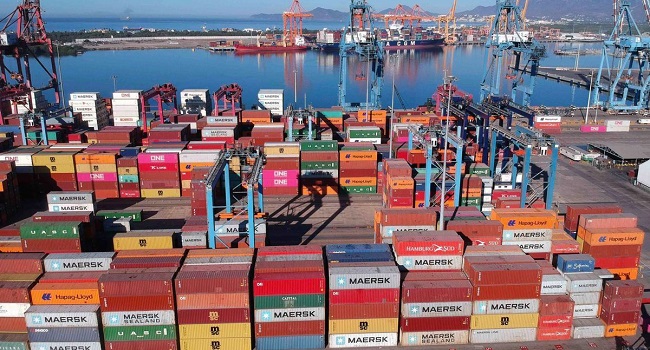
The USTR described Nigeria’s main ports, particularly Apapa in Lagos, as some of the most expensive globally, citing congestion, infrastructure issues, and maritime insecurity.
“The 30-day average delay to clear a container ship makes Apapa in Lagos among the most expensive ports for shipments from the United States,” it noted.
“While acknowledging the Federal Government’s establishment of the Ministry of Marine and Blue Economy and its efforts to enhance port efficiency, the report concluded that trade barriers and investment restrictions remain widespread in Nigeria.”




As International Women’s Day [IWD] draws near, Wema Bank, Nigeria’s oldest indigenous bank, most innovative and pioneer of Africa’s first fully digital bank, ALAT, has announced its 2026 IWD Grand Event, scheduled to hold on March 4th, 2026.
Inspired by the global IWD 2026 theme “Give To Gain”, Wema Bank’s 2026 IWD event is centred on the topic “When Women Gain, We Grow”, spotlighting not only the importance of giving to women but also the impact of each effort towards this cause, with the ultimate goal of promoting a culture of supporting and celebrating women.
Announcing the event, Wema Bank’s MD/CEO, Moruf Oseni, reiterated the Bank’s commitment to continue pulling its weight in the promotion of women inclusion. According to him, “Wema Bank has never been one to pay lip service and when it comes to gender inclusion; we walk the talk with pride. A society where women are left out is one that is crippled, and as a Bank, we have made it a priority to never relent in providing tailored opportunities for women, celebrating their growth and supporting their journey, towards building a society where every woman can thrive. This was the idea behind the launch of our women-focused proposition, SARA by Wema, in 2019 and this is the inspiration behind all we do as a Bank towards promoting the 5th Sustainable Development Goal [SDG], gender equality”.
“This year’s IWD theme is quite personal to us because as a Bank that continues to give to women, we have seen firsthand the unique potential that lies within women both personally and professionally. As such, we have decided to dedicate this year’s celebration towards reminding the world of the countless ways we can give to women, and why it is not merely an option but a necessity. This year for us, is about impact—spotlighting, celebrating and encouraging it. Our goal is for every person that joins us for this grand event to be positively transformed in mindset and in action, in the hope that more priority will be given to supporting and giving to women both in the little things we do on a daily basis and in the large-scale efforts; as we collectively bridge the gap in gender equality”, Oseni concluded.
Wema Bank’s 2026 IWD event will convene top women across diverse industries and sectors, as well as “everyday” women still trying to navigate life in the face of prevailing realities, providing a platform for women from all walks of life to network, share valuable insights, access viable opportunities and assess shared versus contrasting realities, all towards showcasing how much impact is generated when individuals, institutions and societies give to women.
Among the highlights of Wema Bank’s upcoming IWD event are the SARA Gives to Empower Her Award which promises grants in support of women who have given and made impact on other women; the employee-focused He For She Award which recognises male employees of the Bank who have given to women beyond financial support; the Wema Knight Gives initiative through which the Bank’s staff will give back to women across Nigeria; and the launch of the Wema Bank Girl Child Journal, a reflective journal that collates real-life insights and words of advice for the girl-child from the perspectives of 80 key contributors across different spheres of life.
Anyone interested in attending the event physically or virtually is encouraged to register at wemabank.com/iwd.
Business
Wema Bank Celebrates Valentine’s Day with “Evolution of Love” Campaign for Couples, Singles, and Friends

Following the launch of “ALAT: The Evolution”, Wema Bank, Nigeria’s oldest indigenous bank, most innovative and pioneer of Africa’s first fully digital bank, ALAT, has launched its 2026 Valentine’s campaign tagged “Evolution of Love, powered by Wema Bank”.
Inspired by the “evolution” theme of its upgraded ALAT app, Wema Bank launched the “Evolution of Love” campaign with the goal of celebrating different forms of love experienced by customers, and how they have evolved over time. From self-love to friendship, romantic love to family, this campaign introduces a fresh twist to Valentine’s, decentralising romantic love and creating a space for every Wema Bank customer this season of love.
“Evolution of Love, powered by Wema Bank” calls on new and existing Wema Bank customers across 4 categories: Singles [self-love], friends [friendship], married couples and those getting married this February [romantic love]. While the gifts vary across each category, the requirement is the same—create a Love Goal on the ALAT App and submit a 1-minute video on any social media platform sharing how your love journey has evolved over the years, for access to gifts ranging from cash to spa vouchers, vacations and expense-paid getaways, and for one couple getting married in February, a special performance at the wedding from a celebrity artiste, courtesy of Wema Bank.
Announcing the campaign, Wema Bank’s MD/CEO, Moruf Oseni, gave further insights into the Bank’s approach to celebrating Valentine’s this year. According to him, “Love is central to the delivery of true customer-centric service, and as a Bank that prides itself on being customer-centric, this is reflected in the thought, intentionality and commitment we put into all we do at Wema Bank. It has always been clear how much we care about our customers and this year, we decided to celebrate the journey of love across different categories that reflect the different experiences and realities of our customers, from friends and couples who have grown together over the years to lovers taking the bold step of marriage and even singles because self-love is crucial”.
“This Valentine’s, we chose to acknowledge the beauty of every love journey, and we are inviting all new and existing customers who have a story to share. For the friends and singles, our goal is to promote true friendship and self-love. For families and married couples, our goal is to strengthen bonds by reminding them of how far they have come. For those intending to get married, we are adding one more memorable touch to their wedding with a special artiste performance. Our ultimate goal is for every Wema Bank customer to feel loved this season and beyond,” Oseni concluded.
Anyone interested in submitting their entry is encouraged to make a 1-minute video sharing their love journey and where applicable, feature the person with whom their love has evolved. All submissions are to be posted on any social media platforms using #ALATEvolutionofLove and tagging @alat_ng and @wemabank.
To be eligible, customers are expected to activate SAW, the Voice Banking virtual assistant on the upgraded ALAT App, create a personal or group goal on the app with the name “Love Goal”, fund the goal and transact with their ALAT/Wema card between February 1st – February 10th.
More details on qualification criteria are available at wemabank.com/love

Wema Bank, Nigeria’s most innovative bank and pioneer of Africa’s first fully digital bank, ALAT, has launched the upgraded version of its flagship digital banking platform, ALAT by Wema. Designed as the next phase in digital banking, the upgraded version of ALAT delivers a smarter, faster, and more intuitive experience, reinforcing Wema Bank’s leadership in technology-driven financial services.
Tagged ALAT: The Evolution, the upgraded version represents a significant advancement in how customers interact with their bank. It enables seamless banking through intelligent features such as voice banking (called SAW), which allows customers to carry out banking activities using natural voice commands, reducing friction and improving accessibility. It also introduces Tap and Pay for quick, secure, and convenient contactless transactions, alongside uptime prediction that enhances transparency, reliability, and confidence around service availability. Together, these innovations are designed to simplify everyday banking while anticipating customer needs in real time, reinforcing Wema Bank’s commitment to trust, efficiency, and customer-centric digital experiences.
Announcing the upgraded version, the Managing Director and Chief Executive Officer of Wema Bank, Mr. Moruf Oseni, said, “ALAT: The Evolution is more than an upgrade. It is a clear demonstration of our commitment to redefining digital banking in Africa. By understanding the future of banking and listening closely to our customers, we have upgraded ALAT by Wema to a digital banking platform that is smart, intelligent and dependable. This evolution reinforces our promise to deliver innovation that genuinely enhances how people live, work, and transact everyday.”
He added that migrating to the upgraded app is seamless. “Existing customers can simply visit the Google Play Store or Apple App Store to update their existing ALAT app and sign-in with their existing login details (All their account information and transaction history remain intact on their profile and they will also gain access to new features that make banking faster, more intuitive, and more reliable). For new customers, all they have to do is visit the Google Play Store or Apple App Store to download ALAT by Wema app and click the Get Started icon to onboard seamlessly.
Speaking on the technology in the upgraded ALAT by Wema, Mr. Olusegun Adeniyi, Chief Digital Officer at Wema Bank, explained, “With ALAT: The Evolution, we set out to enhance not just functionality but the overall banking experience. By integrating voice banking, contactless payments, and predictive reliability, we are delivering a platform that is built on powerful technology and responds intelligently to customer needs. This upgrade reflects our long-term digital vision to create a digital bank that is adaptive, intuitive, and consistently available.”
Built on speed, intelligence, and user-centric design, ALAT: The Evolution redefines everyday banking through intuitive features such as voice-enabled transactions, contactless payments, and predictive service reliability. Designed to anticipate customer needs in real time, the platform delivers a smarter, more seamless, and dependable digital banking experience that reflects Wema Bank’s vision for the future of finance.
With the upgraded version of ALAT, Wema Bank continues to strengthen its position as a digital-first institution, delivering innovative solutions that empower individuals and businesses to bank with confidence in an increasingly digital economy.
-
 News3 years ago
Just In: President Tinubu returns to Nigeria
-
 News3 years ago
2023 Elections: Outgoing Rwandan High Commissioner say s Nigeria, ‘ handle their destiny’ in a peaceful way.
-
 Entertainment3 years ago
Social media cloth Vendor Found Dead In Ibadan Hotel.
-
 News3 years ago
Ogun HoS Solicit Affordable Housing For Civil Servants
-
 Trending News3 years ago
FG begins 40% pay rise for workers.
-
 Entertainment3 years ago
9mobile Ambassadors Begin “Meet And Greet” Session With Staffs, Customers.
-
Sports3 years ago
CAF SALUTES RIVERS UNITED AFTER SEALING QUARTER-FINAL TICKET.
-
 Business3 years ago
JUST IN: DSS Arrests Godwin Emefiele