
International News
Impact Of US judge’s Ruling On Google’s Search Dominance


Google has escaped a breakup of its Chrome browser in a major US competition case, but the judge imposed remedies whose impact remains uncertain just as AI starts to compete with search engines.
Here is what we know about how the antitrust ruling could affect the company, the wider tech sector and ordinary users of the giant’s services.
What is the impact on Google?
Judge Amit Mehta, who found a year ago that Google illegally maintained monopolies in online search, did not order the company to sell off its widely-used Chrome browser in his Tuesday ruling.
Neither did he halt Google’s agreements with companies like iPhone maker Apple or Firefox browser developer Mozilla, under which it pays them to make Google their default search engine.
Instead, he ordered remedies including requirements to share data with other firms so they could develop their own search products, and barring exclusive deals to make Google the only search engine on a device or service.
The ruling was “far milder than feared… (it) removes a significant legal overhang and signals that the court is willing to pursue pragmatic remedies,” Hargreaves Lansdown analyst Matt Britzman commented.
Google chiefs nevertheless still “disagree… strongly with the Court’s intial decision in August 2024,” the company’s Vice-President of Regulatory Affairs Lee-Anne Mulholland said in a blog post — hinting at a likely appeal that could go all the way to the US Supreme Court.
Stock in Google parent company Alphabet surged on Wednesday as investors welcomed the ruling.
How will this affect the wider tech sector?
Mehta himself noted that the landscape has changed since the US Justice Department and 11 states launched their antitrust case against Google in 2020.
The emergence of generative artificial intelligence as a challenge to traditional search “give(s) the court hope that Google will not simply outbid competitors for distribution if superior products emerge,” he wrote in his ruling.
“Competition is intense and people can easily choose the services they want,” Google’s Mulholland agreed.
Others in the sector were unhappy with the ruling.
“Google will still be allowed to continue to use its monopoly to hold back competitors, including in AI search,” said Gabriel Weinberg, chief executive of privacy-conscious search engine DuckDuckGo.
Beyond Google, observers have pointed out that Apple and Mozilla are both big winners from the decision.
Ending tie-ups like theirs with Google would “impose substantial — in some cases, crippling — downstream harms to distribution partners, related markets and consumers,” Mehta wrote.
“This is a huge win for Apple, but perhaps even more so for Mozilla, which may very well have died” without the cash infusions, former Google Ventures investor M.G. Siegler wrote on his blog.
What about ordinary search and AI users?
In the near term, some search data will be shared by Google with competitors under the ruling — with Mulholland saying the company has “concerns about how these requirements will impact our users and their privacy”.
Looking further ahead, “Google Search is in the process of being disrupted” by chatbots, Siegler said.
A future where the company’s flagship search product is completely displaced may yet be far off, as Google Search notched up more than 85 billion individual visits in the month of March 2024, the most recent with data available from Statista.
That compares with around 700 million weekly users reported by OpenAI for its ChatGPT chatbot, the biggest-name generative AI product.
What’s more, Google is not barred from entering into the same kinds of distribution deals as it struck for online search to place its own AI products on partner devices or services.
The company already reports 450 million monthly users for its Gemini chatbot app, and offers competitive tools in other areas like video generation.
AFP




A Finnish appeal court has reduced the prison sentence of Biafran separatist leader, Simon Ekpa, from six to four years.
Finnish newspaper Yle disclosed this in a report on Thursday.
However, the Court of Appeal upheld the decision of the Päijät-Häme District Court, which found Ekpa guilty of terrorism-related charges last year.
The charges were related to Ekpa’s alleged activities aimed at re-establishing an independent state of Biafra in southeastern Nigeria.
Ekpa subsequently appealed the ruling, seeking to have his conviction and sentence overturned.
In a ruling that offered some relief to Ekpa, the Court of Appeal found him guilty of the same offences but reduced his prison term after considering the circumstances surrounding his actions. The court noted that the situation in the Biafran region closely resembled, but did not meet the definition of, a civil war.
Ekpa had told the court that his involvement was not motivated by terrorist intent, citing the political turmoil in the Biafran region.
The prosecutor in the case had also appealed the district court’s decision, arguing that the prison sentence did not reflect the seriousness of Ekpa’s offences.
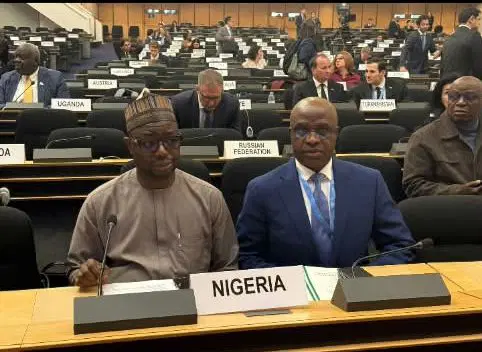
The Federal Government has called for stronger international responsibility sharing and innovative arrangement to address the growing humanitarian needs of over 142,000 refugees and asylum seekers from 42 countries.
The Minister of Humanitarian Affairs and Poverty Reduction, Dr. Bernard Doro, made the call while delivering Nigeria’s national statement at the 77th Session of the Executive Committee of the United Nations High Commissioner for Refugees (UNHCR), currently holding at the Palais des Nations in Geneva.
In a statement by his Senior Technical Adviser on Information Systems and Data Analysis, Dr. Abimbola Fasanu, the Minister disclosed that as of September 2026, Nigeria had received over 24,000 returnees and was managing a population of more than 6.7 million internally displaced persons (IDPs).
Doro reaffirmed Nigeria’s commitment to international refugee protection obligations, noting that the country continues to maintain an asylum system under the National Commission for Refugees, Migrants and Internally Displaced Persons (NCFRMI) Act of 2022.
He stated that no case of refoulement had been recorded in Nigeria in 2026, reaffirming the country’s commitment to protecting people fleeing persecution from being returned to situations where their lives or freedom could be threatened.
Highlighting progress on durable solutions, the Minister disclosed that over 7,000 Nigerian refugees had voluntarily returned from neighbouring countries this year under Tripartite Agreements, while another 14,000 in Cameroon had registered their intention to return. An agreement covering the return of 2,000 Nigerians from Niger is also being finalised.
He acknowledged the continued hospitality of Cameroon, Chad and Niger in providing refuge to displaced Nigerians.
According to the Minister, improved security conditions in parts of the country are creating opportunities for voluntary return, while Resettlement Cities established in seven locations are supporting the phased closure of displacement camps in conditions of safety and dignity.
Beyond return and resettlement, Dr. Doro outlined measures aimed at promoting self-reliance and reducing prolonged dependence on humanitarian assistance.
He explained that refugees in five states are benefiting from access to land, agricultural inputs and skills training, while the newly established Public-Private Partnership Department of the NCFRMI is supporting efforts to expand livelihood opportunities.
The Minister also cited the successful local integration of former Liberian and Sierra Leonean refugees, some of whom have established businesses and become economically active members of their host communities.
On access to essential services, he disclosed that displaced persons and host communities are being enrolled in Nigeria’s national identity system to facilitate access to banking, education and social services.
He added that refugees are being incorporated into state action plans and social registers, while ten mobile documentation buses are expected to extend identity services to underserved and remote communities.
Doro further highlighted the development of a Digital Gateway in collaboration with UNHCR to provide refugees with secure online access to information.
Addressing the growing pressure on humanitarian financing, the Minister urged the international community to strengthen support for refugee-hosting countries through expanded resettlement opportunities, complementary pathways and greater responsibility-sharing.
He specifically called on UNHCR to explore partnerships with regional and subregional financial institutions, including the African Development Bank and the ECOWAS Bank for Investment and Development, as a means of mobilising additional resources for refugee protection and durable solutions.
The Minister emphasised that the responsibility for addressing displacement could not rest on host countries alone, particularly at a time of increasing humanitarian needs and declining international resources.
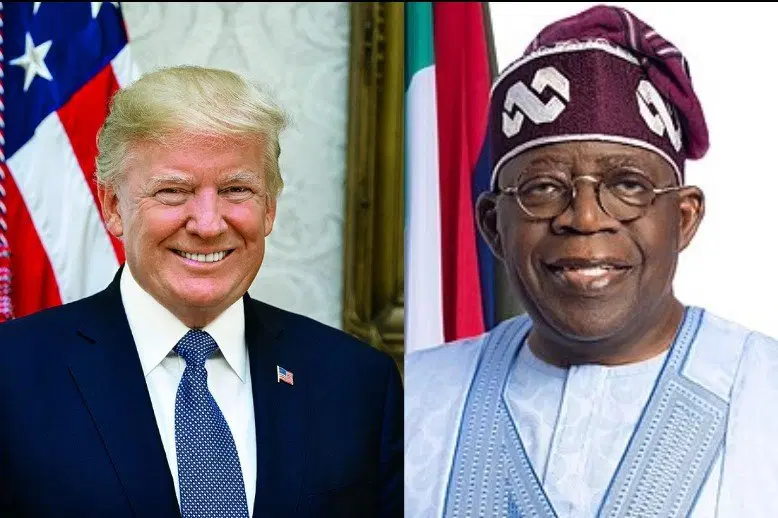
The United States has listed Nigeria among 14 countries identified for recruiting or using child soldiers, warning that the designation could trigger restrictions on certain forms of military assistance.
The listing is contained in the 2026 Trafficking in Persons (TIP) Report, which covers the period from April 1, 2025, to March 31, 2026.
According to the report, restrictions under the Child Soldiers Prevention Act (CSPA) could affect international military education and training, foreign military financing, excess defence articles, peacekeeping operations and licences for direct commercial sales of military equipment, unless a presidential waiver is granted.
Nigeria was listed alongside Afghanistan, Burma, the Central African Republic, the Democratic Republic of the Congo, Ethiopia, Iran, Russia, Rwanda, Somalia, South Sudan, Sudan, Venezuela and Yemen.
The report also retained Nigeria on Tier 2 for human trafficking, a category for countries whose governments do not fully meet the minimum standards for eliminating trafficking but are making significant efforts to comply.
However, the US raised concerns about corruption and alleged official complicity in human trafficking crimes.
“The government did not report any investigations, prosecutions, or convictions of government employees allegedly complicit in trafficking crimes or provide details or other actions taken against complicit officials from previous years,” the report stated.
The report also faulted Nigeria’s efforts to protect trafficking victims, stating that 675 victims received assistance in 2025, compared with 2,058 in the previous year.
It said support services, particularly for male victims, remained limited, with only one dedicated non-governmental organisation shelter for adult male victims operating during the reporting period.
The report further stated that shelters operated by the National Agency for the Prohibition of Trafficking in Persons (NAPTIP) restricted residents’ freedom of movement, while access to certain protection services depended on victims cooperating with law enforcement proceedings.
Despite these concerns, the report acknowledged increased government efforts in investigating, prosecuting and securing convictions in human trafficking cases compared with the previous reporting period.
-
 Health & Wellness1 year ago
President Tinubu Directs Cut in Dialysis Cost from ₦50,000 to ₦12,000
-
News2 years ago
CBN Debunks Fake Circular on New ₦5,000 and ₦10,000 Notes
-

 Business7 months ago
Dangote Refinery Reduces Petrol Gantry Price To ₦1,200 Per Litre
-

 International News7 months ago
Indian Police Arrest Nigerian Over ₦290m Drug Haul
-

 Business7 months ago
After Plea Bargain, Court Discharges Stella Oduah of ₦2.5bn Fraud
-
Business2 years ago
Dangote; We Did Not Fix ₦600/Litre Petrol Price
-
 Trending News1 year ago
NELFUND Disburses ₦86bn To 449,000 Beneficiaries
-
 Opinion2 years ago
Championing the People’s Voice: Obasa’s Dedication to Grassroots Representation By Dave Agboola⁰