
News
EFCC Boss Decries High Level Corruption Of Religious Leaders

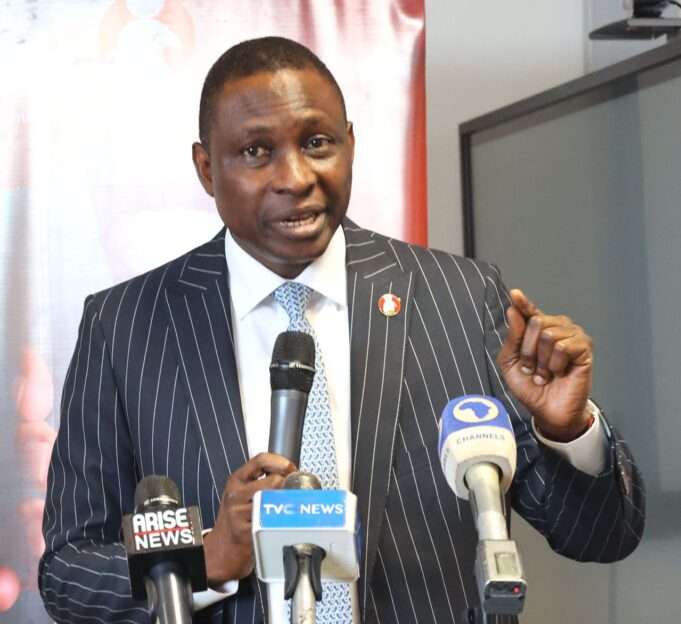
The Chairman of the Economic and Financial Crimes Commission (EFCC), Ola Olukoyede has decried the high level of corruption among religious leaders and called for a rethink of the use of religious titles such as “Pastor,” “Imam,” “Reverend” and “Bishop” for people facing allegations of financial crimes.
Olukoyede who made the call while speaking at the meeting of the Nigeria Inter-Religious Council (NIREC) and the launch of an EFCC interfaith anti-corruption manual in Abuja, revealed that the EFCC’s case files contain numerous suspects identified by religious titles, including some who have been convicted and imprisoned for financial crimes.
He said, “I have advocated for review of the title we give to men of God, “Maybe if it is possible for us to remove that title, pastor and imam.”
Olukayode who insisted that religious leaders and institutions have extraordinary responsibility in Nigeria’s anti-corruption struggle , emphasized that that one of the most consequential contributions religious leaders can make is to restore the moral dignity of honest living.
The EFCC chairman said religious titles should not influence how suspects are treated or obscure the alleged offences for which they are being investigated.
Olukayode also challenged churches and mosques to scrutinise the sources of donations and wealth brought before them, warning that accepting unexplained wealth in the name of religious expansion could amount to providing moral cover for corruption.
He cited the example of a public servant who allegedly builds a multimillion-naira religious facility far beyond what could reasonably be supported by his known earnings.
“If a public servant says he has built a mosque that is worth more than his earnings in the next 500 years, and you go there to dedicate it, you are dedicating the proceeds of crime,” Olukoyede said.
The EFCC chairman also warned religious leaders against accepting huge donations without questioning their sources.
“If he says he is giving you N550 million and you don’t ask questions, and you say, ‘God bless you,’ you are blessing the proceeds of crime,” he said.
He recounted an encounter with a suspect who introduced himself by several religious titles when he appeared in his office.
“I said, wait there. Don’t bring that one here. Did you misappropriate money or not?” That suspect was subsequently faced with five charges”.
Olukoyede stressed that the EFCC would prosecute financial crimes regardless of the religious identity of the suspect.
“If you think you’re a Christian or you’re a pastor here and you commit financial crime, I will be your enemy. I won’t be your friend,” he declared.
Olukayode stated that when he was chief of staff and also secretary at the EFCC, the agency carried out an investigation on both the Christian Pilgrims and the Muslim Pilgrims Boards adding that some of the discoveries were mind-boggling as almost 75 per cent of the money that government released to sponsor pilgrims was stolen by the leaders of those organisations.
“Some of them would register companies of their own in those countries we are travelling to by themselves. All kinds of criminal conflict of interest. The message should begin with us as leaders before we even go down to our followers. If as leaders we do the right thing, the followers will emulate us”.
Olukoyede urged religious organisations to maintain proper financial separation between institutional funds and the personal businesses or finances of their leaders.
He said offerings, zakat and other funds belonging to religious organisations should remain in the organisations’ accounts and should not be diverted to private businesses.
The EFCC chairman said religious leaders have a critical role to play in preventing corruption before it occurs, arguing that the fight against corruption cannot be won through arrests and prosecutions alone.
“The EFCC can investigate a person’s conduct. Faith communities can influence that person’s character,” he said.
He called for a new social attitude in which unexplained wealth loses its prestige in places of worship and honest living is accorded greater respect.
“Integrity is not foolishness. Honest labour is not failure,” Olukoyede said.
The EFCC chairman also disclosed that the commission had dismissed more than 40 staff members following findings of corrupt practices and other gross misconduct, saying an institution fighting corruption must demonstrate integrity within its own ranks.
He further highlighted the commission’s fraud-risk assessment and control initiative, saying the EFCC was increasingly focused on preventing public funds from being stolen rather than waiting until the money had disappeared before acting.
Olukoyede said the commission monitors the release and application of government funds as well as the execution of projects, describing prevention as central to the future of Nigeria’s anti-corruption efforts.
He maintained that corruption should not be viewed through religious, ethnic or political lenses, stressing that financial crimes have no religion and that the consequences of corruption affect Nigerians across faiths and communities.
The EFCC chairman urged pastors, imams and other religious leaders to use the commission’s new interfaith manual to educate their followers on the moral and legal consequences of corruption.
Olukayode stated that Nigeria’s religious diversity should be used to strengthen, rather than undermine, the country’s commitment to justice, ethical conduct and good governance.
He said, “We believe that no religion condones corruption and no faith entertains fraudulent engagement. The EFCC believes that financial crimes have no religion. Corruption has no tribe. Fraud does not become Christian or Muslim because of the identity of the person accused of committing it”.
There are certain things we discover our religious leaders do that is heartbreakin
The EFCC boss urged churches and mosques to challenge the values that make society worship wealth without questioning its source.
He said, “We must ask difficult questions. What message do we send when unexplained wealth commands more respect than integrity? What do young Nigerians learn when society celebrates the wealthy person but rarely asks how the wealth was acquired? What happens when religious communities condemn corruption from the pupils but confer honour and recognition without sufficient concern for the integrity behind the wealth being celebrated? “.
Also speaking, the Sultan of Sokoto and Co-Chairman of the Nigeria Inter-Religious Council (NIREC) , His Eminence Muhammadu Sa’ad Abubakar III called for a united religious response to corruption, declaring that no cleric, religious leader or influential Nigerian should be shielded from the law when found culpable.
He stated that religious leaders had a responsibility to support efforts to tackle corruption because, according to him, corruption was condemned by God.
Abubakar warned against using proceeds of corruption for religious activities, including sponsoring pilgrims to Jerusalem or Saudi Arabia for Hajj.
“You cannot steal money and then send people to Jerusalem and Mecca with corrupt money, and then you think God will accept your deeds. No.”
The Sultan urged the authorities responsible for fighting corruption to pursue anyone suspected of wrongdoing, irrespective of their religious status or connections.
He said: “Whoever is involved, even our brothers, our sisters, our fathers, our friends, those involved, should face the law.”
The Sultan also cautioned religious leaders against intervening when their members or colleagues were facing legitimate legal proceedings.
“If he is facing the law, don’t tell me he is the pastor of so-and-so church, he is the chief monk of so-and-so national mosque. We don’t want to hear that,” he said.
Abubakar stressed that the application of the law should not be determined by political considerations, saying those found to have committed offences should be dealt with according to the law.
He also used the occasion to call for greater understanding between Christians and Muslims, describing NIREC as an important platform for religious dialogue and national cohesion.
According to him, Nigerians should move beyond merely “tolerating” one another to genuinely understanding each other’s faiths and perspectives.
“Understanding is more important than toleration,” he said, urging Muslims and Christians to continue meeting, talking openly and addressing the country’s problems together.
The Sultan also appealed to religious leaders and their followers to pray for Nigeria’s political leaders, including the President, governors and members of the National Assembly, regardless of their political differences.
He warned religious leaders against using their pulpits to promote or denigrate political candidates, saying the country’s religious communities should instead encourage peaceful participation and pray for leaders to govern well.
The Sultan said Nigeria’s ability to bring Christians and Muslims together for dialogue was something the country should value, describing such engagement as essential to the stability and development of the nation.
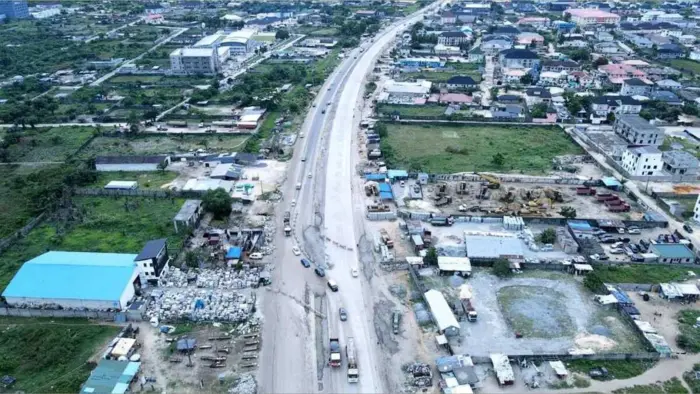
Motorists plying the deteriorating Eti-Osa-Lekki-Epe Expressway are expected to face temporary traffic disruptions as the Lagos State Government begins a 35-day rehabilitation of damaged sections from Bonny Camp to Admiralty Way Junction and around Victoria Garden City (VGC) tomorrow.
The government said traffic diversion arrangements would be introduced to minimise congestion and ensure the safety of road users during the exercise.
The Special Adviser to the Governor on Infrastructure, Olufemi Daramola, disclosed this yesterday at a stakeholders’ engagement organised by the Ministry of Works and Infrastructure to discuss the scope of work and traffic management plans for the project.
Daramola said the meeting was part of the government’s policy of consulting residents, businesses and other road users before embarking on major infrastructure projects, adding that feedback from stakeholders would inform the implementation process.
He appealed for the cooperation of residents and motorists, particularly as Lagos prepares for increased traffic during the festive season.
The rehabilitation is expected to improve road safety and ease movement along the strategic corridor, which connects residential communities, commercial centres and major industrial investments across the Lekki-Epe axis.
The expressway provides access to the Lekki Free Zone, Dangote Refinery, Dangote Fertiliser Factory, Lekki Deep Sea Port and Eleganza Industrial Estate. It also serves major housing developments and educational institutions, including Pan-Atlantic University and Lagos Business School.
However, rapid urbanisation, growing commercial activities and increasing traffic have accelerated the deterioration of some sections, leaving commuters struggling with difficult journeys along the busy route.
Daramola said the government was also addressing drainage concerns along the corridor, adding that the proposed Green Line rail project would form part of a broader plan to improve transportation infrastructure in the area.
The European Union Support to Democratic Governance in Nigeria (EU-SDGN) Election Observation Hub has said vote trading during the Ekiti and Osun states governorship elections was rampant, with voters rewarded heavily for selling their votes.
The Hub, established for election monitoring, is made up of the Kukah Centre (TKC), TAF Africa, Nigerian Women Trust Fund (NWTF), Yiaga Africa, International Press Centre (IPC) and Centre for Media and Society (CEMESO).
Speaking at the presentation and dissemination of the report on the Ekiti and Osun Off-cycle Elections (which took place in June and August, 2026, respectively) in Abuja on Tuesday, Prof. Bolade Eyinla, who read the findings of the Hub, said voters got up to N50,000 for selling their votes.
“The scourge of vote trading is becoming a pandemic,” he said, adding that, “if we don’t do anything about it, the sanctity of the vote and freedom of choice is beginning to come under severe threat and pressure.”
Prof. Eyinla lamented that vote trading has become extremely well organised and standardised, stressing that offenders remain unpunished.
“Maybe the IG (Inspector-General of Police) will tell us if they are arrested. And the result of that is that everybody has assumed a sense of impunity.
“The data shows us that 77% of the 84 verified incidents were vote trading, and party agents were the main actors in at least 90% of these cases.
“In Osun, it was 69%, and as I said, we still have not heard of any reported arrests, investigations, or prosecutions, given the magnitude of vote trading that went on in both elections.”
Describing how it was carried out, he said the voter marks the ballot paper to show his preference, but he then brings it up to show the people who are making the tally.
“And of course, once the agent confirms ‘he has done what we demanded’, payment follows.
“Originally, I was thinking payment was within the range of 10,000 or thereabouts, but the report from Osun even told me that people got N50,000. If you divide N50,000 by the number of voters in Osun, how much that will amount to in terms of the volume of money involved,” he said.
The Hub also called for the presentation of results from the ward level, noting that most of the irregularities are done at that level.
“I think for the presidential election, it’s 8,809 (wards). We want to see the results of the ward level uploaded. If you can upload polling units, then you should be able to upload ward-level results,” he argued.
However, the Hub commended the Independent Electoral Commission for organising a near-perfect election, noting that the election started early and the results were almost the same as those independently compiled.
It also commended the security agencies for ensuring a peaceful poll in Ekiti and Osun.
Dr Akin Akingbulu, the Executive Director, Centre for Media and Society (CEMESO), in his remarks, said the Hub deployed 598 observers across all 16 Local Government Areas in Ekiti on 20 June, and 823 observers across all 30 LGAs in Osun on 15 August.
“That is more than 1,400 trained Nigerians who watched, counted, verified and reported, polling unit by polling unit, so that the conversation we have today rests on facts and not on sentiment,” he said.
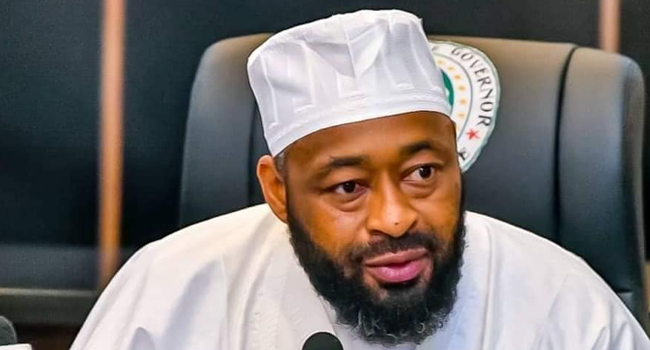
The officer in charge of Minna General Hospital Mortuary, Dr Chinweokwu Alaribe, has told the judicial commission investigating the deaths of miners in Niger State that the facility received 33 corpses, not 37 as reported by the government.
Alaribe stated this while testifying before the nine-member judicial commission, chaired by Justice Mohammed Mohammed, at its resumed sitting in Minna.
According to him, the corpses brought to the mortuary were 33, adding that he could not account for bodies that were not taken to the facility.
“I’m only aware that 33 corpses were brought in, not aware of any 37 as reported. I cannot count the corpses that were not in the mortuary. I only know that 33 corpses were brought to me,” he said.
Report says the mortician told the panel that the corpses were brought to the hospital in two batches in an ambulance.
He added that two nurses from the medical unit of the Nigeria Security and Civil Defence Corps (NSCDC) accompanied the bodies to the hospital.
Alaribe identified the nurses as Mariam and Hauwa, both attached to the NSCDC medical unit in Minna.
-
 Health & Wellness1 year ago
President Tinubu Directs Cut in Dialysis Cost from ₦50,000 to ₦12,000
-
News2 years ago
CBN Debunks Fake Circular on New ₦5,000 and ₦10,000 Notes
-
 International News7 months ago
Indian Police Arrest Nigerian Over ₦290m Drug Haul
-

 Business7 months ago
Dangote Refinery Reduces Petrol Gantry Price To ₦1,200 Per Litre
-
 Business7 months ago
After Plea Bargain, Court Discharges Stella Oduah of ₦2.5bn Fraud
-
Business2 years ago
Dangote; We Did Not Fix ₦600/Litre Petrol Price
-
 Trending News1 year ago
NELFUND Disburses ₦86bn To 449,000 Beneficiaries
-
 Opinion2 years ago
Championing the People’s Voice: Obasa’s Dedication to Grassroots Representation By Dave Agboola⁰