
News
Electoral Act: Jega Insists On Amendments Before Poll, Says President Should Not Pick INEC Chair

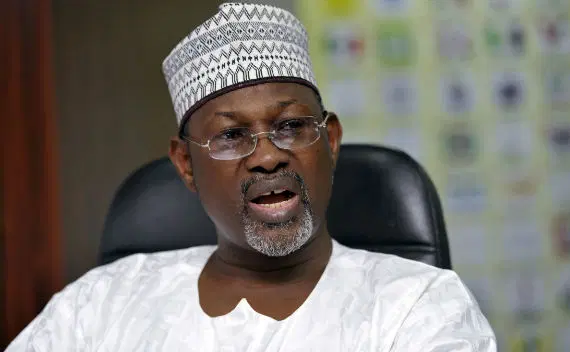
A former Chairman of the Independent National Electoral Commission (INEC), Professor Attahiru Jega, has raised concerns over some sections of the 2026 Electoral Act, calling for urgent amendment.
He maintained that regardless of the lofty intentions of the act to add value to the integrity of elections in Nigeria, it contains “issues of serious concern” and some areas that require further contemplation in order to remove ambiguities and strengthen the efficacy of the electoral law.
Prof Jega made the observations in a paper titled “Some Reflections on the 2026 Electoral Act and Nigeria’s Electoral Democracy,” delivered at a public presentation of “A Collection of Essays: Readings on the Legislature,” authored by a policy expert, Prof Ladi Hamalai, on Wednesday, in Abuja.
He identified some “grey provisions” in the act that require immediate review to include Section 60(3) that borders on the electronic transmission of election results; Section 83(5), which restrains courts from entertaining any suit on the internal affairs of a political party and Section I38 (1), which excludes qualification as a ground for post-election challenge.
The professor of political science lauded the electoral law for mandating the electronic transmission of results, but expressed worry over the clause in the provision that makes the result sheet – Form EC8A – the primary collation document, where electronic transmission fails.
While acknowledging that the clause anticipates the need to fall back on Form EC8A if all efforts at electronic transmission fail, Jega warned it could be a recipe for election malpractice, noting that “given what we know about the Nigerian environment and the desperation of the ‘do-or-die’ politicians, there shouldn’t be such a vague provision, which would be used to truncate electronic transmission, in favour of manual transmission of results, which is easier to fraudulently manipulate and exploit.”
“Besides, there is an undue emphasis on reliance on data on the IReV portal for final determination of results in case of transmission failure. If this is so, there is a misunderstanding of the fact that IReV transmitted data is for public ‘viewing’ purposes only. The data to be relied upon in result declaration should be the backend result compilation database, which ideally is more secure, not publicly accessible, and less susceptible to fraudulent intrusion,” he added.
The former INEC chair described Section 83(5) as a sweeping generalisation that needs to be moderated, wondering how courts could be denied the power to entertain “internal affairs” of a political party that contradict constitutional provisions, such as those bordering on fundamental rights and the rule of law.
Recall that a former INEC Resident Electoral Commissioner, Mike Igini, had also raised the alarm over Section 63 of the act, warning that it could open the door to electoral manipulation ahead of the 2027 general elections.
Jega further questioned the constitutionality of excluding qualification as a ground for post-election matters, citing Section 131 of the 1999 Constitution, which recognises at least a school certificate or its equivalent as part of the requirements for any individual seeking to run for elective positions.
“Besides, it is a very good provision in the previous acts, which has been put to good use, and there does not seem to be any rational justification for removing it; unless, of course, if some certificate fraudsters and qualification racketeers would like to have an unrestricted field day,” he said.
He recommended urgent amendment to the 2026 Electoral Act “within the AU/ECOWAS protocols, which require all amendments to and reviews of the electoral legal framework to be completed at least six months to the general elections.”
As of today (Friday), the 2027 general election is six months and a week away, based on the revised INEC timetable, casting doubt on possible amendments. The presidential and National Assembly elections are slated for January 16, 2027, while the governorship and State Houses of Assembly elections will be held on February 6, 2027.
Prof Jega further identified other pertinent reforms to the electoral legal framework that should be addressed “at the earliest opportunity” after the 2027 elections. He said those reforms are persistent carry-overs from recommendations made by panels such as the Justice Muhammad Lawal Uwais Electoral Reform Committee.
The scholar stressed that to strengthen the independence of INEC, the power of appointment of the chairman and national commissioners should be taken away from the president, “to free the commission from the damaging negative perception of he who pays the piper calls the tune.”
He said INEC should be “unbundled” to enable it to focus on preparation and conduct of elections, while other agencies should be entrusted with the prosecution of electoral offenders, constituency delimitation, registration and regulation of political parties.
Jega recommended that beyond party registrations, there should be a stringent legal threshold political parties must cross before they could vie and field candidates for elective positions, especially offices of governor and president.
He maintained that the campaign finance limits – N10 billion for presidential candidates; N3bn for governorship candidates; N500 million for senatorial candidates; N250m for House of Representatives candidates; N100m for State House of Assembly candidates – are high and encourage monetisation of the electoral process. He called for a downward review and effective oversight by regulatory and law enforcement bodies to ensure compliance.
Jega said electoral reforms undoubtedly play a major role in shaping how citizens view the democratic process and whether they choose to participate in it. He urged that prolonged delay in reviewing and improving the electoral legal framework should be avoided, adding that reforms at every electoral cycle are commendable and should be sustained.
“But reform measures must be products of broad-based consultations, as nationalistic, patriotic and selfless endeavours by legislators, the government in power and key stakeholders, with a clear focus on adding remarkable value to electoral integrity and sustainable participatory democratic development,” he stated.
Jega said when reforms improve transparency, access and fairness, they strengthen public trust in democratic institutions and encourage greater voter turnout, civic engagement and participation as well as accountability of elected officials to the electorate.
“While the National Assembly and all stakeholders involved deserve commendation for ensuring that the 2022 Electoral Act was replaced by the 2026 Electoral Act, within one electoral cycle, some misplaced, whether unintended, are deliberately and selfishly introduced, have tended to undermine the corrective efficacy of the new law. These may need to be looked at and remedied as soon as possible,” he added.
In a country like Nigeria, Jega insisted that building trust through inclusive and well-implemented electoral reforms is critical to long-term, sustainable, democratic development, highlighting the major responsibility of courts in interpreting electoral provisions to safeguard the integrity of the electoral process.
“There are serious worrisome concerns emanating from the judicial quarters, in this regard, with willful acts by reckless judges/justices, acts of ‘judicial rascality’, which undermine not only electoral integrity and democratic development, but also integrity of the courts, and which the NJC (National Judicial Council) needs to swiftly nip in the bud.
“A good legal framework is a necessary condition for electoral integrity and desirable, sustainable democratic development. But it is not a sufficient condition. Other requirements include democratic character, mindset and disposition of the political parties and the politicians that populate them; enlightened and actively participating citizenry; and institutions that discharge their responsibilities effectively, efficiently and with integrity. It is a good combination of all these that puts a country in transition to democracy on the trajectory for stable, sustainable democratic development.
“Indeed, all hands need to be firmly on deck, to ensure a conducive environment for the preparation and conduct of the 2027 general elections with integrity; and improving the prospects of stable, sustainable democratic development in Nigeria,” he concluded.
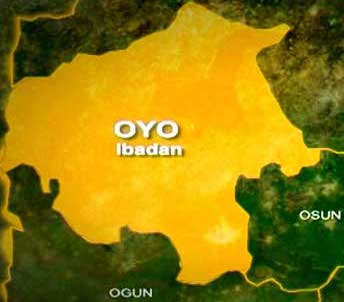
Police operatives have arrested a 45-year-old man, identified as Adeniyi Benjamin, for allegedly operating an unlicensed medical facility and administering treatments for about seven years without any medical qualification or licence.
The spokesperson for Oyo Police Command, DSP Ayanlade Olayinka, in a statement on Wednesday said Benjamin was arrested on 2 October 2026 at about 3:00 p.m. by operatives of the Command Monitoring Unit at his clinic, ‘Life Is Good Hospital’ in the Olodo area of Ibadan.
Ayanlade said the arrest followed credible intelligence about his activities at the facility.
“The suspect was found attending to patients and administering treatments, particularly fertility-related treatments, despite not being a certified medical doctor,” the statement said.
The Police spokesperson listed items recovered from the premises of the suspect’s facility to include two weighing scales, four Quantum Magnetic Resonance Body Analysers, one stethoscope, a large carton of assorted medicines, and specimen bottles.
The Oyo police spokesperson added that during preliminary investigation, Benjamin confessed that he had been operating as a quack practitioner for about seven years without any licence to practise medicine.
He further stated that he specialized in fertility-related treatment, which he administered to patients at the facility.
DSP Olayinka said the confession raised concerns about potential risks to members of the public who may unknowingly seek treatment from unqualified persons, especially in sensitive areas such as fertility care.
Investigation is ongoing to establish the full extent of the suspect’s activities and determine whether other persons were connected to the operation of the facility. Appropriate action will be taken in accordance with the law, the police said.
The command advised residents to verify the professional credentials and registration status of anyone offering medical services before entrusting their health or that of their loved ones to them.
Oyo Police Command also appealed to residents to promptly report suspicious medical facilities or persons presenting themselves as medical practitioners without verifiable credentials to the police or relevant regulatory authorities.
The Command also reaffirmed its commitment to protecting lives and property and said it would continue to collaborate with relevant regulatory agencies and members of the public to address activities that endanger residents’ health and safety.
Ogun State Police Command has arraigned five suspects before the Ota Magistrate Court over their alleged involvement in the assault and obstruction of police officers carrying out their lawful duties in Ota.
The suspects were brought before the court following an incident around The Bells area of Iyana-Iyesi, Ota, on October 2, 2026, according to a statement issued on Wednesday by the command’s Police Public Relations Officer, DSP Oluseyi B. Babasiyi.
The police said the incident occurred after a patrol team intercepted and arrested a suspect allegedly found with a large quantity of substances suspected to be Indian hemp.
According to the command, the officers were taking the handcuffed suspect to the station when they were allegedly ambushed by a group of people armed with cutlasses, stones and bottles.
The attack reportedly resulted in injuries to some of the officers, damage to the police operational vehicle and the escape of the suspect in custody.
Following the incident, the command said an intelligence-led operation was launched, leading to the arrest of five suspects identified as Morenikeji Badmus, 36; Adedoja Segun, 40; Jeremiah Odise Ugbede Onride, 49; Mike Stephen, 28; and David Odeh, 32.
The suspects were arraigned on charges bordering on conspiracy, serious assault on police officers, obstruction of lawful duty and conduct likely to cause a breach of the peace.
The police said efforts were still ongoing to arrest other suspects who fled the scene of the incident.
The Commissioner of Police, Ogun State Command, CP Bode Ojajuni, reaffirmed the command’s commitment to protecting police officers carrying out their lawful responsibilities.
“Members of the public are urged to refrain from physical confrontation with law enforcement personnel and channel grievances through established lawful channels,” the statement said.
The command added that “the safety of police officers performing lawful duties remains a priority of the command.”
The Yobe State Police Command has arrested a nine-year-old boy over the alleged killing of four family members in Rugan Badali community, Karasuwa Local Council of the state.
The police said the child allegedly set fire to the family house while his two stepmothers and two younger brothers were asleep, resulting in their deaths.
According to report, the suspect was said to have committed the act after his father flogged him over an allegation that he had stolen a fowl.
Speaking with journalists in Damaturu yesterday, the suspect, whose name was withheld because of his age, allegedly confessed to setting the house ablaze.
He said he bought matches the following day and set fire to the house.
“I carried one of our fowls to sell. People reported me to my father, and I was beaten. The following day, I bought N50 worth of matches in the neighbourhood. While my two stepmothers and two younger brothers were asleep, I set our house on fire as revenge for what my father did to me,” he said.
The boy added: “People came to the rescue. I did not tell them that I was the one who did it until after three days of prayer. I then confessed and was later arrested by policemen and brought here to Damaturu.”
Parading the suspect alongside his father, Abubakar Idi, the police spokesperson, ASP Yusuf Ali, said the boy remained a suspect despite his age.
Ali said the case would be handled in accordance with the law, stressing that the incident underscored the need for greater attention to criminal activities involving children.
He expressed concern over the development, particularly as the state continues to recover from the effects of Boko Haram insurgency and other security challenges.
-
 Health & Wellness1 year ago
President Tinubu Directs Cut in Dialysis Cost from ₦50,000 to ₦12,000
-
News2 years ago
CBN Debunks Fake Circular on New ₦5,000 and ₦10,000 Notes
-
 International News6 months ago
Indian Police Arrest Nigerian Over ₦290m Drug Haul
-

 Business7 months ago
Dangote Refinery Reduces Petrol Gantry Price To ₦1,200 Per Litre
-
 Business7 months ago
After Plea Bargain, Court Discharges Stella Oduah of ₦2.5bn Fraud
-
Business2 years ago
Dangote; We Did Not Fix ₦600/Litre Petrol Price
-
 Trending News1 year ago
NELFUND Disburses ₦86bn To 449,000 Beneficiaries
-
 Opinion2 years ago
Championing the People’s Voice: Obasa’s Dedication to Grassroots Representation By Dave Agboola⁰