
News
Fear Of Abuse: FG Insert Control Clauses In State Police Bill


The Federal Government has expanded the circumstances under which it can intervene in the operations of state police forces in the Executive Bill on state policing transmitted to the National Assembly by President Bola Ahmed Tinubu.
The House of Representatives had earlier passed its own State Police Bill during the ongoing constitutional amendment exercise.
Speaker Tajudeen Abbas announced yesterday that the House would withdraw its version to enable lawmakers consider the Executive Bill which he described as “more robust and comprehensive.”
He spoke at the opening ceremony of the 2026 National Assembly Open Week and the unveiling of the Third-Year Legislative Scorecard of the 10th House of Representatives in Abuja.
Abbas noted that the Executive Bill was produced by a committee inaugurated by President Tinubu and chaired by the Chief of Staff to the President and former Speaker of the House Femi Gbajabiamila.
Deregistration: A/Court reserves judgement on ADC, others’ appeals
Residents laud FCT infrastructural development
He explained that the House would withdraw the bill he passed to give expedited consideration to the new proposal from the executive.
“I am able to share a development that speaks to the seriousness with which this administration regards the safety of Nigerians. His Excellency the president has now transmitted to the National Assembly an Executive version of the State Police Bill, one that is more robust and more comprehensive than the version this House earlier passed.
“The House will therefore recall the version it earlier passed, and accord the Executive Bill the expedited consideration that a matter of this urgency deserves,” the speaker stated.
He assured Nigerians that the proposed legislation would undergo public hearing and scrutiny before passage.
He said safeguards would be incorporated to prevent abuse of state police structures, noting that states would be required to meet strict conditions before establishing their own police services.
Key changes introduced by the executive bill
A comparative analysis of the Executive Bill and an earlier State Police Bill passed by the House of Representatives shows that the Presidency is seeking broader constitutional powers to step into the affairs of state police services, while also introducing stricter safeguards to prevent abuse of such intervention.
The proposed legislation allows the Federal Government to intervene not only when there is a breakdown of law and order beyond the capacity of a state police service or at the request of a governor, but also where there is evidence of widespread human rights violations, partisan policing, ethnic or religious persecution, or threats to national security.
Whereas the House bill provides that the Federal Police shall maintain public security across the federation and within states “to the extent provided for under this Constitution”; the Executive Bill expressly reserves federal policing for national issues.
“The Federal Police Service shall be responsible for federal policing functions, including the enforcement of laws of the Federation, policing of the Federal Capital Territory, Abuja, protection of federal institutions and assets, and policing matters with inter-State, international, organised-crime, terrorism, cybercrime, arms-trafficking, border-security, national-security or other federal dimensions.”
One of the most significant departures is the clear division of responsibilities between the Federal Police Service and State Police Service.
It states that in section 214(5) “The Federal Police Service shall be responsible for federal policing functions, including the enforcement of laws of the Federation, policing of the Federal Capital Territory, Abuja, protection of federal institutions and assets, and policing matters with inter-State, international, organised-crime, terrorism, cybercrime, arms-trafficking, border-security, national-security or other federal dimensions.”
The Executive Bill equally gives state police clearly defined local responsibilities, providing in section 214(6) that:
“A State Police Service shall, within the State for which it is established, be responsible for the enforcement of laws of the State, the maintenance of public safety and public order, the prevention and detection of offences within its policing competence, the protection of life and property.”
The House version contains no such detailed constitutional allocation of policing functions.
Another major difference is the expansion of circumstances under which the Federal Government can intervene in a state’s policing affairs.
The House bill permits intervention only where there is a breakdown of law and order beyond the capacity of the state police, where the governor requests assistance, or where the state police becomes inoperative due to administrative or financial problems, subject to approval of the National Police Council.
The Executive Bill, however, substantially widens those powers.
Beyond security breakdowns and governors’ requests,in section 214(10)(d) allows intervention where there is:
“substantial evidence that the State Police Service is being used for egregious or systematic violation of fundamental rights, partisan or electoral intimidation, ethnic, religious or sectional persecution, or unlawful obstruction of this Constitution…”
It also permits intervention where there is “a substantial threat to national security, the sovereignty or integrity of the Federation, or public safety across State boundaries.”
Unlike the House version, the Executive Bill prescribes elaborate constitutional safeguards for such intervention.
It requires that every intervention be temporary, proportionate and authorised in writing by the President, with notice to the governor, state assembly, National Police Council and National Assembly within 48 hours.
It further provides that no intervention may continue beyond the period prescribed by law without Senate approval, while the legality and duration of every intervention shall remain subject to judicial review.
On operational independence, the Executive Bill expressly bars state police from operating outside their states except where authorised by an Act of the National Assembly.
Section 214(7) state that “A State Police Service shall not exercise police powers outside the State for which it is established except as authorised by an Act of the National Assembly.”
The Executive Bill also contains stronger provisions aimed at preventing political misuse of state police.
While the House bill allows governors to issue lawful directions to Commissioners of Police, subject only to review by the National Police Council where the commissioner considers such directives unlawful, the Executive Bill expressly prohibits governors from issuing operational directives against specific individuals or political groups.
Section 215(7) state that “No direction under this section shall require the arrest, detention, investigation, non-investigation, deployment or use of force against any named person, political party, association or class of persons except in accordance with law.”
It further prohibits directives that would “require a police service to act unlawfully, violate fundamental rights, suppress lawful political activity, discriminate against any person or group, or enforce the law for a partisan, ethnic, religious, sectional or personal purpose.”
The President’s proposal also highlights the security of tenure for police leadership.
Unlike the House bill, which simply prescribes removal procedures, the Executive Bill constitutionally protects both the Inspector-General of Police and state Commissioners of Police from arbitrary removal.
It provides that the Inspector-General in section 215(9) “shall not be suspended or removed except for stated cause, in accordance with a fair hearing on the recommendation of the National Police Council and subject to approval by a resolution supported not less than two-thirds majority of the Senate.”
Similarly, a state Commissioner of Police cannot be removed except for stated cause and with the approval of two-thirds of members of the State House of Assembly.
The Executive Bill equally introduces an entirely new constitutional framework on national policing standards and accountability.
It mandates the National Assembly to prescribe minimum standards covering recruitment, vetting, training, promotions, use of force, firearms, complaints, criminal information systems and public reporting.
Section 216(1) stated that “The National Assembly shall by an Act prescribe national minimum standards applicable to the Federal Police Service and every State Police Service, including standards on recruitment, vetting, training, certification, appointment, promotion, discipline, conduct, use of force, firearms, custody, complaints, criminal information, inter-governmental cooperation, public reporting and accountability.”
The House bill instead introduces a different provision empowering the Federal Government to provide grants and financial assistance to state police.
It states section 216 (a) “The Federal Government shall provide grant or aids to State Police on the recommendation of the National Police Council subject to the approval of the National Assembly.”
Another notable difference concerns the composition of oversight institutions.
The House proposal creates a much broader National Police Council that includes representatives of the Nigeria Union of Journalists, traditional rulers, the Nigerian Labour Congress, Nigerian Bar Association and two representatives of the National Human Rights Commission.
By contrast, the Executive Bill streamlines the council’s membership, removing the NUJ and traditional rulers while reducing National Human Rights Commission representation to one member.
Similarly, the House bill prescribes detailed membership for State Police Service Commissions, including representatives of the NBA, NUJ, National Human Rights Commission, labour unions and traditional rulers.
The Executive Bill instead leaves the composition largely to legislation, providing only that the commission shall comprise a chairman and “such number of other persons, as may be prescribed by an Act of the National Assembly.”

Captain Rasheedat Ajibade, goalkeeper Chiamaka Nnadozie and dependable defender Michelle Alozie have arrived at the Super Falcons’ camp in Ijebu Ode ahead of their 2028 Olympic Games qualifying fixture against Comoros.
Also joining the team are midfielder Jennifer Echegini and forward Folashade Ijamilusi, bringing the number of players in camp to 22.
Only four players—Comfort Erhabor, Gift Monday, Joy Omewa and Uchenna Kanu—are still expected to join the squad.
The Super Falcons will continue their preparations with another training session at the Otunba Dipo Dina Stadium, Ijebu Ode, tonight.
Meanwhile, the Comoros senior women’s national team arrived in Ijebu Ode on Monday and held their first training session on Tuesday night as they intensify preparations for the first leg.
Friday’s encounter, which was originally scheduled to take place in Comoros, will now be played at the Remo Stars Stadium, Ikenne-Remo, with kick-off set for 6pm.
The reverse fixture will hold at the same venue next week Tuesday.
Players In Camp
Goalkeepers: Christiana Uzoma, Chiamaka Nnadozie
Defenders: Farida Abdulwahab; Sandra John; Tumininu Adeshina; Valentina Uroko; Glory Edet; Shukurat Oladipo; Glory Ogbonna
Midfielders: Christy Ucheibe; Toni Payne; Favour Omenazu; Joy Igbokwe; Jennifer Echegini; Fatimoh Solaty, Suliat Abideen
Forwards: Rasheedat Ajibade; Shakirat Moshood; Blessing Nkor; Sandra John, Folashade Ijamilusi; Janet Akekoromowei
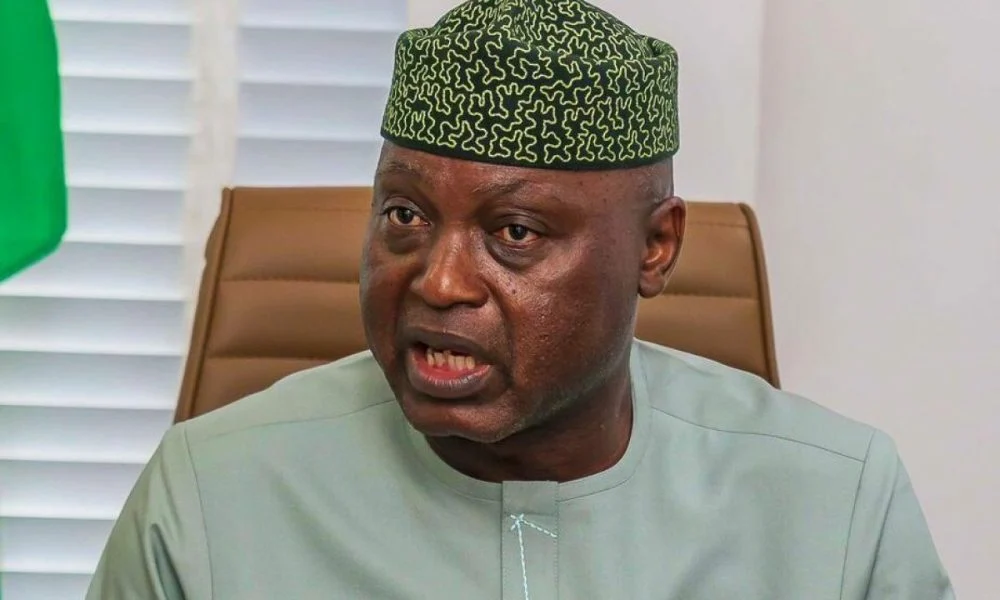
Ekiti State Governor, Biodun Oyebanji, on Wednesday said God used a former military Head of State, Sani Abacha, to create the state.
Governor Oyebanji said without Abacha, Ekiti State would not have been created.
Ekiti State was created on October 1, 1996, out of the old Ondo State, during Abacha’s military regime.
The governor said Ekiti State owes a debt of gratitude to the former military ruler.
Speaking during the ‘Ekiti at 30 Future Summit’ in Ado Ekiti, the state capital, Oyebanji said people of the state have distinguished themselves in various sectors of the economy.
He said: “In the old Western region and later Ondo State, Ekiti men and women distinguished themselves in education, public administration, commerce, agriculture, culture, and national service.
“Through the act of persistent advocacy, leaders made a compelling case for the creation of the state, that way the aspiration of our people would be more effectively pursued.
“We therefore owe an eternal debt of gratitude to the founding fathers of Ekiti State, to the traditional rulers, community leaders, professionals, academics, political actors, and women organisations whose sacrifices made the creation possible.
“Some people will not like to hear my next statement but that is the truth, we owe a debt of gratitude to Gen. Sani Abacha who was the Head of State when the state was created.
“Without that man, Abacha, we will not be here. Kabiyesi will tell you what they contended with but God used Abacha and we are grateful.”
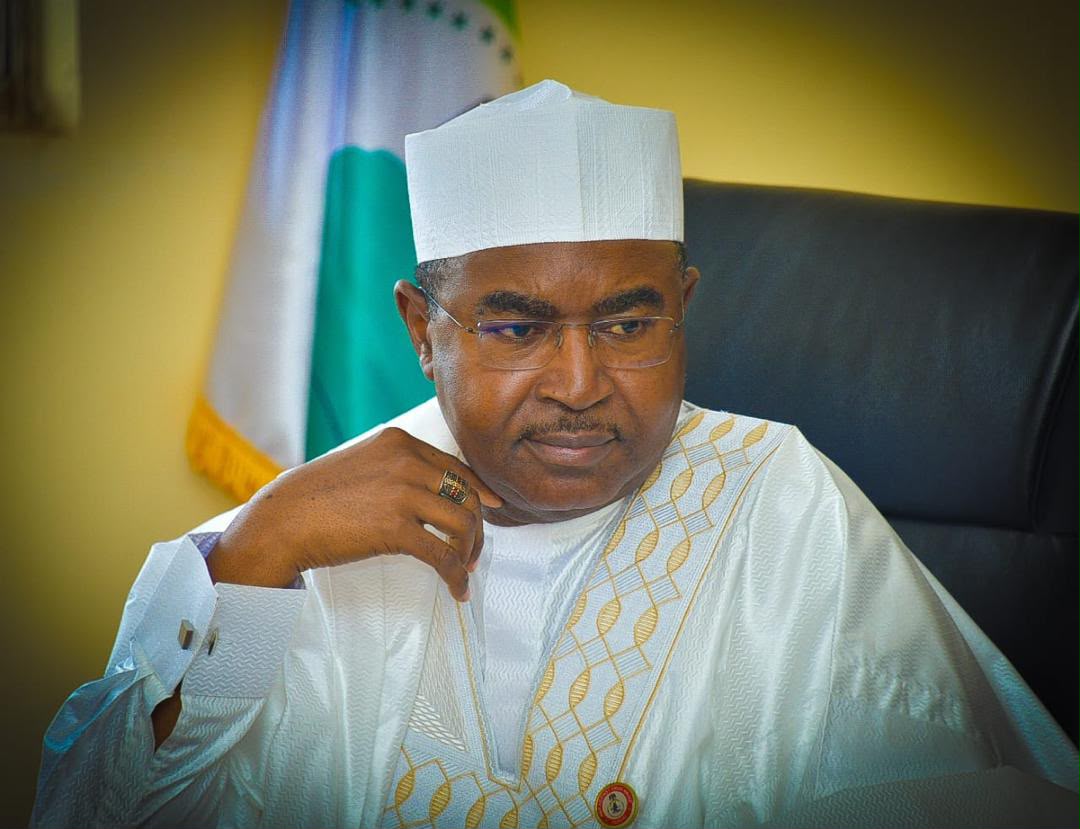
The National Drug Law Enforcement Agency (NDLEA) has expressed condolences to the Nigerian Air Force (NAF) over the aircraft crash in Ondo State that claimed the lives of several NAF personnel and others.
The NDLEA Chairman/Chief Executive Officer, Brig. Gen. Mohamed Buba Marwa (Rtd), conveyed the agency’s sympathies in a letter of condolence addressed to the Chief of the Air Staff, Air Marshal Sunday Kelvin Aneke.
In a statement made available to thecolumn.ng by the
Director, Media and Advocacy Femi Babafemi
in Abuja on Wednesday (today) Marwa extended the agency’s condolences to the NAF leadership, officers and personnel, as well as the families of those who lost their lives in the crash.
He described the incident as devastating, saying the news was received with profound grief.
The NDLEA boss commended the Nigerian Air Force for what he described as its consistent patriotism, gallantry and commitment to the defence and security of the country.
According to him, the loss of personnel who dedicated their lives to national service was a painful blow to the Air Force, the country and the wider national security community.
“In this moment of deep sorrow, our thoughts and prayers are with the grieving families of the fallen heroes, as well as the entire NAF family,” Marwa said.
He prayed that God would comfort the bereaved families, strengthen the Nigerian Air Force and grant the deceased eternal rest.
Marwa also assured the Air Force of the solidarity and support of the officers, men and women of the NDLEA during the period of mourning.
-
 Health & Wellness1 year ago
President Tinubu Directs Cut in Dialysis Cost from ₦50,000 to ₦12,000
-
News2 years ago
CBN Debunks Fake Circular on New ₦5,000 and ₦10,000 Notes
-

 International News6 months ago
Indian Police Arrest Nigerian Over ₦290m Drug Haul
-

 Business6 months ago
Dangote Refinery Reduces Petrol Gantry Price To ₦1,200 Per Litre
-
 Business6 months ago
After Plea Bargain, Court Discharges Stella Oduah of ₦2.5bn Fraud
-
Business2 years ago
Dangote; We Did Not Fix ₦600/Litre Petrol Price
-
 Trending News1 year ago
NELFUND Disburses ₦86bn To 449,000 Beneficiaries
-
 Opinion2 years ago
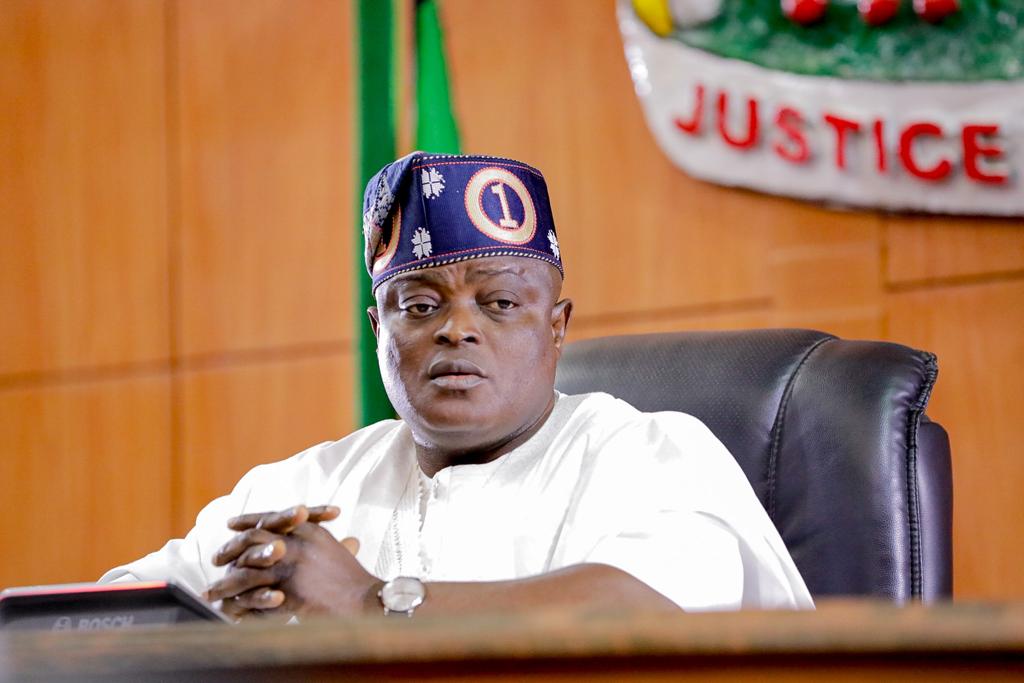
Championing the People’s Voice: Obasa’s Dedication to Grassroots Representation By Dave Agboola⁰