Connect with us

International News

Firefighting Pilot, 18 Dead In South Korea Raging Wildfires

Published

on

Spread the love
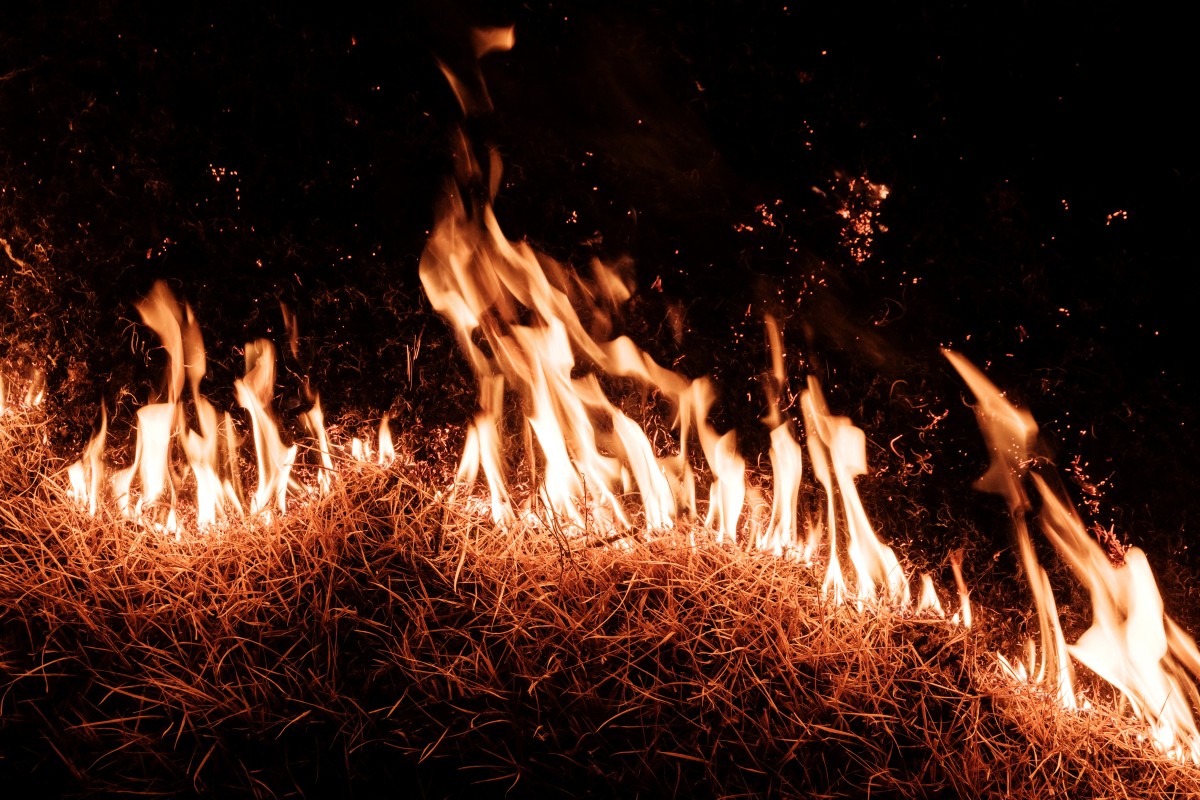
A wildfire spreads in Andong on March 26, 2025. At least 18 people have been killed in one of South Korea’s worst wildfire outbreaks, with multiple blazes burning and causing “unprecedented damage”, the acting president said. (Photo by YASUYOSHI CHIBA / AFP)


At least 19 people have been killed in one of South Korea’s worst wildfire outbreaks, with multiple raging blazes causing “unprecedented damage”, the acting president said Wednesday.

More than a dozen fires broke out over the weekend, scorching wide swathes of the southeast, forcing around 27,000 people to urgently evacuate, with the fire cutting off roads and downing communications lines as residents fled in panic.

Overnight into Wednesday, the death toll jumped to 19 as wind-driven flames tore through neighbourhoods and razed an ancient temple.

Eighteen people were killed in the wildfires and a pilot in a firefighting helicopter died when his aircraft crashed in a mountain area, officials said.

According to the interior ministry, the wildfires have charred 17,398 hectares (42,991 acres), with the blaze in Uiseong county alone accounting for 87 percent of the total.
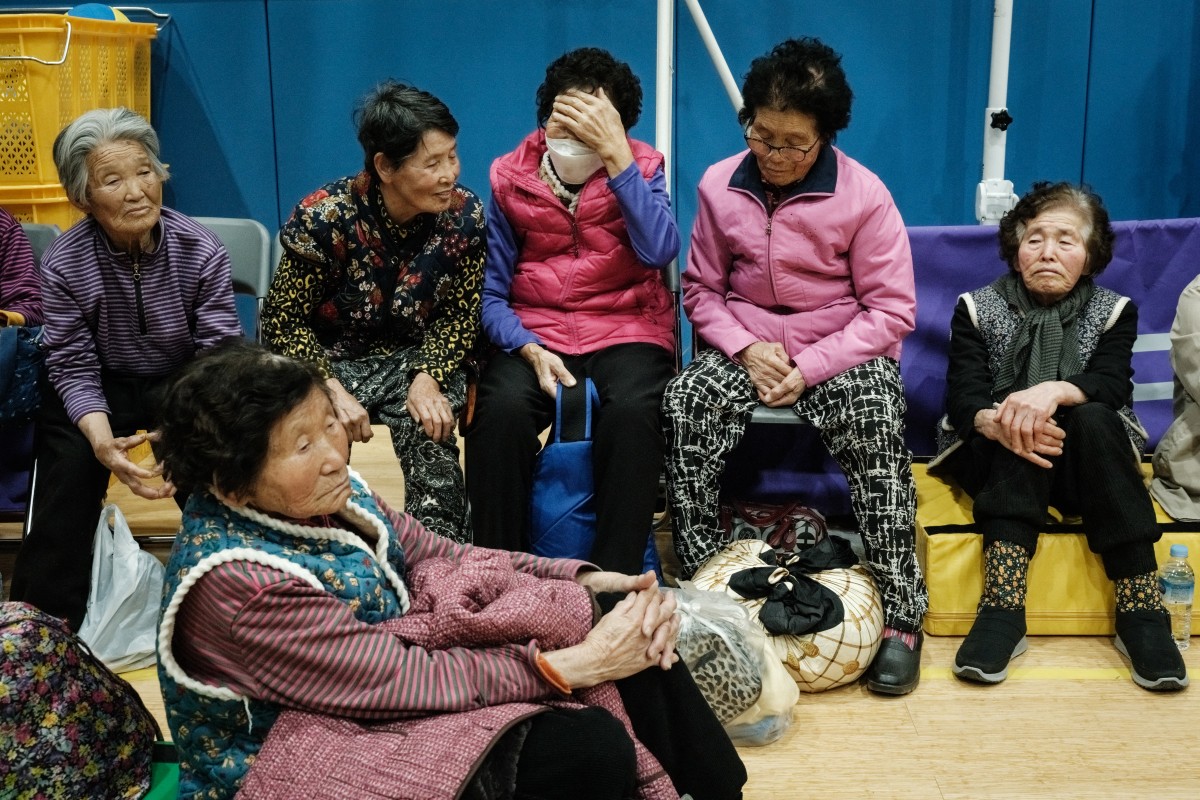
People evacuated from their homes due to the approaching wildfire, stay at the gymnasium of Sinsung Elementary School in Andong, South Korea, on March 25, 2025. Inhabitants of a UNESCO-listed village were ordered to evacuate while a historic Buddhist temple was burned to the ground as South Korea scrambled to contain worsening wildfires, which are tearing across the country’s southeast. (Photo by Yasuyoshi CHIBA / AFP)

The government has raised the crisis alert to its highest level and taken the rare step of transferring thousands of inmates out of prisons in the area.

“Wildfires burning for a fifth consecutive day… are causing unprecedented damage,” South Korea’s acting president Han Duck-soo said.

He told an emergency safety and disaster meeting that the blazes were “developing in a way that is exceeding both existing prediction models and earlier expectations.”

“Throughout the night, chaos continued as power and communication lines were cut in several areas and roads were blocked,” he added.
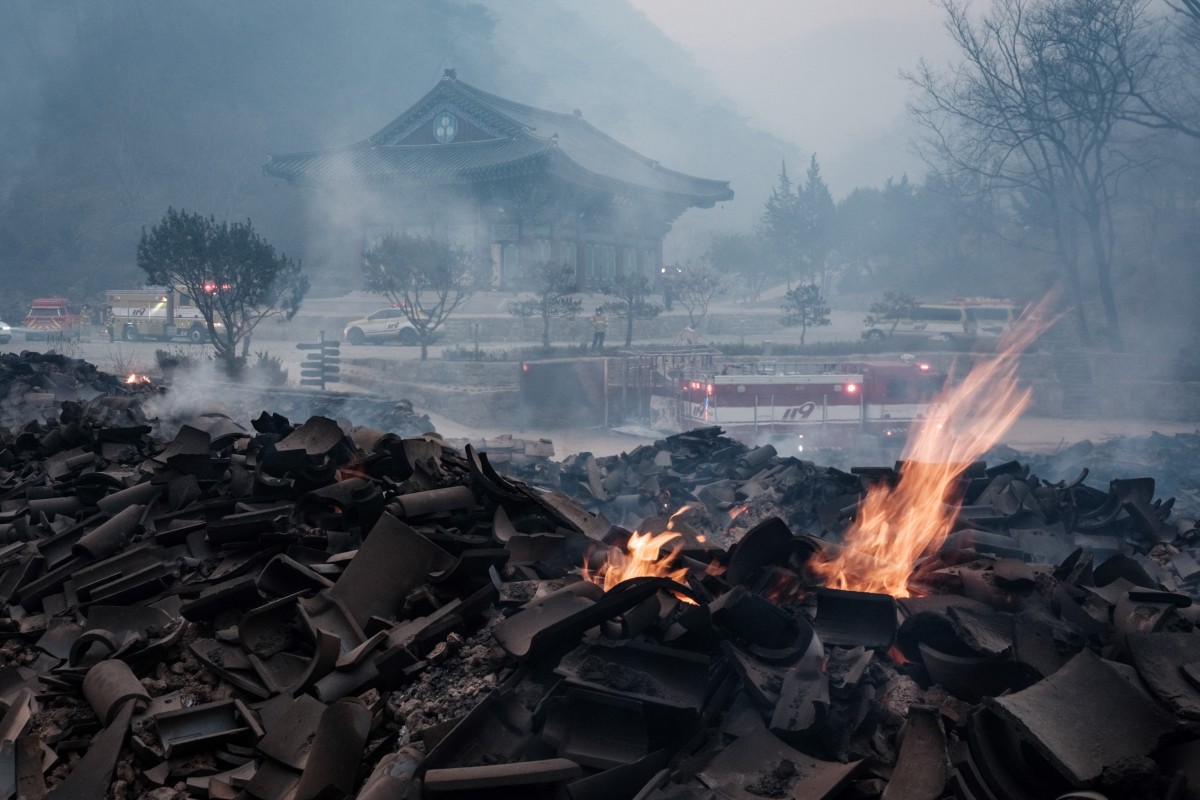
Embers remain among the debris after most of the buildings were burned to the ground in a wildfire at Gounsa Temple in Uiseong on March 26, 2025. At least 18 people have been killed in one of South Korea’s worst wildfire outbreaks, with multiple blazes burning and causing “unprecedented damage”, the acting president said. (Photo by YASUYOSHI CHIBA / AFP)

In the city of Andong, some evacuees sheltering in an elementary school gym told AFP they had to flee so quickly they could bring nothing with them.

“The wind was so strong,” Kwon So-han, a 79-year-old resident in Andong told AFP, adding that as soon as he got the evacuation order he fled.

“The fire came from the mountain and fell on my house,” he said.

“Those who haven’t experienced it won’t know. I could only bring my body.”

– ‘Most devastating’ –

Authorities had been using helicopters to battle the blazes, but suspended all such operations after a helicopter crashed Wednesday, killing the pilot on board.

Authorities said changing wind patterns and dry weather had revealed the limitations of conventional firefighting methods.

Thousands of firefighters have been deployed, but “strong winds reaching speeds of 25 metres per second persisted from yesterday afternoon through the night, forcing the suspension of helicopter and drone operations,” acting president Han said.

The fires are “the most devastating” yet in South Korea, Han said.

By Wednesday, one of the fires was threatening historic Hahoe Folk Village — a UNESCO-listed world heritage site popular with tourists but now under an emergency alert.

Huge plumes of smoke turned the sky over the village grey, AFP reporters saw, with fire trucks and police cars lined up at the edges of the historic site.

– ‘Fireballs’ –

Last year was South Korea’s hottest year on record, with the Korea Meteorological Administration saying that the average annual temperature was 14.5 degrees Celsius — two degrees higher than the preceding 30-year average of 12.5 degrees.

The fire-hit region had been experiencing unusually dry weather with below-average precipitation, authorities have said, with the South experiencing more than double the number of fires this year than last.

Some types of extreme weather have a well-established link with climate change, such as heatwaves or heavy rainfall.

Other phenomena, such as forest fires, droughts, snowstorms and tropical storms can result from a combination of complex factors.

“We can’t say that it’s only due to climate change, but climate change is directly (and) indirectly affecting the changes we are experiencing now. This is a sheer fact,” Yeh Sang-Wook, professor of climatology at Seoul’s Hanyang University, told AFP.

“Wildfires will become more frequent,” he added.

“Basically, as the atmosphere becomes warmer due to climate change, the water vapour in the ground evaporates more easily, so the amount of moisture contained in the ground decreases. So, all this creates the conditions wildfires can occur more frequently.”

The major fire in Uiseong was reportedly caused by a person tending to a family grave who accidentally ignited the blaze.

Apple farmer Cho Jae-oak told AFP that he and his wife had sprayed water around their house all day in a desperate bid to protect it.

“We kept spraying and guarded. When the fire was burning on the mountain, fireballs flew here,” he said, adding that the encroaching flames eventually forced them to leave.


AFP

Continue Reading
Click to comment

Leave a Reply

Your email address will not be published. Required fields are marked *

International News

Israel Says Struck Two Naval Missile Production Sites In Tehran

Published

on

Spread the love

The Israeli military announced on Wednesday it had struck two naval cruise missile production facilities operating under Iran’s ministry of defence in Tehran.


“In recent days, the Israeli air force acting on IDF intelligence struck two key naval cruise missile production sites in Tehran,” the military said.

It said the facilities were used to “develop and manufacture long-range naval cruise missiles, which are capable of rapidly destroying targets at sea and on land”.

The strikes “represent another step in deepening the damage done to the regime’s military production infrastructure”, the military added.

Last week, the military announced its fighter jets had struck several Iranian naval ships in the Caspian Sea, including vessels equipped with anti-submarine missiles.


AFP

Continue Reading

International News

2025 ‘Deadliest Year’ Yet For Red Sea Migrants, UN Reports 922 Deaths

Published

on

Spread the love

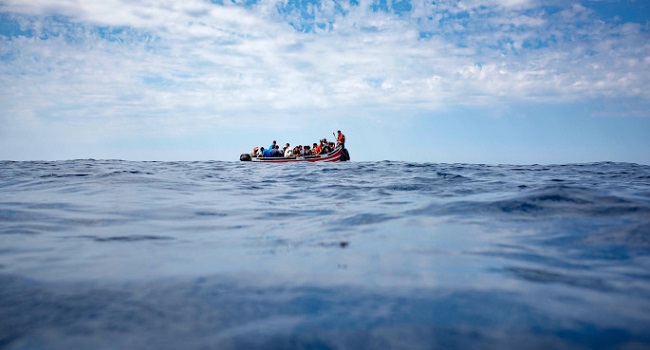
The number of migrants who died on the “Eastern Route” from the Horn of Africa to the Arabian Peninsula doubled to a record high of 922 last year, the UN migration agency said Wednesday.

Tens of thousands of migrants from Ethiopia, Somalia and neighbouring countries take the route across the Red Sea each year, mostly from Djibouti to Yemen, in search of work as labourers or domestic workers in wealthy Gulf countries.

“2025 was the deadliest year ever recorded on the Eastern migration route… with 922 people dead or missing — double the number from the previous year,” Tanja Pacifico, head of mission for the International Organisation for Migration (IOM) in Djibouti, told AFP.

The majority of victims were from Ethiopia, the second most-populous country in Africa with more than 130 million people. It is plagued by multiple internal conflicts and deep poverty.

“IOM remains fully committed to working alongside the government of Djibouti to promote safe and dignified migration pathways, in order to prevent further tragedies,” said Pacifico.

Many migrants who cross the Red Sea find themselves stuck in Yemen, the poorest country on the Arabian Peninsula, which has been embroiled in a civil war for nearly a decade, and some even choose to return.

Rapid economic growth in Ethiopia — estimated to reach around 10 percent in 2026 — could encourage less migration, IOM says, but that is mitigated by high inflation, also around 10 percent in February.


AFP

Continue Reading

International News

Denmark Faces Lengthy Negotiations To Form A Government

Published

on

Spread the love
Election workers recount ballots in the Marselisborg Hallen in Aarhus, Denmark on March 25, 2026. (Photo by Mikkel Berg Pedersen / Ritzau Scanpix / AFP) /

Denmark’s political parties began the thorny process of forming a government Wednesday, with the centrist Moderates as kingmaker after the prime minister’s Social Democrats scraped through a general election without a majority.

Greenland’s Inuit Ataqatigiit party member Naaja Nathanielsen (C) looks on in a polling station in Nuuk, on March 24, 2026, during the parliamentary election in Denmark (Photo by Oscar Scott Carl / Ritzau Scanpix / AFP) / Denmark OUT

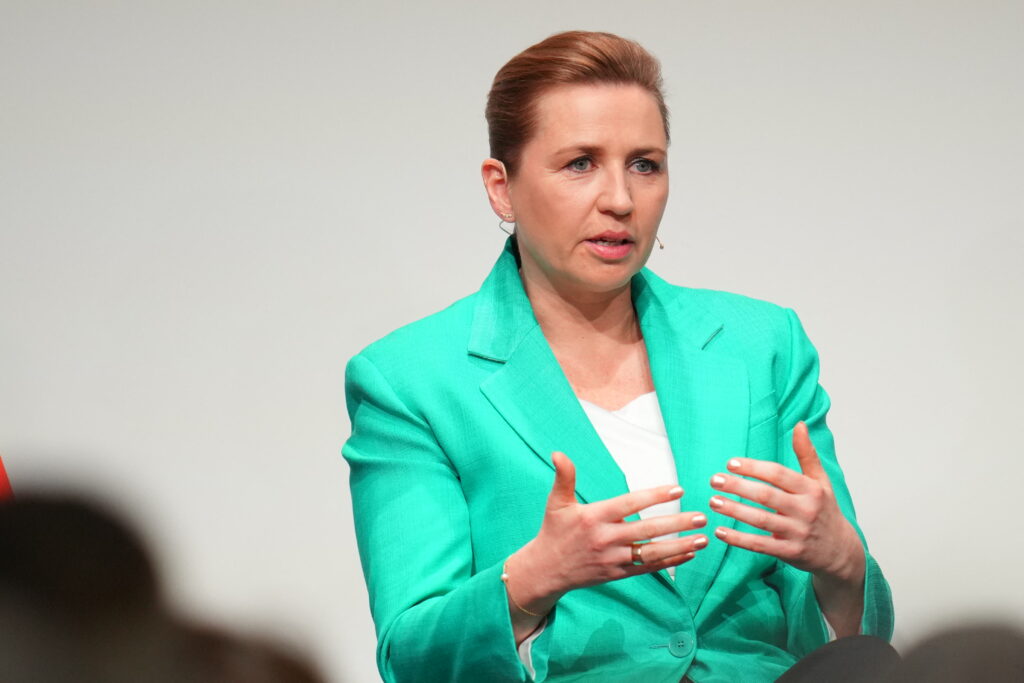
Danes were braced for a weeks-long process as Prime Minister Mette Frederiksen seeks to consolidate power in the deeply splintered parliament after Tuesday’s snap vote.

Denmark’s Prime Minister Mette Frederiksen arrives at Amalienborg Palace in Copenhagen to inform the king about the election result one day after the parliamentary election on March 25, 2026. (Photo by Martin Sylvest / Ritzau Scanpix / AFP) 

A left-wing bloc made up of five parties, including Frederiksen’s Social Democrats, won 84 seats; the right-wing and far-right claimed 77; and the Moderates won 14 in the election.

The Social Democrats posted their worst election score since 1903—though they remained Denmark’s largest single party, with 38 seats in the 179-seat parliament.

Chairwoman of the Social Democrats Mette Frederiksen attends a party leader debate hosted by Publicists’ Club one the day after the parliamentary election at the Confederation of Danish Industry’s building in Copenhagen on March 25, 2026. (Photo by Liselotte Sabroe / Ritzau Scanpix / AFP)


Frederiksen formally tendered her coalition government’s resignation to King Frederik on Wednesday, telling a televised party leader debate she wanted to try to form a centre-left government.

“The most realistic scenario” would be a coalition with the five parties on the left and the centre-right Moderates, she said.

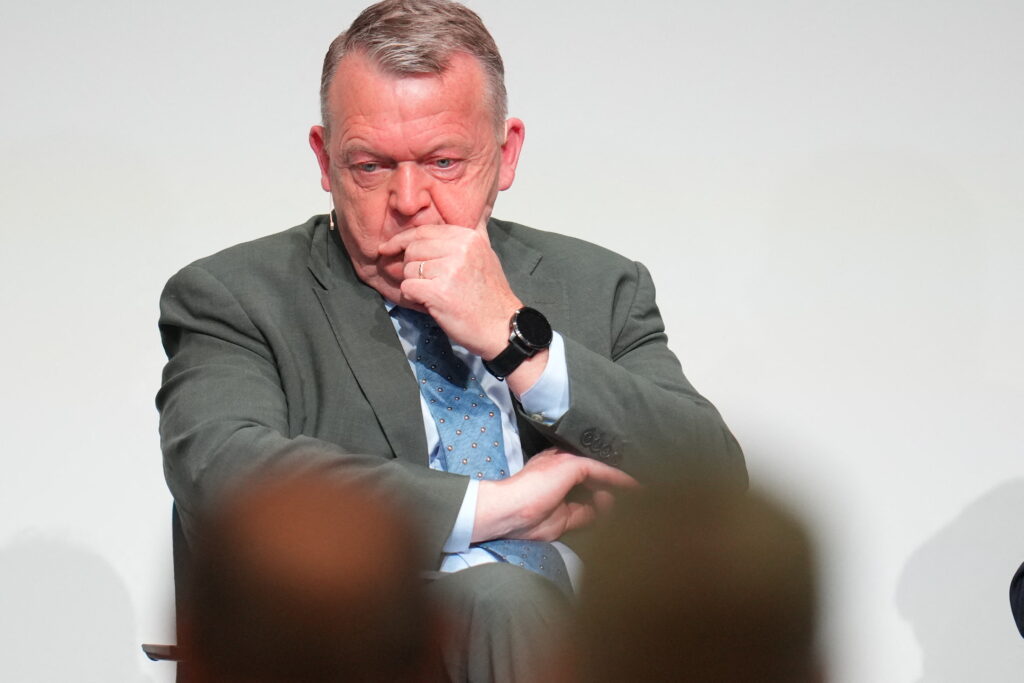
But it is not certain the Moderates, led by Foreign Minister Lars Lokke Rasmussen, would agree to that.

“I don’t believe that Denmark needs policies aligned with” the leftist Red-Green Alliance, Lokke said.

Chairman of the Moderates Lars Loekke Rasmussen attends a party leader debate at the Confederation of Danish Industry’s building in Copenhagen on March 25, 2026, the day after the parliamentary election. (Photo by Liselotte Sabroe / Ritzau Scanpix / AFP) / Denmark OUT

King Frederik was to meet party leaders individually later Wednesday to determine who should be asked to try to form the next government.

“My expectation is that Mette Frederiksen will become prime minister,” University of Copenhagen political science professor Rune Stubager told reporters.

“But I don’t know with the backing of which parties, like the left wing or the right wing,” he said.

He noted that Lokke, a two-time former prime minister, would likely vie for the position of prime minister, even though he has adamantly denied any interest in the job.

“Danes want me and not another prime minister. I still have the backing to be able to continue on behalf of the Danish people,” Frederiksen insisted during the debate.

Frederiksen has for the past four years headed an unprecedented left-right coalition made up of her Social Democrats, the Moderates and the Liberals.

The Liberals have refused to continue in a Social Democrat-led government.

‘Too Hard To Say’

Danes are now prepared for long negotiations. After the 2022 election, the talks lasted six weeks.

“It’s a long process, which means the government won’t be formed and it will be quite difficult to pass laws during this period,” lamented Jesper Dyrfjeld Christensen, a 54-year-old engineer.

“It’s really too hard to say who will be part of the coalition,” admitted Stubager.

With 12 parties in parliament, the political landscape is jagged — though Denmark is accustomed to minority governments.

“To some extent, this is the way Danish politics works. You have a minority government in the centre which forms a majority with the left on some issues and with the right on others,” he explained.

The negotiations are expected to focus on economic and pension issues, pollution and immigration, he said.

The traditional far-right party, the Danish People’s Party, which has heavily influenced policy since the late 1990s but slumped in the 2022 election, more than tripled its result to 9.1 per cent of votes.

The three anti-immigration groups together garnered 17 per cent, a stable figure for Denmark’s populist right over the past two decades.

“If negotiations take place in the left-wing bloc with the moderates, then there will be more focus on green issues than on immigration,” Stubager said.

“But if, instead, the Moderates negotiate with the parties on the right, then the central issue will be immigration.”

Four seats in Denmark’s parliament are held by its two autonomous territories — two for Greenland and two for the Faroe Islands.

While the Faroese renewed the mandates of the two outgoing lawmakers, with one for each bloc, Greenland overwhelmingly backed the left-wing party and Naleraq, which advocates rapid independence from Denmark.


AFP

Continue Reading

Trending

Copyright © 2026 TheColumn NG