Connect with us

International News

Trump Signs Order Requiring Citizenship Proof In Elections

Published

on

Spread the love
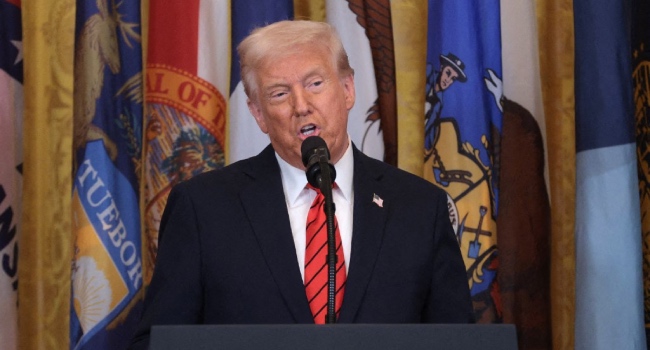
WASHINGTON, DC – MARCH 20: U.S. President Donald Trump delivers remarks before signing an executive order to reduce the size and scope of the Education Department during a ceremony in the East Room of the White House on March 20, 2025 in Washington, DC. (Photo by ALEX WONG / GETTY IMAGES NORTH AMERICA / Getty Images via AFP)


US President Donald Trump on Tuesday ordered tighter controls on federal elections, including requiring proof of citizenship when registering to vote, as the Republican continues to attack a system he insists remains tilted against him.

Experts swiftly denounced his executive order as an abuse of presidential power that could ultimately prevent millions of Americans from casting ballots, and rights groups already have vowed to challenge it in court.

Trump, now in his second term, has never acknowledged his defeat to Joe Biden in the 2020 presidential election, and he maintains baseless claims of massive election fraud — particularly in absentee voting, a method which has become widely used across the United States.

“Perhaps some people think I shouldn’t be complaining, because we won in a landslide” last November, Trump said as he signed the executive order in the White House.

“But we’ve got to straighten out our election. This country is so sick because of the election, the fake elections,” he said. “And we’re going to straighten it out, one way or the other.”
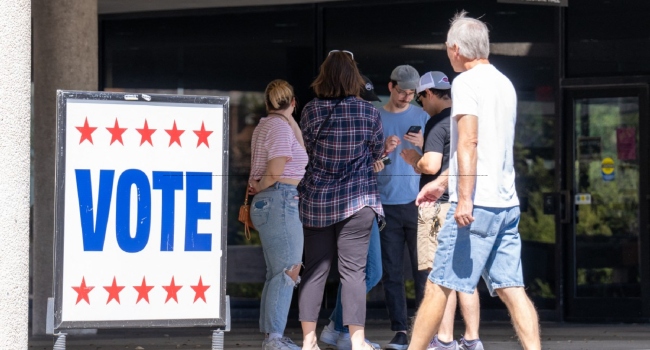
Voters enter a polling location during the Texas primary elections on March 5, 2024 in Austin, Texas. Americans from 15 states and one territory vote simultaneously on “Super Tuesday,” a campaign calendar milestone expected to leave Donald Trump a hair’s breadth from securing the Republican Party’s presidential nomination. (Photo by SUZANNE CORDEIRO / AFP)


The new rules will require proof of citizenship to be presented — through documents such as a passport — when registering to vote in one’s state of residence. US states that fail to comply with the directive could see cuts to their federal election funding.

According to the executive order, the attorney general would be empowered to “take all necessary action… against States that violate these provisions by including absentee or mail-in ballots received after Election Day in the final tabulation of votes.”

Several states allow absentee ballots to be counted if they arrive after Election Day, provided they are postmarked before the polls close in their state.

For law professor Richard Hasen of the University of California, Los Angeles, this “dangerous” executive order could “potentially disenfranchise millions of voters.”

On his Election Law blog, Hasen calls Trump’s directive “an executive power grab,” and notes that federal elections are largely the responsibility of the states, with Congress setting rules for the conduct of elections.

The Brennan Center, a nonprofit public policy institute, denounced the executive order, posting on X that it “would block tens of millions of American citizens from voting. Presidents have no authority to do this.”

The powerful civil liberties group ACLU also slammed the order as “an extreme abuse of power” and suggested legal challenges would be filed. “We’ll see him in court,” it said.

Voting in US federal elections by non-citizens has been a criminal offense for decades, with the law threatening fines, imprisonment and deportation.


AFP

International News

Nigeria Missing As Saudi Arabia Names African Countries Eligible For eVisa

Published

on

Spread the love


Saudi Arabia has updated its tourist eVisa programme for 2026, limiting eligibility in Africa to only three countries as part of its list of 66 nations whose citizens can apply through the Kingdom’s online visa platform.


The move leaves most African countries, including Nigeria, outside the simplified entry scheme.

The electronic visa allows eligible travellers to visit Saudi Arabia for tourism, leisure activities, family visits and Umrah, excluding the annual Hajj pilgrimage. Applications are completed online, eliminating the need for embassy visits and lengthy visa processing.

Saudi authorities said the eVisa forms part of ongoing efforts to expand tourism, attract international visitors and simplify travel procedures through a fully digital application system. The visa is available only to citizens of approved countries and territories listed on the Kingdom’s official tourism portal.

Below is the list of African countries eligible for Saudi Arabia’s eVisa.

1. Mauritius

2. Seychelles

3. South Africa

Continue Reading

International News

South Africa Says Over 53,000 Deported In Migration Campaign

Published

on

Spread the love


The South African government says more than 53,000 foreign nationals have been deported or repatriated since launching a “migration management” campaign five weeks ago.

Most were from Malawi, Zimbabwe, and Mozambique, officials say, and the number is likely to rise as repatriations and deportations continue.

South Africa is carrying out one of its biggest crackdowns on undocumented migrants in years, following weeks of anti-immigration protests that have seen violence, intimidation and looting.

Protesters have been demanding tighter border controls and mass deportations, accusing migrants of contributing to high unemployment, rising crime rates and collapse of public services.

The UN has warned against using migrants as scapegoats for South Africa’s socioeconomic challenges.

Anti-migrant activists have threatened to stage weekly protests to pressure the government until their demands are met, and there are fears the protests could turn violent.

The demonstrators had set an “unofficial deadline” of 30 June for all undocumented migrants to leave the country, which has seen many foreigners leave to escape violence and intimidation.

Several countries, including Ghana, Nigeria, Uganda and Kenya, have flown their citizens home in recent weeks.

Justice and Constitutional Development Minister Mmamoloko Kubayi announced on Sunday that 53,499 foreign nationals have been processed for deportation and repatriation, “which is dominated by the Malawians, followed by Zimbabweans and Mozambicans”.

“We are striving to achieve an orderly and regular migration which is mindful and sensitive to the concerns raised by our people, while observing human rights and dignity of all people in our country, irrespective of their citizenship and immigration status,” Kubayi told a news conference in Pretoria.

She said the repatriation and deportation process has helped them catch people who were wanted by the police for alleged criminal activity.

Authorities will continue to enforce its immigration laws, she added, but warned that protesters should not conduct unauthorised searches of homes and businesses that are suspected of sheltering undocumented migrants.

South Africa’s President Cyril Ramaphosa has acknowledged public concerns about immigration but has condemned attacks against migrants, warning citizens against taking the law into their own hands.

South Africa is the continent’s wealthiest nation and has long attracted migrants searching for better economic opportunities, some of whom enter the country illegally.

Continue Reading

International News

FIFA Boss,Infantino Plans 64-Team World Cup

Published

on

Spread the love


Plans for a 64-team men’s World Cup are set to be assessed after the 2026 tournament, with Fifa boss Gianni Infantino saying the event needs to be “for the whole world”.


The proposal for an expanded tournament was put forward last year, and Infantino says the success of the expanded 48-team tournament means Fifa should look at how a 64-team World Cup could work.

“These are all issues that we will be examining after the World Cup,” Infantino told Swiss broadcaster Blue Sport, external when asked if the tournament could grow to 64 teams.

“When organising a World Cup, it’s important to organise it for the whole world – not just Europe and South America, but effectively the entire world. Every nation should be allowed to dream of participating in the World Cup.

“You can see that the quality of the teams is extremely high, and it’s getting higher and higher, all over the world. If you don’t give smaller countries a chance to participate in the World Cup, they’ll lack the incentive to keep improving.”

Infantino said that the first 48-team World Cup has been “a huge success”, citing the progression of nine out of 10 African teams to the knockout stages.

“At the last World Cup, there were only five teams from Africa,” he said. “That just goes to show how important it is to include all teams – to give them this opportunity to participate.”

The Fifa council approved the expansion of the World Cup from 32 to 48 teams in 2017.

An official proposal to boost the 2030 World Cup to 64 teams was put forward by South American governing body Conmebol in April 2025, but no decision has been reached.

The 2030 edition will be mainly co-hosted by Spain, Portugal and Morocco, with the three opening matches to be hosted by Argentina, Uruguay and Paraguay to celebrate the centenary of the competition. Uruguay hosted the first World Cup, in 1930.

Uefa president Aleksander Ceferin is among those to have dismissed the 64-team proposal, with the Slovenian saying it is a “bad idea” for both the tournament itself and the qualifying process.

Asian Football Confederation (AFC) president Sheikh Salman bin Ibrahim Al Khalifa agreed, saying further expansion would bring “chaos”.

Victor Montagliani, president of the governing body for football in North and Central America and the Caribbean (Concacaf), said the suggestion “doesn’t feel right” and he believes the expansion would damage “the broader football ecosystem”.

However, Andrew Giuliani, executive director of the White House’s World Cup task force, said the United States could consider making a bid to host the 2038 World Cup and would be able to “handle it” if expanded to 64 teams.

Fifa’s official position has always been it will discuss expansion ideas with stakeholders and it is duty bound to consider any proposals from council members.

The Fifa council would make the ultimate decision, but there are no signs it is something expected to happen imminently.

Continue Reading

Trending

Copyright © 2026 TheColumn NG