
News
INEC Chair Gives Condition For 2027 Election Success, Tasks Police On Neutrality

The Chairman of the Independent National Electoral Commission, INEC, Prof Joash Amupitan, has emphasised that sufficient financial resources are essential for securing the necessary security measures and logistical support required to successfully execute the 2027 general elections.
Amupitan conveyed this message on Wednesday in Owerri, Imo State, during a goodwill address at the sixth edition of the Conference and Retreat for Senior Police Officers, which focused on the theme: “Developing a Nigeria Police Roadmap for Effective Management of Security During Elections.”
The INEC chairman noted that while the commission’s funding is constitutionally designated as a first-line charge on the Consolidated Revenue Fund, the breadth of its mandates necessitates continuous financial investment to facilitate effective electoral administration.
He elaborated that INEC bears responsibility for conducting not only presidential and National Assembly elections, but also governorship and state House of Assembly elections, managing voter registration, and overseeing the registration of political parties.
According to him, the commission additionally possesses statutory authority to direct the deployment of security agencies for electoral activities and voter registration processes, thereby establishing security as a fundamental component of the electoral framework.
He said, “Sometimes, it is not what you would like to do that you are able to do because of financial constraints. The system does make allocations of what is available and what is affordable at a particular time for the expenses and appropriation of the agencies, including the police and also including INEC.”
Amupitan emphasised that voter registration constitutes the cornerstone of legitimate elections, asserting that an inaccurate or obsolete voters’ register could compromise the electoral process’s inclusiveness.
He contended that because INEC administers elections affecting all three governmental tiers, election-related expenditures, encompassing security-related outlays, ought to be regarded as a shared national obligation.
The chairman noted that sufficient funding was essential for deploying personnel and electoral materials to local government areas, wards, registration areas, and polling units.
In his assessment, even when security agencies successfully maintain peace, insufficient logistical support could still jeopardise election administration.
Amupitan noted that INEC had prioritised both security and logistics under his tenure, emphasising that the commission was collaborating with governmental and security entities to prevent operational impediments from compromising the 2027 elections.
He further emphasised the significance of the Inter-Agency Consultative Committee on Election Security, ICCES, saying it is a collaborative forum that combines INEC and security and governmental agencies to facilitate election security coordination.
He explained that the committee, which originated as a coordinating framework following the 2011 general elections in response to post-election violence concerns, has matured into a formalised election security coordination mechanism.
According to him, ICCES now operates at federal, state and local government levels, with the Inspector-General of Police participating at the national level, commissioners of police at the state level and divisional police leadership represented at the local level.
The INEC chairman said stronger coordination among the agencies would be necessary ahead of 2027, noting that the police remained the lead agency when it came to election security.
He also cited recent off-cycle elections as evidence of the importance of adequate security and coordination, recalling that security agencies had helped to resolve incidents that could otherwise have disrupted the electoral process.
Amupitan said the experience of recent elections should be used to strengthen preparations for the 2027 general elections, particularly in intelligence gathering, logistics and inter-agency coordination.
He added that Nigerians expected a highly effective electoral system but must also recognise that achieving such standards requires adequate resources.
“In Nigeria, we want the best. We want our electoral system to be 100 per cent. But sometimes we don’t ask ourselves the question: if we want the nation to be perfect, there must be a cost for it,” he said.
He urged the relevant authorities to provide the resources required by security agencies and INEC to perform their respective responsibilities effectively.
Reaffirming the Commission’s commitment to deepening operational synergy through ICCES, the Chairman expressed optimism that the Owerri retreat would produce an actionable, forward-looking roadmap ahead of the 2027 General Elections.
He charged senior police managers to sustain absolute professional neutrality, proactive intelligence gathering, and seamless inter-agency coordination to continuously protect the integrity of the ballot.
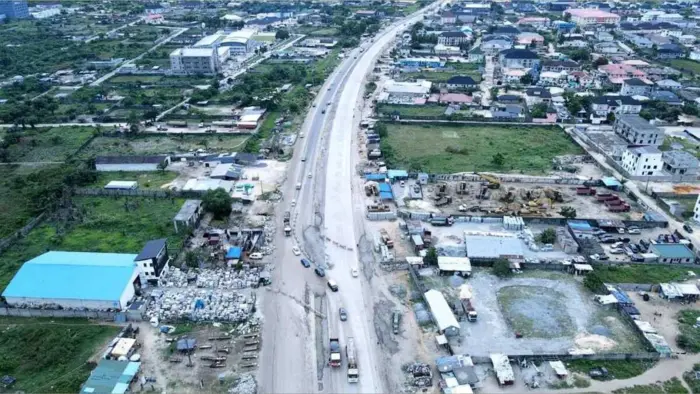
Motorists plying the deteriorating Eti-Osa-Lekki-Epe Expressway are expected to face temporary traffic disruptions as the Lagos State Government begins a 35-day rehabilitation of damaged sections from Bonny Camp to Admiralty Way Junction and around Victoria Garden City (VGC) tomorrow.
The government said traffic diversion arrangements would be introduced to minimise congestion and ensure the safety of road users during the exercise.
The Special Adviser to the Governor on Infrastructure, Olufemi Daramola, disclosed this yesterday at a stakeholders’ engagement organised by the Ministry of Works and Infrastructure to discuss the scope of work and traffic management plans for the project.
Daramola said the meeting was part of the government’s policy of consulting residents, businesses and other road users before embarking on major infrastructure projects, adding that feedback from stakeholders would inform the implementation process.
He appealed for the cooperation of residents and motorists, particularly as Lagos prepares for increased traffic during the festive season.
The rehabilitation is expected to improve road safety and ease movement along the strategic corridor, which connects residential communities, commercial centres and major industrial investments across the Lekki-Epe axis.
The expressway provides access to the Lekki Free Zone, Dangote Refinery, Dangote Fertiliser Factory, Lekki Deep Sea Port and Eleganza Industrial Estate. It also serves major housing developments and educational institutions, including Pan-Atlantic University and Lagos Business School.
However, rapid urbanisation, growing commercial activities and increasing traffic have accelerated the deterioration of some sections, leaving commuters struggling with difficult journeys along the busy route.
Daramola said the government was also addressing drainage concerns along the corridor, adding that the proposed Green Line rail project would form part of a broader plan to improve transportation infrastructure in the area.
The European Union Support to Democratic Governance in Nigeria (EU-SDGN) Election Observation Hub has said vote trading during the Ekiti and Osun states governorship elections was rampant, with voters rewarded heavily for selling their votes.
The Hub, established for election monitoring, is made up of the Kukah Centre (TKC), TAF Africa, Nigerian Women Trust Fund (NWTF), Yiaga Africa, International Press Centre (IPC) and Centre for Media and Society (CEMESO).
Speaking at the presentation and dissemination of the report on the Ekiti and Osun Off-cycle Elections (which took place in June and August, 2026, respectively) in Abuja on Tuesday, Prof. Bolade Eyinla, who read the findings of the Hub, said voters got up to N50,000 for selling their votes.
“The scourge of vote trading is becoming a pandemic,” he said, adding that, “if we don’t do anything about it, the sanctity of the vote and freedom of choice is beginning to come under severe threat and pressure.”
Prof. Eyinla lamented that vote trading has become extremely well organised and standardised, stressing that offenders remain unpunished.
“Maybe the IG (Inspector-General of Police) will tell us if they are arrested. And the result of that is that everybody has assumed a sense of impunity.
“The data shows us that 77% of the 84 verified incidents were vote trading, and party agents were the main actors in at least 90% of these cases.
“In Osun, it was 69%, and as I said, we still have not heard of any reported arrests, investigations, or prosecutions, given the magnitude of vote trading that went on in both elections.”
Describing how it was carried out, he said the voter marks the ballot paper to show his preference, but he then brings it up to show the people who are making the tally.
“And of course, once the agent confirms ‘he has done what we demanded’, payment follows.
“Originally, I was thinking payment was within the range of 10,000 or thereabouts, but the report from Osun even told me that people got N50,000. If you divide N50,000 by the number of voters in Osun, how much that will amount to in terms of the volume of money involved,” he said.
The Hub also called for the presentation of results from the ward level, noting that most of the irregularities are done at that level.
“I think for the presidential election, it’s 8,809 (wards). We want to see the results of the ward level uploaded. If you can upload polling units, then you should be able to upload ward-level results,” he argued.
However, the Hub commended the Independent Electoral Commission for organising a near-perfect election, noting that the election started early and the results were almost the same as those independently compiled.
It also commended the security agencies for ensuring a peaceful poll in Ekiti and Osun.
Dr Akin Akingbulu, the Executive Director, Centre for Media and Society (CEMESO), in his remarks, said the Hub deployed 598 observers across all 16 Local Government Areas in Ekiti on 20 June, and 823 observers across all 30 LGAs in Osun on 15 August.
“That is more than 1,400 trained Nigerians who watched, counted, verified and reported, polling unit by polling unit, so that the conversation we have today rests on facts and not on sentiment,” he said.
The officer in charge of Minna General Hospital Mortuary, Dr Chinweokwu Alaribe, has told the judicial commission investigating the deaths of miners in Niger State that the facility received 33 corpses, not 37 as reported by the government.
Alaribe stated this while testifying before the nine-member judicial commission, chaired by Justice Mohammed Mohammed, at its resumed sitting in Minna.
According to him, the corpses brought to the mortuary were 33, adding that he could not account for bodies that were not taken to the facility.
“I’m only aware that 33 corpses were brought in, not aware of any 37 as reported. I cannot count the corpses that were not in the mortuary. I only know that 33 corpses were brought to me,” he said.
Report says the mortician told the panel that the corpses were brought to the hospital in two batches in an ambulance.
He added that two nurses from the medical unit of the Nigeria Security and Civil Defence Corps (NSCDC) accompanied the bodies to the hospital.
Alaribe identified the nurses as Mariam and Hauwa, both attached to the NSCDC medical unit in Minna.
-
 Health & Wellness1 year ago
President Tinubu Directs Cut in Dialysis Cost from ₦50,000 to ₦12,000
-
News2 years ago
CBN Debunks Fake Circular on New ₦5,000 and ₦10,000 Notes
-
 International News7 months ago
Indian Police Arrest Nigerian Over ₦290m Drug Haul
-
 Business7 months ago
Dangote Refinery Reduces Petrol Gantry Price To ₦1,200 Per Litre
-
 Business7 months ago
After Plea Bargain, Court Discharges Stella Oduah of ₦2.5bn Fraud
-
Business2 years ago
Dangote; We Did Not Fix ₦600/Litre Petrol Price
-
 Trending News1 year ago
NELFUND Disburses ₦86bn To 449,000 Beneficiaries
-
 Opinion2 years ago
Championing the People’s Voice: Obasa’s Dedication to Grassroots Representation By Dave Agboola⁰