Connect with us

International News

Israel Announces Ground Operations, Issues ‘Last Warning’ To Gazans

Published

on

Spread the love
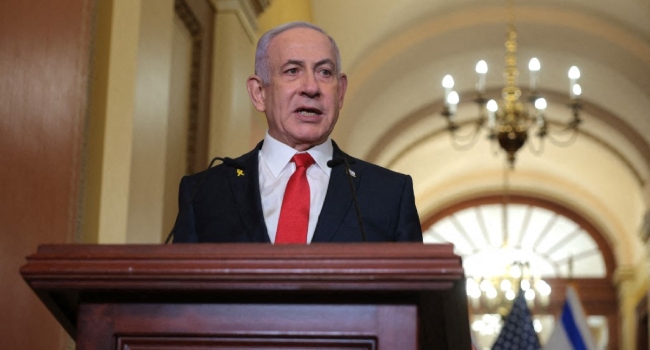
Israeli Prime Minister Benjamin Netanyahu delivers remarks following a meeting with U.S. Speaker of the House Mike Johnson (R-LA) at the U.S. Capitol on February 07, 2025 in Washington, DC. (Photo by Kayla Bartkowski / GETTY IMAGES NORTH AMERICA / Getty Images via AFP)


Israel announced renewed ground operations in Gaza on Wednesday and issued what it called a “last warning” to residents of the territory to return hostages and remove Hamas from power.

Israel conducted this week the deadliest wave of air strikes since the start of a truce in January, killing hundreds of people, according to the health ministry in the Hamas-run territory.

“Over the past 24 hours, IDF (military) forces have begun targeted ground operations in the central and southern Gaza Strip to expand the security perimeter and create a partial buffer between the north and south of the Strip,” the army said in a statement.

“Residents of Gaza, this is the last warning,” Defence Minister Israel Katz said.

“Take the advice of the President of the United States. Return the hostages and remove Hamas, and other options will open up for you — including the possibility of leaving for other places in the world for those who want to.”

 

Israel
Demonstrators gather with portraits of Israeli hostages and raise placards during a rally calling for action to release the remaining ones held captive in Gaza since the 2023 October 7 attacks by Palestinian militants, in the plaza outside the Tel Aviv Museum of Art informally called the “Hostages Square”, in Tel Aviv on March 1, 2025. (Photo by Jack GUEZ / AFP)


He was referring to a warning earlier this month by US President Donald Trump, who said: “To the People of Gaza: A beautiful Future awaits, but not if you hold Hostages. If you do, you are DEAD!”

Long lines of fleeing civilians filled the roads of Gaza on Wednesday as Israel kept up its renewed bombardment despite a chorus of calls from foreign governments to preserve the ceasefire.

Families with young children fled northern Gaza for areas further south, fearing for their lives after Israel urged civilians to leave areas it described as “combat zones”.

– Impasse –

So far, Hamas has not responded militarily to the strikes, and an official from the group said it was open to talks on getting the ceasefire back on track.

He rejected, however, Israeli demands to renegotiate the three-stage deal agreed with Egyptian, Qatari and US mediators.

 

U.S. President Donald Trump speaks during a meeting with NATO Secretary General Mark Rutte in the Oval Office of the White House on March 13, 2025 in Washington, DC. (Photo by Andrew Harnik / GETTY IMAGES NORTH AMERICA / Getty Images via AFP)


“Hamas has not closed the door on negotiations but we insist there is no need for new agreements,” Taher al-Nunu told AFP.

“We have no conditions, but we demand that the occupation be compelled to immediately halt its aggression and war of extermination, and begin the second phase of negotiations.”

Negotiations stalled over how to proceed with the ceasefire, whose first phase expired in early March, with Israel and Hamas disagreeing on whether to move to a new phase intended to bring the war to an end.

Israel and the United States have sought to change the terms of the deal by extending stage one.

That would delay the start of phase two, which was meant to establish a lasting ceasefire and an Israeli withdrawal from Gaza — a stance swiftly rejected by Hamas, which demanded full implementation of the original deal.

– ‘So frustrated’ –

Israel and the United States have portrayed Hamas’s rejection of an extended phase one as a refusal to release more Israeli hostages in exchange for Palestinian prisoners.

Netanyahu’s office said he ordered the renewed strikes on Gaza after “Hamas’s repeated refusal to release our hostages”.

The White House said Israel consulted with it before launching the strikes.

The intense Israeli bombardment sent a stream of new casualties to the few hospitals still functioning in Gaza and triggered fears of a return to full-blown war after two months of relative calm.

A UN Office for Project Services employee was killed and at least five other people were wounded when a UN building in the central city of Deir el-Balah was hit, the agency said.

A UN statement said “an explosive ordnance was dropped or fired at the infrastructure and detonated inside the building”, adding the type of ordnance was so far unknown.

The health ministry in the Hamas-run territory blamed Israel, while the Israeli military denied it had struck the UN compound in Deir el-Balah.

AFPTV footage showed UN vehicles and an ambulance transporting three men to Al-Aqsa Martyrs Hospital.

Two of them appeared to have leg injuries and a third had bandages on both arms and abdomen, with traces of blood on his chest.

Thousands of Israelis massed in Jerusalem on Wednesday, accusing Netanyahu of resuming strikes on Gaza without regard for the safety of the remaining hostages.

“Many people here in Israel are so frustrated with the operation that began yesterday because it’s obvious it will not… make Hamas more flexible and bring the release of hostages,” said Palestinian affairs expert Michael Milshtein of Tel Aviv University’s Moshe Dayan Center.

– ‘Shattering’ hopes –

Governments in the Middle East, Europe and beyond called for the renewed violence to end.

German Foreign Minister Annalena Baerbock said Israel’s raids on Gaza “are shattering the tangible hopes of so many Israelis and Palestinians of an end to suffering on all sides”.

European Union foreign policy chief Kaja Kallas said she told her Israeli counterpart Gideon Saar that the new strikes on Gaza were “unacceptable”.

Israel’s resumption of military operations, after it already halted all humanitarian aid deliveries to Gaza this month, drew an immediate political dividend for Netanyahu.

The far-right Otzma Yehudit party, which quit his ruling coalition in January in protest at the Gaza ceasefire, rejoined its ranks.

The war began with Hamas’s October 7, 2023 attack on Israel, which resulted in 1,218 deaths, mostly civilians, according to Israeli figures.

Of the 251 hostages seized during the attack, 58 are still in Gaza, including 34 the Israeli military says are dead.

Gaza’s civil defence agency said Wednesday that at least 436 people had been killed since Israel resumed intense strikes on the Palestinian territory.

The ministry of health in the Hamas-run territory had earlier published a much higher death toll for the last 48 hours, but an official later withdrew it, citing a “technical error”.

As of Monday, before the latest strikes, the overall toll in Gaza stood at more than 48,570, according to the health ministry.


AFP

International News

Israel Says It had Struck Two Naval Missile Production Sites In Tehran

Published

on

Spread the love

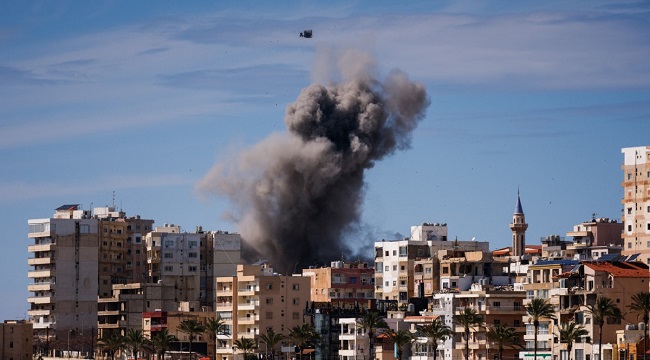
The Israeli military announced on Wednesday it had struck two naval cruise missile production facilities operating under Iran’s ministry of defence in Tehran.


“In recent days, the Israeli air force acting on IDF intelligence struck two key naval cruise missile production sites in Tehran,” the military said.

It said the facilities were used to “develop and manufacture long-range naval cruise missiles, which are capable of rapidly destroying targets at sea and on land”.

The strikes “represent another step in deepening the damage done to the regime’s military production infrastructure”, the military added.

Last week, the military announced its fighter jets had struck several Iranian naval ships in the Caspian Sea, including vessels equipped with anti-submarine missiles.


AFP

Continue Reading

International News

2025 ‘Deadliest Year’ Yet For Red Sea Migrants, UN Reports 922 Deaths

Published

on

Spread the love

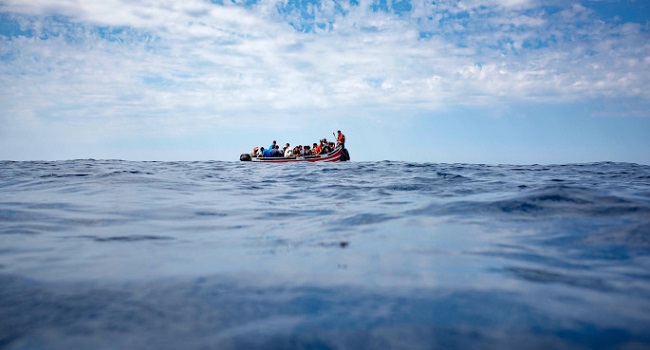
The number of migrants who died on the “Eastern Route” from the Horn of Africa to the Arabian Peninsula doubled to a record high of 922 last year, the UN migration agency said Wednesday.

Tens of thousands of migrants from Ethiopia, Somalia and neighbouring countries take the route across the Red Sea each year, mostly from Djibouti to Yemen, in search of work as labourers or domestic workers in wealthy Gulf countries.

“2025 was the deadliest year ever recorded on the Eastern migration route… with 922 people dead or missing — double the number from the previous year,” Tanja Pacifico, head of mission for the International Organisation for Migration (IOM) in Djibouti, told AFP.

The majority of victims were from Ethiopia, the second most-populous country in Africa with more than 130 million people. It is plagued by multiple internal conflicts and deep poverty.

“IOM remains fully committed to working alongside the government of Djibouti to promote safe and dignified migration pathways, in order to prevent further tragedies,” said Pacifico.

Many migrants who cross the Red Sea find themselves stuck in Yemen, the poorest country on the Arabian Peninsula, which has been embroiled in a civil war for nearly a decade, and some even choose to return.

Rapid economic growth in Ethiopia — estimated to reach around 10 percent in 2026 — could encourage less migration, IOM says, but that is mitigated by high inflation, also around 10 percent in February.


AFP

Continue Reading

International News

Denmark Faces Lengthy Negotiations To Form A Government

Published

on

Spread the love
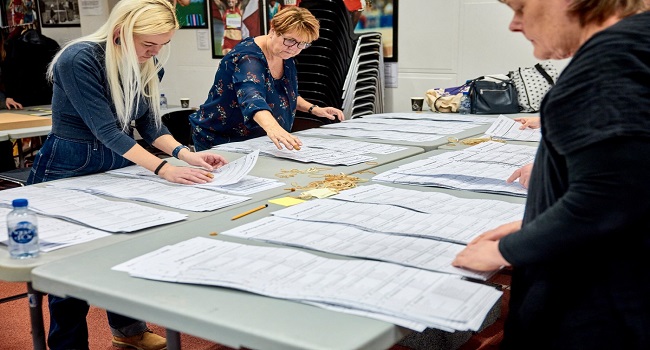
Election workers recount ballots in the Marselisborg Hallen in Aarhus, Denmark on March 25, 2026. (Photo by Mikkel Berg Pedersen / Ritzau Scanpix / AFP) /

Denmark’s political parties began the thorny process of forming a government Wednesday, with the centrist Moderates as kingmaker after the prime minister’s Social Democrats scraped through a general election without a majority.

Greenland’s Inuit Ataqatigiit party member Naaja Nathanielsen (C) looks on in a polling station in Nuuk, on March 24, 2026, during the parliamentary election in Denmark (Photo by Oscar Scott Carl / Ritzau Scanpix / AFP) / Denmark OUT

Danes were braced for a weeks-long process as Prime Minister Mette Frederiksen seeks to consolidate power in the deeply splintered parliament after Tuesday’s snap vote.

Denmark’s Prime Minister Mette Frederiksen arrives at Amalienborg Palace in Copenhagen to inform the king about the election result one day after the parliamentary election on March 25, 2026. (Photo by Martin Sylvest / Ritzau Scanpix / AFP) 

A left-wing bloc made up of five parties, including Frederiksen’s Social Democrats, won 84 seats; the right-wing and far-right claimed 77; and the Moderates won 14 in the election.

The Social Democrats posted their worst election score since 1903—though they remained Denmark’s largest single party, with 38 seats in the 179-seat parliament.

Chairwoman of the Social Democrats Mette Frederiksen attends a party leader debate hosted by Publicists’ Club one the day after the parliamentary election at the Confederation of Danish Industry’s building in Copenhagen on March 25, 2026. (Photo by Liselotte Sabroe / Ritzau Scanpix / AFP)


Frederiksen formally tendered her coalition government’s resignation to King Frederik on Wednesday, telling a televised party leader debate she wanted to try to form a centre-left government.

“The most realistic scenario” would be a coalition with the five parties on the left and the centre-right Moderates, she said.

But it is not certain the Moderates, led by Foreign Minister Lars Lokke Rasmussen, would agree to that.

“I don’t believe that Denmark needs policies aligned with” the leftist Red-Green Alliance, Lokke said.

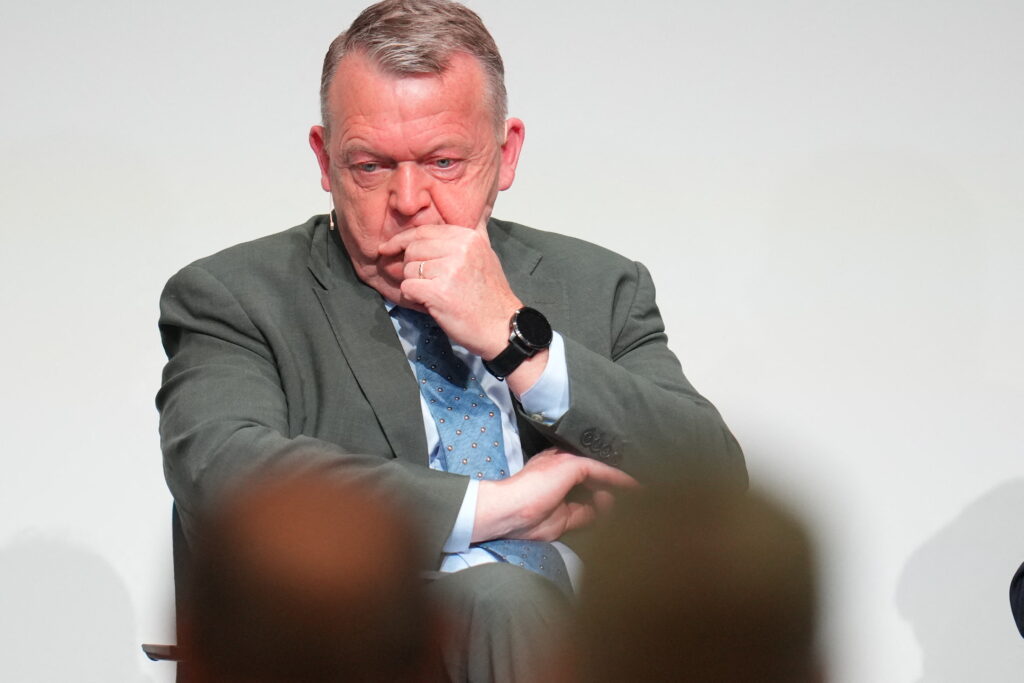
Chairman of the Moderates Lars Loekke Rasmussen attends a party leader debate at the Confederation of Danish Industry’s building in Copenhagen on March 25, 2026, the day after the parliamentary election. (Photo by Liselotte Sabroe / Ritzau Scanpix / AFP) / Denmark OUT

King Frederik was to meet party leaders individually later Wednesday to determine who should be asked to try to form the next government.

“My expectation is that Mette Frederiksen will become prime minister,” University of Copenhagen political science professor Rune Stubager told reporters.

“But I don’t know with the backing of which parties, like the left wing or the right wing,” he said.

He noted that Lokke, a two-time former prime minister, would likely vie for the position of prime minister, even though he has adamantly denied any interest in the job.

“Danes want me and not another prime minister. I still have the backing to be able to continue on behalf of the Danish people,” Frederiksen insisted during the debate.

Frederiksen has for the past four years headed an unprecedented left-right coalition made up of her Social Democrats, the Moderates and the Liberals.

The Liberals have refused to continue in a Social Democrat-led government.

‘Too Hard To Say’

Danes are now prepared for long negotiations. After the 2022 election, the talks lasted six weeks.

“It’s a long process, which means the government won’t be formed and it will be quite difficult to pass laws during this period,” lamented Jesper Dyrfjeld Christensen, a 54-year-old engineer.

“It’s really too hard to say who will be part of the coalition,” admitted Stubager.

With 12 parties in parliament, the political landscape is jagged — though Denmark is accustomed to minority governments.

“To some extent, this is the way Danish politics works. You have a minority government in the centre which forms a majority with the left on some issues and with the right on others,” he explained.

The negotiations are expected to focus on economic and pension issues, pollution and immigration, he said.

The traditional far-right party, the Danish People’s Party, which has heavily influenced policy since the late 1990s but slumped in the 2022 election, more than tripled its result to 9.1 per cent of votes.

The three anti-immigration groups together garnered 17 per cent, a stable figure for Denmark’s populist right over the past two decades.

“If negotiations take place in the left-wing bloc with the moderates, then there will be more focus on green issues than on immigration,” Stubager said.

“But if, instead, the Moderates negotiate with the parties on the right, then the central issue will be immigration.”

Four seats in Denmark’s parliament are held by its two autonomous territories — two for Greenland and two for the Faroe Islands.

While the Faroese renewed the mandates of the two outgoing lawmakers, with one for each bloc, Greenland overwhelmingly backed the left-wing party and Naleraq, which advocates rapid independence from Denmark.


AFP

Continue Reading

Trending

Copyright © 2026 TheColumn NG