
International News
Magnitude 6.2 Earthquake Strikes Philippines


A magnitude 6.2 earthquake struck the Philippines on Thursday, the US Geological Survey said, but there were no immediate reports of damage.
The earthquake struck at a depth of 112 kilometres (77 miles) at around 10:00 am (0200 GMT) in waters off Calatagan town, about three hours’ drive from the capital Manila.

Calatagan police chief Emil Mendoza said he and his staff rushed outside following the tremor, which was also felt over the country’s heavily populated heartland, including Manila.
“It was a bit strong. We had to run outside,” Mendoza told AFP.
While there were no immediate reports of casualties or damage, disaster authorities had been deployed to assess the earthquake’s impact, Mendoza said.
Calatagan disaster officer Ronald Torres said the quake lasted between 30 seconds and a minute.
The state seismological agency warned of aftershocks but ruled out tsunami waves due to the tremor’s depth.
The earthquake sent people rushing out of buildings in the capital.
Runways and taxiways at Ninoy Aquino International Airport were temporarily closed to inspect for any damage to the pavement, according to the country’s transportation department.
Operation of the capital’s metro system was also halted while tracks were checked for possible damage.
Images on social media verified by AFP showed a crane truck at a Manila port as it swayed from the force of the tremor.
Diego Mariano, information officer at the civil defence office, said authorities were still assessing the impact of the quake.
“As of now, no major damage or casualties as of reporting time. Assessment still ongoing,” Mariano told reporters in a message.
Quakes are a daily occurrence in the Philippines, which sits along the Pacific “Ring of Fire”, an arc of intense seismic as well as volcanic activity that stretches from Japan through Southeast Asia and across the Pacific basin.
In October 2013, a magnitude 7.1 earthquake struck Bohol Island in the central Philippines, triggering landslides and killing more than 200 people.
Old churches in the birthplace of Catholicism in the Philippines were badly damaged. Nearly 400,000 were displaced and tens of thousands of houses were damaged due to the quake.
In 1990, a magnitude 7.8 earthquake in the northern Philippines created a ground rupture that stretched over a hundred kilometres, causing severe damage and killing more than 1,200 people.
AFP




A spate of cyber-attacks that hit supermarket chains across at least 10 European countries on Monday has prompted European Union officials to warn of a deliberate attempt to disrupt the food supply chain.
Supermarkets have reported problems in Belgium, Estonia, Finland, Ireland, Italy, Luxembourg, the Netherlands, Portugal, Germany and Sweden, and the significant increase in freezer temperatures has forced retailers to discard food.
Temperatures in chains across Europe reportedly rose as high as 50C (122F).
No-one has yet admitted carrying out the cyber-attacks.
Supermarket chains said the temperatures of refrigerators and freezers in some of their shops soared as high as 50C
The European Union has raised concerns about the attacks, which come three weeks after a cyber-attack disrupted as many as 700 French grocery stores, causing food losses estimated at tens of millions of euros.
The security of refrigeration systems as well as other devices that can be monitored remotely has heightened concerns about government-backed hybrid attacks.
The EU’s food and agriculture commissioner, Christophe Hansen, said the bloc was taking the incidents very seriously and warned of further disruption in the future.
Commission spokesman Thomas Regnier was careful not to attribute blame, but said: “These incidents of course show once again how cyber-attacks can disrupt essential services and affect citizens’ daily lives.”
“These are not isolated incidents and of course we have to be collectively resilient and prepared for such cyber incidents.”
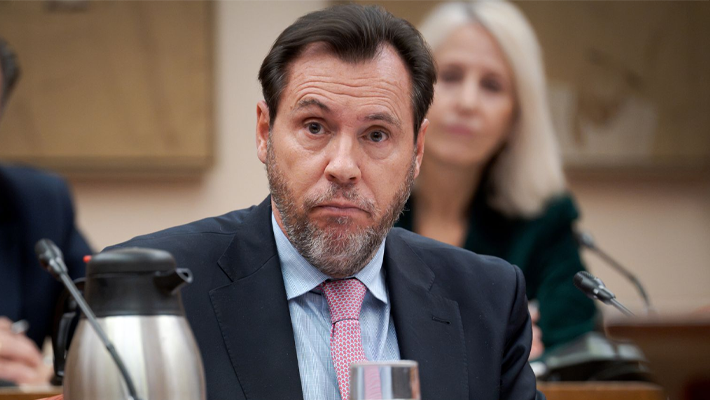
Spain’s Transport Minister Óscar Puente has resigned – six days after the high-speed train collision in which at least 69 people were killed and dozens injured.
He announced his decision in Congress, after giving evidence on last Wednesday’s disaster near the town of Urda, south of the capital Madrid, in which a train smashed into the back of another which had stopped on the same line.
“A transport minister in a country like Spain cannot remain in office after two accidents of this seriousness in less than a year,” he said – a reference to January’s crash on the same line in which 46 people were killed.
Last week’s crash was one of the worst rail disasters in Europe’s modern history, and Spain’s worst crash since 2013.
Rescuers had to use heavy lifting equipment to get access to derailed carriages where a number of passengers were trapped
Puente announced his decision at the end of a congressional session on Tuesday evening in which he had outlined new rail safety measures and been grilled by the opposition.
He said he had taken the decision to resign immediately after the 28 October disaster, but had not made it public.
Puente had been under mounting pressure in the wake of the disaster as opposition parties and some allies of the government called on him to step down.
His resignation comes as a blow to the Socialist-led government ahead of a general election set for 29 November.
During his lengthy hearing before lawmakers, Puente said: “I wish to inform you that I am not only stepping down from my position as minister of transport, but that I am also withdrawing my name from the lists for the early legislative elections.”
Last Wednesday’s accident involved a train run by state-owned operator Renfe with 397 passengers on board and a stationary train run by private operator Iryo, which was carrying 147 passengers.
A reported issue with the automatic signalling system – a computer failure – had forced all trains to halt on the affected stretch.
Leaked audio recordings published in Spanish media soon after the crash revealed conversations between train drivers and a control centre just minutes before the disaster.
The three recordings of conversations between Madrid’s control centre and two train drivers appear to show that the Renfe train was given clearance to move even though the other train had stopped on the track, about 25km (15 miles) ahead.
In one, a control centre operator is speaking to the driver of the Renfe train, which was having some technical difficulties.
After some exchanges, the control operator tells the driver: “Continue your journey and then proceed under [Lateral Signalling Block], at normal speed with normal operation.”
The driver replies: “At normal speed?” To which the controller answers: “Yes.”
The Lateral Signalling Block is a back-up system used when the automatic signalling or data transmission system fails.
The driver of the stationary Iryo train says in another audio recording that communication with the train-control system has been lost, and it is not moving.
The train “is stationary in front of the entry signal at Urda”, the driver tells the control centre operator. After a series of exchanges, the driver is then told to “resume the journey” normally.
The Iryo driver then contacts the control centre again, according to a later recording, saying they cannot start the train. “The train won’t allow me to control the [security] system. That’s why I am still stopped in front of the entry signal,” they say.
The latter recording suggests that the controller had been notified that the Iryo train remained stationary as the Renfe train approached.
Iryo said its carriages were “struck from behind” by the other train.
Puente said last week that the decision to instruct the trains to move again, without any speed restrictions, was “inexplicable”.
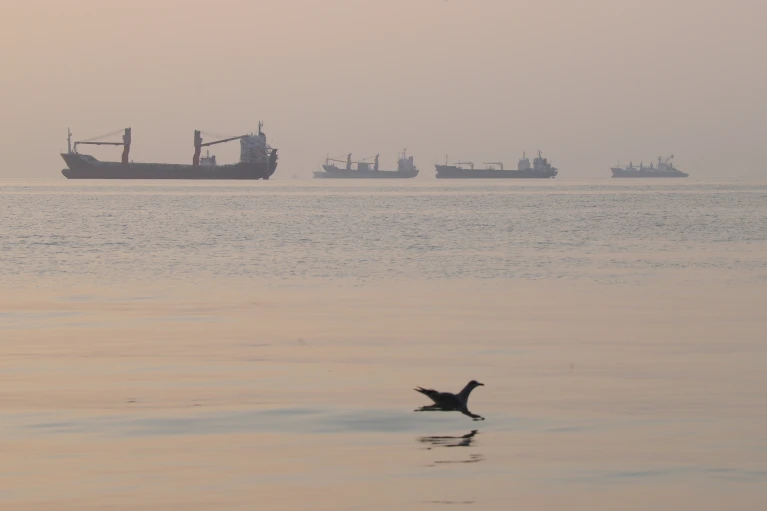
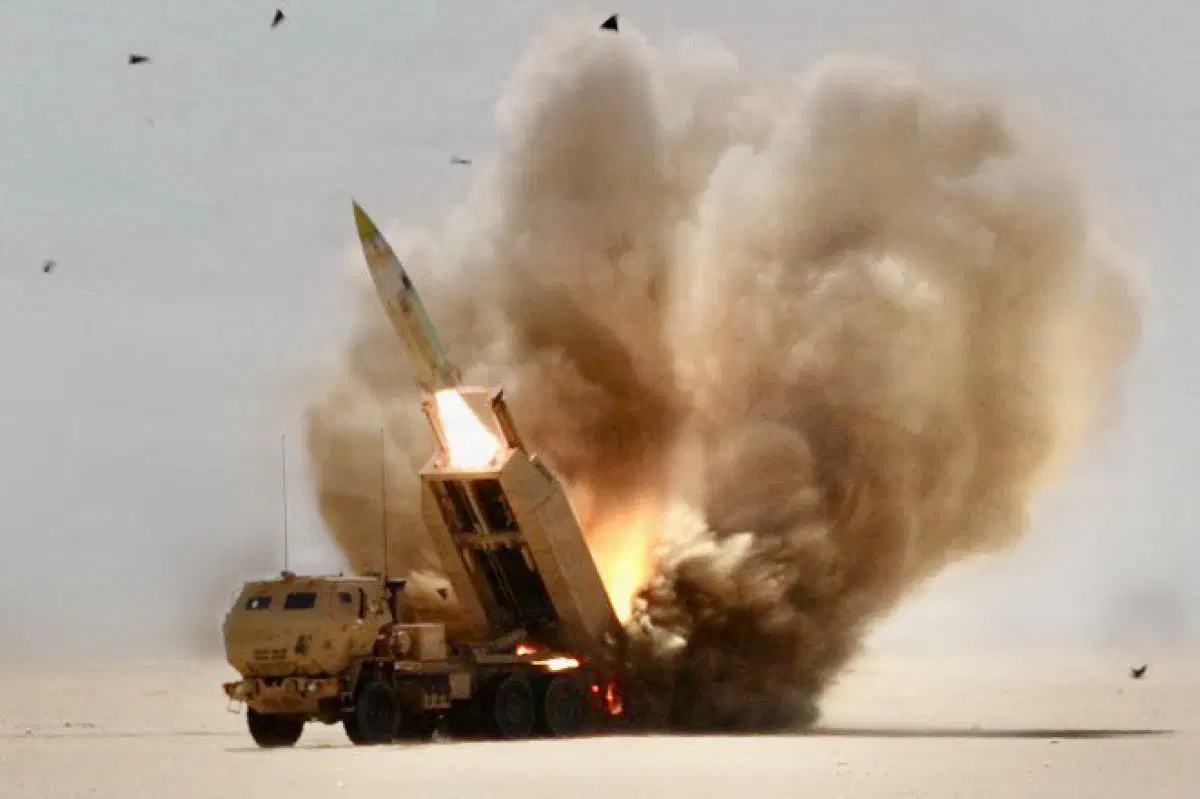
The United States has launched strikes on Iranian targets in the Strait of Hormuz, just hours before the country votes in the mid-term elections.
US officials told several American news outlets that the strikes were defensive in nature and meant to protect US assets in the region.
The officials added that the strikes were also in response to Iran’s Islamic Revolutionary Guard Corps (IRGC) firing at a US aircraft.
The last confirmed US strikes on Iran were in September.
Trump previously said attacks would not resume until after the mid-terms.
On Saturday, Iranian Supreme Leader Mojtaba Khamenei instructed the country’s military to respond to any threats, without geographical restrictions.
Khamenei also ordered an expansion of the list of potential American and Israeli targets.
At the time, Marco Rubio, US secretary of state, said Trump had yet to decide whether to launch new missiles on Iran but would prefer to resolve the conflict diplomatically.
Trump has been facing plunging poll numbers and pressure from within his party to end the war, which began when the US and Israel attacked Iran in February.
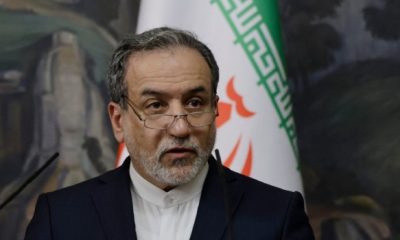
Mohammad Ghalibaf, Iranian parliamentary speaker who is leading negotiations with the US, issued a fresh warning early Tuesday.
“The Iranian nation will not surrender to the enemy’s threats and military actions,” he said.
Ghalibaf added that Iran’s military and strategic response “will be unpredictable”.
-
News2 years ago
CBN Debunks Fake Circular on New ₦5,000 and ₦10,000 Notes
-
 Health & Wellness1 year ago
President Tinubu Directs Cut in Dialysis Cost from ₦50,000 to ₦12,000
-
 Opinion2 years ago
Championing the People’s Voice: Obasa’s Dedication to Grassroots Representation By Dave Agboola⁰
-

 International News7 months ago
Indian Police Arrest Nigerian Over ₦290m Drug Haul
-
 Business7 months ago
Dangote Refinery Reduces Petrol Gantry Price To ₦1,200 Per Litre
-
 Business7 months ago
After Plea Bargain, Court Discharges Stella Oduah of ₦2.5bn Fraud
-
Business2 years ago
Dangote; We Did Not Fix ₦600/Litre Petrol Price
-
 Trending News1 year ago
NELFUND Disburses ₦86bn To 449,000 Beneficiaries