
News
Prepare For State Police, IGP Tells Officers

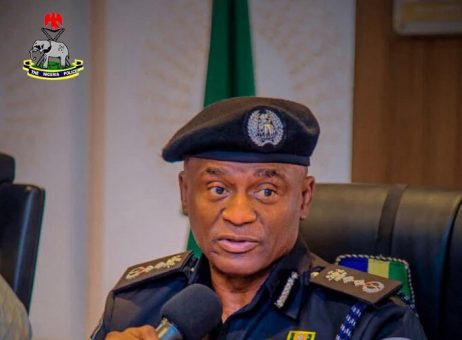
Nigeria’s Inspector-General of Police (IGP) Olatunji Disu has called on officers of the police force to embrace the proposed creation of state police, saying the Federal Government led by President Bola Tinubu has made up its mind to establish the new policing structure and that the Force must play a leading role in educating personnel about the reform.
Declaring open a one-day workshop on state policing, the IGP described the proposed initiative as one of the most significant security reforms currently under consideration in Nigeria, noting that its outcome would have implications beyond the country’s borders.
“This is a very important topic raging in the country today and in other parts of the world because everything that happens in Nigeria concerns the world,” Disu said.
He explained that discussions on state police have advanced through several stages, including the establishment of committees, constitutional amendment deliberations and the development of an implementation framework.
According to him, the immediate responsibility of the police leadership is to ensure that officers fully understand the concept and objectives of state policing.
“We are leading hundreds of officers who must be told about state police, who must be educated about state police to allay their fears because there are fears everywhere, and it’s our duty to educate them and let them know what state police is all about,” he said.
Disu stressed that the proposed reform should not be viewed as a project of the Nigeria Police Force alone but as a national initiative being driven by the Federal Government in the interest of Nigerians.
“The Federal Government of Nigeria have made up their mind to have the state police, and it’s our duty to assist them to achieve it,” he said.
He added, “This is not the issue of us only. This is the issue of the Federal Government of Nigeria and the people of Nigeria.”
The Inspector-General urged participants at the workshop to actively engage in discussions and seek clarification on areas of concern so they would be equipped to enlighten officers in their respective commands.
“So the most important thing is to listen very well, ask questions, how this thing is going to work, so that we’ll be able to go back and talk to our officers and educate them,” he said.
Disu commended Professor Olu Ogunsakin, Director General, National Institute of Police Studies and Head, Nigeria Police Reform Secretariat, for his contributions to the development of the framework on state policing, describing him as a key resource person in the ongoing reform process.
The IGP recalled that although there were initial suggestions that the police should remain passive because decisions on state policing had already been taken, the Force instead opted to establish its own committee to contribute meaningfully to the national conversation.
“I’ll go back to when we were about to start. Arguments arose that decisions have been taken and we should just sit down and be complacent and not do anything about it. I’m happy we quickly agreed to set up a committee,” he stated.
He disclosed that although the Nigeria Governors’ Forum had already constituted its committee and made significant progress, the police committee worked swiftly to catch up.
“The governors have already set up their committee. They have already almost concluded, in fact, they have concluded. We started late, we caught up with them, and I’m happy to say our work is what they are deliberating on today,” Disu said.
According to him, the police committee produced the framework within just 17 days, laying the foundation for the ongoing national discussions.
“I think it took us 17 days only to come up with the framework that has become the genesis of what everybody is working on today,” he said.
Disu, however, noted that the framework remains a work in progress and would continue to benefit from expert input before its final adoption.
“We still need to put some finishing touches to it,” he said.
He further disclosed that retired Inspectors-General of Police had met with him to offer recommendations aimed at strengthening the proposed framework.
“Retired Inspectors-General of Police have visited me, and they have shown their concern, and we have deliberated, and they have put in their contributions into this as well,” he said.
The IGP encouraged participants to critically examine the framework and make further contributions to ensure that all important issues are adequately addressed.
“You have the opportunity to help us to look at it so that every detail, every important detail that will be needed, should be input into it,” he added.
Disu also revealed that the committee carried out comparative studies of policing systems in other federal countries to guide Nigeria’s approach.
“A lot of comparative analysis have been done. We have taken time to study nations where they have state police: India, America, and even Pakistan, how things work there,” he said.
He concluded by urging participants to approach the workshop with seriousness, saying their contributions would help shape the future of policing in Nigeria.
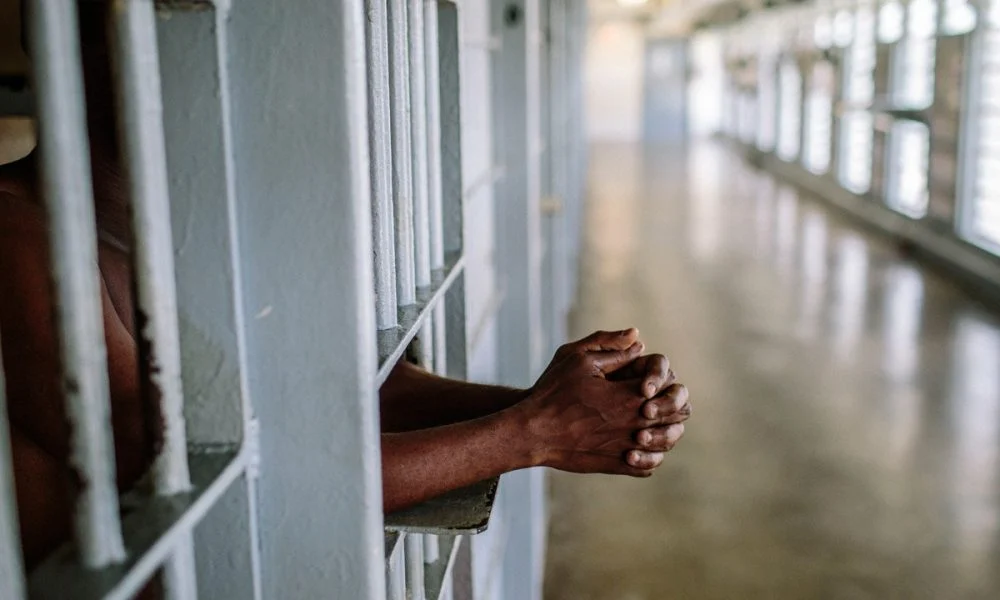
Ogun State Police Command has arraigned five suspects before the Ota Magistrate Court over their alleged involvement in the assault and obstruction of police officers carrying out their lawful duties in Ota.
The suspects were brought before the court following an incident around The Bells area of Iyana-Iyesi, Ota, on October 2, 2026, according to a statement issued on Wednesday by the command’s Police Public Relations Officer, DSP Oluseyi B. Babasiyi.
The police said the incident occurred after a patrol team intercepted and arrested a suspect allegedly found with a large quantity of substances suspected to be Indian hemp.
According to the command, the officers were taking the handcuffed suspect to the station when they were allegedly ambushed by a group of people armed with cutlasses, stones and bottles.
The attack reportedly resulted in injuries to some of the officers, damage to the police operational vehicle and the escape of the suspect in custody.
Following the incident, the command said an intelligence-led operation was launched, leading to the arrest of five suspects identified as Morenikeji Badmus, 36; Adedoja Segun, 40; Jeremiah Odise Ugbede Onride, 49; Mike Stephen, 28; and David Odeh, 32.
The suspects were arraigned on charges bordering on conspiracy, serious assault on police officers, obstruction of lawful duty and conduct likely to cause a breach of the peace.
The police said efforts were still ongoing to arrest other suspects who fled the scene of the incident.
The Commissioner of Police, Ogun State Command, CP Bode Ojajuni, reaffirmed the command’s commitment to protecting police officers carrying out their lawful responsibilities.
“Members of the public are urged to refrain from physical confrontation with law enforcement personnel and channel grievances through established lawful channels,” the statement said.
The command added that “the safety of police officers performing lawful duties remains a priority of the command.”
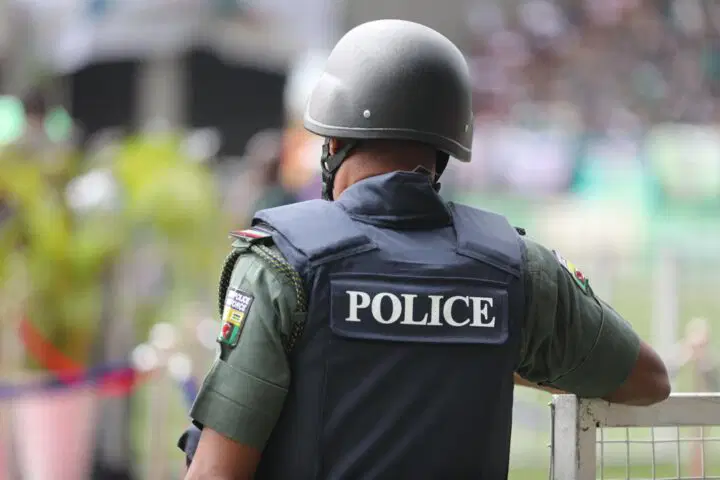
The Yobe State Police Command has arrested a nine-year-old boy over the alleged killing of four family members in Rugan Badali community, Karasuwa Local Council of the state.
The police said the child allegedly set fire to the family house while his two stepmothers and two younger brothers were asleep, resulting in their deaths.
According to report, the suspect was said to have committed the act after his father flogged him over an allegation that he had stolen a fowl.
Speaking with journalists in Damaturu yesterday, the suspect, whose name was withheld because of his age, allegedly confessed to setting the house ablaze.
He said he bought matches the following day and set fire to the house.
“I carried one of our fowls to sell. People reported me to my father, and I was beaten. The following day, I bought N50 worth of matches in the neighbourhood. While my two stepmothers and two younger brothers were asleep, I set our house on fire as revenge for what my father did to me,” he said.
The boy added: “People came to the rescue. I did not tell them that I was the one who did it until after three days of prayer. I then confessed and was later arrested by policemen and brought here to Damaturu.”
Parading the suspect alongside his father, Abubakar Idi, the police spokesperson, ASP Yusuf Ali, said the boy remained a suspect despite his age.
Ali said the case would be handled in accordance with the law, stressing that the incident underscored the need for greater attention to criminal activities involving children.
He expressed concern over the development, particularly as the state continues to recover from the effects of Boko Haram insurgency and other security challenges.
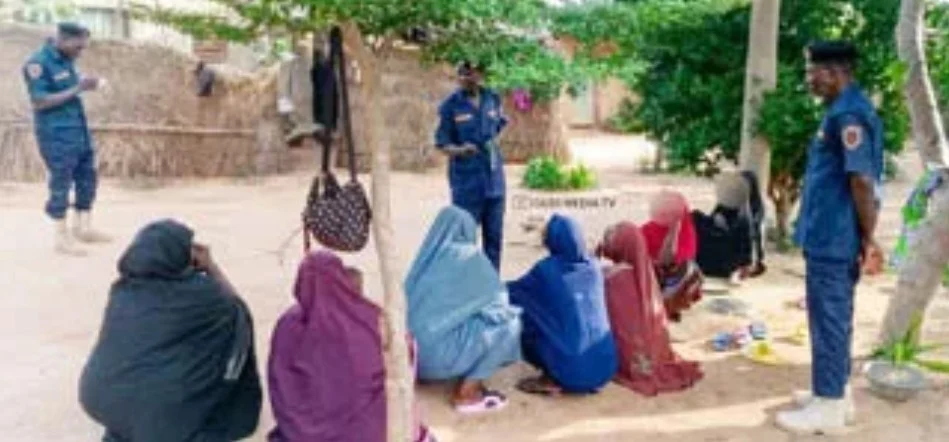
The Yobe State Hisbah Commission has arrested six women suspected of engaging in sex work during an operation in Gadaka, Fika Local Government Area of the state.
The women were arrested in the Abuja area of Gadaka town during a weekend operation conducted by operatives of the commission’s Fika Local Government Area command.
The operation also targeted locations suspected of selling and processing alcoholic drinks, according to the commission.
Head of Administration of the commission in Fika LGA, Malam Musa Abari Talba, who confirmed the arrests, said the operation was part of efforts to check activities considered contrary to the religious and moral values of the community.
Talba said the operatives also embarked on awareness campaigns during the exercise, warning residents against activities they described as harmful to the peace and moral conduct of the society.
He said: “The operation was carried out by our men at the weekend in the Abuja area of Gadaka. Six women suspected of engaging in sex work were arrested.”
According to him, the operatives also visited locations suspected of selling and processing alcoholic drinks, where residents were cautioned against activities prohibited by law.
He added that the commission used the opportunity to preach to residents and encourage them to comply with the law and shun practices considered detrimental to the community.
Talba said the exercise was not limited to arrests, stressing that the commission’s broader objective was to promote peace, discipline and good moral conduct among residents.
He further disclosed that similar operations would continue across the local government as part of efforts to ensure compliance with the law and promote peaceful and orderly communities.
-
 Health & Wellness1 year ago
President Tinubu Directs Cut in Dialysis Cost from ₦50,000 to ₦12,000
-
News2 years ago
CBN Debunks Fake Circular on New ₦5,000 and ₦10,000 Notes
-
 International News6 months ago
Indian Police Arrest Nigerian Over ₦290m Drug Haul
-

 Business7 months ago
Dangote Refinery Reduces Petrol Gantry Price To ₦1,200 Per Litre
-
 Business7 months ago
After Plea Bargain, Court Discharges Stella Oduah of ₦2.5bn Fraud
-
Business2 years ago
Dangote; We Did Not Fix ₦600/Litre Petrol Price
-
 Trending News1 year ago
NELFUND Disburses ₦86bn To 449,000 Beneficiaries
-
 Opinion2 years ago
Championing the People’s Voice: Obasa’s Dedication to Grassroots Representation By Dave Agboola⁰