
News
Subsidy Return Will Reverse Economic Gains – Minister

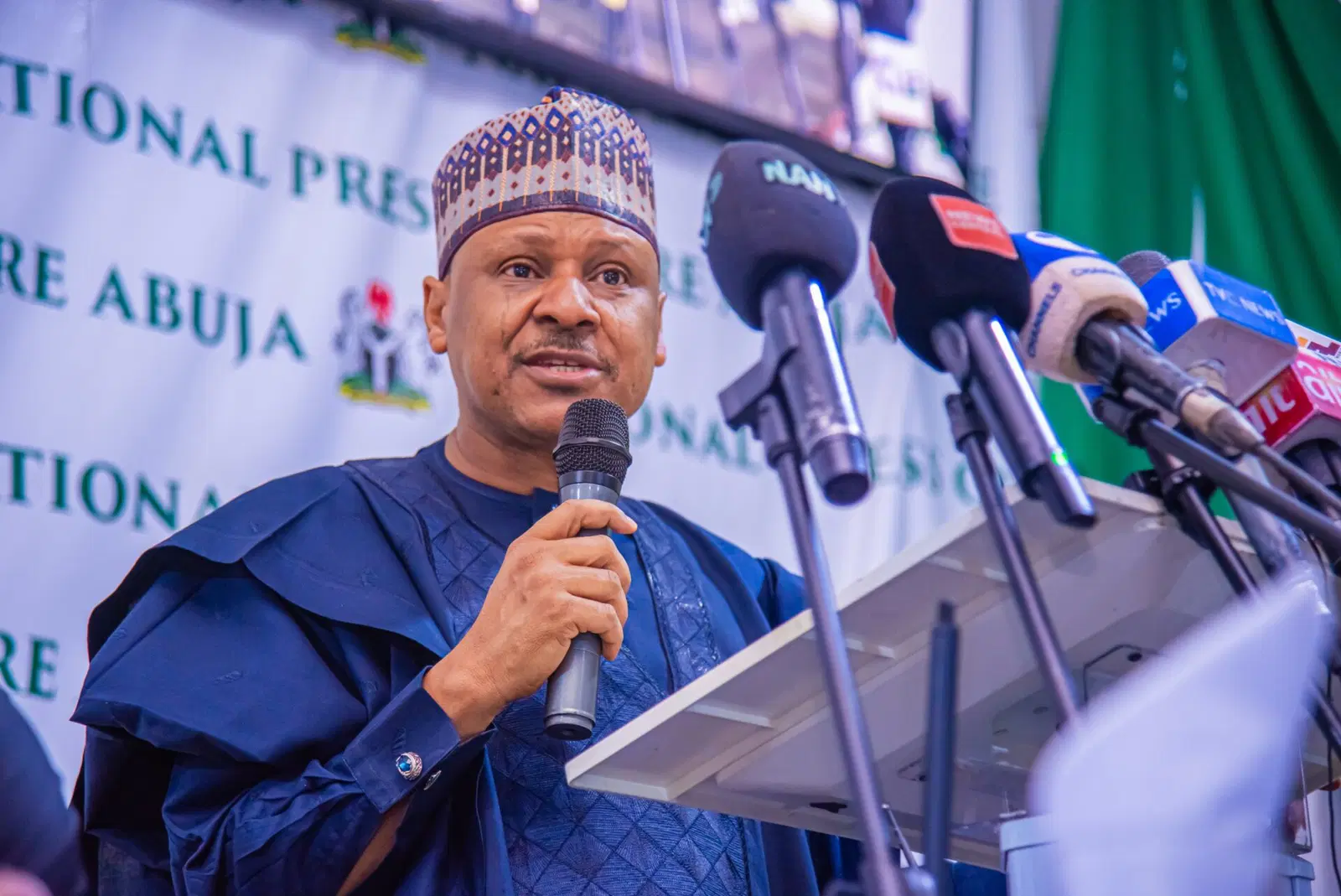
The Minister of Information and National Orientation, Mohammed Idris, has cautioned against calls to restore the petrol subsidy.
He said a return to the old regime would undermine Nigeria’s improving fiscal position, weaken investor confidence, and reverse gains from the economic reforms of the President Bola Tinubu’s administration.
According to a statement issued by his Media Aide, Rabiu Ibrahim, in Abuja on Monday, the minister stated this in an Op-Ed published on Monday in some national dailies, titled “Restoring Fuel Subsidy Will Reverse Nigeria’s Economic Gains.”
He outlined the fiscal benefits of subsidy removal, the economic risks averted, and the difficult trade-offs that would confront the country should petrol subsidy be reintroduced.
“Restoring subsidy would almost instantly return Nigeria to the economic conditions of 2022, recreating the same fiscal pressures, distortions, scarcity and incentives for arbitrage that made the old system unsustainable,” Idris said.
Idris said proponents of subsidy restoration must confront its real opportunity costs.
“Do we restore petrol subsidy, or sustain student loans and consumer credit for young Nigerians? Do we restore subsidy, or preserve higher allocations to states and local governments? Do we restore subsidy, or continue funding roads, rail, power and security?
“Do we restore subsidy, or strengthen the fiscal capacity required to expand healthcare, education and social protection for vulnerable Nigerians?” he asked.
The minister recalled that in 2022, amid declining oil production and weak revenues, Nigeria spent about $10 billion on fuel subsidies, while the World Bank warned that the subsidy was consuming resources that could otherwise have supported education, healthcare, infrastructure and social protection.
Citing the Federal Government’s recently presented “Nigeria’s Reform Scorecard: The Benefits, Costs and Harms Prevented,” Idris said the Minister of Finance and Coordinating Minister of the Economy, Dr Taiwo Oyedele, disclosed that subsidy savings mobilised N15.8 trillion in resources for the Federation between June 2023 and December 2025.
He explained that approximately ₦5.43 trillion accrued to the Federal Government, N6.52 trillion to states and N3.88 trillion to local governments, clarifying that the N15.8 trillion was not a separate pool of cash but resources released within the Federation’s wider fiscal system.
According to Idris, the increased fiscal space has strengthened the capacity of states and local governments to meet salary and pension obligations and invest in essential services, while supporting major federal investments in infrastructure, security, agriculture and human capital.
He said, “The Reform Scorecard recorded approximately N6.47 trillion in additional expenditure on strategic infrastructure, alongside more than N400 billion committed to major social investment initiatives, including NELFUND, MOFI Real Estate Investment Fund, MREIF and CREDICORP.
“In contrast, social transfers have reached more than 10 million Nigerian households.”
Idris added that Nigeria was already carrying an electricity subsidy estimated at N3.14 trillion between June 2023 and December 2025, warning that reintroducing petrol subsidy would impose an additional burden on public finances.
He noted that the Organised Private Sector and the wider economic community had also cautioned against reversing the reform.
“Nigeria cannot build tomorrow’s economy by returning to yesterday’s unsustainable subsidy regime. We have moved beyond that model,” he said.
He urged Nigerians to view the reforms in the context of the country’s long-term economic stability and the need to build a stronger and more productive economy.
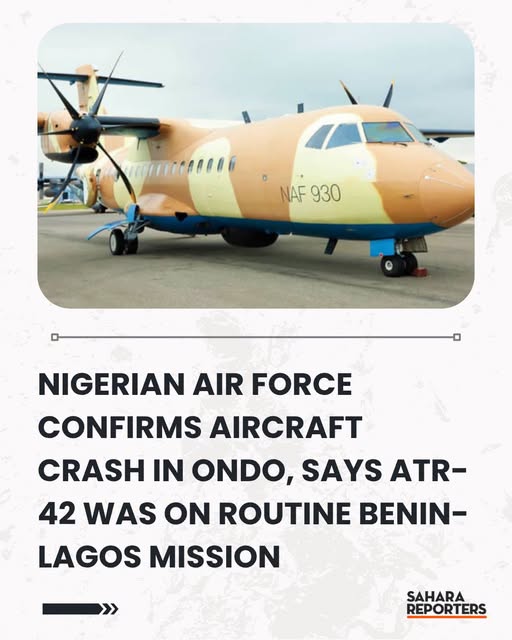
The Nigerian Air Force (NAF) has confirmed ownership of the aircraft which crashed on Monday in Igbokoda area of Ondo State.
Ehimen Ejodame, NAF Director of public relations and information, said the aircraft was on a “routine mission” when it crashed in the early hours of Monday.
In a statement, the air force spokesperson said a rescue operation is underway.
“The Nigerian Air Force (NAF) has activated an immediate Search and Rescue operation following an ATR-42 aircraft accident in the Igbokoda area of Ondo State on 5 October 2026,” the statement reads.
“The aircraft was on a routine mission from Benin to Lagos when the accident occurred.
“Search and Rescue operations, in coordination with relevant authorities and emergency response agencies, are currently ongoing.
“The NAF is committed to ensuring the success of the ongoing Search and Rescue efforts. Further details will be communicated in due course.”
The Ondo state police command had earlier confirmed the incident, but said details surrounding the crash were still emerging.
Residents had, however, informed that the crash occurred in a swampy terrain opposite a naval base.
International News
Portuguese Economy Minister: Ronaldo’s Value Is Greater Than Football, Many People Know Our Country Because Of Him
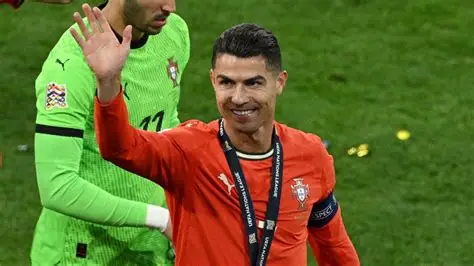
Portugal’s Economy Minister, Manuel Castro Almeida, says Cristiano Ronaldo matters to Portugal in ways that reach far beyond football. “Many people know Portugal only because of Cristiano Ronaldo,” he stressed.
His comments land as the fallout from Ronaldo’s sudden exit from the national team camp continues to dominate the headlines.
Speaking in remarks carried by the Portuguese website The Resident from the Now channel, the minister painted Ronaldo as a huge asset for Portugal’s image on the world stage. “Cristiano Ronaldo has an enormous impact in promoting and highlighting Portugal’s image,” he said. He went further still, likening the Portugal star to “the most famous company in Portugal”
On the row between Ronaldo and coach Jorge Jesus, Castro Almeida pleaded ignorance. He insisted he was “not an expert” and refused to judge who was in the right.
His focus stayed on Ronaldo’s wider worth to Portugal and its standing abroad.
That global recognition, the Economy Minister argues, makes Ronaldo “a value and an asset” to the country. “It would be good if Portugal could continue to rely on this asset,” he said.
He added: “From the angle of enhancing Portugal’s image and reputation, Cristiano holds extremely important value, and it would be very good for Portugal to continue to benefit from this potential.”
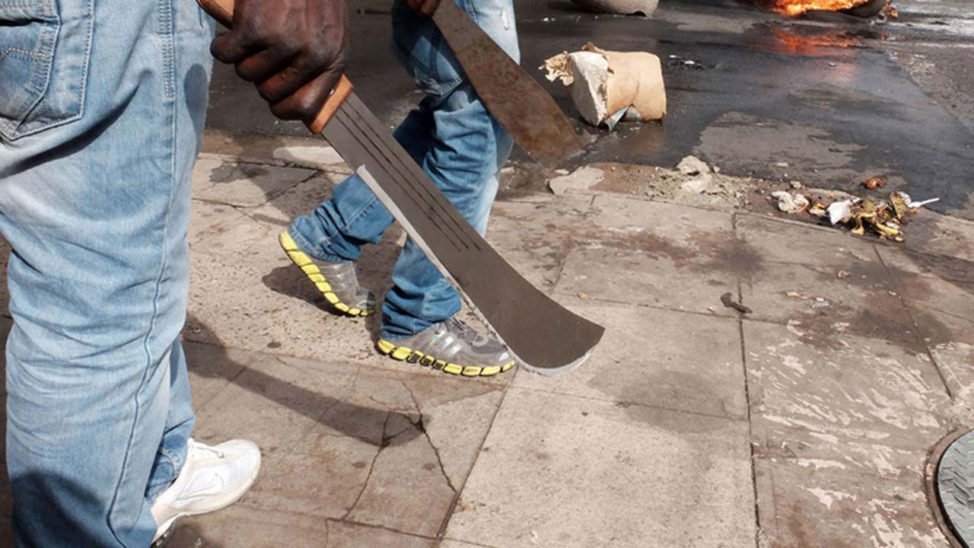
There is palpable apprehension in Osogbo, the Osun State capital, following the killing of three persons in suspected cult clashes between Friday and Sunday, forcing residents to flee and traders to shut their businesses.
The latest violence has heightened fears across the city, with residents and other stakeholders calling on the state government and security agencies to restore peace and prevent further bloodshed.
The first incident occurred on Friday evening at a lounge around Owo-Eba, in the Owode-Ilesa Garage area.
Report quoted sources as divulging that a rival gang stormed the lounge where Adebayo Taoreed, popularly known as Small Rugged, and others were relaxing and opened fire.
Taoreed, who was alleged to be linked to the Eiye confraternity, although the claim could not be independently verified, was killed alongside another man identified only as Osha.
Four other persons sustained gunshot injuries when the assailants allegedly fired sporadically while fleeing the scene. The shooting triggered panic along the Ilesa Garage-Ayepe axis, as residents ran for safety and shop owners hurriedly closed their businesses.
Confirming the incident, the Osun State Police Command spokesperson, Abiodun Ojelabi, described it as a suspected cult clash.
Ojelabi said: “The command is aware of a shooting incident suspected to be cult clash around Owo-Eba area, Osogbo. Two persons died at the spot, one identified as Small Rugged, while the other’s name is yet unknown. Four other people sustained gunshot injuries and have been rushed by the police to a nearby hospital for treatment.”
He added that the Commissioner of Police, Ibrahim Gotan Zungura, had directed tactical teams to apprehend those responsible. No arrest had been announced as of press time.
About 48 hours later, violence erupted again in the Ita-Olokan area of Osogbo on Sunday morning, leaving a man identified as Taoheed Ojoiku dead.
Residents said the incident occurred at about 9:30 a.m., throwing the area into chaos.
Ojoiku was rushed to a nearby hospital for treatment but was later confirmed dead by medical personnel.
The circumstances surrounding the attack were not immediately clear. However, sources said it might have been connected to Friday’s killings, raising fears that the incident could be a reprisal attack.
Residents have urged the state government and security agencies to intensify surveillance and security operations across the city to prevent further clashes and restore normalcy.
-
 Health & Wellness1 year ago
President Tinubu Directs Cut in Dialysis Cost from ₦50,000 to ₦12,000
-
 International News6 months ago
Indian Police Arrest Nigerian Over ₦290m Drug Haul
-
News2 years ago
CBN Debunks Fake Circular on New ₦5,000 and ₦10,000 Notes
-
 Business6 months ago
Dangote Refinery Reduces Petrol Gantry Price To ₦1,200 Per Litre
-
 Business6 months ago
After Plea Bargain, Court Discharges Stella Oduah of ₦2.5bn Fraud
-
Business2 years ago
Dangote; We Did Not Fix ₦600/Litre Petrol Price
-
 Trending News1 year ago
NELFUND Disburses ₦86bn To 449,000 Beneficiaries
-
 News1 year ago
PICTURE: In Lagos Couple Sentenced to 22½ Years for Cannabis Trafficking