
News
Tinubu Wants Judiciary To Block Loopholes Used To Escape Justice

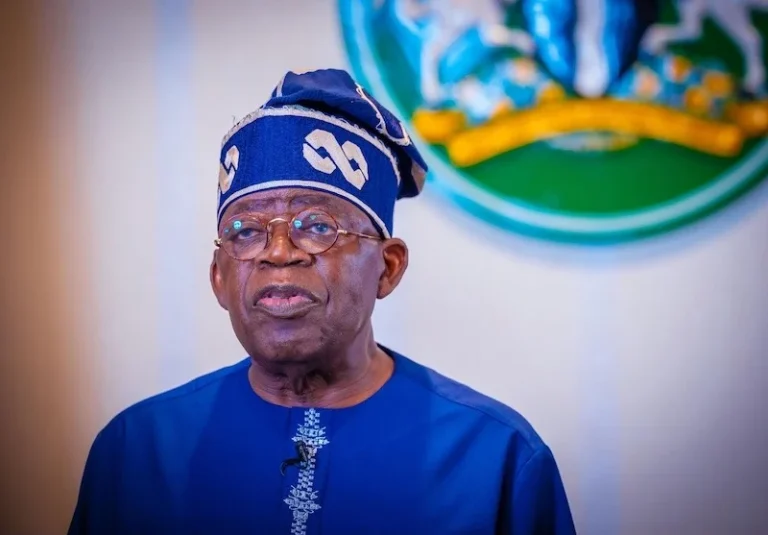
President Bola Ahmed Tinubu has asked the judiciary to overhaul the justice system to ensure that no well-connected individual manipulate technicalities to evade the full weight of the law.
This is as he also insisted that corruption cannot be uprooted without independent, reform-minded judicial system.
President Tinubu gave the charge on Tuesday in Abuja during the annual EFCC/NJI Capacity Building Workshop for Judges and Justices.
Represented by Vice President Kashim Shettima, Tinubu urged the judiciary to interrogate existing statutory frameworks against the backdrop of emerging financial crimes.
He called for the probe of prosecution strategies, “dismantle outdated precedents, and seal procedural gaps that politically exposed persons and organised crime actors exploit to delay or frustrate trial”.
The President warned that while financial and economic crimes pose an existential threat to Nigeria, corruption has no respect for status and spares no arm of government.
According to him, framing the anti-corruption campaign as purely an executive agenda is a fundamental error because compromised public services equally affect the executive, legislature, judiciary, and ordinary citizens.
Noting that corruption is a battle for the nation’s collective survival, President Tinubu said, “We must no longer permit legal pyrotechnics and procedural pedantry to shelter criminality. The Bench is not merely a mechanical arbiter of rules, but an active guardian of moral order and social equity.
“Law is, by design, an instrument of social engineering; it must invariably prioritise the public good over narrow, selfish interests shielded by technical manoeuvres. Our courts must embody the spirit, and not just the arid letter, of the law.”
The President maintained that there will be no meaningful progress in uprooting graft “without an independent, progressive, and reform-minded Bench,” even as he commended the EFCC for convening the 8th edition of the Judges and Justices Workshop.
He said the workshop with the theme, “Investigation and Prosecution of Economic and Financial Crimes in a Digital Age,” was timely and necessary in “fostering the institutional cohesion required to confront corruption’s ever-changing architecture in Nigeria.
Speaking earlier, the Chief Justice of Nigeria, Hon. Justice Kudirat Kekere-Ekun, said the event reflects the commitment of the NJI and EFCC to sustain efforts aimed at addressing challenges confronting stakeholders in Nigeria’s justice system.
She said the trend in technology has impacted how digital evidence is obtained and recorded, noting that the effective administration of criminal justice in the digital era require firm and disciplined case management which, according to her, capacity building programmes such as the EFCC and NJI collaboration, aims to strengthen.
The CJN noted that sustained judicial education and capacity development in the justice sector was yielding positive results with the improved conduct of judicial officers especially judges in case management and the dispensation of justice in recent years.
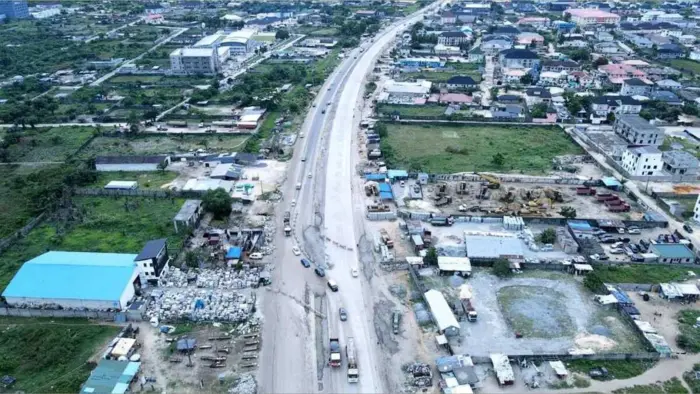
Motorists plying the deteriorating Eti-Osa-Lekki-Epe Expressway are expected to face temporary traffic disruptions as the Lagos State Government begins a 35-day rehabilitation of damaged sections from Bonny Camp to Admiralty Way Junction and around Victoria Garden City (VGC) tomorrow.
The government said traffic diversion arrangements would be introduced to minimise congestion and ensure the safety of road users during the exercise.
The Special Adviser to the Governor on Infrastructure, Olufemi Daramola, disclosed this yesterday at a stakeholders’ engagement organised by the Ministry of Works and Infrastructure to discuss the scope of work and traffic management plans for the project.
Daramola said the meeting was part of the government’s policy of consulting residents, businesses and other road users before embarking on major infrastructure projects, adding that feedback from stakeholders would inform the implementation process.
He appealed for the cooperation of residents and motorists, particularly as Lagos prepares for increased traffic during the festive season.
The rehabilitation is expected to improve road safety and ease movement along the strategic corridor, which connects residential communities, commercial centres and major industrial investments across the Lekki-Epe axis.
The expressway provides access to the Lekki Free Zone, Dangote Refinery, Dangote Fertiliser Factory, Lekki Deep Sea Port and Eleganza Industrial Estate. It also serves major housing developments and educational institutions, including Pan-Atlantic University and Lagos Business School.
However, rapid urbanisation, growing commercial activities and increasing traffic have accelerated the deterioration of some sections, leaving commuters struggling with difficult journeys along the busy route.
Daramola said the government was also addressing drainage concerns along the corridor, adding that the proposed Green Line rail project would form part of a broader plan to improve transportation infrastructure in the area.

The European Union Support to Democratic Governance in Nigeria (EU-SDGN) Election Observation Hub has said vote trading during the Ekiti and Osun states governorship elections was rampant, with voters rewarded heavily for selling their votes.
The Hub, established for election monitoring, is made up of the Kukah Centre (TKC), TAF Africa, Nigerian Women Trust Fund (NWTF), Yiaga Africa, International Press Centre (IPC) and Centre for Media and Society (CEMESO).
Speaking at the presentation and dissemination of the report on the Ekiti and Osun Off-cycle Elections (which took place in June and August, 2026, respectively) in Abuja on Tuesday, Prof. Bolade Eyinla, who read the findings of the Hub, said voters got up to N50,000 for selling their votes.
“The scourge of vote trading is becoming a pandemic,” he said, adding that, “if we don’t do anything about it, the sanctity of the vote and freedom of choice is beginning to come under severe threat and pressure.”
Prof. Eyinla lamented that vote trading has become extremely well organised and standardised, stressing that offenders remain unpunished.
“Maybe the IG (Inspector-General of Police) will tell us if they are arrested. And the result of that is that everybody has assumed a sense of impunity.
“The data shows us that 77% of the 84 verified incidents were vote trading, and party agents were the main actors in at least 90% of these cases.
“In Osun, it was 69%, and as I said, we still have not heard of any reported arrests, investigations, or prosecutions, given the magnitude of vote trading that went on in both elections.”
Describing how it was carried out, he said the voter marks the ballot paper to show his preference, but he then brings it up to show the people who are making the tally.
“And of course, once the agent confirms ‘he has done what we demanded’, payment follows.
“Originally, I was thinking payment was within the range of 10,000 or thereabouts, but the report from Osun even told me that people got N50,000. If you divide N50,000 by the number of voters in Osun, how much that will amount to in terms of the volume of money involved,” he said.
The Hub also called for the presentation of results from the ward level, noting that most of the irregularities are done at that level.
“I think for the presidential election, it’s 8,809 (wards). We want to see the results of the ward level uploaded. If you can upload polling units, then you should be able to upload ward-level results,” he argued.
However, the Hub commended the Independent Electoral Commission for organising a near-perfect election, noting that the election started early and the results were almost the same as those independently compiled.
It also commended the security agencies for ensuring a peaceful poll in Ekiti and Osun.
Dr Akin Akingbulu, the Executive Director, Centre for Media and Society (CEMESO), in his remarks, said the Hub deployed 598 observers across all 16 Local Government Areas in Ekiti on 20 June, and 823 observers across all 30 LGAs in Osun on 15 August.
“That is more than 1,400 trained Nigerians who watched, counted, verified and reported, polling unit by polling unit, so that the conversation we have today rests on facts and not on sentiment,” he said.
The officer in charge of Minna General Hospital Mortuary, Dr Chinweokwu Alaribe, has told the judicial commission investigating the deaths of miners in Niger State that the facility received 33 corpses, not 37 as reported by the government.
Alaribe stated this while testifying before the nine-member judicial commission, chaired by Justice Mohammed Mohammed, at its resumed sitting in Minna.
According to him, the corpses brought to the mortuary were 33, adding that he could not account for bodies that were not taken to the facility.
“I’m only aware that 33 corpses were brought in, not aware of any 37 as reported. I cannot count the corpses that were not in the mortuary. I only know that 33 corpses were brought to me,” he said.
Report says the mortician told the panel that the corpses were brought to the hospital in two batches in an ambulance.
He added that two nurses from the medical unit of the Nigeria Security and Civil Defence Corps (NSCDC) accompanied the bodies to the hospital.
Alaribe identified the nurses as Mariam and Hauwa, both attached to the NSCDC medical unit in Minna.
-
 Health & Wellness1 year ago
President Tinubu Directs Cut in Dialysis Cost from ₦50,000 to ₦12,000
-
News2 years ago
CBN Debunks Fake Circular on New ₦5,000 and ₦10,000 Notes
-
 International News7 months ago
Indian Police Arrest Nigerian Over ₦290m Drug Haul
-

 Business7 months ago
Dangote Refinery Reduces Petrol Gantry Price To ₦1,200 Per Litre
-
 Business7 months ago
After Plea Bargain, Court Discharges Stella Oduah of ₦2.5bn Fraud
-
Business2 years ago
Dangote; We Did Not Fix ₦600/Litre Petrol Price
-
 Trending News1 year ago
NELFUND Disburses ₦86bn To 449,000 Beneficiaries
-
 Opinion2 years ago
Championing the People’s Voice: Obasa’s Dedication to Grassroots Representation By Dave Agboola⁰