
News
Tinubu’s FAAC Boom Is A Scam — Atiku


Former Vice President Atiku Abubakar has accused the Federal Government of dressing economic decline in bigger naira figures, declaring that the much-celebrated FAAC “boom” is a monetary illusion that collapses once the figures are tested against currency depreciation, inflation, purchasing power and the mounting liabilities of state governments.
In a statement issued by his Senior Special Assistant on Public Communication, Phrank Shaibu, Atiku said Nigerians should not be deceived by the spectacle of trillions being announced every month when the naira in which those trillions are denominated has lost enormous value and ordinary citizens are paying substantially more for virtually everything.
“The arithmetic is brutal. In 2019, FAAC distribution was approximately ₦7.85 trillion, worth about $25.6 billion at the prevailing exchange rate. By 2025, FAAC had risen on paper to approximately ₦21.9 trillion, yet its dollar value had fallen to roughly $14.6 billion. So while government parades almost three times as many naira, the underlying dollar value is more than 40 per cent lower.
“That is not an economic miracle. That is money illusion. You cannot batter the currency, allow inflation to ravage purchasing power and then wave bigger naira figures before Nigerians as evidence that the country has become richer. Bigger numbers do not cancel smaller value.”
Atiku said the deception becomes even clearer when translated into the everyday experience of the Nigerian worker, where salaries may have increased nominally while their real value and purchasing power have deteriorated.
“Take the minimum wage as the simplest example. In 2019, ₦30,000 was worth roughly $83. By May 2023, that same ₦30,000 was worth about $65. Today, government boasts that the minimum wage has more than doubled to ₦70,000, yet at an exchange rate of around ₦1,320 to the dollar, that ₦70,000 is worth only about $53. Think about that: the number written on the worker’s payslip has risen from ₦30,000 to ₦70,000, but its dollar value has fallen from about $83 to about $53.
“That is Tinubu’s money illusion in its simplest form. The figure in your hand is bigger, but the value in your pocket is smaller. A worker can earn more naira today and still afford less food, less transport, less electricity, less medicine and less housing than before. Government counts the naira but conveniently refuses to count what the naira can buy.”
Atiku said the proper test of an economy is therefore not the size of the figures announced after FAAC meetings, but what those allocations can actually purchase and what obligations they are capable of meeting.
“If FAAC is truly booming, then where is the boom? Where is it in the price of food? Where is it in transport? Where is it in electricity, healthcare, housing and jobs? Where is it in the purchasing power of salaries? Government cannot become richer on paper while the people become poorer in reality and then expect Nigerians to applaud the contradiction.”
He said the contradiction becomes even more glaring when the debts still carried by states are placed beside claims of unprecedented revenue.
“And here is another question the FAAC cheerleaders must answer: if the states are swimming in unprecedented revenues, why are they still drowning in debt? A September 2026 report based on Debt Management Office data shows that just 12 states whose governors are approaching the end of their tenures carry a combined debt burden of approximately ₦5.3 trillion, comprising ₦2.16 trillion in domestic debt and about $2.33 billion in foreign obligations.
“So spare Nigerians the victory parade. You cannot boast endlessly about unprecedented FAAC allocations while states remain heavily indebted, pension and gratuity obligations persist, contractors chase payments and governments continue to carry enormous liabilities. If the money is as unprecedented as we are constantly told, Nigerians have every right to ask the most elementary question: where has the money gone?
“What is the purpose of a revenue boom if liabilities remain enormous? What is the meaning of record allocations if governments continue borrowing and citizens cannot see a corresponding improvement in their standard of living? Revenue is not an achievement merely because it enters a government account. The achievement is what that revenue buys, what debts it settles, what infrastructure it delivers and how much better it makes the lives of the people.”
Atiku said the administration must also stop pretending that fiscal discipline begins only when ordinary Nigerians require relief, insisting that government expenditure, tax concessions, import waivers, revenue exemptions, duplicated projects, abandoned projects and other areas of potential waste must be subjected to the same scrutiny.
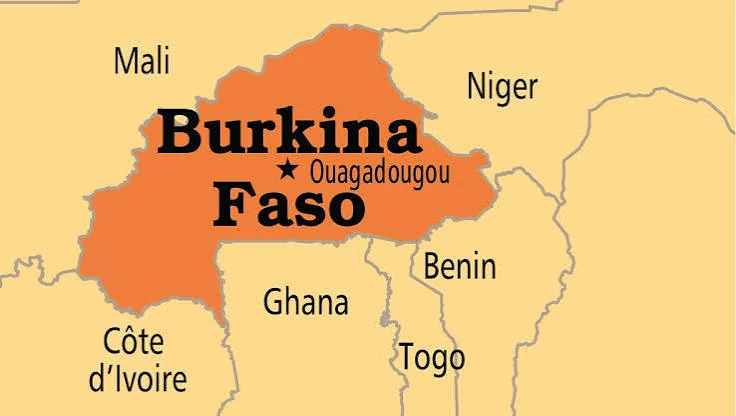
Burkina Faso’s parliament has voted unanimously to reinstate the death penalty for crimes including terrorism, espionage and treason, ending the country’s abolition of capital punishment for ordinary crimes in 2018.
All 71 members of the West African country’s transitional legislature supported the revised penal code on Tuesday, October 20, following its presentation by Justice Minister Edasso Rodrigue Bayala, according to the Associated Press.
The decision restores capital punishment nearly four decades after the country’s last known execution, which took place in 1988, according to Human Rights Watch.
The military-led government’s Council of Ministers approved a bill to restore the death penalty in December 2025, prompting criticism from international human rights organisations.
Amnesty International and Human Rights Watch warned that the move could threaten fundamental rights and be used to suppress critics of the authorities.
Burkina Faso’s military government has previously faced allegations of detaining journalists, human rights defenders and other perceived opponents. The authorities also dissolved political parties earlier in 2026 and repealed the laws governing their activities.
The reinstatement comes as the country continues to battle an armed insurgency involving militant groups linked to al-Qaida and the Islamic State group. The violence has killed thousands of people and displaced millions across Burkina Faso and the wider Sahel region.
The government has presented the tougher penal code as part of its response to the security crisis. Bayala had indicated in 2024 that the death penalty would be included in a revised criminal code.
According to Reuters, the revised code also provides for capital punishment in cases involving the importation of expired or prohibited products that result in death, although the precise scope and implementation of the new provisions will depend on the final legal text.
Human rights organisations have questioned whether restoring the death penalty will improve security, warning that it could deepen repression and create additional risks for people accused of offences.
Human Rights Watch previously said the proposed change could intensify a climate of fear and send a chilling message to critics of the military authorities.
The country’s security forces have also faced allegations of serious abuses during counterinsurgency operations. Human Rights Watch reported this year that government forces killed more than twice as many civilians as jihadist fighters between 2023 and 2025.
Armed groups, including Jama’at Nusrat al-Islam wal-Muslimin, an al-Qaida-linked organisation, have also been accused of war crimes and crimes against humanity by rights groups.
Burkina Faso, a landlocked country with a population of about 23 million, has been governed by military authorities since a coup in 2022. The junta has repeatedly delayed a return to civilian rule as it seeks to contain the insurgency.
The parliamentary vote marks a significant change in the country’s criminal justice policy. Burkina Faso abolished the death penalty for ordinary crimes in 2018 under former President Roch Marc Christian Kaboré, although the last known execution had taken place decades earlier.
The decision is likely to renew scrutiny of the country’s human rights record as authorities pursue their security campaign against armed groups.
(APNews)

A seven-year-old boy, Abdullahi Rabi’u, has been found dead hours after suspected kidnappers abducted him in the Majema area, along Ring Road in Jos North Local Council of Plateau State and demanded a N2.5million ransom.
The boy was reportedly abducted on Monday evening after being sent on an errand to a neighbour’s house.
Narrating the incident, his uncle, Sukairaj Danladi Me Gado, said Abdullahi delivered the message but failed to return home, prompting the family to search for him.
He said their efforts to locate the boy proved unsuccessful until Tuesday morning, when the family received a call from an unidentified number.
According to him, the caller demanded N2.5million as ransom and informed the family that the boy had been kidnapped.
Me Gado said the family had agreed to pay the ransom in the hope of securing the child’s release.
However, their hopes were shattered later on Tuesday when they learnt that his body had been found in a narrow passage near their residence.
The discovery plunged the family and residents of the neighbourhood into mourning.
The grieving uncle expressed sorrow over the killing and alleged that the perpetrators might be familiar with the neighbourhood.
He called on security agencies to investigate the incident, apprehend those responsible and ensure they were brought to justice.

FCT Police Command operatives have intercepted a Lexus LX570 SUV with a concealed number plate in Maitama District of the Federal Capital Territory (FCT).
According to the Police, officers intercepted the SUV on 20th October 2026, at about 8 pm, and promptly arrested the occupant for investigation and subsequent prosecution.
Spokesperson of the command, SP Josephine Adeh, said, “Preliminary investigations revealed that the concealed number plate bore the inscription ‘PRESIDENCY’ and registration number 10B218 FG.
“Following the suspect’s claim of being the legitimate holder of the number plate, further investigations revealed that the plate’s registration documents were forged and that the suspect was impersonating a Permanent Secretary attached to the Office of the Secretary to the Government of the Federation.
“Investigations are ongoing, and the suspect will be charged to court upon their conclusion.
“The FCT Police Command urges residents to remain law-abiding, cooperate with police operations, and promptly report suspicious persons or activities to the nearest Police Station or through the Command’s emergency numbers: 08032003913, 08061581938.”
-
 Health & Wellness1 year ago
President Tinubu Directs Cut in Dialysis Cost from ₦50,000 to ₦12,000
-
News2 years ago
CBN Debunks Fake Circular on New ₦5,000 and ₦10,000 Notes
-

 Business7 months ago
Dangote Refinery Reduces Petrol Gantry Price To ₦1,200 Per Litre
-

 International News7 months ago
Indian Police Arrest Nigerian Over ₦290m Drug Haul
-

 Business7 months ago
After Plea Bargain, Court Discharges Stella Oduah of ₦2.5bn Fraud
-
Business2 years ago
Dangote; We Did Not Fix ₦600/Litre Petrol Price
-
 Trending News1 year ago
NELFUND Disburses ₦86bn To 449,000 Beneficiaries
-
 Opinion2 years ago
Championing the People’s Voice: Obasa’s Dedication to Grassroots Representation By Dave Agboola⁰