
News
Agbakoba, Falana Kicks Against Compulsory Voting Bill, Declares It Unconstitutional

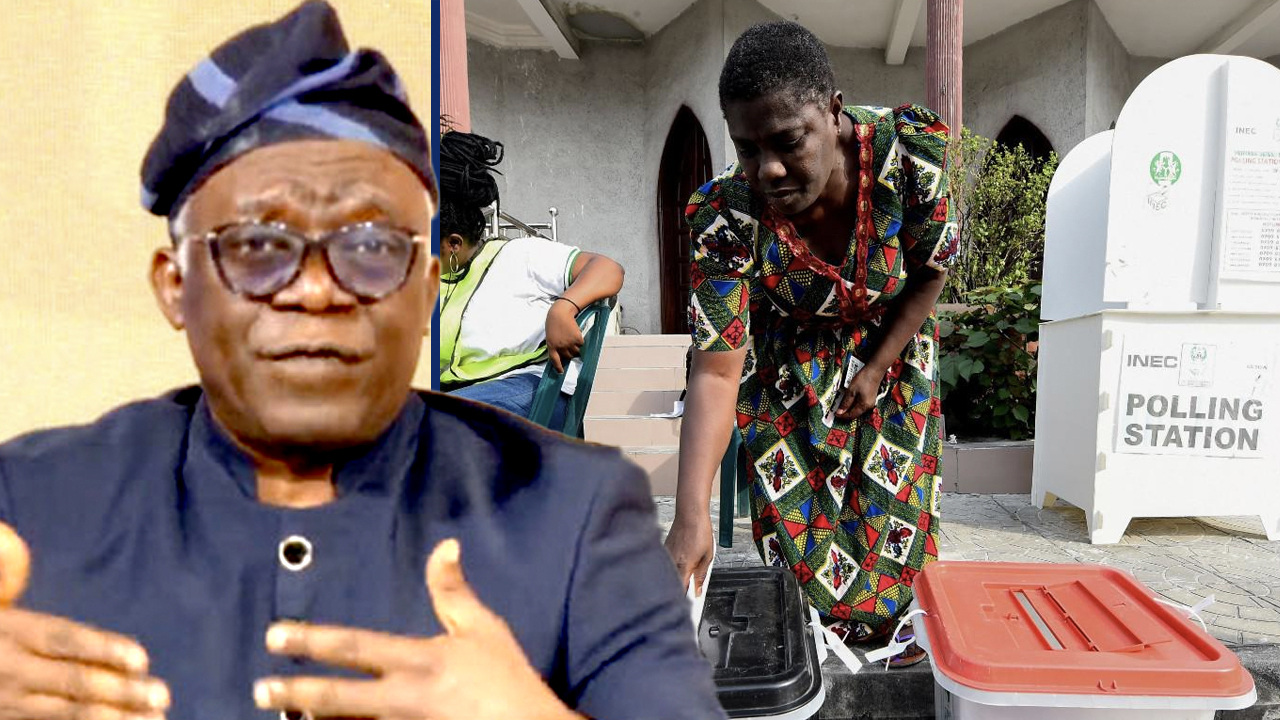
Human rights lawyers and Senior Advocate of Nigeria, Femi Falana, and Olisa Agbakoba have strongly opposed the proposed bill to make voting compulsory in Nigeria, Falana declared it “unconstitutional” and “impractical” under the current legal framework while Agbakoba, said that he would rather be jailed than comply with such a law.
The bill, co-sponsored by the Speaker of the House of Representatives, Tajudeen Abbas, and Labour Party lawmaker Daniel Asama Ago, seeks to amend the Electoral Act to make voting mandatory for all Nigerians of voting age in national and state elections. It proposes a six-month jail term or a fine of ₦100,000 for eligible citizens who fail to vote.
During the plenary on Thursday, Ago, who represents Bassa/Jos North, argued that the bill aims to curb voter apathy and reduce vote-buying. Deputy Speaker Benjamin Kalu supported the bill, citing Australia as a model where compulsory voting has reportedly enhanced civic responsibility.
However, Falana, in a statement issued on Monday titled ‘Compulsory Voting is Not Enough’, faulted the legislative move on constitutional grounds.
He said the bill is inconsistent with several provisions of the 1999 Constitution, which guarantee citizens’ rights to privacy, freedom of thought, and freedom of conscience.
“The Speaker of the House of Representatives probably wants Nigeria to join Egypt—the only African country out of 23 globally with provisions for compulsory voting.
“The said constitutional provisions protect the fundamental rights of the Nigerian people to privacy, freedom of thought and conscience, as well as the freedom to register and vote in national and state elections conducted in Nigeria.
“However, it is doubtful whether the Speaker and his colleagues have paid sufficient attention to the relevant provisions of the Constitution. Otherwise, they would have realised that the compulsory voting is constitutionally invalid in every material particular on the ground that it is inconsistent with Sections 37, 38, 77(2), 135(5) and 178(5) of the Constitution,” he stated.
‘Impractical To Prosecute Nigerians’
He argued that the legal foundation for mandatory voting is shaky since Chapter II of the constitution outlines the Fundamental Objectives and Directive Principles of State Policy, which remain non-justiciable.
“Compulsory voting cannot be legalised in vacuo. Apart from the possibility that it may be declared illegal under the current political dispensation, it is practically impossible to prosecute millions of Nigerians who may decide to boycott national and local elections that have been reduced to the periodic renewal of misgovernance, corruption, and abuse of power by pampered members of the political class,” Falana warned.
“Since Section 14(2) of the Constitution provides for popular participation in the democratic process, compulsory voting may only be justified if Chapter II thereof is made justiciable,” he said.
Falana criticised Nigerian courts for dismissing the enforceability of Chapter II without considering Section 224 of the Constitution, which mandates political parties to align their programmes and policies with the principles in that chapter.
“Nigerian courts have never considered Section 224, which states that ‘the programme, as well as the aims and objects of a political party, shall conform with the provisions of Chapter II of this Constitution,’” he said.
He also cited sections of the constitution which require public officeholders to swear to uphold the Constitution, including the directive principles in Chapter II.
Falana maintained that both political parties and officeholders are legally bound to respect the socio-economic rights of citizens.
“Each of these public officers is mandatorily required to swear or affirm to ‘strive to preserve the Fundamental Objectives and Directive Principles of State Policy contained in the Constitution of the Federal Republic of Nigeria.
“The point I am struggling to make is that by the combined effect of the relevant provisions of the Constitution, all political parties and members of the executive and legislature are under a legal obligation to comply with the provisions of the Fundamental Objectives and Directive Principles of State Policy enshrined in Chapter II,” he said.
He further invoked Article 13(1) of the African Charter on Human and Peoples’ Rights (Ratification and Enforcement) Act, which guarantees citizens the right to participate in government.
“Citizens can be justifiably compelled to vote only if the socio-economic rights set out in Chapter II are made justiciable,” Falana added.
‘Review Bill, Tilt To Electoral Act’
Citing several precedents, Falana stressed that compulsory voting violates both legal and moral boundaries. “The National Assembly is advised to review the controversial bill without any further delay,” he stated.
The SAN also criticised the lack of constitutional backing for electronic election devices such as BVAS and IReV, despite their role in improving electoral credibility. “The Supreme Court has ruled that the use of these devices is not yet recognised under the Electoral Act or the Constitution,” he stated.
According to Falana, the legislative focus should shift toward amending the Electoral Act to formally integrate technological innovations like BVAS and to adopt key recommendations from the Uwais Electoral Reform Panel.
These include unbundling INEC, introducing proportional representation, concluding election petitions before the swearing-in of winners, and establishing an electoral offences commission.
He stated that unless Chapter II of the Constitution—containing the Fundamental Objectives and Directive Principles of State Policy—is made justiciable, enforcing compulsory voting would remain a legal contradiction.
“Having regard to the state of the law, compulsory voting cannot be legalised in vacuo,” the lawyer declared.
Falana referenced Nwali v Ebonyi State Independent Electoral Commission & Ors (2014), where the Court of Appeal ruled that open ballot voting violated the right to privacy.
Case References
The senior lawyer also cited Medical and Dental Practitioners Disciplinary Tribunal v Okonkwo (2001), where the Supreme Court upheld the right to freedom of thought and conscience, emphasizing that individuals cannot be coerced into actions that conflict with their beliefs.
Falana noted that in the case, the court reversed a disciplinary sanction on a doctor who had respected a patient’s religious refusal of blood transfusion, stressing that coercion undermines constitutional rights.
Further highlighting judicial positions, he pointed to Incorporated Trustees of Digital Rights Lawyers Initiative & Ors v National Identity Management Commission (2020), where a judge ruled that the right to privacy extends beyond physical spaces to personal data and decisions.
On religious freedoms, he cited the 2022 Supreme Court decision in Lagos State Govt & Ors v Asiyat AbdulKareem, which upheld Muslim students’ right to wear the hijab in public schools, reaffirming that religious expression is constitutionally protected.
Agbakoba condemned the National Assembly’s attempt to enforce compulsory voting, arguing that it fails to address the root causes of voter apathy in the country.
“Look at the ridiculous one in the National Assembly about voting being compulsory. If that bill were to pass, I would say, ‘Agbakoba, we will not obey it.’ I’ll plead conscientious objection. I’d rather go to prison for six months than to obey it,” he said.
He questioned the rationale behind the bill, stating, “Why would the National Assembly want to impose compulsory voting? Why don’t they reverse the question and say, Why are Nigerians not interested? What is the apathy about?”
Exclusion, Unfulfilled Promises
Agbakoba maintained that voter disengagement stems from years of exclusion and unfulfilled political promises, not a lack of civic responsibility.
“The apathy is that they don’t get anything. If I know that I’m going to get something—there’s an aspiration, there’s an interest—you will find people coming out to vote. But then people see the same old trick. You come, you take my vote, you disappear till the next four years. There’ll be apathy,” he said.
According to the senior lawyer, exclusion is at the heart of Nigeria’s democratic failure.
“Right now, we have a big problem with having a system that excludes. I think you will find the biggest problem we have in Nigeria is around exclusion. That, I think, is the biggest problem—around exclusion. People are not taking part in the process,” he noted.
Looking ahead to the 2027 general elections, he stated that he has noticed a troubling pattern, warning that democracy in Nigeria cannot succeed if it continues to serve only a select elite.
“Suddenly, you have a big issue of coalitions and defections. Why? I have not heard many politicians talk about people—about the welfare of Nigerians, about their suffering, about their inadequate opportunities. I have not heard that.
“All I hear politicians do is, every four years, they jump up; they become active. Once they get power, they disappear. So for all these reasons, I think we need to look for a new model,” Agbakoba stated.
Pressed on whether the real issue is the attractiveness of public office and the consistent failure of leadership, Agbakoba reiterated that Nigeria’s political failure is the core reason behind low voter turnout.
He said, “We’ve had some good leaders, I must confess. But generally speaking, the leadership quality has been very poor. And the leadership quality has not led Nigerians to where they want to be.
“That’s why I refer to the fact that we have voter apathy and disinterest. So, unless we ask ourselves and interrogate the issue behind this lack of interest in voting, wewill will not get it right.
.
“I can tell you that the reason why Nigerians are not interested is because they don’t see anything. You should take a trip around Nigeria. Lagos is not Nigeria, by the way, because some people who live here, like us, think that.”


News
Corruption: EFCC Boss Exposes Public Officers ” They Assume Office With Empty Account But Own Millions Of Dollars In 3 Years”
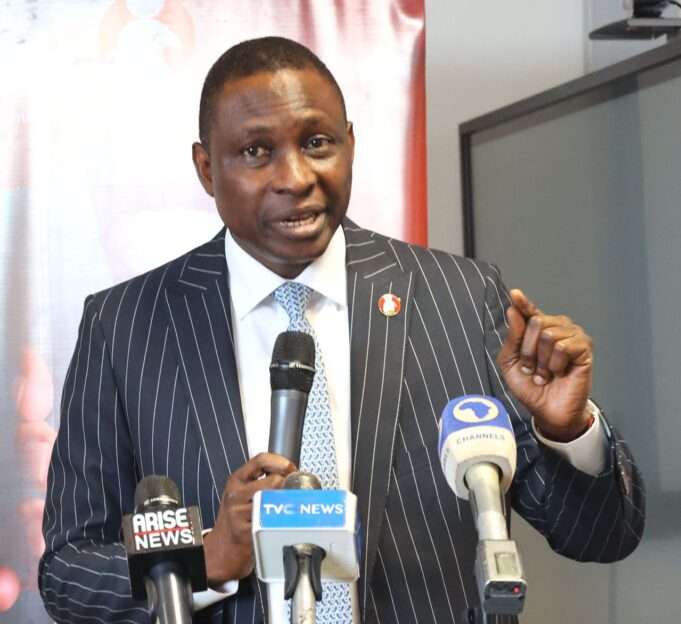
The Chairman of the Economic and Financial Crimes Commission, EFCC, Ola Olukoyede, says Nigerian politicians steal public funds every minute.
He spoke in Abuja at the 80th birthday celebration of former Attorney-General, Kanu Agabi.
Olukoyede said the anti-graft agency receives over 20,000 corruption petitions every year, adding that most of the cases are shocking.
“I receive over 20,000 petitions in a year in respect to public corruption, all terrible. What is going on? Like every minute, public officers take money, and if you go through some of our case files you will weep.
“The way people take national resources and Nigerians are victims of these fraudulent activities. And we must come together for once in our lifetime and say no to the activities of some of our leaders,” Olukoyede said.
The EFCC boss said some public officers resume office with less than N100,000 in their account, but after three years, EFCC will trace millions of dollars to them.
He said some of them build hundreds of houses while still in office, noting that corruption is killing Nigeria.
Olukoyede said public officers must explain what they did in office, stressing that accountability and transparency must guide public service.
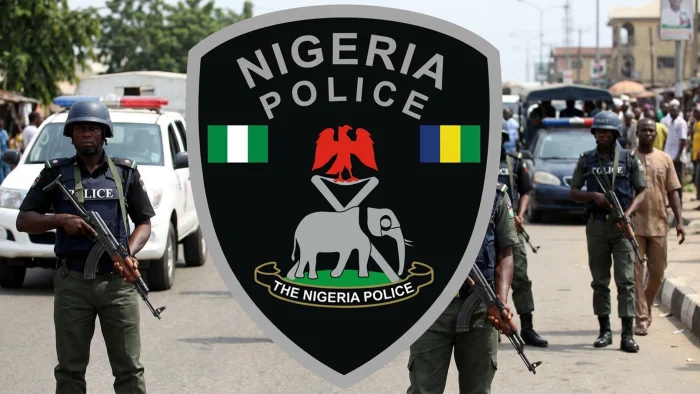
The Ogun State Police Command says, it has arrested 43-year-old Edebiri Temitope, who allegedly beat his neighbour to death with a bamboo stick for hugging his son in Bluestone Treasure Estate, Mowe-Ofada area of Ogun State.
The deceased, 38 years old Micheal Oje, a Guidance and Counselling graduate of Benue State University, was accused of hugging and playing rough with the 3-year-old child .
According to Peter Adum, a younger cousin to the deceased, Micheal had just returned from work and the child who lived with them on the same street, ran towards him and hugged him.
He stated that Michael hugged the boy and threw him playfully in the air and caught him, before going into his room to sleep.
Adum said, “While he was sleeping, Adebiri, the father of the boy, came outside and knocked on his door. When Mike came out, the man accused him of playing roughly with his child. Mike explained that he had only hugged the boy and lifted him into the air.
“That was how the man then started slapping Mike. He picked up a bamboo stick from the ground and hit him about three times. Mike fell and died on the spot.”
The suspect was reported to have gone into hiding with his family.
However, the Police Public Relations Officer, DSP Oluseyi Babaseyi on Friday, said the suspect had been arrested and transferred to the State CID, Eleweran, Abeokuta, for further investigation.
“Edebiri Temitope, ‘M’, aged 43 years, who was earlier reported to be at large, has been arrested in connection with the death of Oje Michael Eje, ‘M’.
“The suspect has been transferred to the State CID, Eleweran, Abeokuta, for further investigation,” Babaseyi stated.
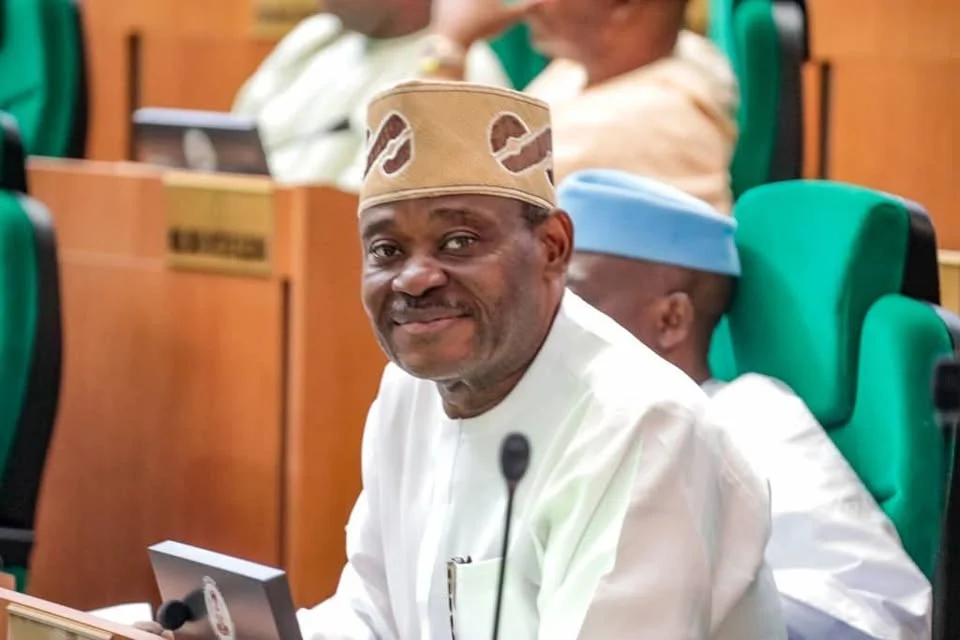
Jimoh Ibrahim, Nigeria’s permanent representative to the United Nations, has defended President Bola Tinubu’s absence at the 81st session of the United Nations General Assembly (UNGA).
Ibrahim spoke on a Television program, on Thursday, noting that Tinubu cannot attend the event just to deliver a 15-minute speech.
Mohammed Idris, minister of information and national orientation, had said Tinubu would not attend the 81st UNGA because he is currently on annual leave.
Idris said Tinubu had mandated Vice-President Kashim Shettima to lead Nigeria’s delegation to the high-level session in New York, United States.
The minister’s comment followed criticism from former Vice-President Atiku Abubakar, the presidential candidate of the African Democratic Congress (ADC), who faulted the president’s absence at the gathering.
Atiku had questioned Tinubu’s decision to stay away from the general debate for the third consecutive year, saying the president’s “persistent avoidance” of the United States raises questions.
The former vice-president also questioned why Tinubu did not show up after Ibrahim reportedly said arrangements had been made for the president to sit close to US President Donald Trump at the general assembly.
Atiku further linked Tinubu’s absence to his past legal history in the US and asked: “Is Tinubu afraid that he could become Donald Trump’s next Nicolás Maduro?”
However, Ibrahim said Tinubu’s absence should not be taken as a big deal because many presidents of other countries did not attend the gathering in person.
“What do you think President Tinubu is coming to do?” he queried.
“The presidents are allowed in the UN under UNGA for 15 minutes. Is that the reason why he should board the flight and be here for 15 minutes?”
He said Shettima had, in Tinubu’s absence, attended high-level meetings and met with Nigerians in the diaspora, describing the engagement as ideal.
“This is the kind of engagement we want, not that the president will just be inside the plane and be coming to UNGA for a 15-minute speech. What is the meaning of that? We don’t want that,” Ibrahim said.
Ibrahim, who was appointed chairman of the budget and administration committee for UNGA’s Fifth Committee in June, said 60 percent of those on the speaking list at the gathering were foreign affairs ministers and vice-presidents.
“As permanent representative of Nigeria to the United Nations, if I’m to do a memo to the president at the last minute of boarding the plane to go to UNGA, do you think I will recommend the president to be on his way when 60 percent of the speaking list of 193 countries are ministers and vice-presidents representing their countries?” he queried.
“There are exigencies. If the speaking list is 90 presidents, maybe of course, the president can come. I don’t think the president should come and be where his equivalent is a minister of foreign affairs of another country.”
The envoy also said the country occupied a prominent position at UNGA, arguing that Tinubu’s physical presence was not necessary.
“I promise that Nigeria will be on the front-row seat at UNGA. Are we not on the front-row seat? Nigeria is sitting at number eight seat in the UN under UNGA and America is at number 26th seat at the back of Nigeria’s seat,” he said.
“And you know, Donald Trump didn’t go to sit on his own seat. He came in to give a lecture at the UNGA and went back from there.
“Are you saying that Nigeria is making the impact it is supposed to make globally? Must we have President Tinubu here before we can make the impact?”
Speaking on what the composition of the speaking list implied, Ibrahim said reforms were being planned to increase the impact of the organisation on member-states.
“That is the reform we are taking on effective from October 1st. When I chair the budget and administrative committee, 90 percent of UN resources is spent at the headquarters, while 10 percent goes to member-states,” he said.
“So legitimacy is reduced because member-states are not seeing impacts of the United Nations. We are going to reverse that.”
-
 Health & Wellness1 year ago
President Tinubu Directs Cut in Dialysis Cost from ₦50,000 to ₦12,000
-
 News1 year ago
PICTURE: In Lagos Couple Sentenced to 22½ Years for Cannabis Trafficking
-

 Business6 months ago
Dangote Refinery Reduces Petrol Gantry Price To ₦1,200 Per Litre
-
Business2 years ago
Dangote; We Did Not Fix ₦600/Litre Petrol Price
-
 Business2 years ago
Heritage Bank Customers’ Path to Securing ₦5m Insured Funds: A Step-By-Step Guide by NDIC”
-
 International News6 months ago
Indian Police Arrest Nigerian Over ₦290m Drug Haul
-
 Trending News1 year ago
NELFUND Disburses ₦86bn To 449,000 Beneficiaries
-
 Business6 months ago
After Plea Bargain, Court Discharges Stella Oduah of ₦2.5bn Fraud