
News
Agbakoba, Falana Kicks Against Compulsory Voting Bill, Declares It Unconstitutional


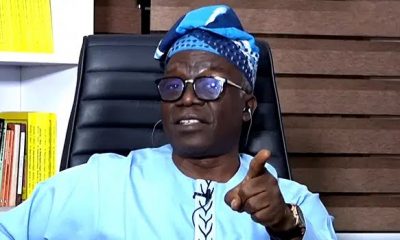
Human rights lawyers and Senior Advocate of Nigeria, Femi Falana, and Olisa Agbakoba have strongly opposed the proposed bill to make voting compulsory in Nigeria, Falana declared it “unconstitutional” and “impractical” under the current legal framework while Agbakoba, said that he would rather be jailed than comply with such a law.
The bill, co-sponsored by the Speaker of the House of Representatives, Tajudeen Abbas, and Labour Party lawmaker Daniel Asama Ago, seeks to amend the Electoral Act to make voting mandatory for all Nigerians of voting age in national and state elections. It proposes a six-month jail term or a fine of ₦100,000 for eligible citizens who fail to vote.
During the plenary on Thursday, Ago, who represents Bassa/Jos North, argued that the bill aims to curb voter apathy and reduce vote-buying. Deputy Speaker Benjamin Kalu supported the bill, citing Australia as a model where compulsory voting has reportedly enhanced civic responsibility.
However, Falana, in a statement issued on Monday titled ‘Compulsory Voting is Not Enough’, faulted the legislative move on constitutional grounds.
He said the bill is inconsistent with several provisions of the 1999 Constitution, which guarantee citizens’ rights to privacy, freedom of thought, and freedom of conscience.
“The Speaker of the House of Representatives probably wants Nigeria to join Egypt—the only African country out of 23 globally with provisions for compulsory voting.
“The said constitutional provisions protect the fundamental rights of the Nigerian people to privacy, freedom of thought and conscience, as well as the freedom to register and vote in national and state elections conducted in Nigeria.
“However, it is doubtful whether the Speaker and his colleagues have paid sufficient attention to the relevant provisions of the Constitution. Otherwise, they would have realised that the compulsory voting is constitutionally invalid in every material particular on the ground that it is inconsistent with Sections 37, 38, 77(2), 135(5) and 178(5) of the Constitution,” he stated.
‘Impractical To Prosecute Nigerians’
He argued that the legal foundation for mandatory voting is shaky since Chapter II of the constitution outlines the Fundamental Objectives and Directive Principles of State Policy, which remain non-justiciable.
“Compulsory voting cannot be legalised in vacuo. Apart from the possibility that it may be declared illegal under the current political dispensation, it is practically impossible to prosecute millions of Nigerians who may decide to boycott national and local elections that have been reduced to the periodic renewal of misgovernance, corruption, and abuse of power by pampered members of the political class,” Falana warned.
“Since Section 14(2) of the Constitution provides for popular participation in the democratic process, compulsory voting may only be justified if Chapter II thereof is made justiciable,” he said.
Falana criticised Nigerian courts for dismissing the enforceability of Chapter II without considering Section 224 of the Constitution, which mandates political parties to align their programmes and policies with the principles in that chapter.
“Nigerian courts have never considered Section 224, which states that ‘the programme, as well as the aims and objects of a political party, shall conform with the provisions of Chapter II of this Constitution,’” he said.
He also cited sections of the constitution which require public officeholders to swear to uphold the Constitution, including the directive principles in Chapter II.
Falana maintained that both political parties and officeholders are legally bound to respect the socio-economic rights of citizens.
“Each of these public officers is mandatorily required to swear or affirm to ‘strive to preserve the Fundamental Objectives and Directive Principles of State Policy contained in the Constitution of the Federal Republic of Nigeria.
“The point I am struggling to make is that by the combined effect of the relevant provisions of the Constitution, all political parties and members of the executive and legislature are under a legal obligation to comply with the provisions of the Fundamental Objectives and Directive Principles of State Policy enshrined in Chapter II,” he said.
He further invoked Article 13(1) of the African Charter on Human and Peoples’ Rights (Ratification and Enforcement) Act, which guarantees citizens the right to participate in government.
“Citizens can be justifiably compelled to vote only if the socio-economic rights set out in Chapter II are made justiciable,” Falana added.
‘Review Bill, Tilt To Electoral Act’
Citing several precedents, Falana stressed that compulsory voting violates both legal and moral boundaries. “The National Assembly is advised to review the controversial bill without any further delay,” he stated.
The SAN also criticised the lack of constitutional backing for electronic election devices such as BVAS and IReV, despite their role in improving electoral credibility. “The Supreme Court has ruled that the use of these devices is not yet recognised under the Electoral Act or the Constitution,” he stated.
According to Falana, the legislative focus should shift toward amending the Electoral Act to formally integrate technological innovations like BVAS and to adopt key recommendations from the Uwais Electoral Reform Panel.
These include unbundling INEC, introducing proportional representation, concluding election petitions before the swearing-in of winners, and establishing an electoral offences commission.
He stated that unless Chapter II of the Constitution—containing the Fundamental Objectives and Directive Principles of State Policy—is made justiciable, enforcing compulsory voting would remain a legal contradiction.
“Having regard to the state of the law, compulsory voting cannot be legalised in vacuo,” the lawyer declared.
Falana referenced Nwali v Ebonyi State Independent Electoral Commission & Ors (2014), where the Court of Appeal ruled that open ballot voting violated the right to privacy.
Case References
The senior lawyer also cited Medical and Dental Practitioners Disciplinary Tribunal v Okonkwo (2001), where the Supreme Court upheld the right to freedom of thought and conscience, emphasizing that individuals cannot be coerced into actions that conflict with their beliefs.
Falana noted that in the case, the court reversed a disciplinary sanction on a doctor who had respected a patient’s religious refusal of blood transfusion, stressing that coercion undermines constitutional rights.
Further highlighting judicial positions, he pointed to Incorporated Trustees of Digital Rights Lawyers Initiative & Ors v National Identity Management Commission (2020), where a judge ruled that the right to privacy extends beyond physical spaces to personal data and decisions.
On religious freedoms, he cited the 2022 Supreme Court decision in Lagos State Govt & Ors v Asiyat AbdulKareem, which upheld Muslim students’ right to wear the hijab in public schools, reaffirming that religious expression is constitutionally protected.
Agbakoba condemned the National Assembly’s attempt to enforce compulsory voting, arguing that it fails to address the root causes of voter apathy in the country.
“Look at the ridiculous one in the National Assembly about voting being compulsory. If that bill were to pass, I would say, ‘Agbakoba, we will not obey it.’ I’ll plead conscientious objection. I’d rather go to prison for six months than to obey it,” he said.
He questioned the rationale behind the bill, stating, “Why would the National Assembly want to impose compulsory voting? Why don’t they reverse the question and say, Why are Nigerians not interested? What is the apathy about?”
Exclusion, Unfulfilled Promises
Agbakoba maintained that voter disengagement stems from years of exclusion and unfulfilled political promises, not a lack of civic responsibility.
“The apathy is that they don’t get anything. If I know that I’m going to get something—there’s an aspiration, there’s an interest—you will find people coming out to vote. But then people see the same old trick. You come, you take my vote, you disappear till the next four years. There’ll be apathy,” he said.
According to the senior lawyer, exclusion is at the heart of Nigeria’s democratic failure.
“Right now, we have a big problem with having a system that excludes. I think you will find the biggest problem we have in Nigeria is around exclusion. That, I think, is the biggest problem—around exclusion. People are not taking part in the process,” he noted.
Looking ahead to the 2027 general elections, he stated that he has noticed a troubling pattern, warning that democracy in Nigeria cannot succeed if it continues to serve only a select elite.
“Suddenly, you have a big issue of coalitions and defections. Why? I have not heard many politicians talk about people—about the welfare of Nigerians, about their suffering, about their inadequate opportunities. I have not heard that.
“All I hear politicians do is, every four years, they jump up; they become active. Once they get power, they disappear. So for all these reasons, I think we need to look for a new model,” Agbakoba stated.
Pressed on whether the real issue is the attractiveness of public office and the consistent failure of leadership, Agbakoba reiterated that Nigeria’s political failure is the core reason behind low voter turnout.
He said, “We’ve had some good leaders, I must confess. But generally speaking, the leadership quality has been very poor. And the leadership quality has not led Nigerians to where they want to be.
“That’s why I refer to the fact that we have voter apathy and disinterest. So, unless we ask ourselves and interrogate the issue behind this lack of interest in voting, wewill will not get it right.
.
“I can tell you that the reason why Nigerians are not interested is because they don’t see anything. You should take a trip around Nigeria. Lagos is not Nigeria, by the way, because some people who live here, like us, think that.”


Entertainment
NIBAD 2026: Abike Dabiri To Take Centre Stage As Bunmi Ebony, DJ X-One Host Baltimore Event

The Chairman and Chief Executive Officer of the Nigerians in Diaspora Commission (NiDCOM), Hon. Dr Abike Dabiri-Erewa ( OON) has been scheduled for honour, among other awardees, at the 2026 and the 6th edition of the annual Nigerian Independence Ball, Awards, and Dinner (NIBAD),billed to hold in Baltimore, Maryland, on the 18th of October .
At the instance of Naija Times USA and Raindrop Group led by Olaniyi Thompson Tabi, activities marking the 6th edition of NIBAD commenced on the 3rd of October with Independence carnival in Maryland.
As part of the expanded 6th edition, the Annual Independence stage play titled ‘Your Excellency Sir!’ …The saga of a nation, written and directed by Olaniyi Thompson Tabi, was showcased at a very colorful event on the 9th of October.
Designed to be an unforgettable celebration of Nigeria’s 66th Independence celebration, the grand finale of the celebration is billed for Sunday, the 18th of October, 4.00pm, at Gabriel Community Centre, 6948, Dogwood Road, Windsor Mill, MD 21244.
The evening will not only commemorate Nigeria’s rich history and vibrant culture but will also spotlight the exceptional contributions of Nigerians at home and abroad in various fields such as business, healthcare, education, community service, and more.
The evening will feature a grand awards ceremony to honor those who have demonstrated leadership, innovation, and dedication in their respective industries. Among them, Dr Dabiri- Erewa
Hon. Dr. Abike Kafayat Oluwatoyin Dabiri-Erewa (OON) is a prominent Nigerian politician, public administrator, and former broadcast journalist who has been able to show leadership since her appointment as the Chairman and Chief Executive Officer of the Nigerians in Diaspora Commission (NiDCOM).
To add colour to the event also, is
Dj X-One, reputed as the best Disc Jockey in the DMV area. Bunmi Ebony, a fast rising Juju Artiste in Atlanta will also be on the bandstand to thrill guests at the event to celebrate Nigeria.
****About NIBAD: The Nigerian Independence Ball, Awards, and Dinner (NIBAD) is an annual event that celebrates Nigeria’s Independence while recognizing the achievements of Nigerians in the diaspora. NIBAD aims to highlight the cultural pride, resilience, and accomplishments of Nigerians globally, bringing together community leaders, professionals, and influencers for an evening of celebration, inspiration, and unity.

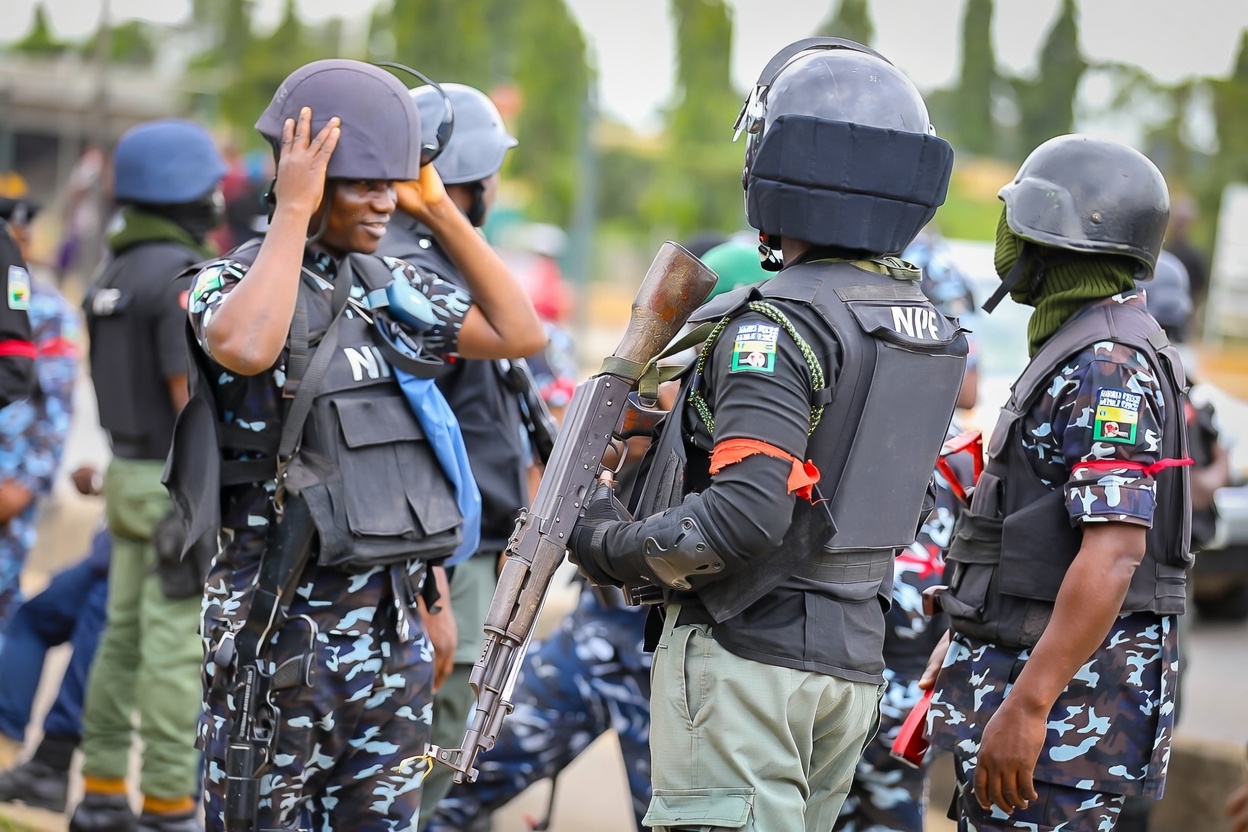
The Rivers State Police Command under CP Olugbenga A. Adepoju has condemned the purported renovation of the Abuloma Police Outpost by suspected cultists and ordered a full investigation into the incident.
Police Public Relations Officer (PPRO) of the command, ASP Blessing Agabe disclosed this in a Friday statement.
She said the command’s action follows a trending social media report and circulating video alleging that suspected cultists renovated the outpost and visited the facility on Thursday, October 15, to celebrate completion of the renovation.
The command said it “strongly condemns any action or association capable of compromising the integrity, discipline and professional standards of the Nigeria Police Force or conferring legitimacy, recognition or acceptance on suspected cult groups or other unlawful organisations.”
It added, “Police facilities are public institutions established for the protection of citizens and the enforcement of law and must not become platforms through which criminal groups seek public validation or influence.”
The command said CP Adepoju maintains zero tolerance for criminality and any conduct that undermines public confidence in the police.
Consequently, he has queried and relieved the Divisional Police Officer in charge of Abuloma Division and the Divisional Officer overseeing the affected outpost of their duties pending investigation.
The CP has also ordered a full investigation to establish the circumstances surrounding the incident and the veracity of the allegations, including the identities and backgrounds of the individuals or groups who financed or facilitated the renovation; the police officers who authorised or approved the project; whether due procedures were followed; whether any officer breached professional standards or compromised the integrity of the force; and the extent of any involvement by police personnel.
The command said while it welcomes legitimate community support for improving police facilities, consistent with Section 26(1)(d) of the Nigeria Police Act 2020, which provides for gifts and contributions to the Police General Fund, such support must not compromise police independence, professional standards or security.
“No donation or assistance confers immunity from investigation or prosecution,” the command stated, adding that the investigation will establish whether necessary approvals were obtained and appropriate checks conducted on those who financed the renovation.
It reiterated that it would not condone unprofessional conduct or any form of improper association with criminal elements and that appropriate disciplinary and legal action would be taken against anyone found culpable.
The Police Command in Benue State has confirmed the abduction of Rev. Fr. John Otache, Parish Priest of St. Margaret’s Parish, Ajegbe-Awume, in Ohimini Local Government Area of the state.
The Police Public Relations Officer, DSP Aondogu Orchia confirmed the incident on Friday in Makurdi.
Orchia said the command had commenced full investigation into the incident and efforts were ongoing to rescue the priest.
Meanwhile, the Catholic Diocese of Otukpo, in a statement signed by the Diocesan Chancellor, Rev. Fr. Joseph Itodo, said the priest was abducted on October 13.
According to Itodo, Otache was returning home from Otukpo when he encountered the abductors along the Otobi Amejo-Ajegbe Road in Ohimini Local Government Area.
He expressed sadness over the incident, saying the Bishop of Otukpo, Most Rev. Michael Apochi, was deeply pained by the development.
He called on priests, religious members, the laity and other well-meaning individuals to pray for the priest’s safe and speedy release.
He also urged prayers for other persons held by kidnappers across the country, expressing hope for their safe return.
-
 Health & Wellness1 year ago
President Tinubu Directs Cut in Dialysis Cost from ₦50,000 to ₦12,000
-
News2 years ago
CBN Debunks Fake Circular on New ₦5,000 and ₦10,000 Notes
-

 Business7 months ago
Dangote Refinery Reduces Petrol Gantry Price To ₦1,200 Per Litre
-
 International News7 months ago
Indian Police Arrest Nigerian Over ₦290m Drug Haul
-
 Business7 months ago
After Plea Bargain, Court Discharges Stella Oduah of ₦2.5bn Fraud
-
Business2 years ago
Dangote; We Did Not Fix ₦600/Litre Petrol Price
-
 Trending News1 year ago
NELFUND Disburses ₦86bn To 449,000 Beneficiaries
-
 Opinion2 years ago
Championing the People’s Voice: Obasa’s Dedication to Grassroots Representation By Dave Agboola⁰