
International News
FULL LIST: NJC Sends 10 Judges On Compulsory Retirement, Recommends 21 For Appointment

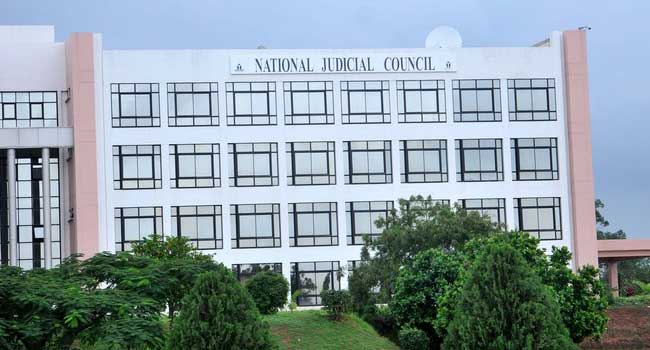
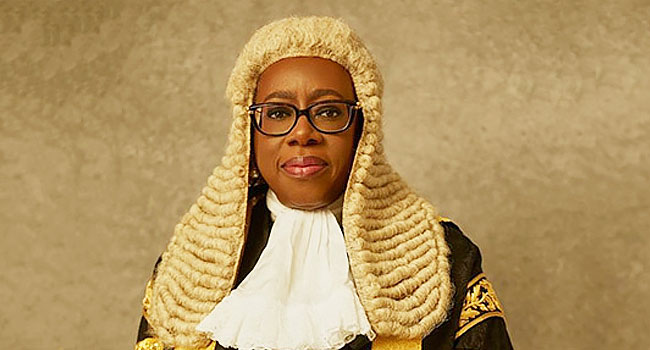
The National Judicial Council (NJC) at its 109th Meeting presided over by the Honourable, the Chief Justice of Nigeria, Hon. Justice Kudirat M. O. Kekere-Ekun, GCON, held on 25 June 2025 has recommended two Hon. Judges for appointment as Heads of Court for Ekiti and Yobe States, respectively.
The Heads of Court are:
Hon. Justice Adekanye Lekan Ogunmoye, Chief Judge, Ekiti State; and Hon. Kadi Abba Mammadi as Grand Kadi, Yobe State.
Similarly, Council has also recommended Mainasara Ibrahim Kogo Umar, Esq. to the President of the Federal Republic of Nigeria, Bola Ahmed Tinubu, GCFR, for appointment as Chairman, Code of Conduct Tribunal.
The recommendations followed a careful consideration of various public complaints made against shortlisted candidates for the various positions and a rigorous interview by an 8- Member Interview Committee of the Council in line with the 2023 Revised NJC Guidelines and Procedural Appointment of Judicial Officers.
The remaining successful recommended for appointment as Judges for different Jurisdictions are as follows:
TWO HIGH COURT JUDGES FOR CROSS RIVER STATE
i) Edu, Glory Bassey
i) Irem, Melody Bassey
THREE HIGH COURT JUDGES FOR OGUN STATE
Adebayo Julius Adewole, Adejumoke Oluwatoyin Adebo, Oluyemisi Olukemi
THREE HIGH COURT JUDGES FOR ZAMFARA STATE i) Garba, Sirajo Aliyu
1) Bashir, Rabi
iii) Abdullahi, Nasiru
THREE KADIS FOR SHARIA COURT OF APPEAL, ZAMFARA STATE
Ibrahim, Jibril
Muhammed, Sanusi Magami
Shaa’ ban Mansur
ONE KADI FOR SHARIA COURT OF APPEAL, PLATEAU STATE
i) Badamasi, Kabir Adam
ONE JUDGE FOR CUSTOMARY COURT OF APPEAL, EBONYI STATE
i) Ogodo, Lynda Nneka
FOUR HIGH COURT JUDGES FOR KATSINA STATE
i) Dikko, Fadila Muhammad
ii) Abdulrahman, Shamsudden Yammama
iii) Abdullahi, Maryham Umaru
iv) Mohammed, Abubakar Dikko
It would be recalled that the Council had at its 108th Meeting held on 29 and 30 April 2025, approved a new policy to publish the names of candidates for consideration for appointment as Judicial Officers and invited public input.
A flurry of 86 public comments and complaints were received by the Council and 73 of them were favourable representing 85%, while 13 were adverse representing 15%.
However, out of the Thirteen (13) complaints, Five (5) had no accompanying verifying affidavits in breach of the publication guidelines and were not considered.
In view of the Council’s resolution, at its 27h Emergency Meeting held on 3 February 2025, relating to the appointment of the Chief Judge, Ekiti State, Council did not consider the Three (3) complaints relating thereto.
Five (5) complaints were considered against the appointment relating to the High Courts of Plateau and Kano States and the Sharia Courts of Appeal of Zamfara and Katsina States.
Flowing from this, Council dismissed Four (4) of the complaints, but found merit in one and dropped the affected candidate.
Meanwhile, the Council has approved the voluntary retirement of the following Judicial Officers:
i) Hon. Justice Babatunde Ademola Bakre of the Ogun State High Court.
ii) Hon. Justice H. O. Ajayi of the Kwara State High Court.
In the meantime, the Council has recommended compulsory retirement of ten Judges of Imo State Judiciary.
Nine (9) of the affected Judges of the Imo State Judiciary were found to have altered their dates of birth in their official records
in order to confer on themselves the undue advantage of staying longer in service while the other Judicial Officer, Hon. Justice .T N. Nzeukwu was found to have made himself available to be sworn in as acting Chief Judge of Imo State High Court knowing fully well that he was number four in the hierarchy of Judges of the Imo State Judiciary and contrary to Section 271.
(4) of the Constitution of the Federal Republic of Nigeria, as amended.
The nine Judges found to have falsified their records, comprising five (5) High Court Judges and four Judges of the
Customary Court of Appeal, Imo State are:
1. Hon Justice M. E. Nwagboso (High Court) 2. Hon Justice B. C. Theka (High Court)
3. Hon Justice K. A. Leaweanya (High Court)
.4 Hon Justice Okereke Chinyere Ngozi (High Court)
5. Hon Justice Innocent Chidi Ibeawuchi (High Court)
6. Hon Justice Tennyson Nze (Customary Court of Appeal)
7. Hon Justice Ofoha Uchenna (Customary Court of Appeal) 8. Hon Justice Everyman Eleanya (Customary Court of
Appeal)
9. Hon Justice Rosemond Ibe (Customary Court of Appeal)
Hon. Justice .T N. Nzeukwu was sanctioned for making himself available to be sworn into office as acting Chief Judge of Imo State.
The President of the Customary Court of Appeal, Imo State, Hon Justice V. U. Okorie who chaired the Commission that nominated Hon. Justice Nzeukwu as acting Chief Judge was however absolved, having dissented on record against the recommendation to appoint Hon. Justice T. N. Nzeukwu as acting Chief Judge.
Council however reiterated its earlier direction to the Imo State Governor, Senator Hope Uzodinma to swear in the most Senior Judge of the State as the acting Chief Judge.
Council took the decision after consideration of the reports of its Investigation Committee on allegations of age falsification against eighteen (18) Judges of the Imo state judiciary on the one hand and the queries issued to Hon. Justices V. U. Okorie and T. N. Nzeukwu.
The Council however dismissed, for want of merit, similar allegations against three Judges of the State High Court whose dates of birth were found to bear no discrepancy.
Six High Court Judges of the State, whose dates of birth either had discrepancies but with acceptable explanations or with discrepancies arising from genuine correction of their dates of birth to their disadvantage, were also exonerated.
The Judges whose dates of birth were found to bear no discrepancy are:
.1 Hon Justice .I O. Agugua (High Court)
2. Hon Justice C. A. Ononeze-Madu (High Court) 3. Hon Justice L. C. Azuama (High Court)
The two Judges given a clean bill of health owing to provision
of acceptable explanation for discrepancies in their dates of birth are:
1. Hon Justice Vincent I. Onyeka (High Court)
2. Hon Justice Vivian O. B. Ekezie (High Court)
Council directed that Hon. Justice Onyeka and Hon. Justice Ekezie must maintain the date of birth supplied by the Council of Legal Education in their official records.
Four other Judges absolved on account that they genuinely corrected their dates of birth to their disadvantage are:
.1 Hon Justice P. U. Nodum (High Court)
.2 Hon. Justice Alma Ngozi Eluwa (High Court)
.3 Hon. Justice Matthew Chinedu Ijezie (High Court) 4. Hon Justice Ononogbo Chidi Linus (High Court)
The Council has also reiterated its earlier direction to the
Governor of Imo State, Senator Hope Uzodinma, to appoint the most Senior Judicial Officer as the acting Chief Judge of the Imo State High Court.
Council, in further deliberation, barred a Judge of the National Industrial Court, Hon. Justice Isaac J. Essien, from being considered for promotion to a Higher Court for three years due to misconduct.
Council found that Hon. Justice Essien wrongly ordered the confiscation of over N1 billion belonging to the Nasarawa State Government and its Local Government Councils, despite being aware that there was a pending appeal and a pending application for stay of execution.
Council also noted that he refused to step aside from the case after the Nasarawa State Government raised concerns about possible bias.
Hon. Justice Essien was a former staff member of the State University, which owed him gratuity, and he had earlier demanded payment using the official letterhead of the Court – a clear breach of Code of Conduct for Judicial Officers.
Council further criticized him for personally visiting the Court of Appeal registry to confirm if an appeal had been filed in the case — an action considered highly inappropriate for a Judge.
His Lordship was found to have violated several rules in the Revised Code of Conduct for Judicial Officers and was reprimanded and barred from elevation to a higher judicial office for a period of (3) three years.
Council also considered the reports of its Preliminary Complaints Assessment Committees, which contained a total number of 30 petitions against various Judicial Officers. Four (4) Committees were empanelled for further investigation, four
(4) Judges were cautioned, while 2 petitions were dismissed for lacking in merit.
Council cautioned Hon. Justice Rahman A. Oshodi, over misuse of judicial discretion in Suit No. ID/232/53C/23.
Hon. Justice Daniel Okungbowa, Chief Judge Edo State was also cautioned over abuse of his judicial discretion in Suit No.
B1/555/2020 and was advised to exercise his discretion judicially and judiciously in future.
Council issued a final warning to Hon. Justice G. B. Okolosi of the Delta State High Court for continued flouting Section 294 (1) of the 1999 Constitution and Hon. Justice Sa’adatu .I Mark, Federal High Court received caution for delivering judgment after constitutional 90 days.
Petition against Chief Judge, Benue State, Hon. Justice M. A. Ikpambese:
Council deliberated on the report of the investigation Committee in respect of three petitions by Attorney-General and Commissioner for Justice, Fidelis Bemsen Mnyim, Guana Benjamin Joseph, Esq., and Terhemen Ngbea against Hon. Justice M. A. Ikpambese and absolved the Chief Judge from any judicial wrong doings, the petitions having ben found ot be lacking in merit.
It noted that all the petitions presented against him were with sole aim to remove him from his position.
Council was particularly concerned about the role of the Attorney-General of the State, Fidelis Bemsen Mnyim, Esq., ni the scheme to remove the Chief Judge and resolved to report him to the Legal Practitioners’ Disciplinary Committee (LPDC) for necessary action.
Council dismissed petitions against four other Judges:
1. Hon. Justice A. M. Liman of the Federal High Court, Kano Division (Petition by Abdullahi Baffa Bichi)
2. Hon. Justice S. A. Amobeda (Petition by Abdullahi Baffa Bichi)
3 Hon. Justice Muhammad Auwal Haruna (Petition by Abdulrazaq Banaru Abubakar)
4. Hon. Justice Binta Fatima Murtala Nyako (Petition by Kabiru S. Chafe)
The joint petition against Hon. Justices A. M. Liman and S. A. Amobeda, and the petition against Hon. Justice Muhammad Auwal Haruna were withdrawn and accordingly
dismissed.
Hon. Justice Binta Fatima Murtala Nyako was exonerated as the Council found no merit in the petition accusing her of delaying judgment and issuing an order on a property while the case was ongoing.
Further action was suspended in respect of petitions against Hon. Justice A. M. Liman by Kenneth Okere (in a different case) and Hon. Justice Yusuf Halilu of the FCT High Court for being sub judice.
The Council, however blacklisted one Peter N. Ekemezie a serial petitioner from presenting further petitions before it.
Kemi Babalola
Ogedengbe Deputy Director (Information)



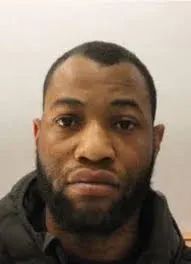
A Nigerian man and registered sex offender, Babatunde Odutola, has been sentenced to prison in the UK after exposing himself and masturbating in front of a woman on a train heading to Manchester.
Odutola, 36, who has no fixed address, was sentenced to 44 weeks in prison at Manchester Magistrates’ Court on Monday, September 14, after pleading guilty to outraging public decency and violating a suspended sentence order.
The incident took place around 7 p.m. on Friday, September 11, on a train traveling through Cheshire towards Manchester Piccadilly railway station.
According to the British Transport Police, Odutola approached a woman on the train, looked her up and down, and became aggressive when she refused to engage with him.
He then exposed himself while sitting in a wheelchair and began masturbating while staring at the woman and telling her to “come over.”
A fellow passenger intervened and helped escort the distressed woman from the carriage. Police reports indicate that CCTV footage showed Odutola continuing to masturbate as other passengers walked through the carriage.
British Transport Police officers arrested him after the train arrived at Manchester Piccadilly. He was prosecuted and jailed within 72 hours of the incident.
Detective Constable Leonidas Christoforou of the British Transport Police stated that Odutola’s behavior was “terrifying” for the victim, whom he allegedly targeted while she was traveling alone.
The National Hajj Commission of Nigeria (NAHCON) has announced that the Kingdom of Saudi Arabia has declined Nigeria’s request for an upward review of its 2027 Hajj allocation, leaving the country’s quota unchanged despite growing demand from intending pilgrims nationwide.
The Commission disclosed that it had formally engaged the Saudi Ministry of Hajj and Umrah, seeking additional pilgrimage slots to accommodate the increasing number of Nigerian Muslims desirous of undertaking the sacred journey and to address appeals from several state pilgrims’ welfare boards for enhanced allocations.
However, Saudi authorities communicated their inability to grant additional slots, citing capacity limitations, structural constraints within the holy sites, and the Kingdom’s policy of strict adherence to approved country quotas under the current operational framework.
Consequently, Nigeria’s allocation for the 2027 Hajj exercise remains fixed at 35,000 slots for government pilgrims and 15,000 slots for licensed tour operators, bringing the country’s total approved allocation to 50,000 pilgrims.
Commenting on the development, the Chairman and Chief Executive Officer of NAHCON, Ambassador Ismail Abba Yusuf, said the Commission fully understands the disappointment the decision may cause many aspiring pilgrims and state pilgrim boards that had hoped for additional allocations.
According to him, the Commission explored all available diplomatic and operational channels in pursuit of an increased quota but respects the final decision of the Saudi authorities.
“We appreciate the deep spiritual desire of many Nigerian Muslims to perform Hajj and understand the expectations of states and stakeholders seeking additional slots. While every effort was made to secure an upward review, the Saudi authorities have communicated their final position based on operational realities and capacity considerations,” Ambassador Yusuf stated.
The NAHCON Chairman urged state pilgrims’ welfare boards, agencies and licensed tour operators to make judicious and transparent use of their approved allocations while ensuring strict compliance with all timelines established by the Commission and the Saudi Nusuk platform.
He emphasized that the deadline for uploading the data of all prospective pilgrims for the 2027 Hajj exercise remains September 26, 2026, warning that no extensions would be granted under any circumstance.
“Kindly note that the deadline for uploading prospective pilgrims’ data remains September 26, 2026. We urge all partners, state pilgrim boards, tour operators and representatives to ensure that all required information is submitted before this date, as no extensions will be granted,” he said.
Ambassador Yusuf further advised intending pilgrims who may be unable to secure a slot under the approved 2027 allocation not to lose hope, revealing that preparations for the subsequent pilgrimage season have already commenced.
“Individuals who were unable to secure a slot for the upcoming Hajj are encouraged to register for the 2028 Hajj. The Commission has officially opened the registration portal for this period, and applications are now being accepted,” he added.

South African police have arrested five suspects after rescuing a 25-year-old e-hailing driver who was allegedly kidnapped, raped and held for ransom in Cape Town.
The South African Police Service (SAPS) said in a statement on Sunday that Steenberg police rescued the driver after he was allegedly raped by two female suspects and held at ransom by the group.
Police were alerted by the victim’s brother after the suspects contacted him and demanded R4,000 in cash for the driver’s release.
According to SAPS, the police used the victim’s vehicle tracker to locate him at Southampton Road in Heathfield, where he was rescued.
“Steenberg police rescued a 25-year-old e-hailing driver after he was raped and held at ransom by two female suspects and three males yesterday,” the police said.
The victim had reportedly met one of the female suspects the previous week through his e-hailing business.
According to police, the two exchanged telephone numbers and communicated throughout the week before arranging to meet.
“When he went to meet her, he was kidnapped by the suspects and the females raped him,” SAPS said.
Police subsequently arrested the two female suspects, aged 23 and 34, as well as three male suspects aged 16, 42 and 48.
The five suspects are expected to appear before the Wynberg Magistrate’s Court on Monday, September 14, 2026.
SAPS said they would face charges relating to the alleged kidnapping and rape.
-
 Health & Wellness1 year ago
President Tinubu Directs Cut in Dialysis Cost from ₦50,000 to ₦12,000
-
 News1 year ago
PICTURE: In Lagos Couple Sentenced to 22½ Years for Cannabis Trafficking
-

 Business6 months ago
Dangote Refinery Reduces Petrol Gantry Price To ₦1,200 Per Litre
-
Business2 years ago
Dangote; We Did Not Fix ₦600/Litre Petrol Price
-
 Business2 years ago
Heritage Bank Customers’ Path to Securing ₦5m Insured Funds: A Step-By-Step Guide by NDIC”
-

 International News6 months ago
Indian Police Arrest Nigerian Over ₦290m Drug Haul
-
 Trending News1 year ago
NELFUND Disburses ₦86bn To 449,000 Beneficiaries
-

 Business6 months ago
After Plea Bargain, Court Discharges Stella Oduah of ₦2.5bn Fraud