
News
Doyin Abiola, First Female Daily Editor in Nigeria, Dies at 82


Dr. Doyin Abiola, a pioneering Nigerian journalist and former Managing Director and Editor‑in‑Chief of National Concord, has died at the age of 82. She passed away peacefully at 9:15 p.m. on Tuesday, August 5, 2025, after a brief illness, according to family.
Born Doyinsola Hamidat Abiola in 1943, her journalism career began at the Daily Sketch in 1969, where she wrote a widely followed column titled Tiro, addressing social and gender-related issues. In 1970, she traveled to the United States to pursue postgraduate studies, earning a Master’s in Journalism and later a Ph.D. in Communications and Political Science from New York University in 1979.
Upon returning to Nigeria, she joined Daily Times as a Features Writer and rose to become Group Features Editor, later serving on its editorial board alongside renowned journalists like Dele Giwa, Stanley Macebuh, and Amma Ogan .
She was then appointed the pioneer daily editor of National Concord in 1980, and in 1986 she made history as the first Nigerian woman to hold the top editorial role—Managing Director and Editor‑in‑Chief—of a national newspaper.
Dr. Abiola married Chief MKO Abiola in 1981 and remained a steadfast partner through his political struggles following the annulled June 12, 1993, presidential election. Under her leadership, the Concord Group grew to publish up to 14 newspapers and magazines, becoming a powerhouse in Nigerian media despite facing government bans during military rule.
She extended her influence beyond journalism by heading the nomination panel for the first Nigerian Media Merit Awards and serving on the advisory council of Ogun State University’s Faculty of Social and Management Sciences.
Honours included the prestigious Eisenhower Fellowship (1986) and the Diamond Awards for Media Excellence Lifetime Achievement Award, making her the second woman ever to receive that accolade.
Tributes have poured in, with Daily Times describing her as a consummate journalist, advocate for social justice, and a champion of women’s rights, whose legacy provided a path for many young journalists—especially women—to follow.
Funeral arrangements are expected to be announced by the family in the coming days.
Dr. Doyin Abiola’s life and career stood at the intersection of media excellence, gender advocacy, and democratic activism. Her fearless dedication and impact on Nigerian journalism will be remembered for generations to come.
News
Corruption: EFCC Boss Exposes Public Officers ” They Assume Office With Empty Account But Own Millions Of Dollars In 3 Years”
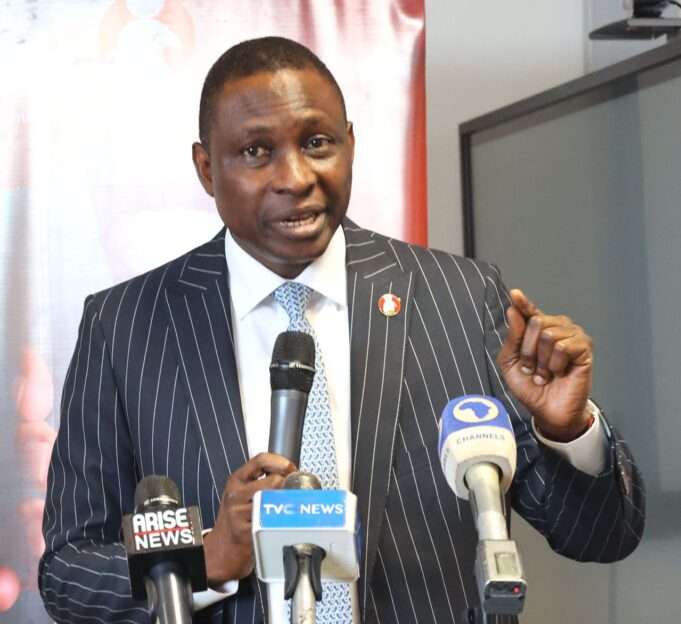
The Chairman of the Economic and Financial Crimes Commission, EFCC, Ola Olukoyede, says Nigerian politicians steal public funds every minute.
He spoke in Abuja at the 80th birthday celebration of former Attorney-General, Kanu Agabi.
Olukoyede said the anti-graft agency receives over 20,000 corruption petitions every year, adding that most of the cases are shocking.
“I receive over 20,000 petitions in a year in respect to public corruption, all terrible. What is going on? Like every minute, public officers take money, and if you go through some of our case files you will weep.
“The way people take national resources and Nigerians are victims of these fraudulent activities. And we must come together for once in our lifetime and say no to the activities of some of our leaders,” Olukoyede said.
The EFCC boss said some public officers resume office with less than N100,000 in their account, but after three years, EFCC will trace millions of dollars to them.
He said some of them build hundreds of houses while still in office, noting that corruption is killing Nigeria.
Olukoyede said public officers must explain what they did in office, stressing that accountability and transparency must guide public service.
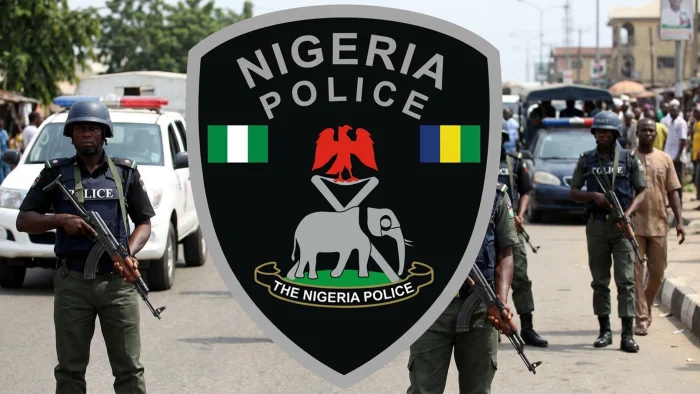
The Ogun State Police Command says, it has arrested 43-year-old Edebiri Temitope, who allegedly beat his neighbour to death with a bamboo stick for hugging his son in Bluestone Treasure Estate, Mowe-Ofada area of Ogun State.
The deceased, 38 years old Micheal Oje, a Guidance and Counselling graduate of Benue State University, was accused of hugging and playing rough with the 3-year-old child .
According to Peter Adum, a younger cousin to the deceased, Micheal had just returned from work and the child who lived with them on the same street, ran towards him and hugged him.
He stated that Michael hugged the boy and threw him playfully in the air and caught him, before going into his room to sleep.
Adum said, “While he was sleeping, Adebiri, the father of the boy, came outside and knocked on his door. When Mike came out, the man accused him of playing roughly with his child. Mike explained that he had only hugged the boy and lifted him into the air.
“That was how the man then started slapping Mike. He picked up a bamboo stick from the ground and hit him about three times. Mike fell and died on the spot.”
The suspect was reported to have gone into hiding with his family.
However, the Police Public Relations Officer, DSP Oluseyi Babaseyi on Friday, said the suspect had been arrested and transferred to the State CID, Eleweran, Abeokuta, for further investigation.
“Edebiri Temitope, ‘M’, aged 43 years, who was earlier reported to be at large, has been arrested in connection with the death of Oje Michael Eje, ‘M’.
“The suspect has been transferred to the State CID, Eleweran, Abeokuta, for further investigation,” Babaseyi stated.
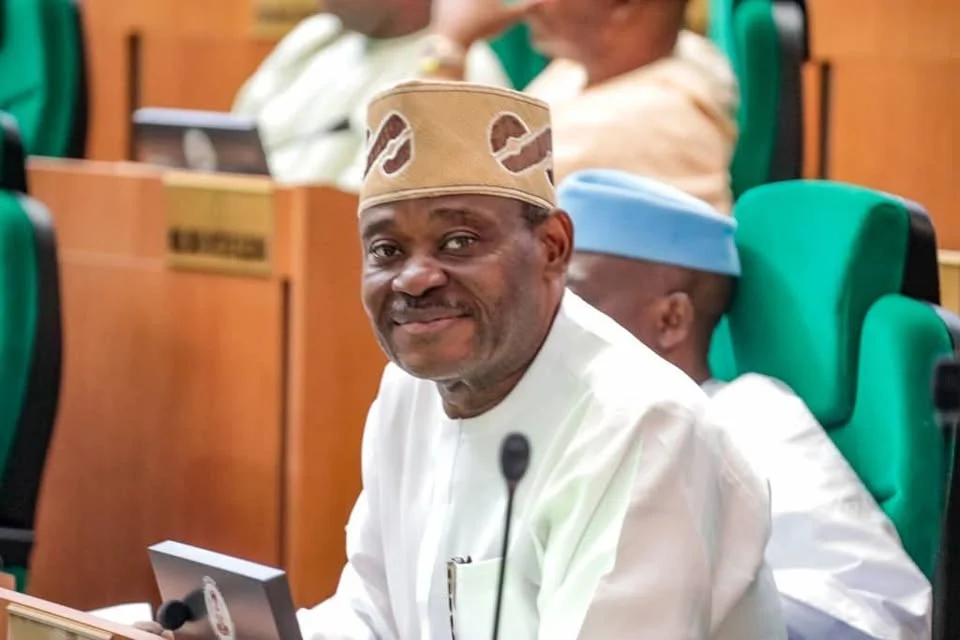
Jimoh Ibrahim, Nigeria’s permanent representative to the United Nations, has defended President Bola Tinubu’s absence at the 81st session of the United Nations General Assembly (UNGA).
Ibrahim spoke on a Television program, on Thursday, noting that Tinubu cannot attend the event just to deliver a 15-minute speech.
Mohammed Idris, minister of information and national orientation, had said Tinubu would not attend the 81st UNGA because he is currently on annual leave.
Idris said Tinubu had mandated Vice-President Kashim Shettima to lead Nigeria’s delegation to the high-level session in New York, United States.
The minister’s comment followed criticism from former Vice-President Atiku Abubakar, the presidential candidate of the African Democratic Congress (ADC), who faulted the president’s absence at the gathering.
Atiku had questioned Tinubu’s decision to stay away from the general debate for the third consecutive year, saying the president’s “persistent avoidance” of the United States raises questions.
The former vice-president also questioned why Tinubu did not show up after Ibrahim reportedly said arrangements had been made for the president to sit close to US President Donald Trump at the general assembly.
Atiku further linked Tinubu’s absence to his past legal history in the US and asked: “Is Tinubu afraid that he could become Donald Trump’s next Nicolás Maduro?”
However, Ibrahim said Tinubu’s absence should not be taken as a big deal because many presidents of other countries did not attend the gathering in person.
“What do you think President Tinubu is coming to do?” he queried.
“The presidents are allowed in the UN under UNGA for 15 minutes. Is that the reason why he should board the flight and be here for 15 minutes?”
He said Shettima had, in Tinubu’s absence, attended high-level meetings and met with Nigerians in the diaspora, describing the engagement as ideal.
“This is the kind of engagement we want, not that the president will just be inside the plane and be coming to UNGA for a 15-minute speech. What is the meaning of that? We don’t want that,” Ibrahim said.
Ibrahim, who was appointed chairman of the budget and administration committee for UNGA’s Fifth Committee in June, said 60 percent of those on the speaking list at the gathering were foreign affairs ministers and vice-presidents.
“As permanent representative of Nigeria to the United Nations, if I’m to do a memo to the president at the last minute of boarding the plane to go to UNGA, do you think I will recommend the president to be on his way when 60 percent of the speaking list of 193 countries are ministers and vice-presidents representing their countries?” he queried.
“There are exigencies. If the speaking list is 90 presidents, maybe of course, the president can come. I don’t think the president should come and be where his equivalent is a minister of foreign affairs of another country.”
The envoy also said the country occupied a prominent position at UNGA, arguing that Tinubu’s physical presence was not necessary.
“I promise that Nigeria will be on the front-row seat at UNGA. Are we not on the front-row seat? Nigeria is sitting at number eight seat in the UN under UNGA and America is at number 26th seat at the back of Nigeria’s seat,” he said.
“And you know, Donald Trump didn’t go to sit on his own seat. He came in to give a lecture at the UNGA and went back from there.
“Are you saying that Nigeria is making the impact it is supposed to make globally? Must we have President Tinubu here before we can make the impact?”
Speaking on what the composition of the speaking list implied, Ibrahim said reforms were being planned to increase the impact of the organisation on member-states.
“That is the reform we are taking on effective from October 1st. When I chair the budget and administrative committee, 90 percent of UN resources is spent at the headquarters, while 10 percent goes to member-states,” he said.
“So legitimacy is reduced because member-states are not seeing impacts of the United Nations. We are going to reverse that.”
-
 Health & Wellness1 year ago
President Tinubu Directs Cut in Dialysis Cost from ₦50,000 to ₦12,000
-
 News1 year ago
PICTURE: In Lagos Couple Sentenced to 22½ Years for Cannabis Trafficking
-

 Business6 months ago
Dangote Refinery Reduces Petrol Gantry Price To ₦1,200 Per Litre
-
Business2 years ago
Dangote; We Did Not Fix ₦600/Litre Petrol Price
-
 Business2 years ago
Heritage Bank Customers’ Path to Securing ₦5m Insured Funds: A Step-By-Step Guide by NDIC”
-
 International News6 months ago
Indian Police Arrest Nigerian Over ₦290m Drug Haul
-
 Trending News1 year ago
NELFUND Disburses ₦86bn To 449,000 Beneficiaries
-
 Business6 months ago
After Plea Bargain, Court Discharges Stella Oduah of ₦2.5bn Fraud