
News
Arewa, Oduduwa, Others Back Dangote’s Decision On Sack Of Employees


In a show of unprecedented unity across Nigeria’s diverse ethnic landscapes, prominent groups from the North, South-West, South-East and South-South have thrown their weight behind the Dangote Refinery’s recent decision to lay off over 800 employees amid escalating labour tensions.
The groups under the aegis of One Nigeria Movement (ONM) held emergency meetings in Kaduna, Lagos, Enugu and Port Harcourt respectively to accuse the Petroleum and Natural Gas Senior Staff Association of Nigeria (PENGASSAN) and the Nigeria Union of Petroleum and Natural Gas Workers (NUPENG) of orchestrating a sinister plot to infiltrate and corrupt the operations of Africa’s largest private refinery.
The pan-Nigerian solidarity comes as PENGASSAN’s nationwide strike, declared on September 28, cripples crude and gas supplies to the facility, threatening fuel scarcity and power outages just as the nation edges toward energy self-sufficiency under President Bola Tinubu’s reforms.
The crisis, which has gripped the nation’s oil and gas sector for weeks, erupted when Dangote Refinery dismissed the workers on September 25, citing “repeated acts of sabotage” during an ongoing reorganization to repair a key gasoline unit shut down in late August.
PENGASSAN and NUPENG, which had earlier secured a Memorandum of Understanding (MoU) on September 9 allowing voluntary unionization after NUPENG’s initial strike threat, claim the layoffs were punitive retaliation for over 90% of staff joining their ranks, allegedly replacing Nigerians with over 2,000 Indian expatriates in violation of labor laws and International Labour Organization (ILO) conventions.
Dangote Industries, however, insists the affected employees numbered far fewer than reported and were let go to safeguard operational integrity, emphasizing that over 3,000 Nigerians remain in its workforce and that union membership is a protected individual right, not a prerequisite for employment.
Federal mediation efforts by the Ministry of Labour and Employment stalled on Monday, with talks set to resume today amid fears of broader economic fallout, including halted truck loadings and potential blackouts from thermal plant shutdowns.
In Kaduna, the Arewa Youth Forum decried the unions’ actions as a “deliberate assault on Northern economic aspirations.”
Led by convener Malam Idris Suleiman, the AYF framed the layoffs as a “defensive necessity to block infiltrators intent on reviving subsidy-era corruption in a private enterprise.”
Suleiman accused PENGASSAN and NUPENG of exploiting the MoU to “embed racketeers who siphoned billions from public refineries through ghost contracts,” warning that their strike threatens the refinery’s role in stabilizing the naira and curbing inflation, now below 20% for the first time in years.
“The Arewa Youth Forum unequivocally supports Dangote Refinery’s layoffs to purge saboteurs, safeguarding Northern hopes for economic revival.
“We accuse PENGASSAN and NUPENG of scheming to implant corrupt syndicates into this private enterprise, echoing their subsidy thefts, and urge Attorney General Lateef Fagbemi to launch an EFCC probe into their financial dealings from 2015 to 2025 to expose illicit gains.”
In Ibadan, the Oduduwa Peace Advocates (OPA) endorsed Dangote Refinery’s sackings as a “bold stand against labor-induced corruption.”
The high-level caucus, attended by over 120 Yoruba leaders, condemned PENGASSAN’s strike escalation on Monday, which halted field operations, as an “attack on Yoruba entrepreneurial spirit.”
OPA spokesperson Chief Tunde Afolabi highlighted the refinery’s role in strengthening Lagos-Ibadan trade corridors, now at risk from union-driven fuel shortages that could spike transport costs by 30%.
OPA traced the dispute to deliberate sabotage linked to the August gasoline unit failure, costing $100 million in repairs, and accused unions of using the MoU to “plant cronies mirroring NNPCL’s $20 billion subsidy heists.”
Afolabi praised Bola Tinubu’s deregulation, which has attracted $50 billion in upstream investments, and dismissed PENGASSAN’s claims of anti-Nigerian layoffs as “propaganda to mask their greed,” noting the refinery’s 3,000-strong Nigerian workforce.
The group urged Yoruba youth to rally behind Dangote, framing it as a symbol of regional innovation.
“These unions, silent during fuel queues that crippled Yoruba traders, now feign advocacy to line their pockets,” Afolabi declared.
Meanwhile the Igbo Young Professionals Forum (IYPF) assembled in Enugu for a stakeholder summit, endorsing Dangote Refinery’s layoffs as a “preemptive strike against corruption’s spread into Nigeria’s private sector.”
The forum, drawing tech entrepreneurs and youth leaders, slammed PENGASSAN and NUPENG’s strike as a “ploy to sabotage Igbo economic aspirations” by disrupting fuel supplies vital to Aba’s markets.
IYPF President Chidi Okonkwo tied the refinery’s stability to the potential for 100,000 Eastern jobs, now threatened by union actions risking the Q4 2024 N3.42 trillion trade surplus.
IYPF dissected the unions’ tactics, linking the sackings to sabotage behind the August unit failure and accusing PENGASSAN and NUPENG of exploiting the MoU to “embed agents who thrived on subsidy scams.”
Okonkwo criticized their opaque finances, including unaccounted dues from IOCs, and connected the crisis to PIA-driven gains like 1.4 billion barrels unlocked via field plans.
The group mobilized diaspora networks to pressure global labor bodies, arguing that PENGASSAN’s “prayer vigil” strikes violate voluntary unionization laws.
“Igbo ingenuity thrives on fairness; we stand with Dangote to block saboteurs prioritizing profit over progress,” Okonkwo affirmed, urging federal action.
On its part, the Niger Delta Peace and Development Assembly (NDPDA) convened a critical town hall in Port Harcourt, voicing robust support for Dangote Refinery’s sackings as a “stand against union sabotage threatening the Niger Delta’s economic lifeline.” The gathering, attended by oil community leaders and environmental activists, condemned PENGASSAN and NUPENG’s strike as a “betrayal of the region’s resource control struggle,” risking fuel shortages that could cripple Port Harcourt’s industrial zones.
NDPDA convener Mrs. Ebiere Okorie linked the refinery’s stability to equitable wealth distribution under the PIA, vital for fishing and trading communities.
NDPDA highlighted how the layoffs countered sabotage linked to the August shutdown, accusing unions of exploiting the MoU to “embed corrupt agents who profited from subsidy scams.”
“These unions ignored Niger Delta suffering under fuel scarcity while pocketing illicit gains; now they threaten our hope for self-sufficiency,” Okorie declared.
The assembly urged Niger Delta youth to reject union protests, framing Dangote as a partner in local refining capacity.
“Our region has bled from NNPCL’s failures; we won’t let PENGASSAN turn Dangote into another looting ground,” Okorie asserted, calling for a federal injunction to halt the strike’s “economic terrorism” before mediation resumes.


News
Corruption: EFCC Boss Exposes Public Officers ” They Assume Office With Empty Account But Own Millions Of Dollars In 3 Years”
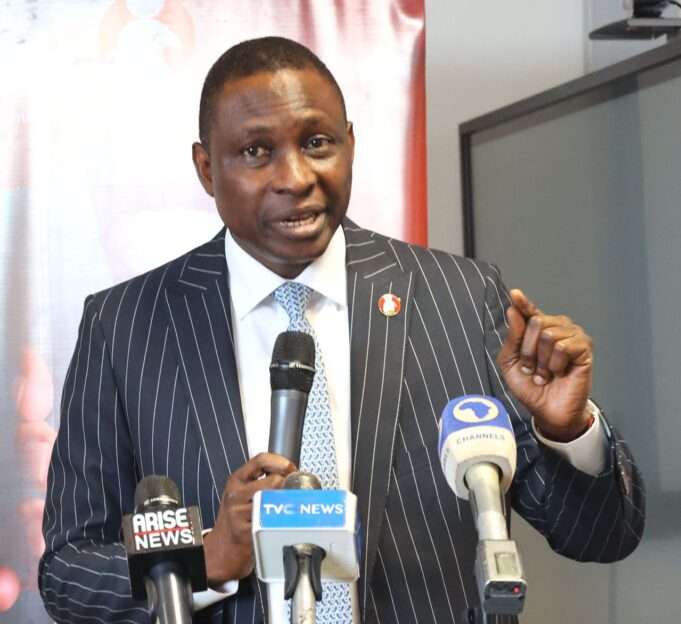
The Chairman of the Economic and Financial Crimes Commission, EFCC, Ola Olukoyede, says Nigerian politicians steal public funds every minute.
He spoke in Abuja at the 80th birthday celebration of former Attorney-General, Kanu Agabi.
Olukoyede said the anti-graft agency receives over 20,000 corruption petitions every year, adding that most of the cases are shocking.
“I receive over 20,000 petitions in a year in respect to public corruption, all terrible. What is going on? Like every minute, public officers take money, and if you go through some of our case files you will weep.
“The way people take national resources and Nigerians are victims of these fraudulent activities. And we must come together for once in our lifetime and say no to the activities of some of our leaders,” Olukoyede said.
The EFCC boss said some public officers resume office with less than N100,000 in their account, but after three years, EFCC will trace millions of dollars to them.
He said some of them build hundreds of houses while still in office, noting that corruption is killing Nigeria.
Olukoyede said public officers must explain what they did in office, stressing that accountability and transparency must guide public service.
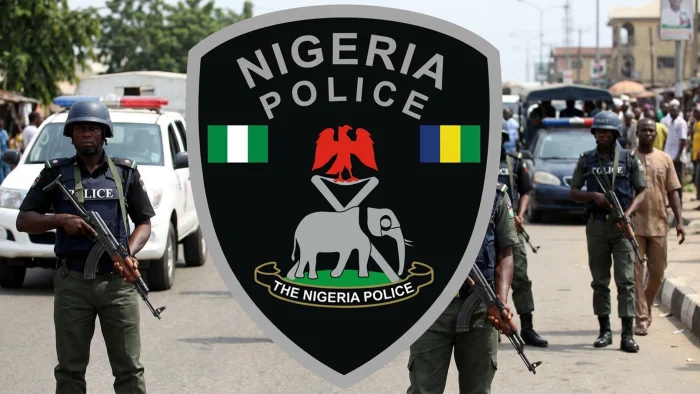
The Ogun State Police Command says, it has arrested 43-year-old Edebiri Temitope, who allegedly beat his neighbour to death with a bamboo stick for hugging his son in Bluestone Treasure Estate, Mowe-Ofada area of Ogun State.
The deceased, 38 years old Micheal Oje, a Guidance and Counselling graduate of Benue State University, was accused of hugging and playing rough with the 3-year-old child .
According to Peter Adum, a younger cousin to the deceased, Micheal had just returned from work and the child who lived with them on the same street, ran towards him and hugged him.
He stated that Michael hugged the boy and threw him playfully in the air and caught him, before going into his room to sleep.
Adum said, “While he was sleeping, Adebiri, the father of the boy, came outside and knocked on his door. When Mike came out, the man accused him of playing roughly with his child. Mike explained that he had only hugged the boy and lifted him into the air.
“That was how the man then started slapping Mike. He picked up a bamboo stick from the ground and hit him about three times. Mike fell and died on the spot.”
The suspect was reported to have gone into hiding with his family.
However, the Police Public Relations Officer, DSP Oluseyi Babaseyi on Friday, said the suspect had been arrested and transferred to the State CID, Eleweran, Abeokuta, for further investigation.
“Edebiri Temitope, ‘M’, aged 43 years, who was earlier reported to be at large, has been arrested in connection with the death of Oje Michael Eje, ‘M’.
“The suspect has been transferred to the State CID, Eleweran, Abeokuta, for further investigation,” Babaseyi stated.
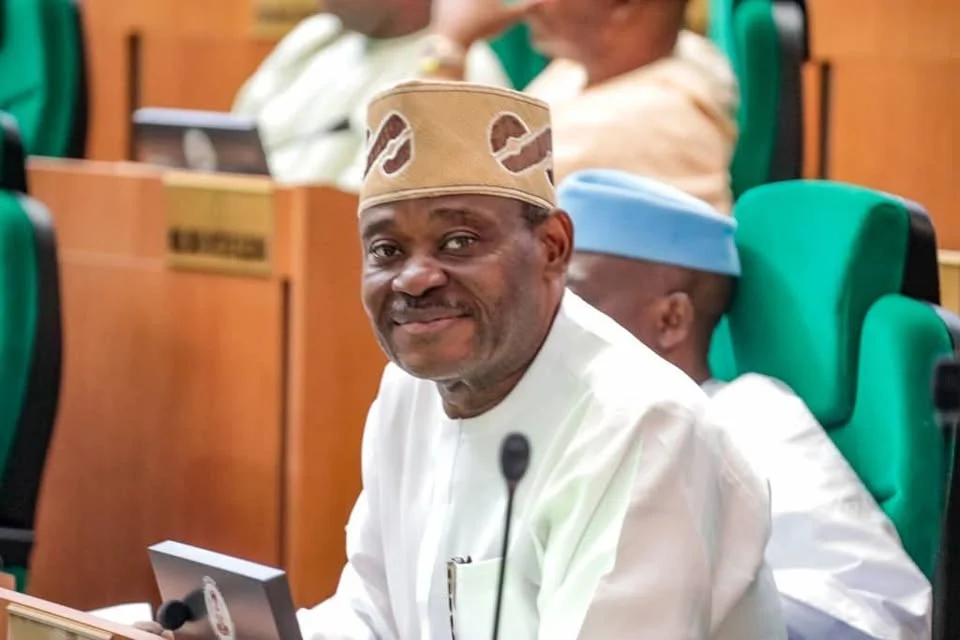
Jimoh Ibrahim, Nigeria’s permanent representative to the United Nations, has defended President Bola Tinubu’s absence at the 81st session of the United Nations General Assembly (UNGA).
Ibrahim spoke on a Television program, on Thursday, noting that Tinubu cannot attend the event just to deliver a 15-minute speech.
Mohammed Idris, minister of information and national orientation, had said Tinubu would not attend the 81st UNGA because he is currently on annual leave.
Idris said Tinubu had mandated Vice-President Kashim Shettima to lead Nigeria’s delegation to the high-level session in New York, United States.
The minister’s comment followed criticism from former Vice-President Atiku Abubakar, the presidential candidate of the African Democratic Congress (ADC), who faulted the president’s absence at the gathering.
Atiku had questioned Tinubu’s decision to stay away from the general debate for the third consecutive year, saying the president’s “persistent avoidance” of the United States raises questions.
The former vice-president also questioned why Tinubu did not show up after Ibrahim reportedly said arrangements had been made for the president to sit close to US President Donald Trump at the general assembly.
Atiku further linked Tinubu’s absence to his past legal history in the US and asked: “Is Tinubu afraid that he could become Donald Trump’s next Nicolás Maduro?”
However, Ibrahim said Tinubu’s absence should not be taken as a big deal because many presidents of other countries did not attend the gathering in person.
“What do you think President Tinubu is coming to do?” he queried.
“The presidents are allowed in the UN under UNGA for 15 minutes. Is that the reason why he should board the flight and be here for 15 minutes?”
He said Shettima had, in Tinubu’s absence, attended high-level meetings and met with Nigerians in the diaspora, describing the engagement as ideal.
“This is the kind of engagement we want, not that the president will just be inside the plane and be coming to UNGA for a 15-minute speech. What is the meaning of that? We don’t want that,” Ibrahim said.
Ibrahim, who was appointed chairman of the budget and administration committee for UNGA’s Fifth Committee in June, said 60 percent of those on the speaking list at the gathering were foreign affairs ministers and vice-presidents.
“As permanent representative of Nigeria to the United Nations, if I’m to do a memo to the president at the last minute of boarding the plane to go to UNGA, do you think I will recommend the president to be on his way when 60 percent of the speaking list of 193 countries are ministers and vice-presidents representing their countries?” he queried.
“There are exigencies. If the speaking list is 90 presidents, maybe of course, the president can come. I don’t think the president should come and be where his equivalent is a minister of foreign affairs of another country.”
The envoy also said the country occupied a prominent position at UNGA, arguing that Tinubu’s physical presence was not necessary.
“I promise that Nigeria will be on the front-row seat at UNGA. Are we not on the front-row seat? Nigeria is sitting at number eight seat in the UN under UNGA and America is at number 26th seat at the back of Nigeria’s seat,” he said.
“And you know, Donald Trump didn’t go to sit on his own seat. He came in to give a lecture at the UNGA and went back from there.
“Are you saying that Nigeria is making the impact it is supposed to make globally? Must we have President Tinubu here before we can make the impact?”
Speaking on what the composition of the speaking list implied, Ibrahim said reforms were being planned to increase the impact of the organisation on member-states.
“That is the reform we are taking on effective from October 1st. When I chair the budget and administrative committee, 90 percent of UN resources is spent at the headquarters, while 10 percent goes to member-states,” he said.
“So legitimacy is reduced because member-states are not seeing impacts of the United Nations. We are going to reverse that.”
-
 Health & Wellness1 year ago
President Tinubu Directs Cut in Dialysis Cost from ₦50,000 to ₦12,000
-
 News1 year ago
PICTURE: In Lagos Couple Sentenced to 22½ Years for Cannabis Trafficking
-
 Business6 months ago
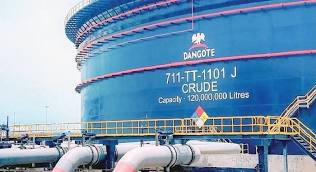
Dangote Refinery Reduces Petrol Gantry Price To ₦1,200 Per Litre
-
Business2 years ago
Dangote; We Did Not Fix ₦600/Litre Petrol Price
-
 International News6 months ago
Indian Police Arrest Nigerian Over ₦290m Drug Haul
-
 Business2 years ago
Heritage Bank Customers’ Path to Securing ₦5m Insured Funds: A Step-By-Step Guide by NDIC”
-
 Trending News1 year ago
NELFUND Disburses ₦86bn To 449,000 Beneficiaries
-
 Business6 months ago
After Plea Bargain, Court Discharges Stella Oduah of ₦2.5bn Fraud