
News
Arewa, Oduduwa, Others Back Dangote’s Decision On Sack Of Employees


In a show of unprecedented unity across Nigeria’s diverse ethnic landscapes, prominent groups from the North, South-West, South-East and South-South have thrown their weight behind the Dangote Refinery’s recent decision to lay off over 800 employees amid escalating labour tensions.
The groups under the aegis of One Nigeria Movement (ONM) held emergency meetings in Kaduna, Lagos, Enugu and Port Harcourt respectively to accuse the Petroleum and Natural Gas Senior Staff Association of Nigeria (PENGASSAN) and the Nigeria Union of Petroleum and Natural Gas Workers (NUPENG) of orchestrating a sinister plot to infiltrate and corrupt the operations of Africa’s largest private refinery.
The pan-Nigerian solidarity comes as PENGASSAN’s nationwide strike, declared on September 28, cripples crude and gas supplies to the facility, threatening fuel scarcity and power outages just as the nation edges toward energy self-sufficiency under President Bola Tinubu’s reforms.
The crisis, which has gripped the nation’s oil and gas sector for weeks, erupted when Dangote Refinery dismissed the workers on September 25, citing “repeated acts of sabotage” during an ongoing reorganization to repair a key gasoline unit shut down in late August.
PENGASSAN and NUPENG, which had earlier secured a Memorandum of Understanding (MoU) on September 9 allowing voluntary unionization after NUPENG’s initial strike threat, claim the layoffs were punitive retaliation for over 90% of staff joining their ranks, allegedly replacing Nigerians with over 2,000 Indian expatriates in violation of labor laws and International Labour Organization (ILO) conventions.
Dangote Industries, however, insists the affected employees numbered far fewer than reported and were let go to safeguard operational integrity, emphasizing that over 3,000 Nigerians remain in its workforce and that union membership is a protected individual right, not a prerequisite for employment.
Federal mediation efforts by the Ministry of Labour and Employment stalled on Monday, with talks set to resume today amid fears of broader economic fallout, including halted truck loadings and potential blackouts from thermal plant shutdowns.
In Kaduna, the Arewa Youth Forum decried the unions’ actions as a “deliberate assault on Northern economic aspirations.”
Led by convener Malam Idris Suleiman, the AYF framed the layoffs as a “defensive necessity to block infiltrators intent on reviving subsidy-era corruption in a private enterprise.”
Suleiman accused PENGASSAN and NUPENG of exploiting the MoU to “embed racketeers who siphoned billions from public refineries through ghost contracts,” warning that their strike threatens the refinery’s role in stabilizing the naira and curbing inflation, now below 20% for the first time in years.
“The Arewa Youth Forum unequivocally supports Dangote Refinery’s layoffs to purge saboteurs, safeguarding Northern hopes for economic revival.
“We accuse PENGASSAN and NUPENG of scheming to implant corrupt syndicates into this private enterprise, echoing their subsidy thefts, and urge Attorney General Lateef Fagbemi to launch an EFCC probe into their financial dealings from 2015 to 2025 to expose illicit gains.”
In Ibadan, the Oduduwa Peace Advocates (OPA) endorsed Dangote Refinery’s sackings as a “bold stand against labor-induced corruption.”
The high-level caucus, attended by over 120 Yoruba leaders, condemned PENGASSAN’s strike escalation on Monday, which halted field operations, as an “attack on Yoruba entrepreneurial spirit.”
OPA spokesperson Chief Tunde Afolabi highlighted the refinery’s role in strengthening Lagos-Ibadan trade corridors, now at risk from union-driven fuel shortages that could spike transport costs by 30%.
OPA traced the dispute to deliberate sabotage linked to the August gasoline unit failure, costing $100 million in repairs, and accused unions of using the MoU to “plant cronies mirroring NNPCL’s $20 billion subsidy heists.”
Afolabi praised Bola Tinubu’s deregulation, which has attracted $50 billion in upstream investments, and dismissed PENGASSAN’s claims of anti-Nigerian layoffs as “propaganda to mask their greed,” noting the refinery’s 3,000-strong Nigerian workforce.
The group urged Yoruba youth to rally behind Dangote, framing it as a symbol of regional innovation.
“These unions, silent during fuel queues that crippled Yoruba traders, now feign advocacy to line their pockets,” Afolabi declared.
Meanwhile the Igbo Young Professionals Forum (IYPF) assembled in Enugu for a stakeholder summit, endorsing Dangote Refinery’s layoffs as a “preemptive strike against corruption’s spread into Nigeria’s private sector.”
The forum, drawing tech entrepreneurs and youth leaders, slammed PENGASSAN and NUPENG’s strike as a “ploy to sabotage Igbo economic aspirations” by disrupting fuel supplies vital to Aba’s markets.
IYPF President Chidi Okonkwo tied the refinery’s stability to the potential for 100,000 Eastern jobs, now threatened by union actions risking the Q4 2024 N3.42 trillion trade surplus.
IYPF dissected the unions’ tactics, linking the sackings to sabotage behind the August unit failure and accusing PENGASSAN and NUPENG of exploiting the MoU to “embed agents who thrived on subsidy scams.”
Okonkwo criticized their opaque finances, including unaccounted dues from IOCs, and connected the crisis to PIA-driven gains like 1.4 billion barrels unlocked via field plans.
The group mobilized diaspora networks to pressure global labor bodies, arguing that PENGASSAN’s “prayer vigil” strikes violate voluntary unionization laws.
“Igbo ingenuity thrives on fairness; we stand with Dangote to block saboteurs prioritizing profit over progress,” Okonkwo affirmed, urging federal action.
On its part, the Niger Delta Peace and Development Assembly (NDPDA) convened a critical town hall in Port Harcourt, voicing robust support for Dangote Refinery’s sackings as a “stand against union sabotage threatening the Niger Delta’s economic lifeline.” The gathering, attended by oil community leaders and environmental activists, condemned PENGASSAN and NUPENG’s strike as a “betrayal of the region’s resource control struggle,” risking fuel shortages that could cripple Port Harcourt’s industrial zones.
NDPDA convener Mrs. Ebiere Okorie linked the refinery’s stability to equitable wealth distribution under the PIA, vital for fishing and trading communities.
NDPDA highlighted how the layoffs countered sabotage linked to the August shutdown, accusing unions of exploiting the MoU to “embed corrupt agents who profited from subsidy scams.”
“These unions ignored Niger Delta suffering under fuel scarcity while pocketing illicit gains; now they threaten our hope for self-sufficiency,” Okorie declared.
The assembly urged Niger Delta youth to reject union protests, framing Dangote as a partner in local refining capacity.
“Our region has bled from NNPCL’s failures; we won’t let PENGASSAN turn Dangote into another looting ground,” Okorie asserted, calling for a federal injunction to halt the strike’s “economic terrorism” before mediation resumes.


Entertainment
NIBAD 2026: Abike Dabiri To Take Centre Stage As Bunmi Ebony, DJ X-One Host Baltimore Event

The Chairman and Chief Executive Officer of the Nigerians in Diaspora Commission (NiDCOM), Hon. Dr Abike Dabiri-Erewa ( OON) has been scheduled for honour, among other awardees, at the 2026 and the 6th edition of the annual Nigerian Independence Ball, Awards, and Dinner (NIBAD),billed to hold in Baltimore, Maryland, on the 18th of October .
At the instance of Naija Times USA and Raindrop Group led by Olaniyi Thompson Tabi, activities marking the 6th edition of NIBAD commenced on the 3rd of October with Independence carnival in Maryland.
As part of the expanded 6th edition, the Annual Independence stage play titled ‘Your Excellency Sir!’ …The saga of a nation, written and directed by Olaniyi Thompson Tabi, was showcased at a very colorful event on the 9th of October.
Designed to be an unforgettable celebration of Nigeria’s 66th Independence celebration, the grand finale of the celebration is billed for Sunday, the 18th of October, 4.00pm, at Gabriel Community Centre, 6948, Dogwood Road, Windsor Mill, MD 21244.
The evening will not only commemorate Nigeria’s rich history and vibrant culture but will also spotlight the exceptional contributions of Nigerians at home and abroad in various fields such as business, healthcare, education, community service, and more.
The evening will feature a grand awards ceremony to honor those who have demonstrated leadership, innovation, and dedication in their respective industries. Among them, Dr Dabiri- Erewa
Hon. Dr. Abike Kafayat Oluwatoyin Dabiri-Erewa (OON) is a prominent Nigerian politician, public administrator, and former broadcast journalist who has been able to show leadership since her appointment as the Chairman and Chief Executive Officer of the Nigerians in Diaspora Commission (NiDCOM).
To add colour to the event also, is
Dj X-One, reputed as the best Disc Jockey in the DMV area. Bunmi Ebony, a fast rising Juju Artiste in Atlanta will also be on the bandstand to thrill guests at the event to celebrate Nigeria.
****About NIBAD: The Nigerian Independence Ball, Awards, and Dinner (NIBAD) is an annual event that celebrates Nigeria’s Independence while recognizing the achievements of Nigerians in the diaspora. NIBAD aims to highlight the cultural pride, resilience, and accomplishments of Nigerians globally, bringing together community leaders, professionals, and influencers for an evening of celebration, inspiration, and unity.
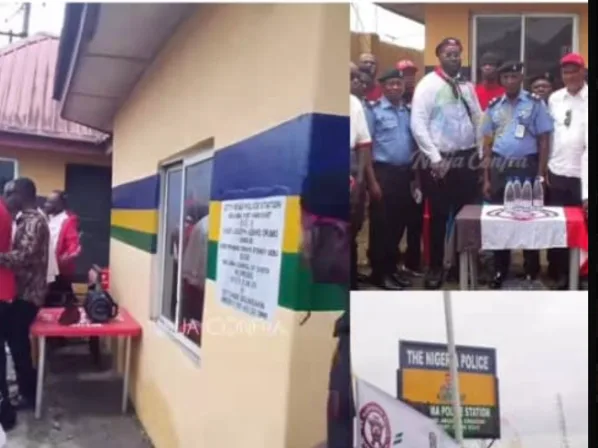
The Rivers State Police Command under CP Olugbenga A. Adepoju has condemned the purported renovation of the Abuloma Police Outpost by suspected cultists and ordered a full investigation into the incident.
Police Public Relations Officer (PPRO) of the command, ASP Blessing Agabe disclosed this in a Friday statement.
She said the command’s action follows a trending social media report and circulating video alleging that suspected cultists renovated the outpost and visited the facility on Thursday, October 15, to celebrate completion of the renovation.
The command said it “strongly condemns any action or association capable of compromising the integrity, discipline and professional standards of the Nigeria Police Force or conferring legitimacy, recognition or acceptance on suspected cult groups or other unlawful organisations.”
It added, “Police facilities are public institutions established for the protection of citizens and the enforcement of law and must not become platforms through which criminal groups seek public validation or influence.”
The command said CP Adepoju maintains zero tolerance for criminality and any conduct that undermines public confidence in the police.
Consequently, he has queried and relieved the Divisional Police Officer in charge of Abuloma Division and the Divisional Officer overseeing the affected outpost of their duties pending investigation.
The CP has also ordered a full investigation to establish the circumstances surrounding the incident and the veracity of the allegations, including the identities and backgrounds of the individuals or groups who financed or facilitated the renovation; the police officers who authorised or approved the project; whether due procedures were followed; whether any officer breached professional standards or compromised the integrity of the force; and the extent of any involvement by police personnel.
The command said while it welcomes legitimate community support for improving police facilities, consistent with Section 26(1)(d) of the Nigeria Police Act 2020, which provides for gifts and contributions to the Police General Fund, such support must not compromise police independence, professional standards or security.
“No donation or assistance confers immunity from investigation or prosecution,” the command stated, adding that the investigation will establish whether necessary approvals were obtained and appropriate checks conducted on those who financed the renovation.
It reiterated that it would not condone unprofessional conduct or any form of improper association with criminal elements and that appropriate disciplinary and legal action would be taken against anyone found culpable.
The Police Command in Benue State has confirmed the abduction of Rev. Fr. John Otache, Parish Priest of St. Margaret’s Parish, Ajegbe-Awume, in Ohimini Local Government Area of the state.
The Police Public Relations Officer, DSP Aondogu Orchia confirmed the incident on Friday in Makurdi.
Orchia said the command had commenced full investigation into the incident and efforts were ongoing to rescue the priest.
Meanwhile, the Catholic Diocese of Otukpo, in a statement signed by the Diocesan Chancellor, Rev. Fr. Joseph Itodo, said the priest was abducted on October 13.
According to Itodo, Otache was returning home from Otukpo when he encountered the abductors along the Otobi Amejo-Ajegbe Road in Ohimini Local Government Area.
He expressed sadness over the incident, saying the Bishop of Otukpo, Most Rev. Michael Apochi, was deeply pained by the development.
He called on priests, religious members, the laity and other well-meaning individuals to pray for the priest’s safe and speedy release.
He also urged prayers for other persons held by kidnappers across the country, expressing hope for their safe return.
-
 Health & Wellness1 year ago
President Tinubu Directs Cut in Dialysis Cost from ₦50,000 to ₦12,000
-
News2 years ago
CBN Debunks Fake Circular on New ₦5,000 and ₦10,000 Notes
-
 Business7 months ago
Dangote Refinery Reduces Petrol Gantry Price To ₦1,200 Per Litre
-
 International News7 months ago
Indian Police Arrest Nigerian Over ₦290m Drug Haul
-
 Business7 months ago
After Plea Bargain, Court Discharges Stella Oduah of ₦2.5bn Fraud
-
Business2 years ago
Dangote; We Did Not Fix ₦600/Litre Petrol Price
-
 Trending News1 year ago
NELFUND Disburses ₦86bn To 449,000 Beneficiaries
-
 Opinion2 years ago
Championing the People’s Voice: Obasa’s Dedication to Grassroots Representation By Dave Agboola⁰