
International News
China Detains Prominent ‘Underground’ Pastor In Crackdown


The founder of a prominent Chinese underground church has been detained along with more than 20 of its members in a sweeping national crackdown, according to his daughter and one of its pastors.
Police arrested Jin Mingri, who founded the unregistered Zion Church, at his home in the southern region of Guangxi on Friday, along with several pastors in other cities, including Beijing were taken into custody overnight.
Jin was detained on “suspicion of the illegal use of information networks”, a detention notice verified by AFP showed.
At least seven pastors including Jin, who also goes by Ezra, may face criminal charges for “illegal dissemination of religious information via the internet”, according to a church statement.
Police searched their homes and confiscated their computers and cell phones.
“It is just a blatant attack on religious freedom,” Jin’s daughter Grace said.
Since Thursday, police have apprehended church leaders and members in Shanghai, Beijing, Zhejiang, Guangxi, Shandong, Sichuan and Henan, according to a list compiled by church members seen by AFP.
Four people have since been released following interrogation.
Police barred lawyers from meeting detained church members in the Guangxi city of Beihai on Monday morning, according to Grace.
It was not immediately clear if those detained have been able to speak with lawyers since then.
“We are not criminals, we are just Christians,” said Sean Long, a Zion pastor based in the United States who has been in touch with family members of those detained in China.
“We pray for the best, but we have to prepare for the worst.”
Further crackdown
Jin started the unregistered church in 2007 in Beijing, where it grew to around 1,500 members.
Authorities shuttered Zion in 2018 after pressuring hundreds of members to stop participating in the church.
But Zion’s membership expanded rapidly online, holding services on Zoom alongside small-scale offline gatherings in 40 Chinese cities.
That angered Chinese authorities, Long said. He suspects the roundup of church leaders was endorsed at the top.
“The government knows this pretty well. And it’s kind of an embarrassment for them after 2018,” he said.
“Sooner or later, they have to take action to further their crackdown against Zion. And I guess 2025, this year, is the time.”
The crackdown on Zion is the latest in a string of arrests targeting house churches in China.
In May, pastor Gao Quanfu of the Light of Zion Church was detained on criminal charges of “using superstitious activities to undermine the implementation of justice”, according to the Zion church’s statement.
And in June, multiple members of Golden Lampstand Church were jailed for fraud, with its pastor Yang Rongli sentenced to 15 years, the statement said.
China’s constitution guarantees citizens religious freedom, but activity is heavily policed.
Christians in the country are split between unofficial “house” or “underground” churches like Zion, and state-sanctioned churches where Communist Party texts are displayed or featured in the service.
In 2022, China banned all online religious services without official licenses.
And last month, it unveiled new rules restricting religious activity on social media.
The rules explicitly ban preaching “via livestreams, short videos, online meetings, WeChat groups or WeChat Moments,” referring to features of China’s most-used social media platform.
The United States on Sunday condemned the detentions and called for the church members’ “immediate release”.
“This crackdown further demonstrates how the CCP exercises hostility towards Christians who reject Party interference in their faith and choose to worship at unregistered house churches,” US Secretary of State Marco Rubio said in a statement.
Asked about the detentions, Chinese foreign ministry spokesman Lin Jian said “I’m not familiar with the situation you mentioned”, adding “we firmly oppose the United States interfering in China’s internal affairs under the pretext of so-called religious issues”.
Grace Jin and her mother, based in the United States, have been unable to reach her father since Friday.
She said her family is worried and scared but not surprised.
“In my mind we’ve played out this scenario since I was a kid,” she said.
“Being a Christian in China, I think you just know that something like this could happen.”
AFP


The National Hajj Commission of Nigeria (NAHCON) has announced that the Kingdom of Saudi Arabia has declined Nigeria’s request for an upward review of its 2027 Hajj allocation, leaving the country’s quota unchanged despite growing demand from intending pilgrims nationwide.
The Commission disclosed that it had formally engaged the Saudi Ministry of Hajj and Umrah, seeking additional pilgrimage slots to accommodate the increasing number of Nigerian Muslims desirous of undertaking the sacred journey and to address appeals from several state pilgrims’ welfare boards for enhanced allocations.
However, Saudi authorities communicated their inability to grant additional slots, citing capacity limitations, structural constraints within the holy sites, and the Kingdom’s policy of strict adherence to approved country quotas under the current operational framework.
Consequently, Nigeria’s allocation for the 2027 Hajj exercise remains fixed at 35,000 slots for government pilgrims and 15,000 slots for licensed tour operators, bringing the country’s total approved allocation to 50,000 pilgrims.
Commenting on the development, the Chairman and Chief Executive Officer of NAHCON, Ambassador Ismail Abba Yusuf, said the Commission fully understands the disappointment the decision may cause many aspiring pilgrims and state pilgrim boards that had hoped for additional allocations.
According to him, the Commission explored all available diplomatic and operational channels in pursuit of an increased quota but respects the final decision of the Saudi authorities.
“We appreciate the deep spiritual desire of many Nigerian Muslims to perform Hajj and understand the expectations of states and stakeholders seeking additional slots. While every effort was made to secure an upward review, the Saudi authorities have communicated their final position based on operational realities and capacity considerations,” Ambassador Yusuf stated.
The NAHCON Chairman urged state pilgrims’ welfare boards, agencies and licensed tour operators to make judicious and transparent use of their approved allocations while ensuring strict compliance with all timelines established by the Commission and the Saudi Nusuk platform.
He emphasized that the deadline for uploading the data of all prospective pilgrims for the 2027 Hajj exercise remains September 26, 2026, warning that no extensions would be granted under any circumstance.
“Kindly note that the deadline for uploading prospective pilgrims’ data remains September 26, 2026. We urge all partners, state pilgrim boards, tour operators and representatives to ensure that all required information is submitted before this date, as no extensions will be granted,” he said.
Ambassador Yusuf further advised intending pilgrims who may be unable to secure a slot under the approved 2027 allocation not to lose hope, revealing that preparations for the subsequent pilgrimage season have already commenced.
“Individuals who were unable to secure a slot for the upcoming Hajj are encouraged to register for the 2028 Hajj. The Commission has officially opened the registration portal for this period, and applications are now being accepted,” he added.
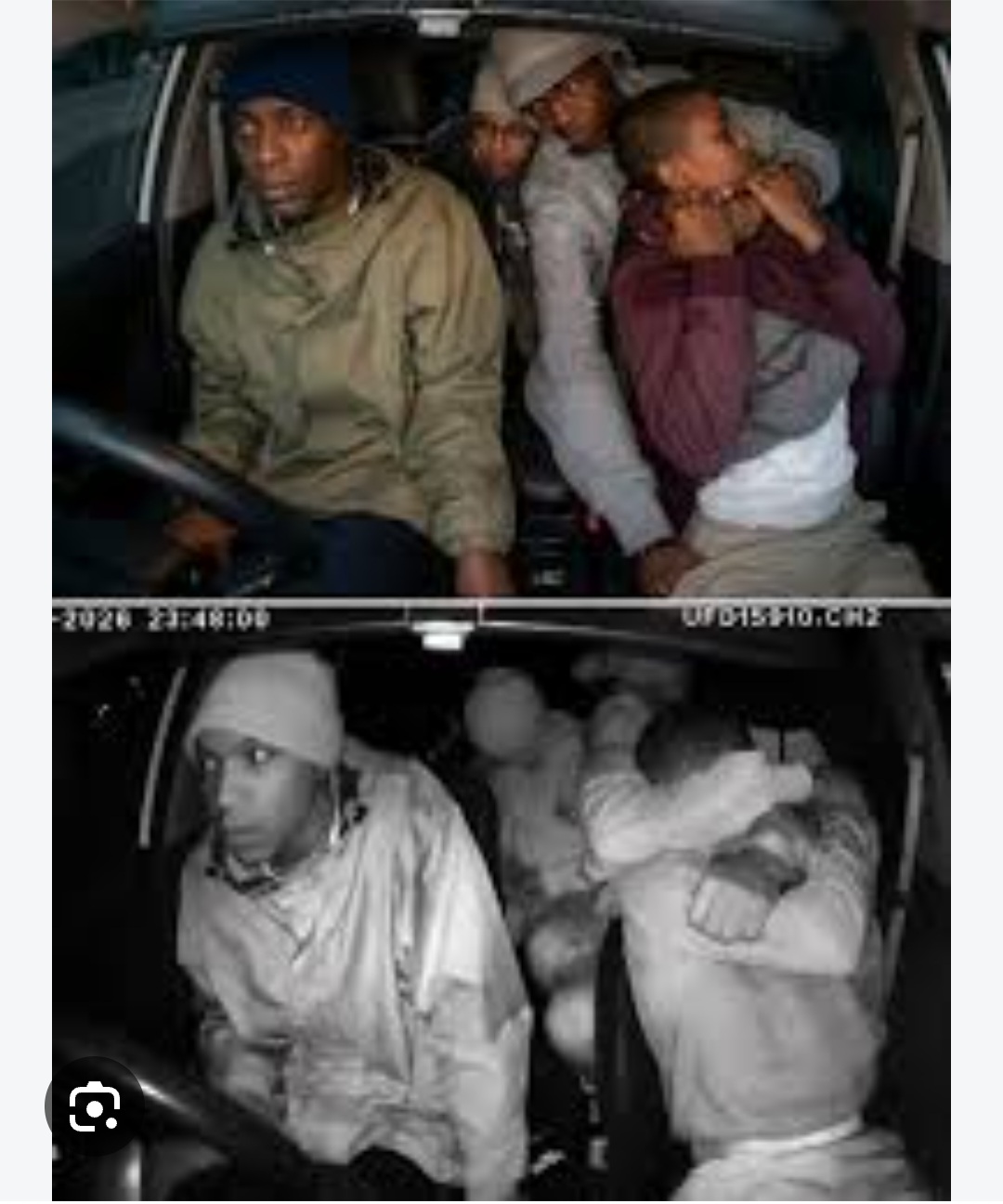
South African police have arrested five suspects after rescuing a 25-year-old e-hailing driver who was allegedly kidnapped, raped and held for ransom in Cape Town.
The South African Police Service (SAPS) said in a statement on Sunday that Steenberg police rescued the driver after he was allegedly raped by two female suspects and held at ransom by the group.
Police were alerted by the victim’s brother after the suspects contacted him and demanded R4,000 in cash for the driver’s release.
According to SAPS, the police used the victim’s vehicle tracker to locate him at Southampton Road in Heathfield, where he was rescued.
“Steenberg police rescued a 25-year-old e-hailing driver after he was raped and held at ransom by two female suspects and three males yesterday,” the police said.
The victim had reportedly met one of the female suspects the previous week through his e-hailing business.
According to police, the two exchanged telephone numbers and communicated throughout the week before arranging to meet.
“When he went to meet her, he was kidnapped by the suspects and the females raped him,” SAPS said.
Police subsequently arrested the two female suspects, aged 23 and 34, as well as three male suspects aged 16, 42 and 48.
The five suspects are expected to appear before the Wynberg Magistrate’s Court on Monday, September 14, 2026.
SAPS said they would face charges relating to the alleged kidnapping and rape.

A 31-year-old woman in the United Kingdom will spend more time in prison after falsely accusing 10 men of rape, following intervention by Attorney General Ellie Reeves.
Bolton, had her sentence increased by two years and six months after Reeves referred her case to the Court of Appeal under the Unduly Lenient Sentence scheme.
Sharples contacted men on Facebook and dating apps between 2013 and 2020, arranged to meet them in person, and then made false claims of rape against them to the police.
The court heard how the convict repeated and sustained the accusations, which led to eight separate police investigations involving ten innocent victims.
The government said the majority of those wrongfully accused were arrested and held in custody, resulting in months of investigations and over 550 hours of police time.
The victims described the impact that false allegations had on their daily lives, including loss of relationships, employment, and lasting damage to their mental health.
“Anyone who seeks to exploit or undermine genuine acts of violence against women and girls must be held to account,” said Attorney General Reeves.
The top justice official advised genuine victims to come forward, saying every report of rape is rightly taken seriously and treated with the care it deserves.
On March 11, March, Sharples was sentenced to four years and six months’ imprisonment for 10 counts of obstruction of justice. The Court of Appeal increased it to 7 years on September 9.
-
 Health & Wellness1 year ago
President Tinubu Directs Cut in Dialysis Cost from ₦50,000 to ₦12,000
-
 News1 year ago
PICTURE: In Lagos Couple Sentenced to 22½ Years for Cannabis Trafficking
-

 Business6 months ago
Dangote Refinery Reduces Petrol Gantry Price To ₦1,200 Per Litre
-
 Trending News1 year ago
NELFUND Disburses ₦86bn To 449,000 Beneficiaries
-
 Business2 years ago
Heritage Bank Customers’ Path to Securing ₦5m Insured Funds: A Step-By-Step Guide by NDIC”
-
Business2 years ago
Dangote; We Did Not Fix ₦600/Litre Petrol Price
-

 International News6 months ago
Indian Police Arrest Nigerian Over ₦290m Drug Haul
-

 Business6 months ago
After Plea Bargain, Court Discharges Stella Oduah of ₦2.5bn Fraud