
Business
Breweries Revenue Growing Despite Economic Hardship


Against the backdrop of rising costs of living and declining purchasing power, brewing companies have recorded sharp rise in revenues.
Filings by the companies to Nigeria Exchange Limited, NGX, indicate that leading brewers, Nigerian Breweries Plc, Guinness Nigeria Plc, International Breweries Plc, and Champion Breweries Plc recorded combined revenue of over N2.8 trillion from the sale of mainly beer and spirits, in addition to their non-alcoholic beverages in the year ended December 31, 2025, up from N1.89 trillion recorded in the corresponding period of 2024, representing an increase of 48.1%.
Analysts noted that the figure underscores the scale of beer and other alcoholic beverage consumption in Nigeria despite prevailing economic pressures.
According to the financial statements of the four major brewers profit was even more impressive with Profit Before Tax (PBT) rising 117.2 percent to N317.213 billion, up from N146.050 billion in 2024.
Meanwhile, the growth rate in revenue and profit were far higher than their cost of doing business despite the inflationary pressures in the economy.
The companies’ cost of sales rose 36.5% to N1.8 trillion from N1.3trillion, while administrative expenses rose by 17.6%, to N639.8billion from N544.04 billion.
Revenue generated
Nigerian Breweries Plc, the largest brewer, recorded revenue of N1.467 trillion for the period, up from N1.084 trillion in the corresponding period of 2024, indicating a 35.3% increase.
Guinness Nigeria followed as the second-largest revenue generator in absolute terms, posting N730.808 billion, up by 144.0% from N299.489 billion in 2024. International Breweries ranked third, posting N620.149 billion, up by 26.8% from N488.955 billion in 2024, while Champion Breweries recorded the least revenue of N29.797 billion, up by 42.6% from N20.890 billion in 2024.
Profit Before Tax
A breakdown of industry profit shows that Nigerian Breweries also topped the chart in absolute terms, posting N161.062 billion, though down by 11.9% from N182.917 billion in 2024.
Trailing Nigerian Breweries is International Breweries, which recorded N85.108 billion, improving from a loss of N111.820 billion in 2024.
Guinness Nigeria ranked third with N68.392 billion, declining by 7.2% from N73.679 billion in 2024, while Champion Breweries recorded N2.651 billion, up from N1.274 billion, representing a 108.1% increase.
Cost of sales/Operating expenses
Breakdown of cost of sales shows that Nigerian Breweries recorded the highest in absolute terms at N902.239 billion, compared to N764.520 billion in 2024.
Guinness Nigeria followed with N500.326 billion against N208.031 billion in 2024; International Breweries recorded N415.707 billion from N357.605 billion, while Champion Breweries posted N14.427 billion from N12.172 billion.
Similarly, operating and administrative expenses showed that Nigerian Breweries rose by 44.7% to N361.782 billion from N249.993 billion. Guinness increased by 104.2% to N141.496 billion from N69.288 billion. International Breweries recorded N131.649 billion, down from N222.428 billion in 2024, representing a 40.8% decline, while Champion Breweries rose to N4.829 billion from N2.328 billion, up by 107.4%.

The Corporate Affairs Commission, CAC has revealed plans to expose the real owners behind Nigerian companies.
Hussaini Ishaq Magaji, Registrar-General of the CAC, made the disclosure at an engagement with journalists on Tuesday in Abuja.
According to him, there are legal owners of Nigerian companies and real individuals behind the corporate structure.
He said there is an urgent need for the public to know the real human beings behind corporate entities under its beneficial ownership disclosure framework.
He added that the move would help track illicit financial inflows within the country’s corporate ecosystem.
“In simple terms, there may be a legal owner on paper and the real person behind the corporate structure.
“We want to know the human being behind the corporate structure. And that is why beneficial ownership disclosure is not merely a bureaucratic requirement,” Magaji said.
The Central Bank of Nigeria (CBN) has rolled out a stronger supervisory framework that seeks to deter the use of Nigerian banks and financial institutions for terrorism financing and other abuses.
In a statement, the apex bank’s Acting Director, Corporate Communications/Investor Relations Department, Hakama Sidi-Ali, said the CBN has made terrorism financing supervision one of its current priorities.
According to her, the focus is part of the bank’s ongoing commitment to protecting the Nigerian financial system from abuse by illicit actors.
She explained that this new push covers four broad areas including how financial institutions manage terrorism financing risk, how they monitor transactions for signs of terrorism financing, how they carry out targeted financial sanctions, and how they report suspicious transactions linked to terrorism.
She said the apex bank would not be sitting back and waiting for problems to surface on their own, rather it plans to use a risk-based approach, which means banks and institutions seen as more exposed to this kind of risk will attract closer attention.
Sidi-Ali said: “This supervisory focus also supports Nigeria’s ongoing domestic and international cooperation on counter-terrorism financing, counter-proliferation financing, financial integrity, and the protection of the financial system. Further supervisory engagement will be undertaken as appropriate.”
According to her, the bank will continue to apply a risk-based supervisory approach, including on-site and off-site engagement, to support effective Anti-Money Laundering, Combating the Financing of Terrorism, and Countering Proliferation Financing (AML/CFT/CPF) controls across the financial sector in line with existing legal and regulatory obligations.
She added that further supervisory engagement will be undertaken as appropriate, suggesting that more steps could follow depending on what its checks turn up.
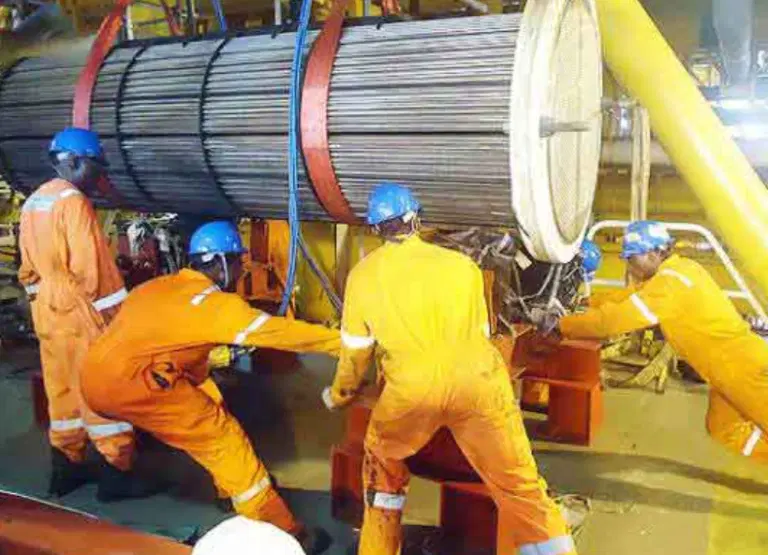
Nigeria’s 4.43 percent economic growth in the second quarter of 2026 (Q2’26) is masking a deepening industrial crisis, with manufacturing and the broader industrial sector losing ground as services increasingly dominate economic activity, the Manufacturers Association of Nigeria, MAN, has warned.
Reacting to the National Bureau of Statistics, NBS, Q2 2026 GDP, report, yesterday, MAN Director-General, Segun Ajayi-Kadir, said the 4.43 per cent year-on-year real GDP growth recorded in the quarter, up from 3.89 per cent in Q1 2026 and 4.23 percent in Q2 2025, masks deep-seated weaknesses in the real economy.
He noted that services accounted for 56.62 per cent of GDP in Q2, while the broader industrial sector contributed only 17.23 per cent and suffered a dramatic slowdown in growth.
“The growth trajectory remains disproportionately service-driven (56.62 per cent of GDP), while the broader industrial sector (17.23 per cent of GDP) is visibly suffocating under severe structural headwinds,” Ajayi-Kadir said.
He described the near-halving of industrial growth as particularly alarming, noting that it fell from 7.46 pe rcent in Q2 2025 to 3.96 per cent in Q2 2026.
According to him, the sharp deterioration was driven largely by the electricity, gas, steam and air-conditioning supply segment, which contracted by 10.63 per cent during the quarter.
MAN also noted that manufacturing’s share of real GDP plunged from 9.57 per cent in Q1 2026 to 7.72 per cent in Q2, while real manufacturing growth eased marginally from 3.29 per cent to 3.24 per cent.
Ajayi-Kadir attributed the weakening performance to the combination of high production costs, exchange-rate pressures, prohibitive interest rates and soaring electricity tariffs confronting manufacturers.
He warned that continued dependence on services and extraction would leave Nigeria vulnerable to external shocks while doing little to expand productive capacity.
“Ultimately, headline GDP growth driven by non-tradable service activities will fail to strengthen foreign exchange reserves, reduce structural inflation, or create sustainable mass industrial jobs. A nation that trades and consumes what it does not produce builds prosperity on quicksand.”
MAN said the trend portends employment fragility, an inflationary spiral, greater FX vulnerability, and erosion of industrial capacity and technological capability.
To reverse the slide, MAN called for urgent intervention in power, industrial finance, FX allocation and local procurement.
It recommended direct power purchase agreements for industrial clusters, matching grants for manufacturers investing in solar and battery systems, credit guarantees to force down lending rates, and a dedicated FX clearance window for raw materials and capital machinery, amongst others.
MAN also demanded stronger enforcement of local procurement, incentives for vehicle assembly, tax relief for domestic supply chains and legally binding implementation of the Nigeria Industrial Policy.
Ajayi-Kadir said Nigeria must urgently move from consumption-led growth to production-led growth, warning that without a stronger manufacturing base, impressive GDP numbers would remain largely disconnected from improvements in living standards and economic prosperity.
-
 Health & Wellness1 year ago
President Tinubu Directs Cut in Dialysis Cost from ₦50,000 to ₦12,000
-
 News1 year ago
PICTURE: In Lagos Couple Sentenced to 22½ Years for Cannabis Trafficking
-
 Business6 months ago
Dangote Refinery Reduces Petrol Gantry Price To ₦1,200 Per Litre
-
 Trending News1 year ago
NELFUND Disburses ₦86bn To 449,000 Beneficiaries
-
 Business2 years ago
Heritage Bank Customers’ Path to Securing ₦5m Insured Funds: A Step-By-Step Guide by NDIC”
-
Business2 years ago
Dangote; We Did Not Fix ₦600/Litre Petrol Price
-

 International News6 months ago
Indian Police Arrest Nigerian Over ₦290m Drug Haul
-

 Business6 months ago
After Plea Bargain, Court Discharges Stella Oduah of ₦2.5bn Fraud