
News
Tinubu Laments Cost Of Borrowing, Puts 2026 Debt Servicing Figure At $11.6b

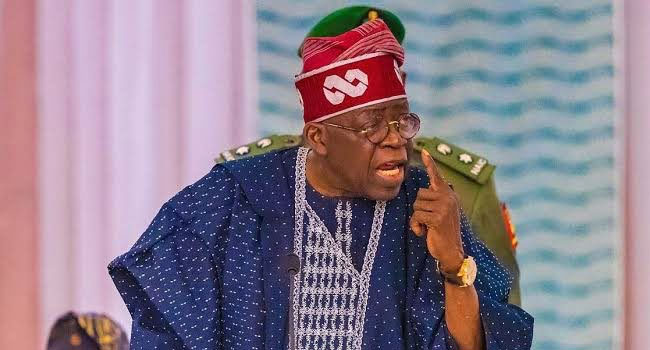
Nigeria President, Bola Hamed Tinubu has lamented the cost of borrowing by African countries, submitting that this has made it difficult for Africa manufacturers to compete meaningfully with their Europe, Asia and North America counterparts.
He said this on Wednesday ,during the Africa Forward Summit held at the Kenyatta International Convention Centre, explaining that the global financial architecture is largely skewed against Africa, leaving the continent at the receiving end of development.
Tinubu quarried”how an African manufacturer can compete with a competitor in Europe, Asia, or North America when the cost of borrowing in our nations is five to ten times higher?”
Revealing that Nigeria will spend $11.6 billion on debt servicing in 2026, Tinubu said the amount is half of the projected revenue for this year.
Contained in a statement by Special Adviser on Information and Strategy, Bayo Onanuga, the President was further quoted as saying that Nigeria would spend about $11.6 billion on debt servicing in 2026, representing nearly half of projected government revenue.
“Every single dollar that leaves our treasury to pay punitive interest rates is a dollar that did not go into our steel sector, our textile mills, our agro-processing plants, or our digital industries.
“We export raw minerals, crude oil, and agricultural commodities, and we import processed goods at a premium. This pattern is not an accident.
“It is the product of a global financial architecture that starves our industries of affordable capital, tolerates massive illicit financial flows, and imposes policy constraints that our competitors themselves never observed when they built their own industrial bases,” he said.
The summit, co-hosted by Kenyan President William Ruto and French President Emmanuel Macron, drew leaders and senior officials from more than 30 African countries.
Among those who delivered opening remarks were United Nations Secretary-General António Guterres and Chairman of the African Union Commission Mahamoud Ali Youssouf.
President Tinubu said Africa’s persistent export of raw materials and importation of finished goods at premium prices was the direct consequence of an international system structured against the continent’s industrial development.
According to him, Africa’s share of global manufacturing value remains below two per cent despite decades of political independence.
The President stressed that Nigeria had undertaken painful but necessary economic reforms through sovereign decisions rather than external impositions.
He listed the removal of fuel subsidies, unification of exchange rates, recapitalisation of the banking sector with over $3.4 billion and Nigeria’s exit from the Financial Action Task Force grey list as part of the reforms already implemented.
President Tinubu said the measures had helped deliver a declining debt-to-GDP ratio projected at 32.3 per cent in 2026, stronger external reserves of $45.5 billion and renewed investor confidence.
He, however, lamented that even reforming African economies remained trapped by an unfair financial system.
“How can an African manufacturer compete with a competitor in Europe, Asia, or North America when the cost of borrowing in our nations is five to ten times higher?
“How can we build cross-border industrial value chains under the African Continental Free Trade Area when our infrastructure projects face a financing gap deepened by the very institutions meant to bridge it?”
Declaring that the present financial system had become “an instrument of industrial disarmament for Africa,” President Tinubu said: “Nigeria is not asking for charity.
“We are demanding a financial system that intentionally enables Africa to industrialise; to process its own minerals, refine its own crude oil, manufacture its own pharmaceuticals, and compete fairly in global markets.”
The President advocated stronger regional cooperation in maritime security and blue economy development, describing ocean governance as central to Africa’s future prosperity
He pledged that Nigeria would intensify regional coordination by making its Deep Blue Project maritime intelligence infrastructure available as a shared data hub for willing Gulf of Guinea countries.
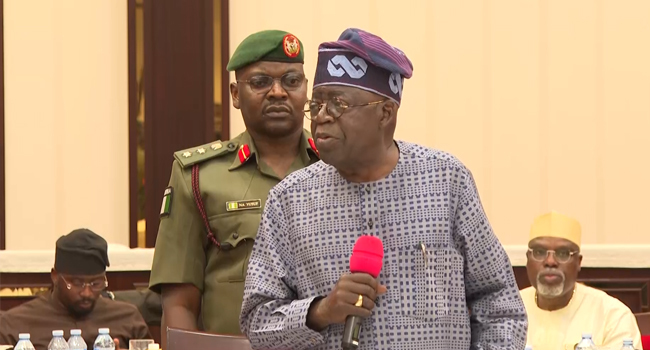
The Federal Government has inaugurated the Inter-Ministerial Committee for the commemoration of Nigeria’s 66th Independence Anniversary, unveiling a programme of activities culminating in a nationwide broadcast by President Bola Tinubu on October 1, 2026.
Head of the Information and Public Relations Department in the Office of the Secretary to the Government of the Federation OSGF, Chris Ugwuegbulam, disclosed this in a statement issued Friday in Abuja.
He said the inaugural meeting of the Committee was held on Thursday, and EWS was chaired by the Secretary to the Government of the Federation, SGF, Senator George Akume, who was represented by the Permanent Secretary, Political and Economic Affairs Office (PEAO), Mrs Bekearedebo Augusta Warrens.
Akume said the anniversary provides an opportunity for Nigerians to reflect on the contributions, sacrifices and enduring legacies of the nation’s founding fathers and heroines who worked for Nigeria’s independence from colonial rule, noting that the achievements recorded since independence were built on the foundation laid by the country’s nationalists.
He said the celebration would also allow the administration to showcase its achievements and highlight efforts being undertaken to reposition the country through its reform initiatives, against the backdrop of the socio-economic challenges confronting the nation.
The SGF, however, emphasised that activities for this year’s celebration would be low-key, urging members of the Committee to work with urgency given the limited time before October 1.
According to him, the programme of activities will commence with a World Press Conference on Thursday, September 24, 2026, followed by a Juma’at Service on Friday, September 25; a Church Service on Sunday, September 27; an Independence Day Public Lecture on Wednesday, September 30; and the nationwide broadcast by President Tinubu on Thursday, October 1, 2026.
The Committee comprises the SGF as Chairman, with members including the Minister of Finance and Coordinating Minister of the Economy, Mr Taiwo Oyedele; the Minister of Information and National Orientation, Mohammed Idris; the Minister of Interior, Dr Olubunmi Tunji-Ojo; the Minister of Foreign Affairs, Amb Bianca Odumegwu-Ojukwu; the Minister of the Federal Capital Territory Administration, Barr Nyesom Wike; the Minister of Budget and Economic Planning, Sen Abubakar Atiku Bagudu, CON; the National Security Adviser, Mallam Nuhu Ribadu; the Special Adviser to the President on Policy Coordination, Hadiza Bala Usman; and the Special Adviser to the President on Information and Strategy, Mr Bayo Onanuga.
Other members include the Special Adviser to the President on Media and Public Communications, Chief Sunday Dare; the Permanent Secretary, State House, Engr Temitope Peter Fashedemi; the Permanent Secretary, General Services Office (GSO), Dr Ibrahim Abubakar Kana, mni; the Permanent Secretary, Federal Ministry of Health, Ms Kachollom Daju, mni; the Permanent Secretary, Cabinet Affairs Office (CAO), Dr John Chidiebere Ezeamama; the Inspector-General of Police, Mr Olatunji Disu; the Director-General, Department of State Services, Mr Adeola Oluwatosin Ajayi; the Commander, Guards Brigade, Brig Gen Adebisi Olusegun Onasanya; and the Permanent Secretary, Political and Economic Affairs Office (PEAO), Mrs Bekearedebo Augusta Warrens.
According to the SGF, the Terms of Reference of the Inter-Ministerial Committee include planning, organising and executing all approved activities for the October 1, 2026 Independence Day celebration; co-opting any organisation or individual considered relevant to the successful execution of the programme; documenting the planned activities for posterity; and undertaking any other assignment required to ensure the successful implementation of the celebration.
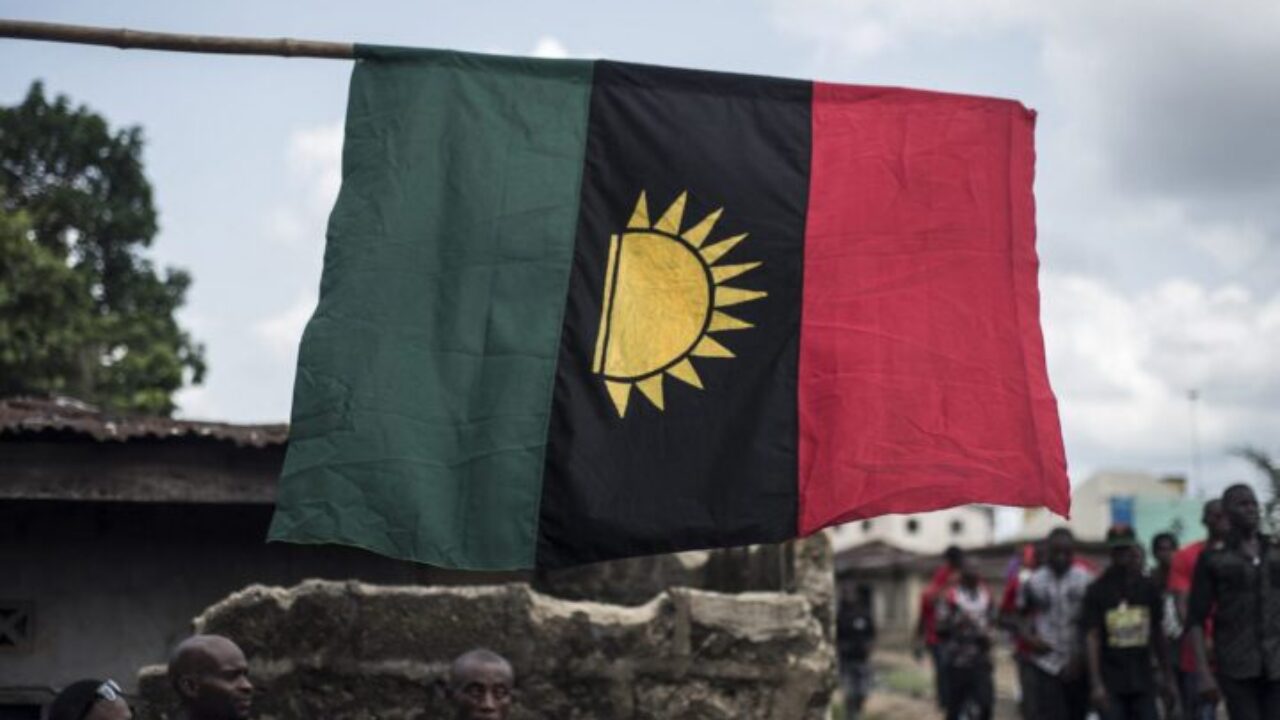
Ahead of the 2027 general election, the Indigenous People of Biafra (IPOB) has dismissed another round of balloting as incapable of resolving what it described as Nigeria’s fundamental political crisis, insisting that the country needs a referendum rather than another change of political leadership.
The separatist group said the question confronting Nigeria goes beyond who emerges president in 2027, arguing that Nigerians should first be given an opportunity to determine whether they want to continue under the existing political arrangement or negotiate a different constitutional future.
In a statement by its spokesperson, Emma Powerful, on Thursday ,IPOB said the debate should not be reduced to a choice among President Bola Tinubu and opposition figures, including Atiku Abubakar and Peter Obi.
It maintained that repeatedly electing different leaders without addressing what it called Nigeria’s foundational problems amounted to “doing same thing over and over again and expecting a different result.”
According to the group, its leader, Nnamdi Kanu, has consistently placed referendum and self-determination at the centre of the agitation. “The peoples trapped in this colonial construction named Nigeria should determine, peacefully and democratically, the future they want.”
IPOB argued that while an election determines who exercises political power for a specified period, a referendum could enable citizens to decide the constitutional framework under which they want to be governed.
IPOB said such a process should not predetermine Nigeria’s break-up, but should give the people an opportunity to choose among remaining together under a new constitution, adopting another federal arrangement or pursuing self-determination.
It drew comparisons with the United Kingdom, citing constitutional votes held in Scotland, Wales and Northern Ireland.
The group referred particularly to Scotland’s 2014 independence referendum, the 1997 devolution referendums in Scotland and Wales and the 1998 Northern Ireland vote on the Belfast Agreement.
It also cited the September 14, 2026 memorandum signed in Cardiff by leaders of Plaid Cymru, the Scottish National Party and Sinn Féin, in which the parties asserted the right of their respective peoples to determine their constitutional futures through democratic means. The Cardiff agreement and its self-determination language have been independently reported.
“If referendum can settle constitutional questions in Britain, why should the peoples of Nigeria be permanently denied the same opportunity?” IPOB asked.
The group also cited a recent symbolic vote in Piddington, Oxfordshire, as further evidence of the use of voting to express views on constitutional or territorial questions.
IPOB sought to reinforce its argument with recent comments by former President Olusegun Obasanjo on Africa’s democratic system.
At the Goodluck Jonathan Foundation Democracy Dialogue in Bauchi on August 11, Obasanjo criticised the Western liberal democratic model inherited by African countries, arguing that it lacked sufficient African context and content. His remarks were made at a forum themed, “Beyond Elections: Can Political Parties and the Judiciary Save African Democracy?”
The pro-Biafra group also cited former President Goodluck Jonathan’s previous comments on Nigeria’s historical struggle to achieve national integration following the 1914 amalgamation.
It maintained that the approach to the 2027 election presents another opportunity for the country to confront what it considers the more fundamental question of political consent rather than concentrate solely on the personalities seeking the presidency.
For IPOB, the group said, “the issue is not who governs Nigeria, but what political arrangement the people freely consent to live under.”
A 49-year old man, identified as Benjamin Segun Bright, was on Thursday arraigned before an Osogbo Magistrate Court on three-count charge of selling adulterated herbal products.
In the suit number MOS/5531/2026 between the Commissioner of Police and the suspect and others at large were said to have committed the offence on July, 20, 2026, at about 9:30am around Odo-Ola Street, Igbona area. Osogbo, Osun State, within Osogbo Magisterial District.
The Commissioner of Police was represented by Inspector Temitope Fatoba, while Bright was represented by his counsel, K.E Ngwoke.
According to the charge sheet, “Count 1: That you Benjamin Segun Bright ‘M’ and others now at large, on or
before the 20 day of July 2026, at about 9:30am at Odo-Ola Street, Igbona area. Osogbo, Osun State, in the Osogbo Magisterial District, did conspire among
yourselves to commit a felony to wit: Exposing For Sale Things Unfit for Food or Drink Being in Possession of Adulterated/Counterfeit Products and thereby committed an offence contrary to and punishable under Section 517 of the Criminal Code Cap 34 Vol.11 Laws of Osun State, 2002.
“Count 2: That you Benjamin Segun Bright ‘M’ and others now at large, on the
same date, time, place and in the aforementioned Magisterial District, did have in your possession various adulterated tea and drinks such as Bright Life Herbal Tonic (2) Kaye Bitters (3) Bright Life Herbal Teas (4) Atura Herbal Balm and (5) Dr. Fresh Super Bleach with intent to sell the same as food or drink, which said products were in a state unfit for human consumption, noxious and/or unfit for food or drink, and thereby committed an offence contrary to and punishable under Section 243(1) of the Griminal Code Cap 34 Vol.11 Laws of Osun State, 2002.
“Count 3: That you, Benjamin Segun Bright ‘M’ and others now at large, on the
same date, time, place and in the aforementioned Magisterial District, did unlawfully adulterate various tea and drinks such as Bright Life Herbal teas, Bright Life Herbal Tonic intended for sale as food or drink which is unfit for human consumption, knowing that the same were likely to be sold as food or drink, and thereby committed an offence contrary to and punishable under Section 243(2) of the Criminal Code Cap 34 Vol.Il Laws of Osun State, 2002.”
Bright, however, pleaded not guilty and his counsel, Ngwoke moved application for bail on behalf of his counsel.
Presiding Chief Magistrate, Dr Olusegun Ayilara granted the accused bail in the sum of N5 million with two sureties, one of whom must be a house owner with valid identification and ready to deposit title document.
The other surety must be responsible person three years tax clearance while the address must be verifiable by prosecutor or court clerk.
Ayilra subsequently adjourned the matter to November 30, 2026.
-
 Health & Wellness1 year ago
President Tinubu Directs Cut in Dialysis Cost from ₦50,000 to ₦12,000
-
 News1 year ago
PICTURE: In Lagos Couple Sentenced to 22½ Years for Cannabis Trafficking
-
 Business6 months ago
Dangote Refinery Reduces Petrol Gantry Price To ₦1,200 Per Litre
-
 Trending News1 year ago
NELFUND Disburses ₦86bn To 449,000 Beneficiaries
-
 Business2 years ago
Heritage Bank Customers’ Path to Securing ₦5m Insured Funds: A Step-By-Step Guide by NDIC”
-
Business2 years ago
Dangote; We Did Not Fix ₦600/Litre Petrol Price
-
 International News6 months ago
Indian Police Arrest Nigerian Over ₦290m Drug Haul
-
 Business6 months ago
After Plea Bargain, Court Discharges Stella Oduah of ₦2.5bn Fraud