
News
Tinubu Laments Cost Of Borrowing, Puts 2026 Debt Servicing Figure At $11.6b

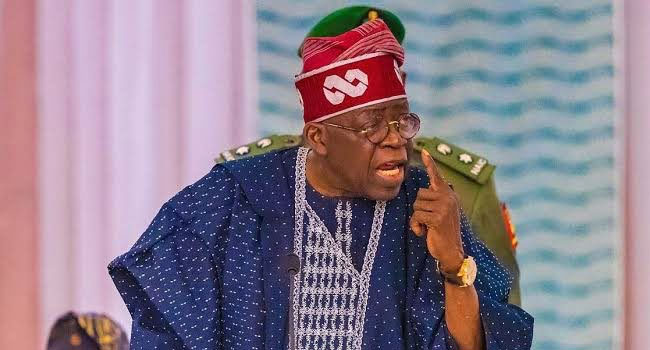
Nigeria President, Bola Hamed Tinubu has lamented the cost of borrowing by African countries, submitting that this has made it difficult for Africa manufacturers to compete meaningfully with their Europe, Asia and North America counterparts.
He said this on Wednesday ,during the Africa Forward Summit held at the Kenyatta International Convention Centre, explaining that the global financial architecture is largely skewed against Africa, leaving the continent at the receiving end of development.
Tinubu quarried”how an African manufacturer can compete with a competitor in Europe, Asia, or North America when the cost of borrowing in our nations is five to ten times higher?”
Revealing that Nigeria will spend $11.6 billion on debt servicing in 2026, Tinubu said the amount is half of the projected revenue for this year.
Contained in a statement by Special Adviser on Information and Strategy, Bayo Onanuga, the President was further quoted as saying that Nigeria would spend about $11.6 billion on debt servicing in 2026, representing nearly half of projected government revenue.
“Every single dollar that leaves our treasury to pay punitive interest rates is a dollar that did not go into our steel sector, our textile mills, our agro-processing plants, or our digital industries.
“We export raw minerals, crude oil, and agricultural commodities, and we import processed goods at a premium. This pattern is not an accident.
“It is the product of a global financial architecture that starves our industries of affordable capital, tolerates massive illicit financial flows, and imposes policy constraints that our competitors themselves never observed when they built their own industrial bases,” he said.
The summit, co-hosted by Kenyan President William Ruto and French President Emmanuel Macron, drew leaders and senior officials from more than 30 African countries.
Among those who delivered opening remarks were United Nations Secretary-General António Guterres and Chairman of the African Union Commission Mahamoud Ali Youssouf.
President Tinubu said Africa’s persistent export of raw materials and importation of finished goods at premium prices was the direct consequence of an international system structured against the continent’s industrial development.
According to him, Africa’s share of global manufacturing value remains below two per cent despite decades of political independence.
The President stressed that Nigeria had undertaken painful but necessary economic reforms through sovereign decisions rather than external impositions.
He listed the removal of fuel subsidies, unification of exchange rates, recapitalisation of the banking sector with over $3.4 billion and Nigeria’s exit from the Financial Action Task Force grey list as part of the reforms already implemented.
President Tinubu said the measures had helped deliver a declining debt-to-GDP ratio projected at 32.3 per cent in 2026, stronger external reserves of $45.5 billion and renewed investor confidence.
He, however, lamented that even reforming African economies remained trapped by an unfair financial system.
“How can an African manufacturer compete with a competitor in Europe, Asia, or North America when the cost of borrowing in our nations is five to ten times higher?
“How can we build cross-border industrial value chains under the African Continental Free Trade Area when our infrastructure projects face a financing gap deepened by the very institutions meant to bridge it?”
Declaring that the present financial system had become “an instrument of industrial disarmament for Africa,” President Tinubu said: “Nigeria is not asking for charity.
“We are demanding a financial system that intentionally enables Africa to industrialise; to process its own minerals, refine its own crude oil, manufacture its own pharmaceuticals, and compete fairly in global markets.”
The President advocated stronger regional cooperation in maritime security and blue economy development, describing ocean governance as central to Africa’s future prosperity
He pledged that Nigeria would intensify regional coordination by making its Deep Blue Project maritime intelligence infrastructure available as a shared data hub for willing Gulf of Guinea countries.
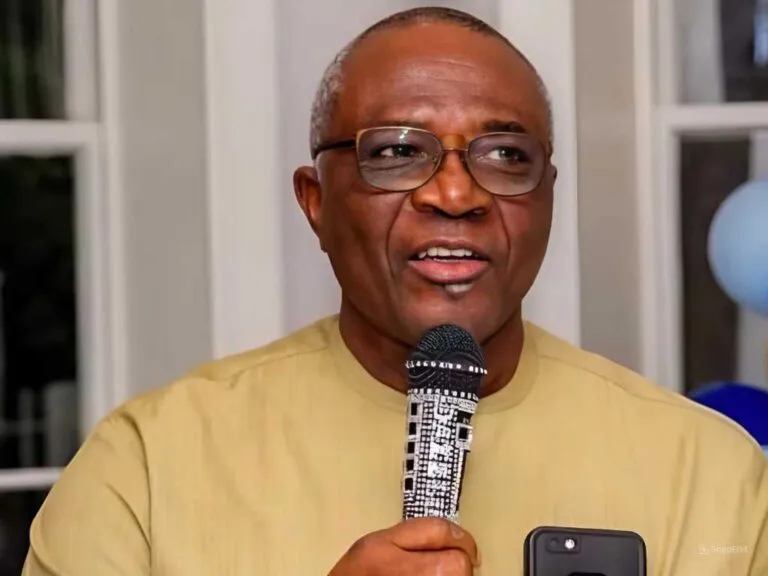
The Federal Government is working to bring down inflation to single digits, Bayo Onanuga, Presidential spokesman, has said.
Onanuga said this while announcing additional measures that the government introduced to support Nigerians amid the global fuel crisis.
Earlier on Thursday, Minister of Finance, Taiwo Oyedele, announced that fuel would be sold at a discounted rate across NNPC filling stations for 30 days.
Although the minister made it clear that the move is not an attempt to reintroduce subsidy, many Nigerians, especially on social media, described it as an attempt to subsidize the product.
In his statement, Onanuga said, “The Nigerian National Petroleum Company (NNPC) agreed today to forgo its petrol retail profit margin and sell to Nigerians at cost to cushion the impact of global crude oil price shocks and volatility on vulnerable households.
“NNPC Retail, which already sells petrol at the lowest price in the market, will offer this new deal within the next 30 days. This means if NNPC’s landing cost is N1300, it will sell fuel to Nigerians, especially commercial vehicles, at the same price.
“The company’s discount gesture, backed by President Bola Ahmed Tinubu, was among the raft of measures the Finance Minister and Coordinating Minister of the Economy, Taiwo Oyedele, announced today.
“Oyedele said he hoped other marketers would take a cue from the NNPC, as the sharp rise in crude and petrol prices is not expected to last long.
“Oyedele was emphatic that NNPC agreeing to sell at a discount must not be misinterpreted as the restoration of petrol subsidy, which ended on May 29, 2023.”
Onanuga added that “The Federal Government is also working on a comprehensive package of fiscal measures to bring inflation down to single digits sustainably in the near term.”
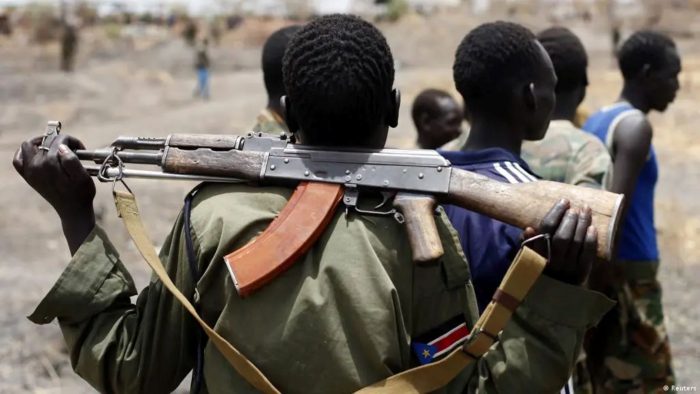
At least three people were killed and two others injured after gunmen attacked a construction site along the Sokoto-Badagry Superhighway in Maiyama Local Government Area , the victims included two security operatives and an expatriate working on the road construction project, while two civilians sustained gunshot injuries.
The incident occurred at a construction site in Gubba Village, Andarai District of Maiyama LGA, according to the Kebbi State Police Public Relations Officer, Superintendent Bashir Usman.
Usman said the attackers, suspected to be Lakurawa terrorists from the Kebbe axis of neighbouring Sokoto State, stormed the construction site and opened fire on the workers.
He said two civilians were also injured during the attack and were evacuated to a hospital for treatment.
The police spokesperson said another attack by the suspected terrorists was recorded the same day along the Birnin Malam axis but was repelled by police teams.
He added that joint security forces had responded to the incidents, with tactical teams deployed to strengthen security and prevent further attacks.
Following the attack, construction activities at the affected site were suspended as security agencies intensified surveillance and deployed additional personnel to the area.
The police assured workers on the project of continued security protection and urged them to remain calm as efforts continued to safeguard lives and property.
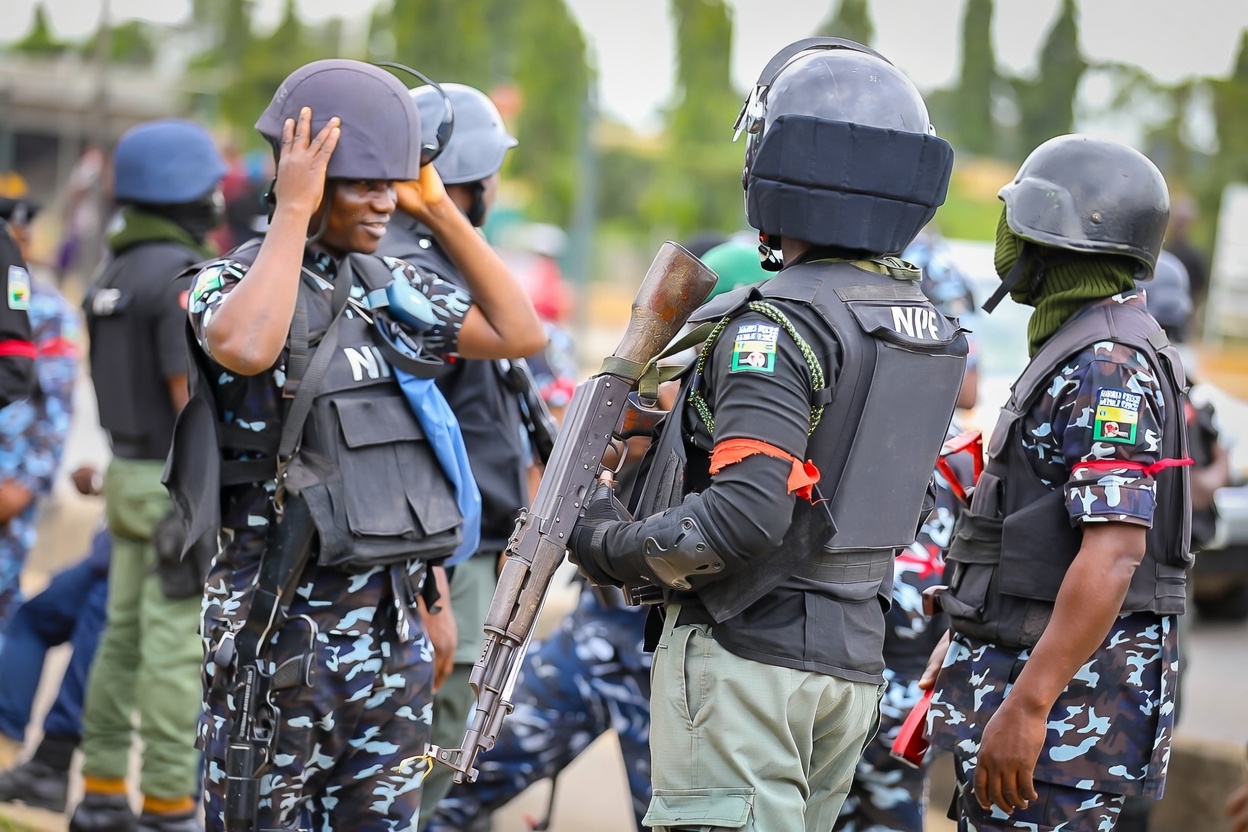
The Imo State Police Command has explained how security agencies secured the release of 21 people, including 20 prospective National Youth Service Corps (NYSC) members, who were abducted in the state.
The Commissioner of Police, Audu Bosso, said the abductors eventually released the victims after security operatives intensified efforts to locate their hideout and mounted pressure on them.
Bosso disclosed this during an interview with Channels Television on Thursday, while providing an update on the rescue operation.
According to the police commissioner, the command had no information indicating that a ransom was paid to secure the victims’ freedom.
He said security personnel had combed the forest as part of a coordinated operation, which eventually forced the kidnappers to give up the captives.
Bosso, however, said the rescued victims were still receiving attention at the office of the Department of State Services (DSS).
The 20 prospective corps members and another victim were kidnapped on October 1 while travelling from Ibadan, Oyo State, to NYSC orientation camps in Abia and Akwa Ibom states.
Following the incident, security agencies launched a joint search for the victims and the suspected kidnappers.
The police had earlier disclosed that drone surveillance helped operatives identify the location of the kidnappers’ camp.
However, security personnel could not immediately access the area after the location was reportedly found to have been planted with improvised explosive devices.
Additional operational resources were subsequently deployed as security agencies intensified their efforts to reach the abducted victims.
The incident had raised concern among relatives of the victims, particularly amid reports that the kidnappers were demanding ₦50 million for each person in their custody.
Police authorities had previously announced the rescue of 10 victims while the search for the remaining abductees continued.
The remaining victims were eventually released from the Amakohia-Ubi forest in Owerri West Local Government Area of Imo State on Wednesday following the coordinated security operation.
The development brought an end to the ordeal of the 21 abducted persons, who were subsequently taken to safety and placed under medical attention in Owerri.
Imo State Governor Hope Uzodimma commended the security agencies involved in the operation.
In a statement personally signed by him, the governor also praised the cooperation between the Imo and Oyo state governments, saying their joint efforts contributed to the release of the abducted persons.
-
 Health & Wellness1 year ago
President Tinubu Directs Cut in Dialysis Cost from ₦50,000 to ₦12,000
-
News2 years ago
CBN Debunks Fake Circular on New ₦5,000 and ₦10,000 Notes
-

 International News6 months ago
Indian Police Arrest Nigerian Over ₦290m Drug Haul
-
 Business7 months ago
Dangote Refinery Reduces Petrol Gantry Price To ₦1,200 Per Litre
-
 Business7 months ago
After Plea Bargain, Court Discharges Stella Oduah of ₦2.5bn Fraud
-
Business2 years ago
Dangote; We Did Not Fix ₦600/Litre Petrol Price
-
 Trending News1 year ago
NELFUND Disburses ₦86bn To 449,000 Beneficiaries
-
 Opinion2 years ago
Championing the People’s Voice: Obasa’s Dedication to Grassroots Representation By Dave Agboola⁰