
News
JUNE 12: Insights from President Tinubu’s Address on Democracy Day: 10 Key Points to Remember

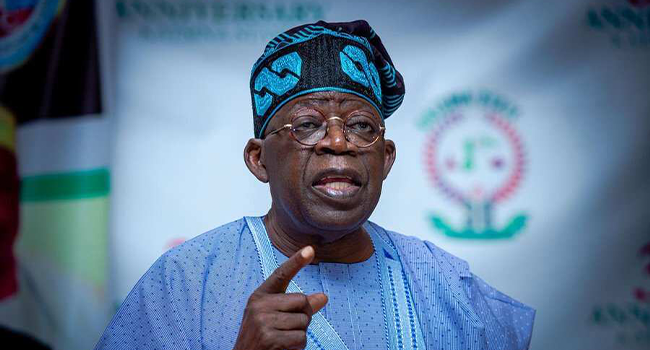
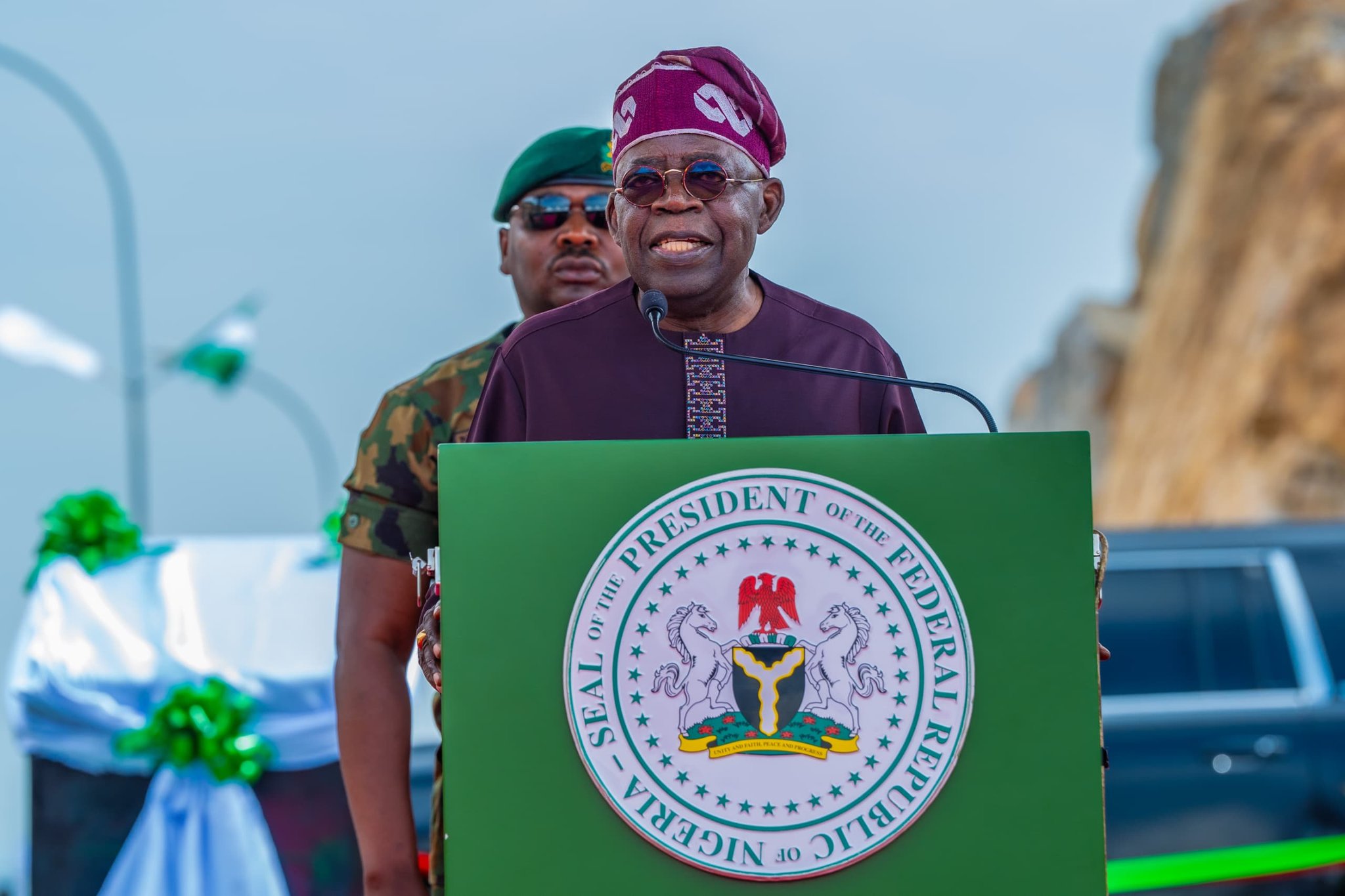
President Bola on Wednesday today charged leaders to recommit to the values of inclusivity, accountability and transparency in the bid to guarantee a democracy that flourishes and endures for generations yet unborn.
In his speech, he reflected on the nation’s journey from the struggles of military rule to becoming Africa’s most populous democracy.
However, Here are the 10 major takeaways from President Tinubu’s Democracy Day address:
1. He paid tribute to the heroes of democratic movement
President Bola on Wednesday charged leaders to recommit to the values of inclusivity, accountability and transparency in the bid to guarantee a democracy that flourishes and endures for generations yet unborn.
In his speech, he reflected on the nation’s journey from the struggles of military rule to becoming Africa’s most populous democracy.
Here are the major takeaways from President Tinubu’s Democracy Day address:
1. He paid tribute to the heroes of democratic movement
Tinubu pays tribute to the individuals who sacrificed their lives for the nation’s democratic struggle, including MKO Abiola, Kudirat Abiola, General Shehu Musa Yar’Adua, and others.
According to the President, Nigeria lost great heroes and heroines along the way. In this struggle, the winner of the June 12, 1993 presidential election, Chief MKO Abiola, the most significant symbol of our democratic struggle, his wife, Kudirat, General Shehu Musa Yar’Adua and Pa Alfred Rewane, among others sacrificed their very lives.
He also honoured the memories of Chief Anthony Enahoro, Chief Abraham Adesanya, Commodore Dan Suleiman, Chief Arthur Nwankwo, Chief Chukwuemeka Ezeife, Admiral Ndubuisi Kanu, Chief Frank Kokori, Chief Bola Ige, Chief Adekunle Ajasin, Chief Ganiyu Dawodu, Chief Ayo Fasanmi, Chief Gani Fawehinmi, Chief Olabiyi Durojaiye, Dr. Beko Ransome-Kuti, Chima Ubani, and others who have transited to the higher realm.
2. He acknowledged the sacrifices of some living heroes
Tinubu praised the sacrifices of General Alani Akinrinade, Professor Bolaji Akinyemi, Professor Wole Soyinka, Chief Ralph Obioha, Chief Cornelius Adebayo, among many others, should never be forgotten. For at least six years, they bore the pains and difficulties of life in exile.
He said while the exiled pro-democracy activists kept the fire burning, their comrades at home sustained the pressure on the military brass hats. Among the latter are Olisa Agbakoba, Femi Falana, Abdul Oroh, Senator Shehu Sani, Governor Uba Sani, Chief Olu Falae, and other National Democratic Coalition leaders such as Chief Ayo Adebanjo and Chief Ayo Opadokun.
3. Role of Activists and Journalists:
Tinubu acknowledged the contributions of pro-democracy activists, journalists, and media establishments in fighting against military dictatorship.
He said Nigeria could not have won the battle against military dictatorship without the irrepressible Nigerian journalists who mounted the barricades along with the pro-democracy activists.
5. Democracy as a way of life:
Tinubu emphasized that democracy is more than just holding elections; it is a way of life that includes freedom of speech, liberty, and peaceful transitions of power.
He stated that the nation exited the yoke of military rule in 1999 to become the most populous democracy on African soil, the beacon of democratic self-determination for the black race and one of the largest democracies in the world.
He maintained that this change stands as a pivotal moment in human history. From this change, we shall never turn, nor shall the annals of mankind’s progress forget the sublime meaning of this great moment.
6. Commitment to Democracy:
Tinubu vowed to protect the rights, freedoms, and liberties of Nigerian citizens and pledges to cement democracy as the nation’s way of life.
He noted that Democracy is neither a foreign nor abstract concept devoid of real-life meaning for us. Neither can they afford to reduce or minimalise it to being nothing but the mere holding of periodic elections where one candidate and party outdo another.
7. Economic Reforms:
Tinubu acknowledged the economic challenges facing Nigeria and highlights ongoing reforms aimed at creating a stronger economic foundation for future growth.
He stated that he understands the economic difficulties Nigeria face as a nation.
He said the country’s economy has been in desperate need of reform for decades. It has been unbalanced because it was built on the flawed foundation of over-reliance on revenues from the exploitation of oil.
He confirmed that reforms they have initiated are intended to create a stronger, better foundation for future growth.
8. Labour Relations:
Tinubu discussed negotiations with organized labour on a new national minimum wage, emphasizing the importance of cooperation over conflict in resolving disputes.
He noted that no one was arrested or threatened. Instead, the labour leadership was invited to break bread and negotiate toward a good-faith resolution.
9. Principled Leadership:
He underscored the importance of reasoned discussion and principled compromise in democratic governance.
Tinubu insists that he takes on this vital task without fear or favour and he commits himself to this work until they have built a Nigeria where no man is oppressed.
10. Call to Action:
Tinubu urged Nigerians to embrace the challenges of the future and to continue moving.
News
Corruption: EFCC Boss Exposes Public Officers ” They Assume Office With Empty Account But Own Millions Of Dollars In 3 Years”
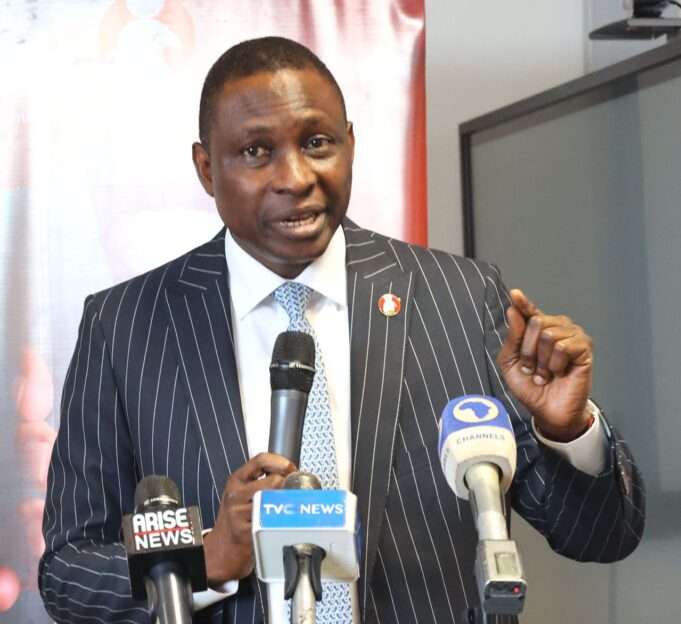
The Chairman of the Economic and Financial Crimes Commission, EFCC, Ola Olukoyede, says Nigerian politicians steal public funds every minute.
He spoke in Abuja at the 80th birthday celebration of former Attorney-General, Kanu Agabi.
Olukoyede said the anti-graft agency receives over 20,000 corruption petitions every year, adding that most of the cases are shocking.
“I receive over 20,000 petitions in a year in respect to public corruption, all terrible. What is going on? Like every minute, public officers take money, and if you go through some of our case files you will weep.
“The way people take national resources and Nigerians are victims of these fraudulent activities. And we must come together for once in our lifetime and say no to the activities of some of our leaders,” Olukoyede said.
The EFCC boss said some public officers resume office with less than N100,000 in their account, but after three years, EFCC will trace millions of dollars to them.
He said some of them build hundreds of houses while still in office, noting that corruption is killing Nigeria.
Olukoyede said public officers must explain what they did in office, stressing that accountability and transparency must guide public service.
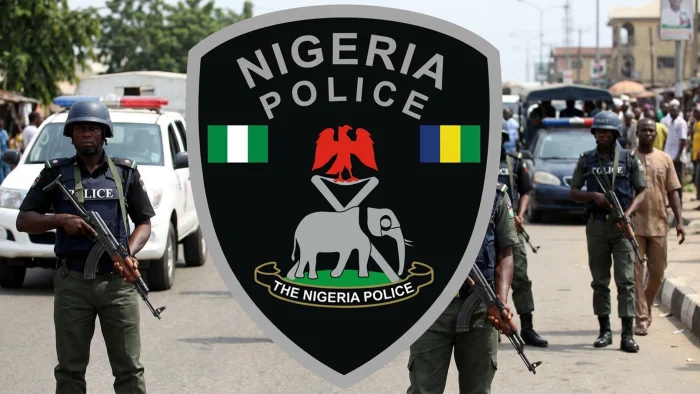
The Ogun State Police Command says, it has arrested 43-year-old Edebiri Temitope, who allegedly beat his neighbour to death with a bamboo stick for hugging his son in Bluestone Treasure Estate, Mowe-Ofada area of Ogun State.
The deceased, 38 years old Micheal Oje, a Guidance and Counselling graduate of Benue State University, was accused of hugging and playing rough with the 3-year-old child .
According to Peter Adum, a younger cousin to the deceased, Micheal had just returned from work and the child who lived with them on the same street, ran towards him and hugged him.
He stated that Michael hugged the boy and threw him playfully in the air and caught him, before going into his room to sleep.
Adum said, “While he was sleeping, Adebiri, the father of the boy, came outside and knocked on his door. When Mike came out, the man accused him of playing roughly with his child. Mike explained that he had only hugged the boy and lifted him into the air.
“That was how the man then started slapping Mike. He picked up a bamboo stick from the ground and hit him about three times. Mike fell and died on the spot.”
The suspect was reported to have gone into hiding with his family.
However, the Police Public Relations Officer, DSP Oluseyi Babaseyi on Friday, said the suspect had been arrested and transferred to the State CID, Eleweran, Abeokuta, for further investigation.
“Edebiri Temitope, ‘M’, aged 43 years, who was earlier reported to be at large, has been arrested in connection with the death of Oje Michael Eje, ‘M’.
“The suspect has been transferred to the State CID, Eleweran, Abeokuta, for further investigation,” Babaseyi stated.
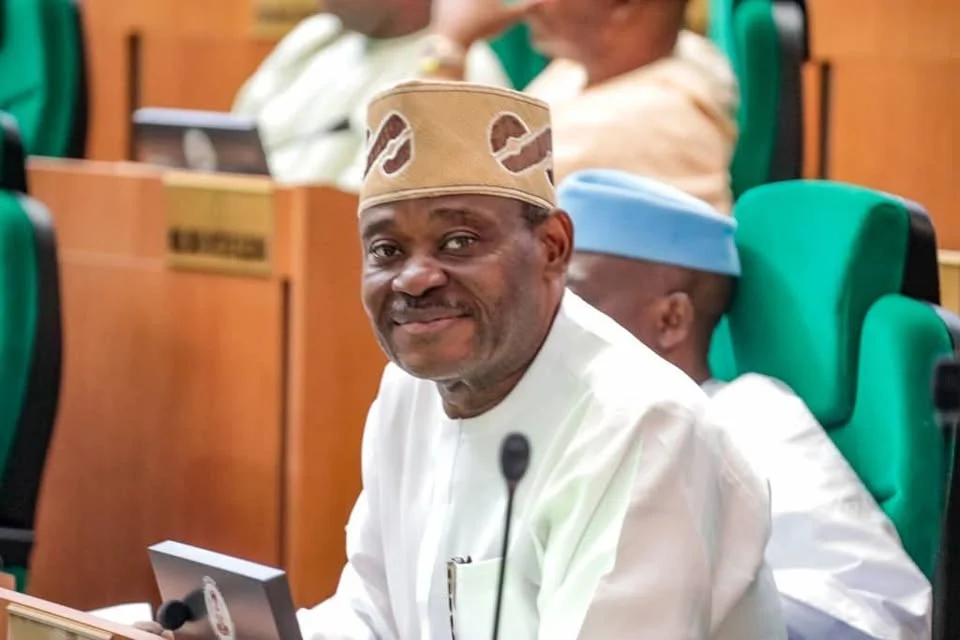
Jimoh Ibrahim, Nigeria’s permanent representative to the United Nations, has defended President Bola Tinubu’s absence at the 81st session of the United Nations General Assembly (UNGA).
Ibrahim spoke on a Television program, on Thursday, noting that Tinubu cannot attend the event just to deliver a 15-minute speech.
Mohammed Idris, minister of information and national orientation, had said Tinubu would not attend the 81st UNGA because he is currently on annual leave.
Idris said Tinubu had mandated Vice-President Kashim Shettima to lead Nigeria’s delegation to the high-level session in New York, United States.
The minister’s comment followed criticism from former Vice-President Atiku Abubakar, the presidential candidate of the African Democratic Congress (ADC), who faulted the president’s absence at the gathering.
Atiku had questioned Tinubu’s decision to stay away from the general debate for the third consecutive year, saying the president’s “persistent avoidance” of the United States raises questions.
The former vice-president also questioned why Tinubu did not show up after Ibrahim reportedly said arrangements had been made for the president to sit close to US President Donald Trump at the general assembly.
Atiku further linked Tinubu’s absence to his past legal history in the US and asked: “Is Tinubu afraid that he could become Donald Trump’s next Nicolás Maduro?”
However, Ibrahim said Tinubu’s absence should not be taken as a big deal because many presidents of other countries did not attend the gathering in person.
“What do you think President Tinubu is coming to do?” he queried.
“The presidents are allowed in the UN under UNGA for 15 minutes. Is that the reason why he should board the flight and be here for 15 minutes?”
He said Shettima had, in Tinubu’s absence, attended high-level meetings and met with Nigerians in the diaspora, describing the engagement as ideal.
“This is the kind of engagement we want, not that the president will just be inside the plane and be coming to UNGA for a 15-minute speech. What is the meaning of that? We don’t want that,” Ibrahim said.
Ibrahim, who was appointed chairman of the budget and administration committee for UNGA’s Fifth Committee in June, said 60 percent of those on the speaking list at the gathering were foreign affairs ministers and vice-presidents.
“As permanent representative of Nigeria to the United Nations, if I’m to do a memo to the president at the last minute of boarding the plane to go to UNGA, do you think I will recommend the president to be on his way when 60 percent of the speaking list of 193 countries are ministers and vice-presidents representing their countries?” he queried.
“There are exigencies. If the speaking list is 90 presidents, maybe of course, the president can come. I don’t think the president should come and be where his equivalent is a minister of foreign affairs of another country.”
The envoy also said the country occupied a prominent position at UNGA, arguing that Tinubu’s physical presence was not necessary.
“I promise that Nigeria will be on the front-row seat at UNGA. Are we not on the front-row seat? Nigeria is sitting at number eight seat in the UN under UNGA and America is at number 26th seat at the back of Nigeria’s seat,” he said.
“And you know, Donald Trump didn’t go to sit on his own seat. He came in to give a lecture at the UNGA and went back from there.
“Are you saying that Nigeria is making the impact it is supposed to make globally? Must we have President Tinubu here before we can make the impact?”
Speaking on what the composition of the speaking list implied, Ibrahim said reforms were being planned to increase the impact of the organisation on member-states.
“That is the reform we are taking on effective from October 1st. When I chair the budget and administrative committee, 90 percent of UN resources is spent at the headquarters, while 10 percent goes to member-states,” he said.
“So legitimacy is reduced because member-states are not seeing impacts of the United Nations. We are going to reverse that.”
-
 Health & Wellness1 year ago
President Tinubu Directs Cut in Dialysis Cost from ₦50,000 to ₦12,000
-
 News1 year ago
PICTURE: In Lagos Couple Sentenced to 22½ Years for Cannabis Trafficking
-
 Business6 months ago
Dangote Refinery Reduces Petrol Gantry Price To ₦1,200 Per Litre
-
Business2 years ago
Dangote; We Did Not Fix ₦600/Litre Petrol Price
-
 Business2 years ago
Heritage Bank Customers’ Path to Securing ₦5m Insured Funds: A Step-By-Step Guide by NDIC”
-
 International News6 months ago
Indian Police Arrest Nigerian Over ₦290m Drug Haul
-
 Trending News1 year ago
NELFUND Disburses ₦86bn To 449,000 Beneficiaries
-
 Business6 months ago
After Plea Bargain, Court Discharges Stella Oduah of ₦2.5bn Fraud