
Business
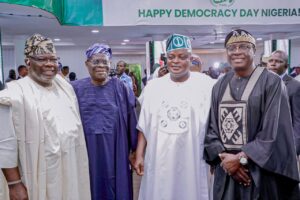
PICTURES : Obasa, Fashola, Foreign Diplomats Advocate for Nigeria’s Democracy Protection

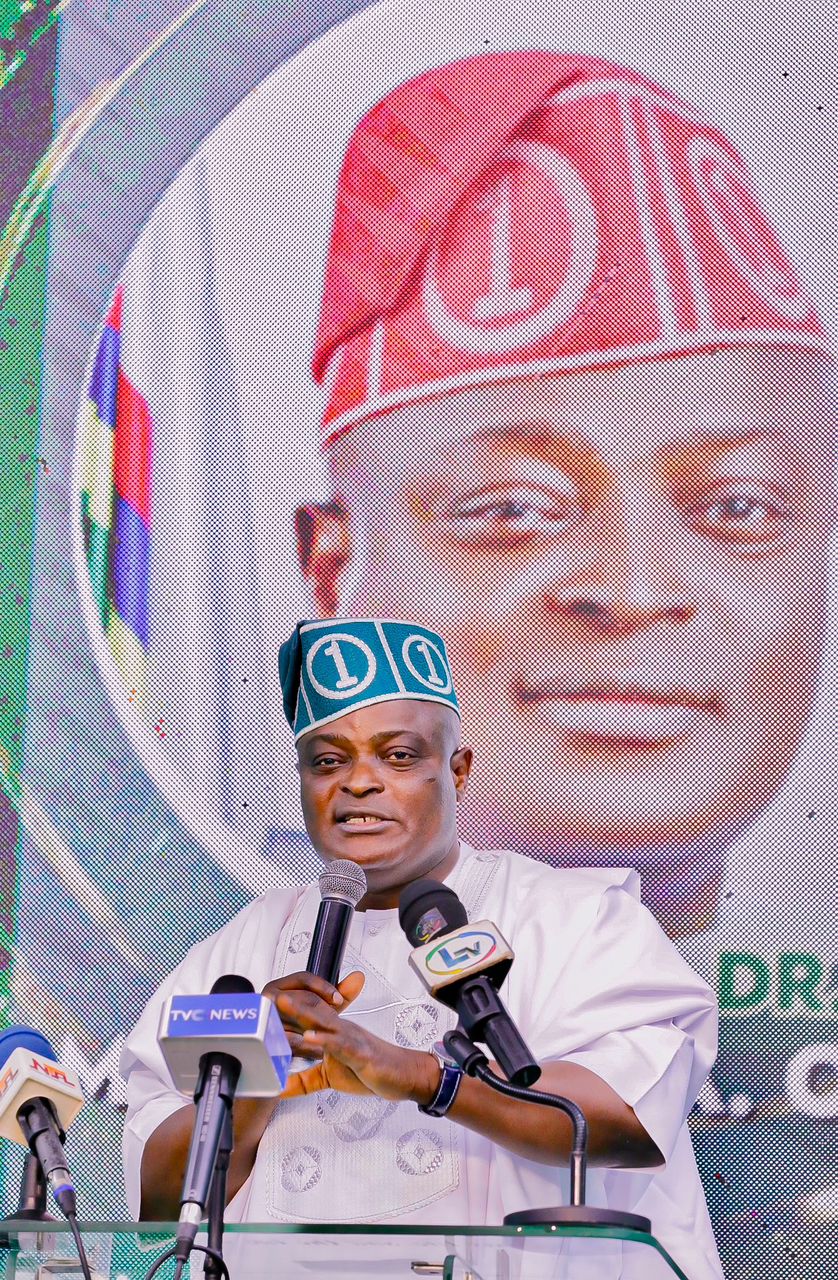
Despite its challenges, democracy in Nigeria must be protected by every citizen, speakers at an event to commemorate the country’s 25 years of unbroken democratic governance organized by the Lagos State House of Assembly have warned.
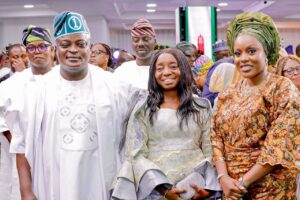
Speaker of the House, Rt. Hon. Mudashiru Obasa, former governor of Lagos, Mr. Babatunde Fashola, foreign diplomats, and business experts argued on Wednesday evening that democracy has benefitted the Nigeria since 1999 when the country began its fourth republic.
Others who spoke at the event include Prof. Eghosa Osaghae of the Nigerian Institute of International Affairs, Dr. Muda Yusuf, former chairman of the Lagos Chamber of Commerce, and Mrs. Abike Dabiri-Erewa, the Nigerians in Diaspora Commission (NiDCOM).
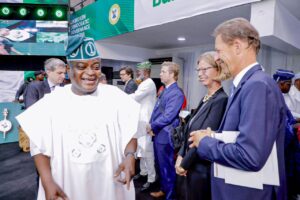
In a statement made available to thecolmn.ng by Eromosele Ebhomele the Chief Press Secretary to the Speaker of the Lagos State House of Assembly, Obasa said Nigeria deserved to celebrate because in the last 25 years, the country has successfully transferred power from one administration to another, uphold the principles of representation, accountability, and the rule of law.

“Our democracy has endured despite challenges and setbacks. We have faced elections, protests, and debates, but our commitment to democracy has remained unwavering.
“We have demonstrated that democracy is not a destination but a journey, and we are proud to be on this path. We must continue to guard it jealously, for it is the foundation upon which the fabric of our nation’s progress is built.
“We must continue to promote democratic values, protect human rights, and ensure that our democracy remains perpetually unbroken,” the Speaker said while recalling the struggle and sacrifice made by well-meaning Nigerians during the struggle for democracy.
Obasa noted the roles so far played by the state legislature in the scheme of Nigeria’s progress to include promotion of good governance, accountability, and the rule of law as well as passage of bills that have transformed the lives of citizens.
“As a transformative and people-centric legislature, the House of Assembly has delivered impactful laws and representation, reforming justice, social welfare, and security systems, and driving tax reforms, infrastructural development, and transportation improvements.
“These have attracted significant attention from local and international admirers, leading to frequent visits from international representatives and private citizens seeking to learn from us, exchange ideas, conduct research, or participate in exchange programmes,” the Speaker said.
He urged Nigerians to continue to support state Houses of Assembly to further deepen democratic values and bring governance closer to the grassroots.
FASHOLA
The former governor of Lagos said 25 years of democracy has provided an opportunity for effective representation of the people as well as freedom to make laws.
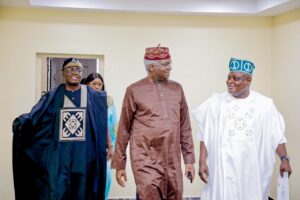
Urging Nigerians to hold on to democracy very jealously, he argued that the federal system practised in Nigeria remains important to the country’s growth.
“For those who are understandably impatient with democracy, I hear them. It can be a tedious way to govern. There is no better way to order our affairs. I will not trade the liberties it offers for anything else.
“We are a federal state and let me tell you why. We have multi-level legislative houses from the local councils to the National Assembly. We have multi-level judicial system.
“We also find different levels of government exercising different forms of responsibilities and this you can find in the exclusive and concurrent lists and, of course, what you can’t find in those two lists, is the residual authority that resides in the states. For example, the Senate cannot make laws on landlords and tenants laws and rent control,” he said.
Speaking about some changes that have happened in Nigeria in the last 25 years, he recalled the ‘famous resource control case’ which originated from Lagos and was resolved through the constitution making some states earn better now. He also recalled the matter relating to local government creation during the administration of Asiwaju Tinubu as governor.
“As at 1999, if you wanted to build a house in Lagos, you would go and get permit in Abuja. It was the Lagos State government that went to court to stop it,” he said adding that the cases were fought and won because of the quest for a perfect union.
Urging support for President Tinubu’s administration, expressed optimism that wages and salaries and issues with the creation of state police would become reality.
FOREIGN DIPLOMATS
The Consul General of the French embassy in Lagos, Laurent Favier, while congratulating Nigeria, said “democracy is not a state of perfection but something people have to fight for at all times. It is a political structure that must be deepened.”
He expressed satisfaction with how democracy in Nigeria has ensured freedom just as he urged the country not to relent in making citizens happy.
On the other hand, Weert Börner, Consul General of Germany, said his country with 16 states, practises same federal system as Nigeria adding that this results in healthy competitions.
He affirmed that Nigerians enjoy freedom of opinions, one of the characteristics of democracy.
He commended Nigeria over its Electricity Act which gives states power to generate electricity noting that Germany followed same part 25 years ago resulting in about two million electricity producers in the country.
Consul General of the Embassy of Italy, Ugo Boni assured that the government of his country will continue to be a trustworthy companion of Nigeria while the British Deputy High Commissioner, Lagos, Jonny Baxter, said: “In these challenging times, it is important that we support each other in our shared commitment to democracy.
“Nigeria’s democratic resilience and significance in West Africa serves as an example to other nations seeking to strengthen and protect their own democracies.”
“The UK looks forward to partnering with Lagos and Nigeria in the next 25 years and more.”
Michael Ervin, political and economic section chief at the US Consulate General, Lagos, said Nigeria is an example of how diverse people can unite and ensure freedom for all.
He congratulated Lagos Assembly and noted that Lagos opens the door to the development of Nigeria.


The Lagos International Trade Fair Complex Management Board (LITFCMB) has condemned the use of its facility for the production of counterfeit products and other illegal activities, pledging to work with regulatory and law enforcement agencies to rid the complex of such practice
The board also commended the National Agency for Food and Drug Administration and Control (NAFDAC) for its recent enforcement operation, which led to the arrest of two persons allegedly linked to the illegal revalidation of expired drinks and the production of counterfeit consumables within the complex.
In a statement issued on Wednesday, the Executive Director and Chief Executive Officer of LITFCMB, Veronica Safiya Ndanusa, said the activities were contrary to the board’s commitment to promoting legitimate trade and ethical business practices.
She disclosed that relevant authorities had commenced investigations to establish the facts surrounding the incident and identify measures to prevent a recurrence.
Ndanusa warned that individuals and businesses found culpable of engaging in activities that endanger public health or undermine the integrity of local manufacturing would face the full weight of the law.
“As a body rooted in the principles of ethical business practices, transparency and genuine trade, we strongly condemn any activity that threatens public safety or brings the reputation of the Lagos International Trade Fair Complex Management Board into disrepute,” she said.
“Our facility exists to provide a conducive environment for legitimate businesses to thrive, not to serve as a breeding ground for the production or distribution of counterfeit and substandard products.”
The board chief assured members of the public that the management would collaborate with relevant regulatory and law enforcement agencies to ensure that the complex remained free of illegal activities.
She also urged traders and business operators within the facility to comply with established standards, stressing that the pursuit of profit must never come at the expense of consumers’ health and safety.
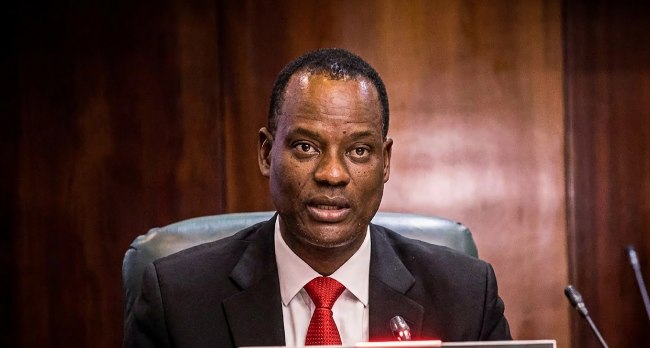
Minister of Finance and Coordinating Minister of the Economy, Taiwo Oyedele, has cautioned governments against introducing new taxes or increasing existing tax burdens on vulnerable citizens and productive sectors, warning that such measures could deepen economic hardship.
Oyedele spoke on the sidelines of the 2026 annual meetings of the International Monetary Fund (IMF) and World Bank in Bangkok, Thailand, where he presented a communiqué on behalf of the Intergovernmental Group of Twenty-Four (G24), which he chairs.
“This is the wrong time to impose new taxes or increase the burden of tax, particularly on the vulnerable population and productive sectors of the economy,” he said.
Responding to questions on how developing countries could reduce debt-servicing costs without cutting essential public spending,report quoted Oyedele as urging governments to identify waste, find savings and improve revenue collection before placing additional financial pressure on citizens and businesses.
He said borrowing remained necessary to finance economic growth but stressed that governments must ensure that debt supports job creation and inclusive development.
“Borrowing and debt financing is a necessary condition for growth, and every country emerging, developing must be able to apply debt financing in a way that is overall of positive impact, particularly to stimulate job-rich and inclusive growth,” he said.
The minister also called for available public funds to be prioritised for essential services, including healthcare and education, while private capital could help finance other areas of investment.
On the choice between taxation and borrowing, Oyedele said both options carried consequences and should be considered in the context of their impact on household welfare.
“If you collect taxes, you raise the money now, and that itself has a lot of trade-offs. What taxes are you collecting? You collect taxes from the most vulnerable, and this will deprive them of money to provide food, health, education,” he said.
He argued that excessive taxation could leave low-income households with less money for basic needs, while borrowing also carried future obligations.
“Debt is future taxes, so it’s not one or the other. It’s to strike a balance, bearing in mind ultimately that the essence of tax and of debts is to cater for the people,” Oyedele said.in the report.
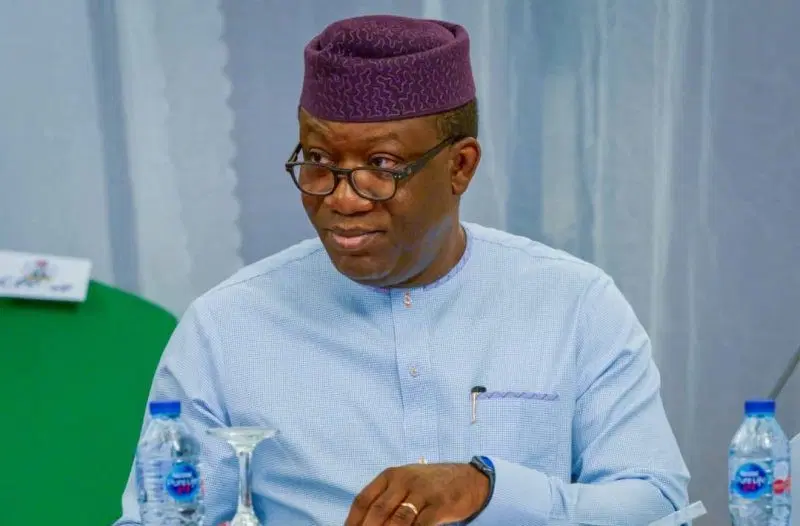
Former Governor of Ekiti State and ex-Minister of Mines and Steel Development, Dr Kayode Fayemi, has warned the United States against slipping into isolationism in its engagement with Africa, insisting that Nigeria remains a must-have strategic partner in the evolving global order.
Fayemi maintained this position in Lagos while speaking as a panelist at the Nigeria Moment, a Nigeria–United States Strategic Dialogue organised by the American Business Council in collaboration with the Heritage Foundation.
In his presentation, which focused on why Nigeria is a must-have partner in the changing world order, Fayemi,former chairman of the Nigeria Governors’ Forum (NGF) stressed the need for a more holistic relationship between both countries grounded in transparency, mutual benefit and shared prosperity.
He insisted that Nigeria must be treated as a strategic partner in the emerging world order.
“While welcoming the growing American interest in Nigeria’s vast mineral endowment, Fayemi warned that the partnership must go beyond resource extraction.
“Nigeria must be engaged as a strategic actor and a co-creator in shaping the future of global energy and resource governance, rather than as a testing ground for experiments. A partnership built on mutual respect, shared interests and long-term cooperation offers the strongest foundation for an enduring relationship between Nigeria and the United States,” Fayemi said.
Describing the engagement as a pleasure, Fayemi said the dialogue brought together a distinguished group of policymakers, business leaders and strategic thinkers to reflect on the future of Nigeria-US relations.
He commended the convener of the dialogue, Mr Ayo Otuyalo,for an excellent convening and for bringing together such high-level participants for the important strategic conversation.
The conference featured Governor Babajide Sanwo-Olu of Lagos State as keynote speaker, alongside senior representatives of the Federal Government, including the Minister of Industry, Trade and Investment, Dr Jumoke Oduwole; Minister of Power,
Also st the event were : Engr Joseph Tegbe; Minister of Solid Minerals Development, Mr Dele Alake, represented by Engr Simon Nkom; and the Head of the Nigerian Upstream Petroleum Regulatory Commission (NUPRC), Mrs Oritsemeyinwa Eyesan among others.
-
 Health & Wellness1 year ago
President Tinubu Directs Cut in Dialysis Cost from ₦50,000 to ₦12,000
-
News2 years ago
CBN Debunks Fake Circular on New ₦5,000 and ₦10,000 Notes
-

 Business7 months ago
Dangote Refinery Reduces Petrol Gantry Price To ₦1,200 Per Litre
-
 International News7 months ago
Indian Police Arrest Nigerian Over ₦290m Drug Haul
-
 Business7 months ago
After Plea Bargain, Court Discharges Stella Oduah of ₦2.5bn Fraud
-
Business2 years ago
Dangote; We Did Not Fix ₦600/Litre Petrol Price
-
 Trending News1 year ago
NELFUND Disburses ₦86bn To 449,000 Beneficiaries
-
 Opinion2 years ago
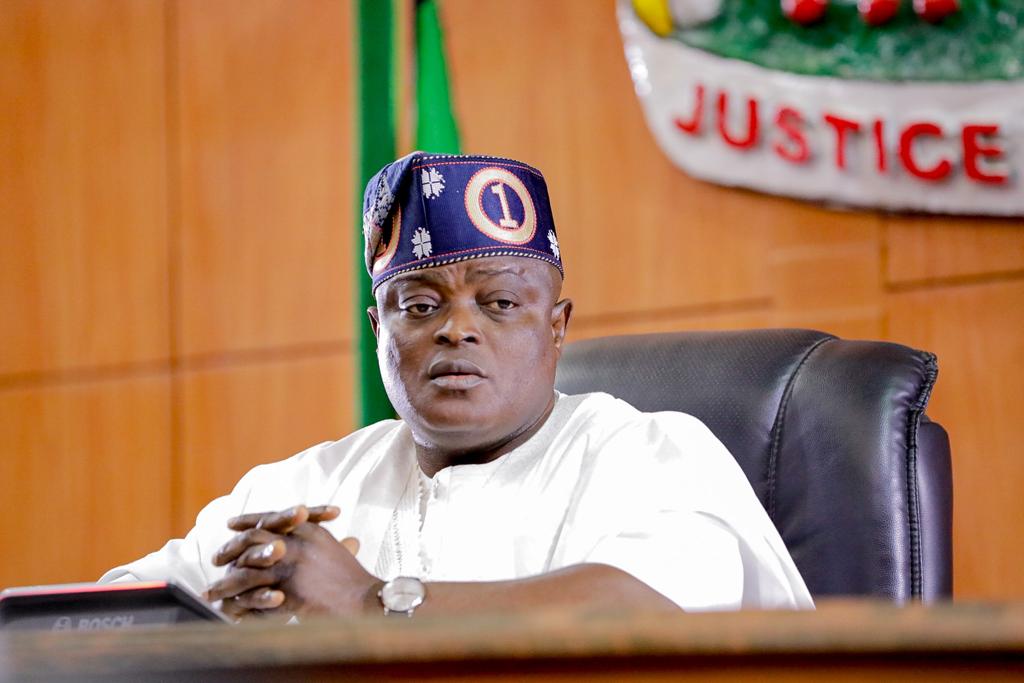
Championing the People’s Voice: Obasa’s Dedication to Grassroots Representation By Dave Agboola⁰