
International News
Mongolians Vote As Anger Grows Over Corruption And Economy

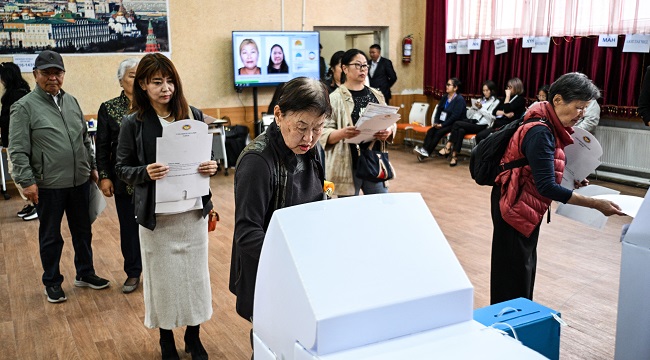
Mongolians began voting in parliamentary elections on Friday, with the ruling party widely expected to win despite deepening public anger over corruption and the state of the economy.
Voters across the vast, sparsely populated nation of 3.4 million — sandwiched between authoritarian China and Russia — are exercising their democratic rights to elect 126 members of the State Great Khural.
Polls opened at 7 am local time (2300 GMT Thursday), AFP reporters saw in the capital Ulaanbaatar and at a remote polling station. They close at 10 pm.
At a polling station in rural Sergelen, an administrative division over an hour’s drive from the capital, election workers in traditional garb stood for the national anthem ahead of the doors being opened to the public.
Voters tricked into the voting station, some taking selfies after casting their ballots, AFP reporters saw.
Among them was Batsaikan Battseren, a 45-year-old local community leader representing the ruling party who said he was urging people to come out to the polls.
“Our area’s average participation is 60 percent,” the former herder said, dressed head to toe in a traditional Mongolian deel.
But, he explained, “young people from 18 to 30 years old don’t go to vote”.
“In previous elections, I would usually bring the youngsters who have just turned 18 to let them vote, but I couldn’t this year,” he said.
Public frustration
Analysts expect the ruling Mongolian People’s Party (MPP), led by Prime Minister Luvsannamsrain Oyun-Erdene, to retain the majority it has enjoyed since 2016 and govern the resource-rich country for another four years.
Yet there is deep public frustration over endemic corruption, as well as the high cost of living and lack of opportunities for young people who make up almost two-thirds of the population.
There is also a widespread view that the proceeds of a decade-long boom in coal mining that fuelled double-digit growth are being hoarded by a wealthy elite.
Preliminary results are expected to come within a few hours despite Mongolia’s vast size, thanks to automated vote counting.
The streets of Ulaanbaatar — home to almost half the population — have been decked out with colourful campaign posters touting candidates from across the political spectrum, from populist businessmen to nationalists, environmentalists and socialists.
And, for the first time in almost a decade, parties are required by law to ensure that 30 percent of their candidates are women in a country where politics is dominated by men.
Young voters unimpressed
Younger voters are not convinced and the failure of the main opposition Democratic Party to provide a credible alternative has fuelled the rise of minor parties.
The centre-right anti-corruption HUN party is expected to increase its parliamentary representation through its social-media savvy, professional candidates who enjoy significant support among the urban middle classes.
“I think young people are more aware of the activities of political parties,” said Norovbanzad Ganbat, a 24-year-old IT worker.
“They can see what the MPP has done in the last four years,” she said. “That’s why young people don’t vote for this party.”
Taking to the stage at Wednesday’s rally, Oyun-Erdene blamed his political opponents for turning Mongolia into a “land of corrupt leaders” and called for a return to “discipline”.
Mongolia has plummeted in Transparency International’s Corruption Perceptions Index under his party’s rule.
It has also fallen in press freedom rankings under the MPP, and campaigners say there has been a notable decline in the rule of law.
A survey by the Sant Maral Foundation, Mongolia’s top independent polling body, suggested more than a third of Mongolians believe the country is “changing into a dictatorship”.
I’ll describe this election as a referendum on… Prime Minister Oyun-Erdene and whether he will manage to get a mandate to rewrite Mongolia’s social contract,” Bayarlkhagva Munkhnaran, political analyst and former adviser on the National Security Council of Mongolia, told AFP.
“This social contract will be about turning Mongolia into a proper electoral autocracy whereas, 10 years ago, Mongolia used to be respected as a liberal democracy,” he said.
The MPP is the successor to the communist party that ruled Mongolia with an iron grip for almost 70 years but nonetheless remains popular, particularly among rural, older voters, and commands a sprawling, nationwide campaign apparatus.
Former president Tsakhiagiin Elbegdorj, who held office for the opposition Democratic Party from 2009 to 2017, hailed the start of the election on X on Friday morning, writing: “As the Mongolian saying goes, ‘It is better to live by your own choice than according to others’ choices.’
“Around 260 foreign observers and three dozen journalists are present. I hope for genuinely democratic and transparent elections.”

A Nigerian man and registered sex offender, Babatunde Odutola, has been sentenced to prison in the UK after exposing himself and masturbating in front of a woman on a train heading to Manchester.
Odutola, 36, who has no fixed address, was sentenced to 44 weeks in prison at Manchester Magistrates’ Court on Monday, September 14, after pleading guilty to outraging public decency and violating a suspended sentence order.
The incident took place around 7 p.m. on Friday, September 11, on a train traveling through Cheshire towards Manchester Piccadilly railway station.
According to the British Transport Police, Odutola approached a woman on the train, looked her up and down, and became aggressive when she refused to engage with him.
He then exposed himself while sitting in a wheelchair and began masturbating while staring at the woman and telling her to “come over.”
A fellow passenger intervened and helped escort the distressed woman from the carriage. Police reports indicate that CCTV footage showed Odutola continuing to masturbate as other passengers walked through the carriage.
British Transport Police officers arrested him after the train arrived at Manchester Piccadilly. He was prosecuted and jailed within 72 hours of the incident.
Detective Constable Leonidas Christoforou of the British Transport Police stated that Odutola’s behavior was “terrifying” for the victim, whom he allegedly targeted while she was traveling alone.
The National Hajj Commission of Nigeria (NAHCON) has announced that the Kingdom of Saudi Arabia has declined Nigeria’s request for an upward review of its 2027 Hajj allocation, leaving the country’s quota unchanged despite growing demand from intending pilgrims nationwide.
The Commission disclosed that it had formally engaged the Saudi Ministry of Hajj and Umrah, seeking additional pilgrimage slots to accommodate the increasing number of Nigerian Muslims desirous of undertaking the sacred journey and to address appeals from several state pilgrims’ welfare boards for enhanced allocations.
However, Saudi authorities communicated their inability to grant additional slots, citing capacity limitations, structural constraints within the holy sites, and the Kingdom’s policy of strict adherence to approved country quotas under the current operational framework.
Consequently, Nigeria’s allocation for the 2027 Hajj exercise remains fixed at 35,000 slots for government pilgrims and 15,000 slots for licensed tour operators, bringing the country’s total approved allocation to 50,000 pilgrims.
Commenting on the development, the Chairman and Chief Executive Officer of NAHCON, Ambassador Ismail Abba Yusuf, said the Commission fully understands the disappointment the decision may cause many aspiring pilgrims and state pilgrim boards that had hoped for additional allocations.
According to him, the Commission explored all available diplomatic and operational channels in pursuit of an increased quota but respects the final decision of the Saudi authorities.
“We appreciate the deep spiritual desire of many Nigerian Muslims to perform Hajj and understand the expectations of states and stakeholders seeking additional slots. While every effort was made to secure an upward review, the Saudi authorities have communicated their final position based on operational realities and capacity considerations,” Ambassador Yusuf stated.
The NAHCON Chairman urged state pilgrims’ welfare boards, agencies and licensed tour operators to make judicious and transparent use of their approved allocations while ensuring strict compliance with all timelines established by the Commission and the Saudi Nusuk platform.
He emphasized that the deadline for uploading the data of all prospective pilgrims for the 2027 Hajj exercise remains September 26, 2026, warning that no extensions would be granted under any circumstance.
“Kindly note that the deadline for uploading prospective pilgrims’ data remains September 26, 2026. We urge all partners, state pilgrim boards, tour operators and representatives to ensure that all required information is submitted before this date, as no extensions will be granted,” he said.
Ambassador Yusuf further advised intending pilgrims who may be unable to secure a slot under the approved 2027 allocation not to lose hope, revealing that preparations for the subsequent pilgrimage season have already commenced.
“Individuals who were unable to secure a slot for the upcoming Hajj are encouraged to register for the 2028 Hajj. The Commission has officially opened the registration portal for this period, and applications are now being accepted,” he added.
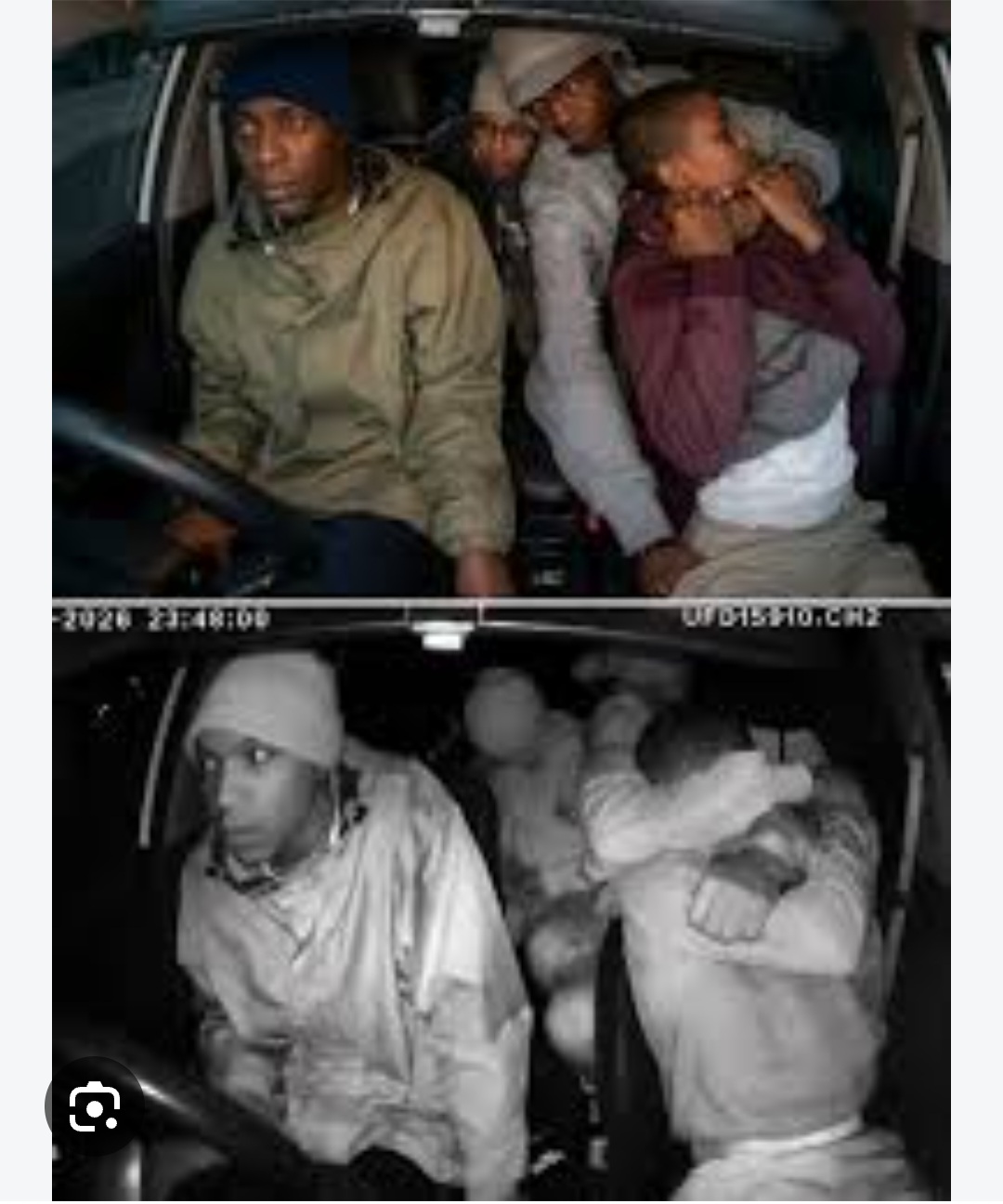
South African police have arrested five suspects after rescuing a 25-year-old e-hailing driver who was allegedly kidnapped, raped and held for ransom in Cape Town.
The South African Police Service (SAPS) said in a statement on Sunday that Steenberg police rescued the driver after he was allegedly raped by two female suspects and held at ransom by the group.
Police were alerted by the victim’s brother after the suspects contacted him and demanded R4,000 in cash for the driver’s release.
According to SAPS, the police used the victim’s vehicle tracker to locate him at Southampton Road in Heathfield, where he was rescued.
“Steenberg police rescued a 25-year-old e-hailing driver after he was raped and held at ransom by two female suspects and three males yesterday,” the police said.
The victim had reportedly met one of the female suspects the previous week through his e-hailing business.
According to police, the two exchanged telephone numbers and communicated throughout the week before arranging to meet.
“When he went to meet her, he was kidnapped by the suspects and the females raped him,” SAPS said.
Police subsequently arrested the two female suspects, aged 23 and 34, as well as three male suspects aged 16, 42 and 48.
The five suspects are expected to appear before the Wynberg Magistrate’s Court on Monday, September 14, 2026.
SAPS said they would face charges relating to the alleged kidnapping and rape.
-
 Health & Wellness1 year ago
President Tinubu Directs Cut in Dialysis Cost from ₦50,000 to ₦12,000
-
 News1 year ago
PICTURE: In Lagos Couple Sentenced to 22½ Years for Cannabis Trafficking
-

 Business6 months ago
Dangote Refinery Reduces Petrol Gantry Price To ₦1,200 Per Litre
-
Business2 years ago
Dangote; We Did Not Fix ₦600/Litre Petrol Price
-
 Business2 years ago
Heritage Bank Customers’ Path to Securing ₦5m Insured Funds: A Step-By-Step Guide by NDIC”
-

 International News6 months ago
Indian Police Arrest Nigerian Over ₦290m Drug Haul
-
 Trending News1 year ago
NELFUND Disburses ₦86bn To 449,000 Beneficiaries
-
 Business6 months ago
After Plea Bargain, Court Discharges Stella Oduah of ₦2.5bn Fraud