
International News
Mongolians Vote As Anger Grows Over Corruption And Economy

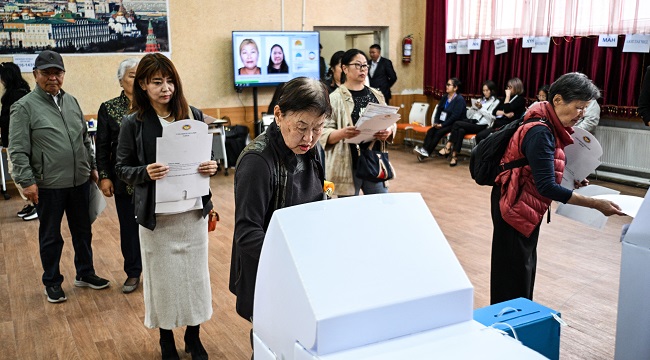
Mongolians began voting in parliamentary elections on Friday, with the ruling party widely expected to win despite deepening public anger over corruption and the state of the economy.
Voters across the vast, sparsely populated nation of 3.4 million — sandwiched between authoritarian China and Russia — are exercising their democratic rights to elect 126 members of the State Great Khural.
Polls opened at 7 am local time (2300 GMT Thursday), AFP reporters saw in the capital Ulaanbaatar and at a remote polling station. They close at 10 pm.
At a polling station in rural Sergelen, an administrative division over an hour’s drive from the capital, election workers in traditional garb stood for the national anthem ahead of the doors being opened to the public.
Voters tricked into the voting station, some taking selfies after casting their ballots, AFP reporters saw.
Among them was Batsaikan Battseren, a 45-year-old local community leader representing the ruling party who said he was urging people to come out to the polls.
“Our area’s average participation is 60 percent,” the former herder said, dressed head to toe in a traditional Mongolian deel.
But, he explained, “young people from 18 to 30 years old don’t go to vote”.
“In previous elections, I would usually bring the youngsters who have just turned 18 to let them vote, but I couldn’t this year,” he said.
Public frustration
Analysts expect the ruling Mongolian People’s Party (MPP), led by Prime Minister Luvsannamsrain Oyun-Erdene, to retain the majority it has enjoyed since 2016 and govern the resource-rich country for another four years.
Yet there is deep public frustration over endemic corruption, as well as the high cost of living and lack of opportunities for young people who make up almost two-thirds of the population.
There is also a widespread view that the proceeds of a decade-long boom in coal mining that fuelled double-digit growth are being hoarded by a wealthy elite.
Preliminary results are expected to come within a few hours despite Mongolia’s vast size, thanks to automated vote counting.
The streets of Ulaanbaatar — home to almost half the population — have been decked out with colourful campaign posters touting candidates from across the political spectrum, from populist businessmen to nationalists, environmentalists and socialists.
And, for the first time in almost a decade, parties are required by law to ensure that 30 percent of their candidates are women in a country where politics is dominated by men.
Young voters unimpressed
Younger voters are not convinced and the failure of the main opposition Democratic Party to provide a credible alternative has fuelled the rise of minor parties.
The centre-right anti-corruption HUN party is expected to increase its parliamentary representation through its social-media savvy, professional candidates who enjoy significant support among the urban middle classes.
“I think young people are more aware of the activities of political parties,” said Norovbanzad Ganbat, a 24-year-old IT worker.
“They can see what the MPP has done in the last four years,” she said. “That’s why young people don’t vote for this party.”
Taking to the stage at Wednesday’s rally, Oyun-Erdene blamed his political opponents for turning Mongolia into a “land of corrupt leaders” and called for a return to “discipline”.
Mongolia has plummeted in Transparency International’s Corruption Perceptions Index under his party’s rule.
It has also fallen in press freedom rankings under the MPP, and campaigners say there has been a notable decline in the rule of law.
A survey by the Sant Maral Foundation, Mongolia’s top independent polling body, suggested more than a third of Mongolians believe the country is “changing into a dictatorship”.
I’ll describe this election as a referendum on… Prime Minister Oyun-Erdene and whether he will manage to get a mandate to rewrite Mongolia’s social contract,” Bayarlkhagva Munkhnaran, political analyst and former adviser on the National Security Council of Mongolia, told AFP.
“This social contract will be about turning Mongolia into a proper electoral autocracy whereas, 10 years ago, Mongolia used to be respected as a liberal democracy,” he said.
The MPP is the successor to the communist party that ruled Mongolia with an iron grip for almost 70 years but nonetheless remains popular, particularly among rural, older voters, and commands a sprawling, nationwide campaign apparatus.
Former president Tsakhiagiin Elbegdorj, who held office for the opposition Democratic Party from 2009 to 2017, hailed the start of the election on X on Friday morning, writing: “As the Mongolian saying goes, ‘It is better to live by your own choice than according to others’ choices.’
“Around 260 foreign observers and three dozen journalists are present. I hope for genuinely democratic and transparent elections.”
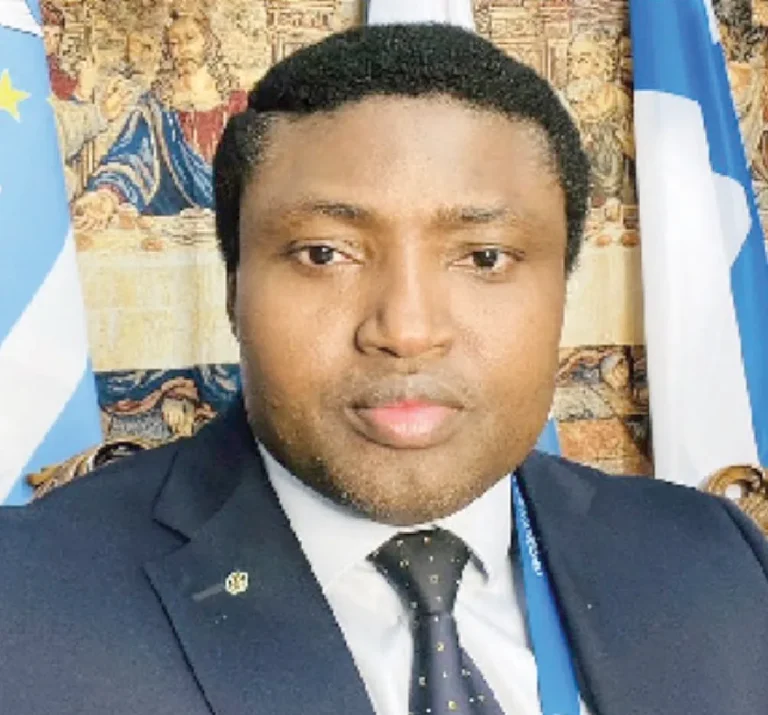
A Finnish appeal court has reduced the prison sentence of Biafran separatist leader, Simon Ekpa, from six to four years.
Finnish newspaper Yle disclosed this in a report on Thursday.
However, the Court of Appeal upheld the decision of the Päijät-Häme District Court, which found Ekpa guilty of terrorism-related charges last year.
The charges were related to Ekpa’s alleged activities aimed at re-establishing an independent state of Biafra in southeastern Nigeria.
Ekpa subsequently appealed the ruling, seeking to have his conviction and sentence overturned.
In a ruling that offered some relief to Ekpa, the Court of Appeal found him guilty of the same offences but reduced his prison term after considering the circumstances surrounding his actions. The court noted that the situation in the Biafran region closely resembled, but did not meet the definition of, a civil war.
Ekpa had told the court that his involvement was not motivated by terrorist intent, citing the political turmoil in the Biafran region.
The prosecutor in the case had also appealed the district court’s decision, arguing that the prison sentence did not reflect the seriousness of Ekpa’s offences.
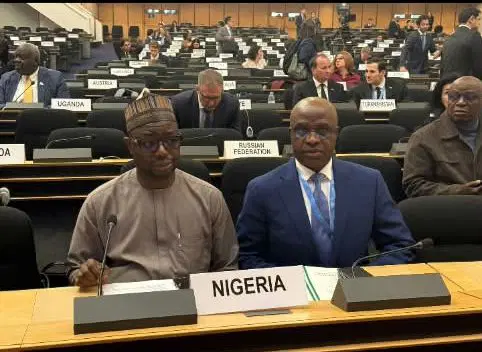
The Federal Government has called for stronger international responsibility sharing and innovative arrangement to address the growing humanitarian needs of over 142,000 refugees and asylum seekers from 42 countries.
The Minister of Humanitarian Affairs and Poverty Reduction, Dr. Bernard Doro, made the call while delivering Nigeria’s national statement at the 77th Session of the Executive Committee of the United Nations High Commissioner for Refugees (UNHCR), currently holding at the Palais des Nations in Geneva.
In a statement by his Senior Technical Adviser on Information Systems and Data Analysis, Dr. Abimbola Fasanu, the Minister disclosed that as of September 2026, Nigeria had received over 24,000 returnees and was managing a population of more than 6.7 million internally displaced persons (IDPs).
Doro reaffirmed Nigeria’s commitment to international refugee protection obligations, noting that the country continues to maintain an asylum system under the National Commission for Refugees, Migrants and Internally Displaced Persons (NCFRMI) Act of 2022.
He stated that no case of refoulement had been recorded in Nigeria in 2026, reaffirming the country’s commitment to protecting people fleeing persecution from being returned to situations where their lives or freedom could be threatened.
Highlighting progress on durable solutions, the Minister disclosed that over 7,000 Nigerian refugees had voluntarily returned from neighbouring countries this year under Tripartite Agreements, while another 14,000 in Cameroon had registered their intention to return. An agreement covering the return of 2,000 Nigerians from Niger is also being finalised.
He acknowledged the continued hospitality of Cameroon, Chad and Niger in providing refuge to displaced Nigerians.
According to the Minister, improved security conditions in parts of the country are creating opportunities for voluntary return, while Resettlement Cities established in seven locations are supporting the phased closure of displacement camps in conditions of safety and dignity.
Beyond return and resettlement, Dr. Doro outlined measures aimed at promoting self-reliance and reducing prolonged dependence on humanitarian assistance.
He explained that refugees in five states are benefiting from access to land, agricultural inputs and skills training, while the newly established Public-Private Partnership Department of the NCFRMI is supporting efforts to expand livelihood opportunities.
The Minister also cited the successful local integration of former Liberian and Sierra Leonean refugees, some of whom have established businesses and become economically active members of their host communities.
On access to essential services, he disclosed that displaced persons and host communities are being enrolled in Nigeria’s national identity system to facilitate access to banking, education and social services.
He added that refugees are being incorporated into state action plans and social registers, while ten mobile documentation buses are expected to extend identity services to underserved and remote communities.
Doro further highlighted the development of a Digital Gateway in collaboration with UNHCR to provide refugees with secure online access to information.
Addressing the growing pressure on humanitarian financing, the Minister urged the international community to strengthen support for refugee-hosting countries through expanded resettlement opportunities, complementary pathways and greater responsibility-sharing.
He specifically called on UNHCR to explore partnerships with regional and subregional financial institutions, including the African Development Bank and the ECOWAS Bank for Investment and Development, as a means of mobilising additional resources for refugee protection and durable solutions.
The Minister emphasised that the responsibility for addressing displacement could not rest on host countries alone, particularly at a time of increasing humanitarian needs and declining international resources.
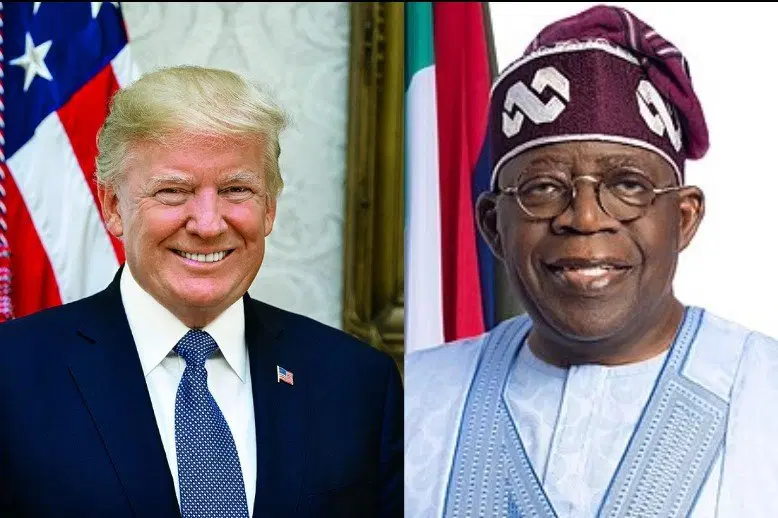
The United States has listed Nigeria among 14 countries identified for recruiting or using child soldiers, warning that the designation could trigger restrictions on certain forms of military assistance.
The listing is contained in the 2026 Trafficking in Persons (TIP) Report, which covers the period from April 1, 2025, to March 31, 2026.
According to the report, restrictions under the Child Soldiers Prevention Act (CSPA) could affect international military education and training, foreign military financing, excess defence articles, peacekeeping operations and licences for direct commercial sales of military equipment, unless a presidential waiver is granted.
Nigeria was listed alongside Afghanistan, Burma, the Central African Republic, the Democratic Republic of the Congo, Ethiopia, Iran, Russia, Rwanda, Somalia, South Sudan, Sudan, Venezuela and Yemen.
The report also retained Nigeria on Tier 2 for human trafficking, a category for countries whose governments do not fully meet the minimum standards for eliminating trafficking but are making significant efforts to comply.
However, the US raised concerns about corruption and alleged official complicity in human trafficking crimes.
“The government did not report any investigations, prosecutions, or convictions of government employees allegedly complicit in trafficking crimes or provide details or other actions taken against complicit officials from previous years,” the report stated.
The report also faulted Nigeria’s efforts to protect trafficking victims, stating that 675 victims received assistance in 2025, compared with 2,058 in the previous year.
It said support services, particularly for male victims, remained limited, with only one dedicated non-governmental organisation shelter for adult male victims operating during the reporting period.
The report further stated that shelters operated by the National Agency for the Prohibition of Trafficking in Persons (NAPTIP) restricted residents’ freedom of movement, while access to certain protection services depended on victims cooperating with law enforcement proceedings.
Despite these concerns, the report acknowledged increased government efforts in investigating, prosecuting and securing convictions in human trafficking cases compared with the previous reporting period.
-
 Health & Wellness1 year ago
President Tinubu Directs Cut in Dialysis Cost from ₦50,000 to ₦12,000
-
News2 years ago
CBN Debunks Fake Circular on New ₦5,000 and ₦10,000 Notes
-
 Business7 months ago
Dangote Refinery Reduces Petrol Gantry Price To ₦1,200 Per Litre
-

 International News7 months ago
Indian Police Arrest Nigerian Over ₦290m Drug Haul
-
 Business7 months ago
After Plea Bargain, Court Discharges Stella Oduah of ₦2.5bn Fraud
-
Business2 years ago
Dangote; We Did Not Fix ₦600/Litre Petrol Price
-
 Trending News1 year ago
NELFUND Disburses ₦86bn To 449,000 Beneficiaries
-
 Opinion2 years ago
Championing the People’s Voice: Obasa’s Dedication to Grassroots Representation By Dave Agboola⁰