Connect with us

International News

Decade Since Ebola, Sierra Leone Fights Another Deadly Fever

Published

on

Spread the love

Decade Since Ebola, Sierra Leone Fights Another Deadly Fever


Rummaging in the darkness of a tiny mud and thatch home in eastern Sierra Leone, ecologist James Koninga plucks a metal rat trap from under a collapsed bedframe.

The 62-year-old belongs to a group of researchers tracking the deadly Lassa fever, a viral haemorrhagic illness endemic in several West African countries and transmitted by infected rats.


Koninga knows all too well what is at stake — he spent a gruelling 20 days in hospital with a Lassa-induced fever, headache and diarrhoea as a young researcher 30 years ago.


“I thought I was going away, I was going to die,” he said.

Ten years ago, the haemorrhagic Ebola virus devastated this region, killing over 11,000 people across Guinea, Sierra Leone and Liberia.

Sierra Leone has not recorded an Ebola case since the outbreak ended in 2016, thanks partly to a vaccine rollout.

In Kenema district, an early Ebola epicentre, scientists are using the lessons learned a decade ago to try to stop Lassa fever in its tracks.


With an overall fatality rate of one per cent, Lassa is nowhere near as deadly as Ebola, which kills on average 50 per cent of sufferers, according to the World Health Organization.


But one in five Lassa infections can result in severe illness with a fatality rate of 15 percent.


While cases have largely plateaued in Sierra Leone, researchers are seeing a spread beyond traditional Lassa hotspots.


There is no licensed vaccine and only limited treatment, with the scars of Ebola preventing many from seeking early life-saving help.

– Living with rats –

Monitoring the rodent population is crucial in remote villages like Mapuma, where some 20 houses lie enveloped by dense forest.

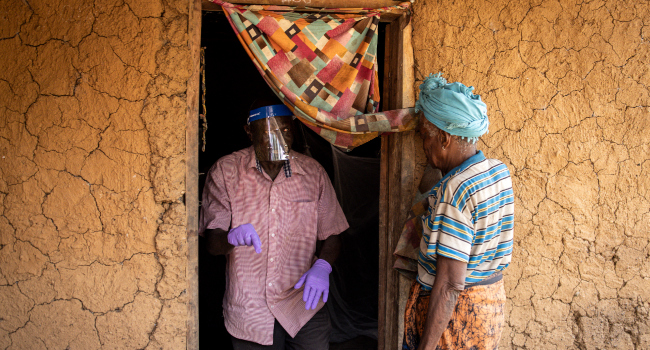
“Rats burrow inside the houses for shelter,” explained Koninga, donning a face shield and gloves.


Humans usually contract Lassa virus after having contact with the urine, saliva or droppings of infected rats.

“If people come in from the bush with cuts on them and lie on the bed, they could be infected.”


Proximity to the forest, rudimentary mud construction, and uncovered grain and water storage make the dwellings “five-star hotels” for rats, said Lansana Kanneh, 58, field supervisor at the region’s Kenema Government Hospital (KGH).


“Food is scarce for these people so sometimes they even eat the food that has been partially eaten by the rodent,” he added.

Trappers can find up to 20 rats per day in some villages.

After identifying if the rodents are the Lassa-carrying Mastomys variety, samples are collected for analysis.


The rats then receive an injection that prevents viral transmission before being released.

Lassa virus infects between 100,000 and 300,000 people annually in West Africa, killing roughly 5,000, according to the Africa Centres for Disease Control and Prevention.


However, the figures likely underestimate the true scale given surveillance challenges.

Admissions to the Lassa unit at KGH — Sierra Leone’s only dedicated treatment centre -– have declined in the past decade.


Patients normally arrive in the 14-bed isolation ward during the dry season from November to May, but this once-predictable pattern is increasingly uncertain.


– ‘Lassa blood’ –

“Now we see cases year-round,” said Donald Grant, head of the KGH Lassa fever programme.

The team are also noticing Lassa beyond traditionally endemic zones, with Grant suspecting an improvement in testing as well as deforestation driving rodents into closer contact with humans.


Over the past decade, KGH has also seen an alarming uptick in Lassa patient mortality, which now stands at over 50 per cent.

“We’ve seen a lot of these cases coming in in their late stages,” said Kanneh.


“Sometimes they only spend 24 to 48 hours in the hospital, and they die.”

Rapid detection is the key to survival, but non-specific febrile symptoms mean Lassa is commonly misdiagnosed as malaria, cholera or typhoid.

Hours-long journeys on dirt roads prevent many from seeking treatment.

As does the trauma from Ebola, which killed some 4,000 Sierra Leoneans.


“The community people thought that Ebola was brought by the health workers,” Kanneh said, explaining that a lingering mistrust contributed to reduced admissions.


A KGH team raises awareness in local communities about seeking rapid help and ensuring good domestic hygiene.

It is a message well-received by Musa Mosoh, a 53-year-old Lassa survivor who lost seven family members to the illness.


As the morning rain fell in his village of Panguma — a Lassa red zone — Mosoh recalled how his family had faced stigma from the community.

“Now… people have got the understanding we are not from Lassa blood, it’s just a sickness.”


Mosoh tells those with a continuous fever or headache to go straight to the hospital, and even keeps cats to repel any virus-carrying rodents.

Grant, the doctor, is hopeful of a vaccine in the next few years.

Participants in Nigeria and Liberia are currently being given the first-ever Lassa vaccine to reach phase two trials — the midway point of testing in humans.


But Grant still urges caution.

Ebola “taught us a lesson that we need not wait until that critical moment that it overwhelms all of us,” he said.

“We need to act now.”


AFP

International News

UK Teenagers To Trial Social Media Bans, Digital Curfews

Published

on

Spread the love

Hundreds of British teenagers will trial social media bans and time limits on apps as part of consultations over new measures to keep children safe online, the government announced Wednesday.


The pilot comes as the government seeks views from parents on whether to follow Australia and issue a blanket ban on social media for children under 16.

Three hundred youngsters aged 13 to 17 will try out different restrictions on social media use over six weeks to gauge the impact on their schoolwork, sleep and family life.

Some will have their social media apps disabled entirely, while others will have no access to them overnight, said the Department for Science, Innovation and Technology.

[ A young student uses her mobile phone at a public school in Planaltina

A third group will have a one-hour-per-day cap on the most popular apps for teenagers, including Instagram, TikTok and Snapchat.

The results will be compared to a fourth set of children who will continue to receive unlimited access.

“We are determined to give young people the childhood they deserve and to prepare them for the future,” said technology minister Liz Kendall.

“These pilots will give us the evidence we need to take the next steps, informed by the experiences of families themselves.”

Australia in December became the first nation to prohibit people under the age of 16 from using immensely popular and profitable social media platforms.

Several other countries are considering similar bans, including France where lawmakers in January passed a bill that would prohibit use by under-15s, which still needs final approval.

A boy poses at his home as he looks at social media on his tablet

The British government has launched a consultation on a potential Australia-style ban, which will also look at measures including age restrictions and banning addictive features like scrolling.

Earlier this month, British MPs struck down proposals by the upper House of Lords chamber to ban social media for under-16s while it awaits the outcome of the consultation, due to close on May 26.

British public figures including actor Hugh Grant have urged the government to back a prohibition, saying parents alone cannot counter social media harms.

But some experts warn restrictions could be easily circumvented and would rather that tech platforms focus on making their sites safer.

Labour Prime Minister Keir Starmer has not ruled out a ban.

Continue Reading

International News

Israel Defence Minister Says Iran Guards Navy Commander Killed In Strike

Published

on

Spread the love

Defence Minister Israel Katz announced on Thursday that an Israeli airstrike had killed Alireza Tangsiri, commander of the Iranian Revolutionary Guards’ navy.

“Last night, in a precise and lethal operation, the IDF eliminated the commander of the Revolutionary Guards’ navy, Tangsiri, along with senior officers of the naval command,” Katz said in a video statement.

“The man who was directly responsible for the terrorist operation of mining and blocking the Strait of Hormuz to shipping was blown up and eliminated.”

Since the start of the joint US-Israeli attacks on Iran on February 28, Israel has announced the killing of several top Iranian officials, including supreme leader Ali Khamenei and the Islamic republic’s powerful security chief, Ali Larijani.

In recent days, Israeli forces have carried out several strikes targeting the naval assets of Iran.

Last week, Israeli airstrikes hit several Iranian naval ships in the Caspian Sea, including ones equipped with missile systems, support vessels and patrol craft.


AFP

Continue Reading

International News

Iran ‘Afraid’ To Admit It Wants A Deal, Says Trump

Published

on

Spread the love

US President Donald Trump insisted Wednesday that Iran was taking part in peace talks, suggesting Tehran’s denials were because Iranian negotiators fear being killed by their own side.

“They are negotiating, by the way, and they want to make a deal so badly. But they’re afraid to say it, because they figure they’ll be killed by their own people,” Trump told a dinner for Republican members of Congress.

“They’re also afraid they’ll be killed by us.”

The US leader’s comments came after Iranian Foreign Minister Abbas Araghchi said that “we do not intend to negotiate”.

Trump repeated his assertion that Iran was being “decimated” in the conflict now in its fourth week, even though Tehran still maintains an effective stranglehold over the crucial Strait of Hormuz oil route.

Lashing out at his domestic opponents, Trump also claimed Democrats were trying to “deflect from all of the tremendous success that we’re having in this military operation.”

In a mocking reference to calls from Democrats for him to seek the approval of Congress for the conflict, Trump added: “They don’t like the word ‘war,’ because you’re supposed to get approval, so I’ll use the word military operation.”

The White House said earlier that Trump was ready to “unleash hell” if Iran did not admit defeat, while also insisting that Tehran is still taking part in talks.

Iranian state media had earlier cited an unidentified official as saying that the Islamic republic had responded “negatively” to a reported 15-point plan from Washington.

 ‘Talks continue’

“If Iran fails to accept the reality of the current moment, if they fail to understand that they have been defeated militarily and will continue to be, President Trump will ensure they are hit harder than they have ever been hit before,” Press Secretary Karoline Leavitt told reporters.

“President Trump does not bluff and he is prepared to unleash hell. Iran should not miscalculate again.”

Asked if negotiations with Iran had stalled, Leavitt replied: “Talks continue. They are productive.”

Leavitt declined to say whom the US was dealing with in Tehran following the assassination of supreme leader Ali Khamenei, whose son and successor Mojtaba Khamenei has not been seen in public.

Reports have suggested the Trump administration’s interlocutor is Mohammad Bagher Ghalibaf, Iran’s speaker of parliament and one of its most prominent non-clerical figures.

The spokeswoman also declined to confirm reports that top US officials including Vice President JD Vance were set to hold talks with the Iranians in Pakistan, which has emerged as a key mediator.

Trump is moving thousands of airborne troops and extra marines to the Gulf amid speculation that he might order a ground invasion to either seize Iranian oil assets in the Gulf or secure the Strait of Hormuz.

The White House meanwhile appeared to stick to the four to six-week timeline it has previously given for the war.

Trump announced Wednesday that his visit to China to meet Xi Jinping had now been rescheduled for mid-May, having postponed it by six weeks to deal with the conflict.

“We’ve always estimated approximately four to six weeks (for the length of military operations against Iran), so you could do the math on that,” Leavitt added.


AFP

Continue Reading

Trending

Copyright © 2026 TheColumn NG