Connect with us

International News

Decade Since Ebola, Sierra Leone Fights Another Deadly Fever

Published

on

Spread the love

Decade Since Ebola, Sierra Leone Fights Another Deadly Fever


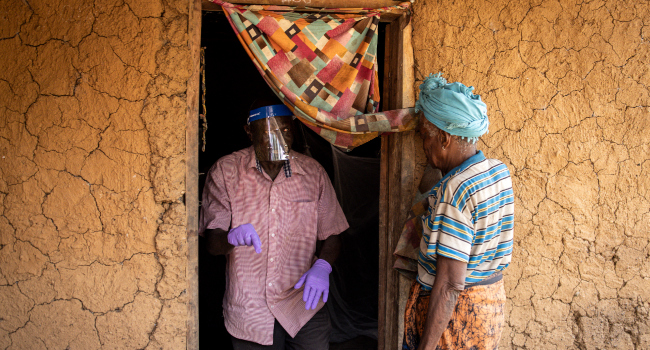
Rummaging in the darkness of a tiny mud and thatch home in eastern Sierra Leone, ecologist James Koninga plucks a metal rat trap from under a collapsed bedframe.

The 62-year-old belongs to a group of researchers tracking the deadly Lassa fever, a viral haemorrhagic illness endemic in several West African countries and transmitted by infected rats.


Koninga knows all too well what is at stake — he spent a gruelling 20 days in hospital with a Lassa-induced fever, headache and diarrhoea as a young researcher 30 years ago.


“I thought I was going away, I was going to die,” he said.

Ten years ago, the haemorrhagic Ebola virus devastated this region, killing over 11,000 people across Guinea, Sierra Leone and Liberia.

Sierra Leone has not recorded an Ebola case since the outbreak ended in 2016, thanks partly to a vaccine rollout.

In Kenema district, an early Ebola epicentre, scientists are using the lessons learned a decade ago to try to stop Lassa fever in its tracks.


With an overall fatality rate of one per cent, Lassa is nowhere near as deadly as Ebola, which kills on average 50 per cent of sufferers, according to the World Health Organization.


But one in five Lassa infections can result in severe illness with a fatality rate of 15 percent.


While cases have largely plateaued in Sierra Leone, researchers are seeing a spread beyond traditional Lassa hotspots.


There is no licensed vaccine and only limited treatment, with the scars of Ebola preventing many from seeking early life-saving help.

– Living with rats –

Monitoring the rodent population is crucial in remote villages like Mapuma, where some 20 houses lie enveloped by dense forest.

“Rats burrow inside the houses for shelter,” explained Koninga, donning a face shield and gloves.


Humans usually contract Lassa virus after having contact with the urine, saliva or droppings of infected rats.

“If people come in from the bush with cuts on them and lie on the bed, they could be infected.”


Proximity to the forest, rudimentary mud construction, and uncovered grain and water storage make the dwellings “five-star hotels” for rats, said Lansana Kanneh, 58, field supervisor at the region’s Kenema Government Hospital (KGH).


“Food is scarce for these people so sometimes they even eat the food that has been partially eaten by the rodent,” he added.

Trappers can find up to 20 rats per day in some villages.

After identifying if the rodents are the Lassa-carrying Mastomys variety, samples are collected for analysis.


The rats then receive an injection that prevents viral transmission before being released.

Lassa virus infects between 100,000 and 300,000 people annually in West Africa, killing roughly 5,000, according to the Africa Centres for Disease Control and Prevention.


However, the figures likely underestimate the true scale given surveillance challenges.

Admissions to the Lassa unit at KGH — Sierra Leone’s only dedicated treatment centre -– have declined in the past decade.


Patients normally arrive in the 14-bed isolation ward during the dry season from November to May, but this once-predictable pattern is increasingly uncertain.


– ‘Lassa blood’ –

“Now we see cases year-round,” said Donald Grant, head of the KGH Lassa fever programme.

The team are also noticing Lassa beyond traditionally endemic zones, with Grant suspecting an improvement in testing as well as deforestation driving rodents into closer contact with humans.


Over the past decade, KGH has also seen an alarming uptick in Lassa patient mortality, which now stands at over 50 per cent.

“We’ve seen a lot of these cases coming in in their late stages,” said Kanneh.


“Sometimes they only spend 24 to 48 hours in the hospital, and they die.”

Rapid detection is the key to survival, but non-specific febrile symptoms mean Lassa is commonly misdiagnosed as malaria, cholera or typhoid.

Hours-long journeys on dirt roads prevent many from seeking treatment.

As does the trauma from Ebola, which killed some 4,000 Sierra Leoneans.


“The community people thought that Ebola was brought by the health workers,” Kanneh said, explaining that a lingering mistrust contributed to reduced admissions.


A KGH team raises awareness in local communities about seeking rapid help and ensuring good domestic hygiene.

It is a message well-received by Musa Mosoh, a 53-year-old Lassa survivor who lost seven family members to the illness.


As the morning rain fell in his village of Panguma — a Lassa red zone — Mosoh recalled how his family had faced stigma from the community.

“Now… people have got the understanding we are not from Lassa blood, it’s just a sickness.”


Mosoh tells those with a continuous fever or headache to go straight to the hospital, and even keeps cats to repel any virus-carrying rodents.

Grant, the doctor, is hopeful of a vaccine in the next few years.

Participants in Nigeria and Liberia are currently being given the first-ever Lassa vaccine to reach phase two trials — the midway point of testing in humans.


But Grant still urges caution.

Ebola “taught us a lesson that we need not wait until that critical moment that it overwhelms all of us,” he said.

“We need to act now.”


AFP

International News

Norway To Ban Social Media For Under-16s

Published

on

Spread the love

Norway said Friday it will present a bill this year making it the latest country seeking to ban social networks for under 16s, adding that technology companies will be responsible for verifying the age of its users.


“We are introducing this legislation because we want a childhood where children get to be children. Play, friendships, and everyday life must not be taken over by algorithms and screens,” Prime Minister Jonas Gahr Store said in a statement.

“This is an important measure to safeguard children’s digital lives,” he added.

Several European countries, such as France, Spain, and Denmark have already said they will introduce a digital age of majority for social networks and others like Australia and Türkey have already done so.

The European Commission has also made clear its determination to take action to protect children and adolescents, notably by unveiling in mid-April an age-verification app that will soon be made available to European citizens.

“I expect technology companies to ensure that the age limit is respected. Children cannot be left with the responsibility for staying away from platforms they are not allowed to use,” added Norwegian  Minister of Digitalisation and Public Governance Karianne Tung.

“That responsibility rests with the companies providing these services. They must implement effective age verification and comply with the law from day one”.

The government said the number of children with phones or using social media had declined  due to a host of measures it had already taken, including “national screen-time guidelines and recommendations for mobile-free schools.”

Continue Reading

International News

Trump envoy wants Italy to replace Iran at World Cup — Report

Published

on

Spread the love

An envoy to US President Donald Trump has asked world football’s governing body FIFA to replace Iran with Italy at the World Cup, according to the Financial Times.


US special envoy Paolo Zampolli told the FT it would be a “dream” to see four-time World Cup winners Italy at the finals in the United States, Mexico and Canada despite the fact they lost in a qualification playoff last month.

The suggestion was an effort to repair ties between Trump and Giorgia Meloni after the Italian prime minister fell out with the president after criticising his attack on Pope Leo XIV over the Iran war, the newspaper reported.

“I confirm I have suggested to Trump and (FIFA President Gianni) Infantino that Italy replace Iran at the World Cup. I’m an Italian native, and it would be a dream to see the Azzurri at a US-hosted tournament. With four titles, they have the pedigree to justify inclusion,” Zampolli told the FT.

Italy missed out on the World Cup for the third successive time after losing a penalty shootout to Bosnia and Herzegovina in their qualifying playoff final.

Iran’s participation in the World Cup has been thrown into doubt by the war with the US and Israel that broke out on February 28.

The Iranian football federation (FFIRI) had said in April it was “negotiating” with FIFA to relocate the country’s World Cup matches from the United States to Mexico.

But Infantino told AFP last month, while attending Iran’s friendly against Costa Rica in Turkey, that Iran will be at the World Cup and that they will play “where they are supposed to be, according to the draw”.

Zampolli is an Italian-American socialite, businessman and former modelling agent who claims to have introduced Trump to his current wife, Melania Trump.

Continue Reading

International News

5 Key Players Barca Will Let Go This Summer

Published

on

Spread the love

Barcelona are set to let five key players leave the club this summer, as they plan a squad overhaul, according to reports.


The Blaugrana are currently sitting nine points clear at the top of LaLiga, and are set to romp to a second consecutive title ahead of rivals Real Madrid.

However, after more disappointment in the Champions League, in which they were dumped out by Atletico Madrid, Hansi Flick and the board at Barcelona are preparing to rebuild their squad at the end of the campaign.

Spanish media outlet Marca are reporting that there are five players who have ‘completed a cycle at the club’ and will likely be moved on come the summer.

Marcus Rashford is one of those players. Barcelona can buy the 28-year-old, who is on loan from Manchester United, for £26million under the terms of the deal, but reports have emerged that they are not willing to exercise that option.

The 28-year-old has contributed 12 goals and 13 assists this season to help the Catalan giants run rampant in LaLiga, and as recently as last week, it was believed that Barca would like to keep him.

However, they have made a failed bid to renegotiate the £26m fee with United, who are refusing to budge on the clause which expires on June 15 – four days after the World Cup kicks off in North America.

It means there is a strong chance that Rashford will be forced to return to his boyhood club following England duty if he is selected for the tournament this summer.

Another attacker who seems set for the exit door is none other than Robert Lewandowski.

The Pole, who joined Barcelona from Bayern Munich in 2022, is out of contract in the summer, and there has been little indication that he will sign a new deal at the club.

It is believed that both Lewandowski’s ‘age and recent physical problems’ have thrust his future at Barca into doubt.

Barcelona are said to be looking at freeing up some financial legroom, and for that reason, they want to offload stars on big wage packets.

One of those players is Frenkie de Jong, who is understood to be on just under €400,000 (£348,000) per week, and Marca suggest that he could be sold to ‘ease the financial burden’ on the Spanish giants.

Former Chelsea defender Andreas Christensen and La Masia graduate Marc Casado are also said to be on the proverbial chopping block.

Christensen played 161 games in six seasons with the Blues before making the move to Catalonia in 2022 on a four-year deal. That deal is now set to expire, and there are no plans for an extension at this moment in time.

Casado, however, still has two years left on his contract, but due to a lack of minutes, could be forced to find a new club.

The defensive midfielder has failed to break into the team ahead of Pedri, Eric Garcia, and Gavi, and has started only one of the last eight LaLiga games.

Continue Reading

Trending

Copyright © 2026 TheColumn NG