
Health & Wellness
Nasrallah’s Apparent Successor Killed In Beirut Strike

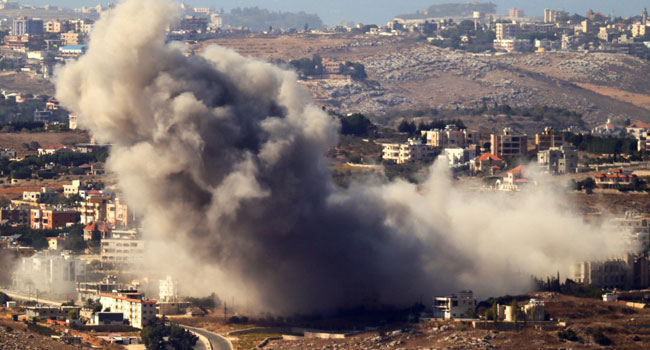
Israel’s army said it had killed the cleric tipped to succeed slain Hezbollah leader Hassan Nasrallah in an air strike on Beirut three weeks ago that targeted commanders of the Iran-backed militant group.
u
Hezbollah has not issued a statement about the Israeli claims to have killed Hashem Safieddine.
“It can now be confirmed that in an attack approximately three weeks ago, Hashem Safieddine, the head of Hezbollah’s Executive Council, and Ali Hussein Hazima, the head of Hezbollah’s Intelligence Directorate, were killed along with other Hezbollah commanders,” the Israeli army said in a statement Tuesday.
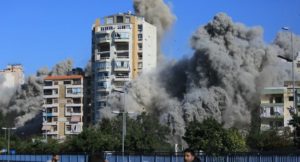
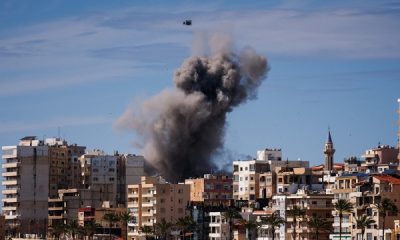
The army said the air force had hit Hezbollah’s main intelligence headquarters in the southern Beirut suburb of Dahiyeh, Hezbollah’s stronghold in the Lebanese capital, and that more than 25 Hezbollah militants were present at the time.
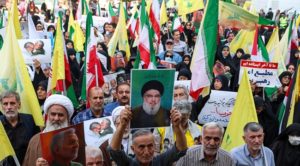
Longtime Hezbollah leader Nasrallah was killed on September 27 in an Israeli air strike on Beirut’s southern suburbs.
Safieddine, tipped to succeed his distant cousin as leader of the Lebanon-based group, had been out of contact since Israeli strikes on Beirut weeks ago, a high-level Hezbollah source said at the time.
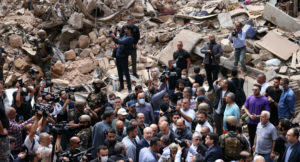
“We have reached Nasrallah, his replacement and most of Hezbollah’s senior leadership”, Israeli army chief Lieutenant General Herzi Halevi said in a statement after the confirmation of Safieddine’s death.
After nearly a year of war with the Palestinian Islamist movement Hamas in Gaza, Israel shifted its focus to Lebanon in late September, vowing to secure its northern border threatened by cross-border fire from Hamas’s Lebanese ally.
Israel ramped up its air strikes on Hezbollah strongholds around the country and sent in ground troops late last month, in a war that has killed at least 1,552 people since September 23, according to an AFP tally of Lebanese health ministry figures.

– Blinken presses for Gaza aid –
Israel’s announcement of the death of Safieddine came as US Secretary of State Antony Blinken urged Prime Minister Benjamin Netanyahu to seize on the killing of Hamas leader Yahya Sinwar in Gaza last week to work towards a ceasefire in the Palestinian territory.
Blinken is on his 11th trip to the Middle East since Hamas’s October 2023 attack on Israel triggered the Gaza war, and his first since Israel’s conflict with Hezbollah escalated in late September.
During his meeting with Netanyahu in Jerusalem, Blinken “underscored the need to capitalise” on the death of Sinwar, US State Department spokesman Matthew Miller said.
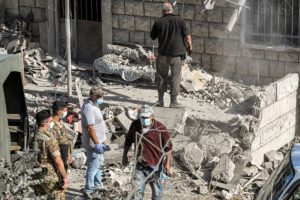
This would be done by “securing the release of all hostages and ending the conflict in Gaza in a way that provides lasting security for Israelis and Palestinians alike”, he added.
Netanyahu told Blinken that Sinwar’s death “could have a positive impact on the return of the hostages” seized by Hamas during the October 7 attack last year, according to a statement from the Israeli leader’s office.
Blinken also pressed for more aid to be allowed into besieged Gaza as concerns rise for tens of thousands of civilians trapped by fighting in the hard-to-reach north.
Blinken later met with Defence Minister Yoav Gallant who said they discussed the army’s “achievements in its mission to destroy Hezbollah’s attack infrastructure”.
In a post on X, Gallant said he had “emphasized the importance of standing together against Iranian aggression — amplifying deterrence across the region”.
Gallant told Blinken Israel expects Washington’s support “following our attack on Iran”, his office said earlier.
Israel is weighing its response to Iran’s October 1 missile attack, which Tehran launched in retaliation for the killing of Nasrallah in Beirut and of Hamas leader Ismail Haniyeh in Tehran in July.
Previous US efforts to end the Gaza war and contain the regional fallout have failed, as did a bid spearheaded by President Joe Biden and his French counterpart Emmanuel Macron to secure a temporary ceasefire in Lebanon.
After Israel, Blinken will visit Saudi Arabia on Wednesday, a US official said.
– South Beirut evacuation orders –
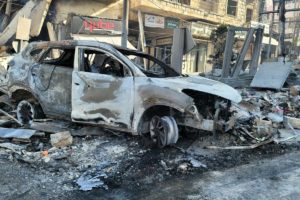
Fighting meanwhile raged in Lebanon, with the Israeli military again striking the southern suburbs of Beirut Tuesday evening, after issuing new calls for residents to evacuate the area.
On Tuesday, an Israeli strike on the eastern Hermel region killed five people, while five more died from a separate strike in the southern city of Nabatiyeh, the Lebanese health ministry said.
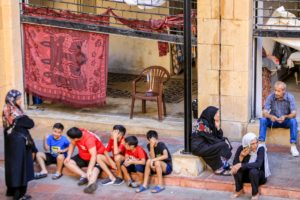
An Israeli air strike near a Beirut hospital killed 18 people, four of them children, according to the ministry.
The strike flattened four buildings near the Rafic Hariri Hospital, Lebanon’s biggest public health facility which is outside Hezbollah’s traditional strongholds, an AFP correspondent reported.
Resident Ola Eid said she was tossing children chocolate and candy from her balcony when her neighbourhood was bombed.
“Before they could even catch them, the first strike hit, then a second. I saw the children ripped apart,” she told AFP.
UN human rights chief Volker Turk said he was “appalled” by the strike.
Hezbollah also continued to fire into Israel through Tuesday, launching about 140 “projectiles” from Lebanon, the Israeli military said.
– ‘Bodies lying on the streets’ –
In the Gaza Strip, Israel launched a major air and ground assault in northern Gaza this month, vowing to stop Hamas militants from regrouping in the area.
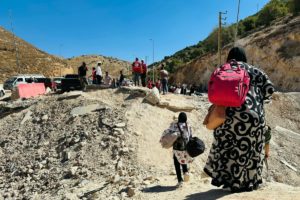
Despite the exodus of tens of thousands of civilians, around 400,000 have been trapped by the fighting, the UN agency for Palestinian refugees warned last week.
The only medical facility still partially functioning in the targeted area of northern Gaza has “no medicine or medical supplies”, warned Kamal Adwan Hospital director Hossam Abu Safia.
“People are being killed in the streets, and we can’t help them. Bodies are lying on the streets.”
The war was sparked by Hamas’s unprecedented attack on Israel on October 7 last year, which resulted in the deaths of 1,206 people, mostly civilians, according to an AFP tally of Israeli official figures.
Israel’s retaliatory offensive has killed 42,718 people in Gaza, also mostly civilians, according to figures from the Hamas-run territory’s health ministry which the UN considers reliable.
AFP





The National Agency for Food and Drug Administration and Control (NAFDAC) has reported that 48 people have died after consuming suspected locally prepared alcoholic and herbal concoctions in parts of Ondo State, with preliminary laboratory findings indicating high concentrations of toxic methanol in samples of the suspected drinks.
The agency, in an update signed by its Director-General, Prof. Mojisola Adeyeye yesterday said a total of 182 cases had been recorded, with five victims who are now totally blind and two others partially blind.
The incident, which was initially reported in early September, affected residents of Odigbo Town, Araromi-Obu, New Town, Odole, Okele, Orita Odigbo and Oniparaga in Odigbo Local Government Area. The report also listed Irele Local Government Area among the affected locations.
According to NAFDAC, the number of reported deaths initially stood at 31, comprising 20 in Odigbo Town and 11 in Araromi-Obu, but increased as investigations and surveillance progressed.
The agency said 90 affected persons had been admitted and subsequently discharged, while six remained hospitalised. Another 31 were treated as outpatients, while the remaining cases involved varying degrees of illness and complications.
NAFDAC said the clinical features reported among affected persons included headaches, generalised body weakness and pain, visual disturbances, difficulty in breathing and altered consciousness, with some cases deteriorating rapidly.
The agency disclosed that 15 people had so far been arrested in connection with the suspected production, sale and distribution of the implicated locally produced alcoholic and herbal beverages.
As part of its investigation, NAFDAC said samples of the suspected concoctions had undergone laboratory examination and toxicological studies to determine their chemical composition and identify potentially toxic substances, adulterants, contaminants or undeclared ingredients.
It said toxicological, microbiological and chemical screening was conducted on 15 unlabeled samples, while acute oral toxicity tests were performed on laboratory mice in accordance with its standard operating procedures and OECD guidelines.
The preliminary findings showed that all the samples caused critical illness in the test animals, while approximately 50 per cent mortality was recorded in six of the 15 samples analysed.
NAFDAC said the critically ill mice recovered after 24 hours of administration, but noted that there was a possibility that they could die if exposed to a second dose.
The agency further disclosed that chemical screening detected Cannabis indicated in 11 samples, while gas chromatography confirmed the presence of high concentrations of methanol.
It explained that methanol was a highly toxic substance capable of causing severe health complications, including blindness, organ failure and death.
According to NAFDAC, the combination of high mortality recorded during animal testing and the confirmed presence of methanol strongly suggested that the samples posed a serious public health risk.
However, it stressed that the findings remained preliminary and required further confirmatory analyses.
The agency said additional testing was ongoing to quantify the methanol concentration and identify other possible toxic agents in the suspected drinks.
NAFDAC said surveillance, case management, investigation and risk-control measures were ongoing, while the reported figures remained subject to verification as investigations continued.
The Economic and Financial Crimes Commission (EFCC), on Monday, disclosed that more than 40 of its personnel have been dismissed in the past two and a half years.
The commission revealed that they were sacked over their involvement in alleged corruption and financial malfeasance that could tarnish the image of the agency.
The EFCC Chairman, Ola Olukoyede, who disclosed this in Abuja when he met with media executives and other journalists in Abuja, said more than five of them are currently facing prosecution.
According to him, the case files of others involved that are yet to face the wrath of the law were being prepared for prosecution.
He stressed that these were part of the efforts to ensure that personnel of the anti-graft agency maintained the highest standards of integrity while investigating and prosecuting corruption cases.
“In the past two and a half years or three years of my service, I have asked them to dismiss over 40 staff on account of corruption and financial malpractice.
“More than five of them are being prosecuted at the moment. You can follow those cases in court; they are public knowledge,” the anti-graft agency boss told journalists.
The EFCC chairman said the commission had also introduced measures to strengthen accountability among its personnel, including a gift policy designed to regulate the acceptance and declaration of gifts by staff.
According to him, personnel would be required to declare assets valued above a specified threshold, including gifts received from relatives abroad.
He said the commission would determine the categories and value of gifts that its personnel could accept, stressing that the policy was aimed at ensuring that staff could account for their means of livelihood and standard of living.
Olukoyede warned that EFCC personnel could not effectively fight corruption while engaging in corrupt practices themselves.
He also disclosed that the commission had renamed its former Department of Internal Affairs as the Department of Ethics and Integrity, as part of efforts to strengthen internal accountability.
Olukoyede said the commission’s anti-corruption activities had also contributed significantly to revenue mobilisation, with federal and state tax recoveries amounting to approximately N288.1 billion during the period under review.
He said the figure comprised about N173.2 billion in federal tax recoveries and N114.9 billion attributed to state internal revenue services.
“This is fiscal value recovered through enforcement of existing obligations, not through the imposition of new taxes,” he said.
The EFCC chairman further disclosed that approximately N257.2 billion in naira recoveries were recorded for federal ministries, departments and agencies.
‘N1.23tn recovered in 3 years’
Olukoyede said the commission recovered N1.23tn, $684.48m, £373,905.78 and €9.34m between October 1, 2023, and June 30, 2026.
He explained that about N397.26 billion, representing 33 per cent of the naira recoveries, constituted direct recoveries for the Federal Government, while N836.34 billion, or 67 per cent, represented indirect recoveries made on behalf of ministries, departments and agencies, state revenue services, companies, individuals and foreign victims.
On the utilisation of recovered funds, Olukoyede said N661.32 billion and $492.37 million had been released to beneficiaries during the period.
He said the naira releases included about N325.35 billion paid directly to individuals and corporate bodies, while N335.97 billion was released to various MDAs, the Nigerian Revenue Service and state internal revenue services, among other beneficiaries.

Conference of the West African College of Physicians, WACP, has urged government at all levels to strengthen the health system or risk worsening the ongoing migration of skilled medical professionals, declining service delivery, and deepening pressures on already overstretched hospitals.
The position was made at a press conference held at the Theophilus Ogunlesi Hall, University of Ibadan on Monday, to formally announce activities marking the 50th Annual General and Scientific Conference of the West African College of Physicians, WACP, Nigeria Chapter.
WACP also highlighted systemic gaps in governance, funding, workforce retention, and healthcare delivery, while emphasising the need for reforms anchored on collaboration, innovation, and patient-centred care.
Speaking at the briefing, the Chairman of the Nigeria Chapter of WACP and Vice President of the College, Prof. Benjamin Uzochukwu, said Nigeria’s health system challenges cannot be solved by restrictive policies but by making local practice more attractive, functional, and sustainable.
Prof. Uzochukwu noted that while artificial intelligence is increasingly useful in modern medicine, especially in diagnosis, it cannot replace the empathy and judgment required in patient care.
He said: “For us and for me in particular, we should not rely solely on artificial intelligence. We must combine it with human intelligence.
“In our clinical practice, we have found that artificial intelligence is very helpful, particularly in diagnosis. However, when it comes to management, the human element is missing.
“Artificial intelligence will not say, ‘I’m sorry.’ However, a clinician’s empathy can help address the social aspects of a patient’s problem by saying, ‘I’m sorry. How are you doing?’ and so on.”
He, however, expressed concern over the continued migration of health workers abroad, warning that brain drain is weakening Nigeria’s healthcare system.
“Brain drain continues to strip our hospitals of experienced specialists,” he said, adding that inflation has further reduced the real value of healthcare workers’ earnings.
On past efforts to curb brain drain, he criticised restrictive measures that limited doctors’ access to international training opportunities, arguing that such policies were counterproductive.
“At one point, the Federal Government introduced a policy that indirectly prevented some doctors from travelling abroad to undertake specialist training. However, we do not believe that this is the appropriate approach.
“To curb brain drain, we must ensure that what we have within the country is sufficient, of high quality, and offers appropriate remuneration to sustain the health system.
“If we strengthen our health system, then anyone who visits a health facility will receive appropriate treatment and quality healthcare services.”
On how Nigeria’s health sector can be revitalised, he said: “We must allocate at least the agreed 15% of the national budget to health. At present, spending is below 6 percent.”
-
 Health & Wellness1 year ago
President Tinubu Directs Cut in Dialysis Cost from ₦50,000 to ₦12,000
-
 News1 year ago
PICTURE: In Lagos Couple Sentenced to 22½ Years for Cannabis Trafficking
-

 Business6 months ago
Dangote Refinery Reduces Petrol Gantry Price To ₦1,200 Per Litre
-
 Business2 years ago
Heritage Bank Customers’ Path to Securing ₦5m Insured Funds: A Step-By-Step Guide by NDIC”
-
 Trending News1 year ago
NELFUND Disburses ₦86bn To 449,000 Beneficiaries
-

 International News6 months ago
Indian Police Arrest Nigerian Over ₦290m Drug Haul
-

 Business6 months ago
After Plea Bargain, Court Discharges Stella Oduah of ₦2.5bn Fraud
-
Business2 years ago
Dangote; We Did Not Fix ₦600/Litre Petrol Price