
Health & Wellness
Nasrallah’s Apparent Successor Killed In Beirut Strike

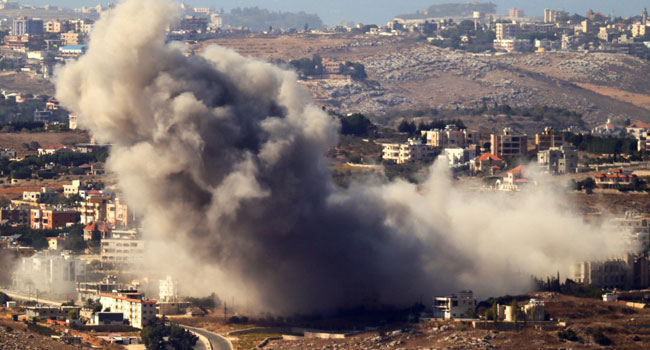
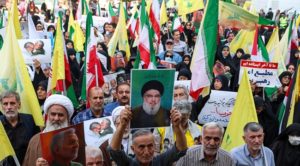
Israel’s army said it had killed the cleric tipped to succeed slain Hezbollah leader Hassan Nasrallah in an air strike on Beirut three weeks ago that targeted commanders of the Iran-backed militant group.
u
Hezbollah has not issued a statement about the Israeli claims to have killed Hashem Safieddine.
“It can now be confirmed that in an attack approximately three weeks ago, Hashem Safieddine, the head of Hezbollah’s Executive Council, and Ali Hussein Hazima, the head of Hezbollah’s Intelligence Directorate, were killed along with other Hezbollah commanders,” the Israeli army said in a statement Tuesday.
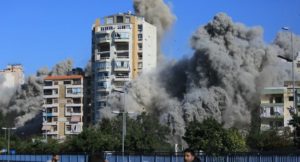
The army said the air force had hit Hezbollah’s main intelligence headquarters in the southern Beirut suburb of Dahiyeh, Hezbollah’s stronghold in the Lebanese capital, and that more than 25 Hezbollah militants were present at the time.
Longtime Hezbollah leader Nasrallah was killed on September 27 in an Israeli air strike on Beirut’s southern suburbs.
Safieddine, tipped to succeed his distant cousin as leader of the Lebanon-based group, had been out of contact since Israeli strikes on Beirut weeks ago, a high-level Hezbollah source said at the time.
“We have reached Nasrallah, his replacement and most of Hezbollah’s senior leadership”, Israeli army chief Lieutenant General Herzi Halevi said in a statement after the confirmation of Safieddine’s death.
After nearly a year of war with the Palestinian Islamist movement Hamas in Gaza, Israel shifted its focus to Lebanon in late September, vowing to secure its northern border threatened by cross-border fire from Hamas’s Lebanese ally.
Israel ramped up its air strikes on Hezbollah strongholds around the country and sent in ground troops late last month, in a war that has killed at least 1,552 people since September 23, according to an AFP tally of Lebanese health ministry figures.

– Blinken presses for Gaza aid –
Israel’s announcement of the death of Safieddine came as US Secretary of State Antony Blinken urged Prime Minister Benjamin Netanyahu to seize on the killing of Hamas leader Yahya Sinwar in Gaza last week to work towards a ceasefire in the Palestinian territory.
Blinken is on his 11th trip to the Middle East since Hamas’s October 2023 attack on Israel triggered the Gaza war, and his first since Israel’s conflict with Hezbollah escalated in late September.
During his meeting with Netanyahu in Jerusalem, Blinken “underscored the need to capitalise” on the death of Sinwar, US State Department spokesman Matthew Miller said.
This would be done by “securing the release of all hostages and ending the conflict in Gaza in a way that provides lasting security for Israelis and Palestinians alike”, he added.
Netanyahu told Blinken that Sinwar’s death “could have a positive impact on the return of the hostages” seized by Hamas during the October 7 attack last year, according to a statement from the Israeli leader’s office.
Blinken also pressed for more aid to be allowed into besieged Gaza as concerns rise for tens of thousands of civilians trapped by fighting in the hard-to-reach north.
Blinken later met with Defence Minister Yoav Gallant who said they discussed the army’s “achievements in its mission to destroy Hezbollah’s attack infrastructure”.
In a post on X, Gallant said he had “emphasized the importance of standing together against Iranian aggression — amplifying deterrence across the region”.
Gallant told Blinken Israel expects Washington’s support “following our attack on Iran”, his office said earlier.
Israel is weighing its response to Iran’s October 1 missile attack, which Tehran launched in retaliation for the killing of Nasrallah in Beirut and of Hamas leader Ismail Haniyeh in Tehran in July.
Previous US efforts to end the Gaza war and contain the regional fallout have failed, as did a bid spearheaded by President Joe Biden and his French counterpart Emmanuel Macron to secure a temporary ceasefire in Lebanon.
After Israel, Blinken will visit Saudi Arabia on Wednesday, a US official said.
– South Beirut evacuation orders –
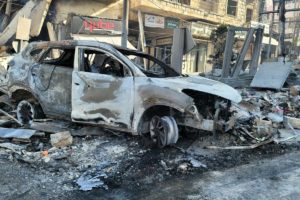
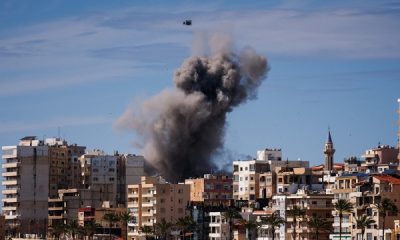
Fighting meanwhile raged in Lebanon, with the Israeli military again striking the southern suburbs of Beirut Tuesday evening, after issuing new calls for residents to evacuate the area.
On Tuesday, an Israeli strike on the eastern Hermel region killed five people, while five more died from a separate strike in the southern city of Nabatiyeh, the Lebanese health ministry said.
An Israeli air strike near a Beirut hospital killed 18 people, four of them children, according to the ministry.
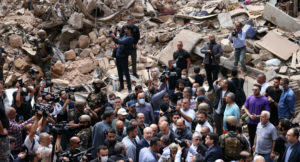
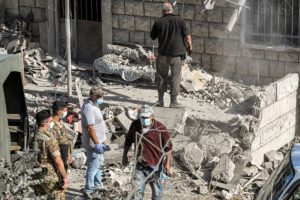
The strike flattened four buildings near the Rafic Hariri Hospital, Lebanon’s biggest public health facility which is outside Hezbollah’s traditional strongholds, an AFP correspondent reported.
Resident Ola Eid said she was tossing children chocolate and candy from her balcony when her neighbourhood was bombed.
“Before they could even catch them, the first strike hit, then a second. I saw the children ripped apart,” she told AFP.
UN human rights chief Volker Turk said he was “appalled” by the strike.
Hezbollah also continued to fire into Israel through Tuesday, launching about 140 “projectiles” from Lebanon, the Israeli military said.
– ‘Bodies lying on the streets’ –
In the Gaza Strip, Israel launched a major air and ground assault in northern Gaza this month, vowing to stop Hamas militants from regrouping in the area.
Despite the exodus of tens of thousands of civilians, around 400,000 have been trapped by the fighting, the UN agency for Palestinian refugees warned last week.
The only medical facility still partially functioning in the targeted area of northern Gaza has “no medicine or medical supplies”, warned Kamal Adwan Hospital director Hossam Abu Safia.
“People are being killed in the streets, and we can’t help them. Bodies are lying on the streets.”
The war was sparked by Hamas’s unprecedented attack on Israel on October 7 last year, which resulted in the deaths of 1,206 people, mostly civilians, according to an AFP tally of Israeli official figures.
Israel’s retaliatory offensive has killed 42,718 people in Gaza, also mostly civilians, according to figures from the Hamas-run territory’s health ministry which the UN considers reliable.
AFP






Doctors in the service of the Kwara State Government on Thursday commenced a seven-day warning strike over alleged salary deductions for the state’s health insurance scheme.
Their grievances also include alleged unpaid allowances, staffing shortages and other unresolved welfare concerns.
The industrial action involves members of the Kwara Doctors Forum, comprising the Medical and Dental Consultants Association of Nigeria (MDCAN), the National Association of Government General Medical and Practitioners (NAGGMDP) and the Association of Resident Doctors (ARD), KWASUTH.
Speaking at a news conference in Ilorin, MDCAN Chairman, Dr Adeola Olasinde, said the strike followed the expiration of a 14-day ultimatum issued to the state government, which ended on October 14.
He said the decision was reached at the forum’s congress on October 14 after the government failed to address the doctors’ demands, including the sudden deduction of two per cent of their salaries for the Kwara Health Insurance Scheme (KHIS), also known as KwaraCare.
Olasinde demanded an immediate reversal of the deduction, payment of approved accoutrement allowance arrears for 2025 and 2026, and implementation of the Consolidated Medical Salary Structure (CONMESS), the salary scale for medical and dental practitioners in government service.
The doctors also called for the recruitment of house officers, medical officers, resident doctors and consultants across public health facilities to address staffing gaps.
Other demands include the renovation of officers’ quarters in teaching hospitals and the establishment of the Governing Board of the Kwara State University Teaching Hospital (KWASUTH) in accordance with its enabling law.
Clarifying their position on the health insurance scheme, Olasinde said the doctors were not opposed to health insurance or efforts to expand access to affordable healthcare.
But he insisted that the scheme must operate transparently and with the confidence of contributors.
He said the deductions, introduced without prior agreement or satisfactory clarification on the management of the funds, had raised serious concerns among the doctors.
“The management of public health insurance funds must be subject to clearly defined institutional controls and collective oversight.
“There should also be transparent financial procedures, independent audit and appropriate legislative and regulatory supervision,” he said.
Olasinde called for the involvement of relevant stakeholders in the formulation, governance, monitoring and periodic review of the scheme, saying workers’ contributions must translate into accessible and quality healthcare.
He apologised to patients and members of the public for the inconvenience the strike might cause.
He described the action as a reluctant decision taken after dialogue failed to resolve the dispute.
“The warning strike is not our preferred course of action but is adopted reluctantly after dialogue failed,” he said.
The MDCAN chairman appealed to Governor AbdulRahman AbdulRazaq and other relevant authorities to intervene urgently and address the doctors’ demands.
However, the Medical Director of KWASUTH, Dr Ahmed Abdul-Qadir, appealed to the striking doctors to return to work.
He warned that prolonged disruption could expose patients to avoidable risks.
Abdul-Qadir said the hospital was operating at full capacity, with critically ill patients in its wards and Intensive Care Unit, including women who had recently undergone surgery.
He described the situation as unfortunate and urged the medical associations to resolve the dispute quickly in the interest of patients.
The medical director expressed confidence in the state government’s commitment to workers’ welfare, particularly in the health sector, and appealed to the doctors to resume duty to ensure uninterrupted healthcare delivery.
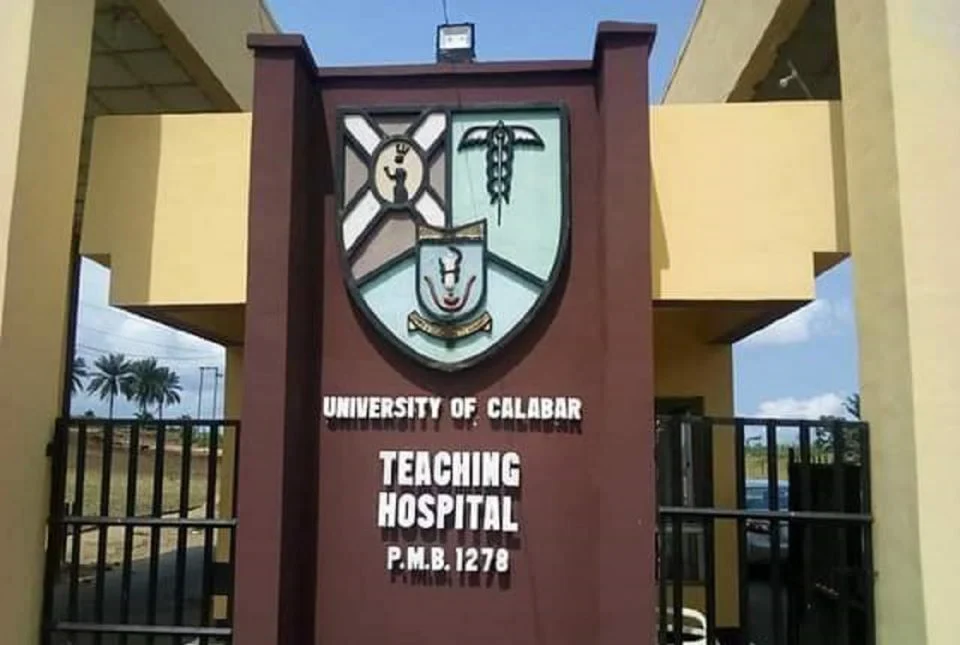
The management of the University of Calabar Teaching Hospital, UCTH, have announced that there are over 50 corpses in their morgues that have been abandoned for over 10 years, more than the statutory three months period.
The UCTH management have explained that the hospital no longer has space in the morgue to preserve more bodies.
According to the hospital’s management, relatives of the deceased have not come to claim the bodies after several years.
As a result, Chairman of the Special Task Force on the Evacuation of Abandoned and Unclaimed Corpses at UCTH, Dr David Ushie, said a decision has been taken to conduct mass burial of the abandoned corpses on Wednesday, 21 October 2026, after the expiration of a three weeks grace period.
The management, however, again called on families and individuals with unclaimed corpses in the morgue to identify and retrieve them on or before October 21, 2026.
Ushie disclosed that the hospital made efforts to locate relatives of the deceased, all to no avail, warning that all bodies still unclaimed would be given mass burial without further notice.
“The October 21 deadline remains firm. The hospital would not issue another notice before carrying out the mass burial”, he stressed.
Speaking earlier on behalf of the Chief Medical Director of UCTH, Prof. Ikpeme Ikpeme, Deputy Chairman of the Medical Advisory Committee in charge of Clinical Services, Dr Stephen Ogbudu, attributed the growing number of unclaimed bodies to the rising cost of burial ceremonies and cultural practices that place significant financial responsibilities on bereaved families and their in-laws.
He noted that the directive covered corpses kept in the mortuary beyond the statutory 90-day period from the date they were deposited.
He disclosed that some of the bodies had been in the morgue for more than a decade.
According to him, the prolonged storage of the bodies has made it necessary to undertake the evacuation exercise to ease pressure on the mortuary, improve sanitation and create a better environment for clinical services.

The National Association of Resident Doctors (NARD) has given the Federal Government a two-week ultimatum to resolve outstanding welfare and professional issues affecting its members or face possible industrial action.
NARD issued the ultimatum on Sunday at its 46th annual general meeting in Calabar, Cross River State, where it expressed concern over the slow implementation of agreements reached with the Federal Government.
The association said prolonged delays in addressing the issues had become unacceptable, demanding urgent action on remuneration, career progression, professional allowances, excessive workload, manpower shortages and the general welfare of resident doctors.
In resolutions read by NARD National President, Ogar Emmanuel Idoko, the doctors demanded “the immediate implementation of agreements reached with the federal government, particularly those relating to improved conditions of service and professional development”.
The association said the Federal Government had concluded a review of existing remuneration and professional salary structures for doctors, noting that the current framework no longer adequately reflected prevailing economic realities.
NARD also demanded appropriate compensation for resident doctors working beyond their normal responsibilities because of manpower shortages in hospitals.
It called for standardised templates for compensating doctors for excess workload, as well as reliable data to justify payments to those performing additional duties.
The doctors also raised concern over attacks on health workers, urging the government to fully implement existing policies and anti-assault measures designed to protect medical personnel in hospitals.
NARD further expressed concern over the continued migration of doctors and other health professionals from Nigeria.
It urged the Federal Ministry of Health and Social Welfare to urgently address the factors driving the exodus of medical professionals from the country.
The association also called on state governments to prioritise the welfare of doctors and other health workers in their institutions and ensure the implementation of relevant welfare policies.
-
 Health & Wellness1 year ago
President Tinubu Directs Cut in Dialysis Cost from ₦50,000 to ₦12,000
-
News2 years ago
CBN Debunks Fake Circular on New ₦5,000 and ₦10,000 Notes
-

 Business7 months ago
Dangote Refinery Reduces Petrol Gantry Price To ₦1,200 Per Litre
-
 International News7 months ago
Indian Police Arrest Nigerian Over ₦290m Drug Haul
-
 Business7 months ago
After Plea Bargain, Court Discharges Stella Oduah of ₦2.5bn Fraud
-
Business2 years ago
Dangote; We Did Not Fix ₦600/Litre Petrol Price
-
 Trending News1 year ago
NELFUND Disburses ₦86bn To 449,000 Beneficiaries
-
 Opinion2 years ago
Championing the People’s Voice: Obasa’s Dedication to Grassroots Representation By Dave Agboola⁰