Connect with us

International News

Fire Rocks Japan Rocket Test Site, No Injuries Reported

Published

on

Spread the love

Japan
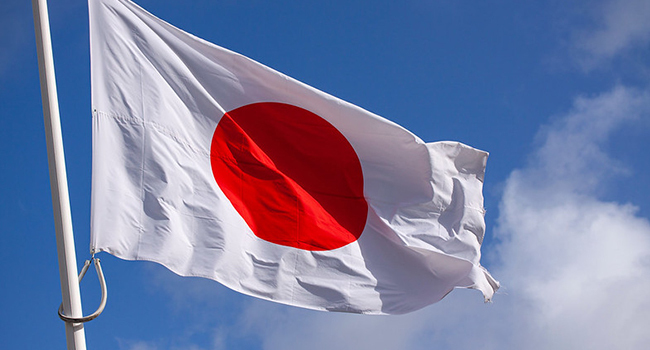
Japan-flag-waving-in-the-wind-against-blue-sky

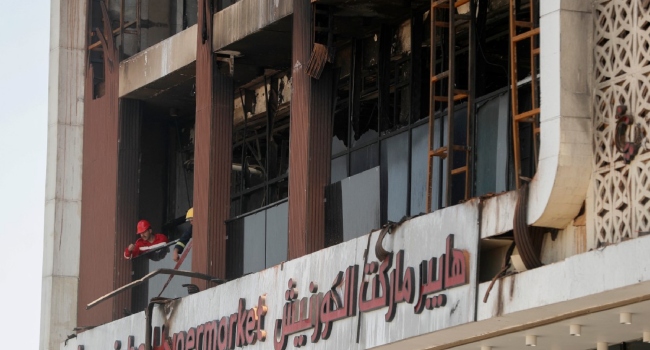
A huge fire erupted Tuesday at a Japanese rocket testing station, sending flames and smoke soaring into the sky, in the latest mishap for the country’s ambitious space programme.

There were no reports of injuries in the incident, in a remote area of Kagoshima in southern Japan, where a solid-fuel Epsilon S rocket was being tested.

Footage on national broadcaster NHK showed towering balls of fire and white fumes rising from the Tanegashima Space Center.

Journalists stationed around 900 metres (yards) away reported a large explosion shortly after the combustion test began at 8:30 am (2330 GMT Monday).

On Tuesday evening, hours after the accident, the Japan Aerospace Exploration Agency (JAXA) said “the cause was still unknown”.

It will take the agency “at least a few months” to identify the cause, make adjustments and, if necessary, conduct another combustion test, JAXA project manager Takayuki Imoto told a briefing.

The agency told AFP earlier that there was “an abnormality” during Tuesday’s test.

The incident could severely complicate the agency’s plan to launch the Epsilon S — the successor to the Epsilon — by March, with the Asahi Shimbun daily describing the target as “hopeless”.

The latest setback will have a “significant” impact on the timeline of JAXA’s space mission, Imoto said.

In July 2023, one engine of an Epsilon S exploded during a test around 50 seconds after ignition.

In that incident, a piece of metal from the ignition melted and damaged the thermal insulator covering the engine, allowing fuel to catch fire, Kyodo News reported.

String of setbacks

Since that misstep last year, “we have done everything we can to identify what went wrong… we regret this happened again, and feel sorry we failed to live up to everyone’s expectations,” Imoto said.

It was one in a string of setbacks for Japan’s space programme, including launch attempts for its next-generation H3 launch system.

JAXA managed a successful blast-off in February this year for the H3, which has been mooted as a rival to SpaceX’s Falcon 9.

But that followed a failed attempt in February 2023 when the ignition process failed. The following month a destruct command was issued shortly after blast-off.

“Including the Epsilon S, the development of flagship rockets is extremely important for the independence of Japan’s space development programme,” top government spokesman Yoshimasa Hayashi told reporters at a regular briefing on Tuesday.

In January, Japan successfully landed an unmanned probe on the Moon — albeit at a crooked angle — making it just the fifth country to achieve a soft landing on the lunar surface.

But in March a rocket made by a private Japanese company exploded seconds after launch.

Tokyo-based Space One’s 18-metre (60-foot) Kairos rocket blasted off in the coastal Wakayama region of western Japan, carrying a small government test satellite.

Around five seconds later, the solid-fuel rocket erupted in fire, sending white smoke billowing around the remote mountainous area as orange flames raged on the ground, live footage showed.

Burning debris fell onto the surrounding slopes as sprinklers began spraying water, in dramatic scenes watched by hundreds of spectators gathered at public viewing areas including a nearby waterfront.

Space One said at the time that it had taken the decision to “abort the flight” and details were being investigated.


AFP

Continue Reading
Click to comment

Leave a Reply

Your email address will not be published. Required fields are marked *

International News

Burkina Faso Reinstates Death Penalty For Terrorism, Fake Goods Import

Published

on

Spread the love


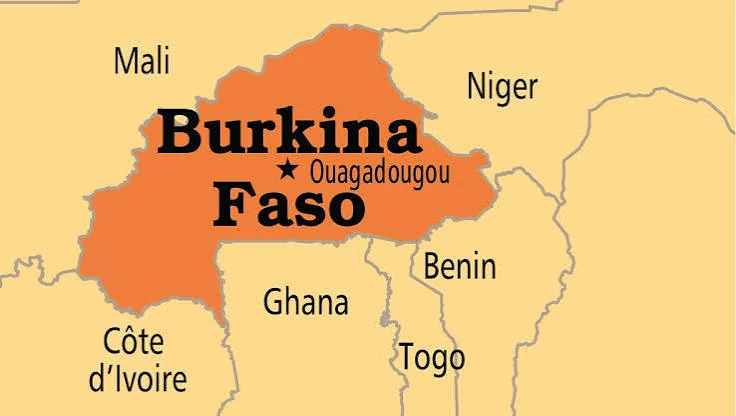
Burkina Faso’s parliament has voted unanimously to reinstate the death penalty for crimes including terrorism, espionage and treason, ending the country’s abolition of capital punishment for ordinary crimes in 2018.


All 71 members of the West African country’s transitional legislature supported the revised penal code on Tuesday, October 20, following its presentation by Justice Minister Edasso Rodrigue Bayala, according to the Associated Press.

The decision restores capital punishment nearly four decades after the country’s last known execution, which took place in 1988, according to Human Rights Watch.

The military-led government’s Council of Ministers approved a bill to restore the death penalty in December 2025, prompting criticism from international human rights organisations.

Amnesty International and Human Rights Watch warned that the move could threaten fundamental rights and be used to suppress critics of the authorities.

Burkina Faso’s military government has previously faced allegations of detaining journalists, human rights defenders and other perceived opponents. The authorities also dissolved political parties earlier in 2026 and repealed the laws governing their activities.

The reinstatement comes as the country continues to battle an armed insurgency involving militant groups linked to al-Qaida and the Islamic State group. The violence has killed thousands of people and displaced millions across Burkina Faso and the wider Sahel region.

The government has presented the tougher penal code as part of its response to the security crisis. Bayala had indicated in 2024 that the death penalty would be included in a revised criminal code.

According to Reuters, the revised code also provides for capital punishment in cases involving the importation of expired or prohibited products that result in death, although the precise scope and implementation of the new provisions will depend on the final legal text.

Human rights organisations have questioned whether restoring the death penalty will improve security, warning that it could deepen repression and create additional risks for people accused of offences.

Human Rights Watch previously said the proposed change could intensify a climate of fear and send a chilling message to critics of the military authorities.

The country’s security forces have also faced allegations of serious abuses during counterinsurgency operations. Human Rights Watch reported this year that government forces killed more than twice as many civilians as jihadist fighters between 2023 and 2025.

Armed groups, including Jama’at Nusrat al-Islam wal-Muslimin, an al-Qaida-linked organisation, have also been accused of war crimes and crimes against humanity by rights groups.

Burkina Faso, a landlocked country with a population of about 23 million, has been governed by military authorities since a coup in 2022. The junta has repeatedly delayed a return to civilian rule as it seeks to contain the insurgency.

The parliamentary vote marks a significant change in the country’s criminal justice policy. Burkina Faso abolished the death penalty for ordinary crimes in 2018 under former President Roch Marc Christian Kaboré, although the last known execution had taken place decades earlier.

The decision is likely to renew scrutiny of the country’s human rights record as authorities pursue their security campaign against armed groups.

(APNews)

Continue Reading

International News

We Have No Active Case’, Uganda Says Ebola Patient In FCT Is ,A Nigerian

Published

on

Spread the love


Uganda has clarified that as of Tuesday, October 21, 2026, when Nigerian health authorities confirmed an active case of Ebola in its capital city, Abuja, it had no active case of the virus.


Health Minister, Muhammad Ali, had announced that a female patient who had travelled from Uganda in East Africa, tested positive for the virus.

“The Federal Government of Nigeria confirms one case of Ebola disease in the Federal Capital Territory (FCT), following laboratory confirmation today, 20 October 2026. The patient, a woman who recently arrived in Nigeria on an international flight from Uganda, was admitted to a private hospital in the FCT, where she received care for several days before the diagnosis was confirmed. She is currently in isolation and receiving medical care.

“The FG calls on all public and private healthcare facilities nationwide to be on high alert. Healthcare workers must maintain a high index of suspicion, promptly identify and isolate suspected cases, observe strict infection prevention and control measures, and immediately report suspected cases to public health authorities.

“Investigations are ongoing, and we will continue to provide accurate and timely information,” Pate had said.

The development had made many Nigerians look towards the direction of Uganda, just like Patrick Sawyerr, a Liberian, imported the disease to Nigeria in 2014.

But in a statement issued after Pate’s comment, Charles Olaro, Director-General of Health Services in the East African country, clarified that the patient is a Nigerian.

Olaro said the woman had travelled to Eastern Democratic Republic of the Congo (DRC), which has over nearly 10,000 active cases with 4,500 deaths from Ebola, for business and transited through Uganda in early October.

According to Olaro, she showed no symptoms while in Uganda but developed symptoms after arriving in Nigeria.

“Travel through Uganda does not establish that infection occurred here. The location of exposure remains under investigation,” the ministry said.

“The Government of Nigeria is yet to provide detailed information on her travel itinerary and clinical history which will guide further investigations and any necessary contact tracing.

“We wish to clarify that, as at the time of this statement, Uganda has NO confirmed active Ebola cases.”

The Ugandan government said it had maintained limited provisions for humanitarian and diplomatic movement, adding that it would strengthen screening and public health controls at points of entry.

Continue Reading

International News

Appeal Court Cuts Simon Ekpa’s Jail Term From 6 To 4 Years

Published

on

Spread the love


A Finnish appeal court has reduced the prison sentence of Biafran separatist leader, Simon Ekpa, from six to four years.


Finnish newspaper Yle disclosed this in a report on Thursday.

However, the Court of Appeal upheld the decision of the Päijät-Häme District Court, which found Ekpa guilty of terrorism-related charges last year.

The charges were related to Ekpa’s alleged activities aimed at re-establishing an independent state of Biafra in southeastern Nigeria.

Ekpa subsequently appealed the ruling, seeking to have his conviction and sentence overturned.

In a ruling that offered some relief to Ekpa, the Court of Appeal found him guilty of the same offences but reduced his prison term after considering the circumstances surrounding his actions. The court noted that the situation in the Biafran region closely resembled, but did not meet the definition of, a civil war.

Ekpa had told the court that his involvement was not motivated by terrorist intent, citing the political turmoil in the Biafran region.

The prosecutor in the case had also appealed the district court’s decision, arguing that the prison sentence did not reflect the seriousness of Ekpa’s offences.

Continue Reading

Trending

Copyright © 2026 TheColumn NG